This post may contain affiliate links. Please see our disclosure policy.
Plokkfiskur is Iceland’s everyday fish and potato dish, simmered in a buttery white sauce until it’s thick enough to spread on rye bread. It’s the cozy, humble supper Icelandic families have made for generations, and with leftover fish and potatoes on hand, dinner is ready in about 25 minutes.
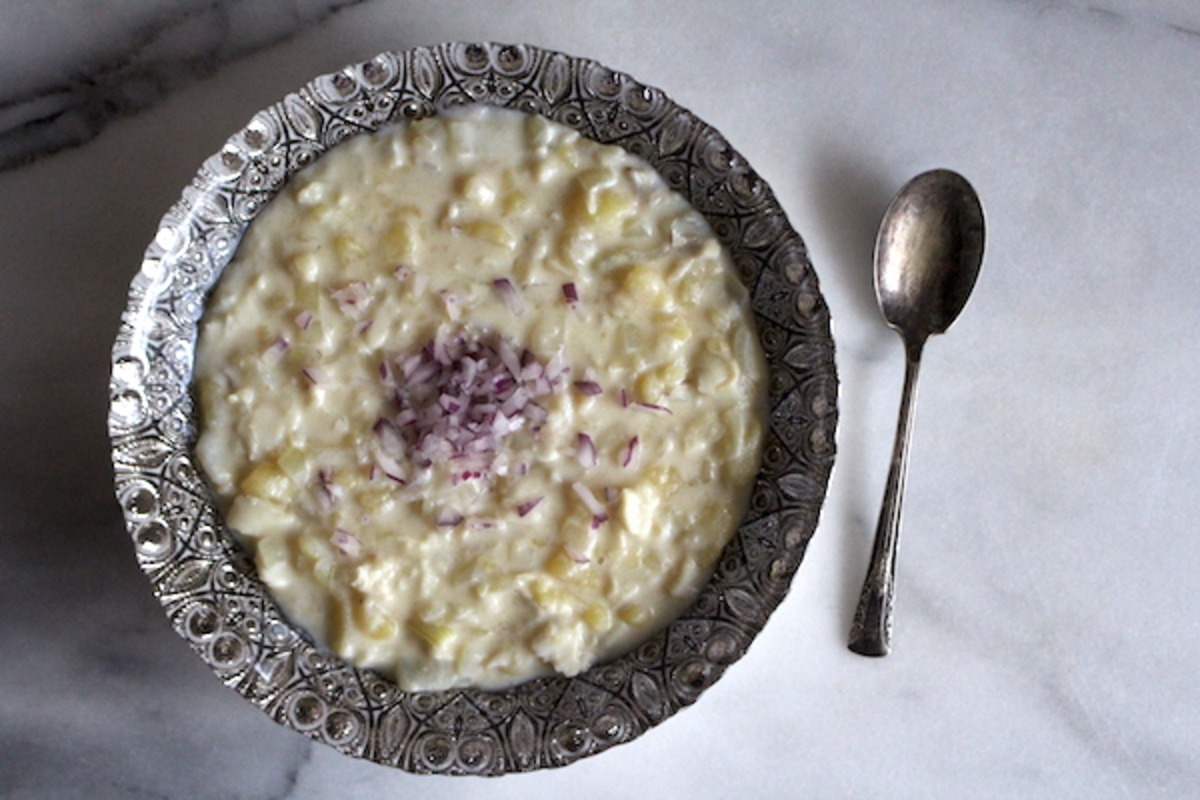
Table of Contents
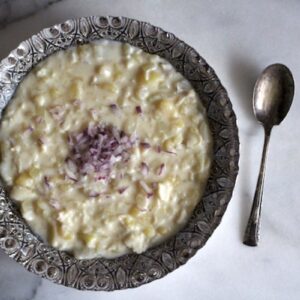
Plokkfiskur goes by Icelandic fish stew in English, but it’s much thicker than any stew. Tender flakes of cod or haddock and soft cubes of potato fold into a creamy sauce, and a spoonful holds its shape in the bowl.
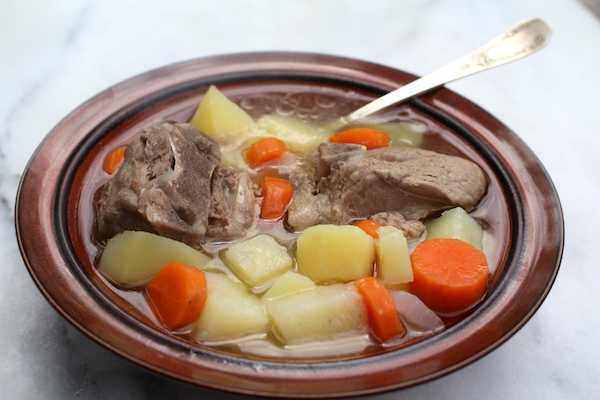
It’s simple comfort food made from a few good ingredients, which is how a lot of everyday Icelandic cooking works. Kjötsúpa, a plain and hearty Icelandic lamb soup with root vegetables, is another everyday classic.
Plokkfiskur has long been a way to use up leftover boiled fish and potatoes. You’ll find that waste-not habit all through Icelandic kitchens, and Icelandic oatmeal pancakes (lummur) started the same way, from the last of the breakfast oatmeal. They’re a huge hit with my kids.
My plokkfiskur started with The Nordic Cookbook, which has a whole section on the dish and the many ways families make it. It’s one of my favorite cookbooks of all time.
If you’d like another Nordic fish dinner, Finnish salmon soup (lohikeitto) is a light, creamy salmon soup that’s ready in under 30 minutes. And for something sweet afterward, my list of Scandinavian holiday recipes has a whole section of Icelandic sweets.
Notes from My Kitchen

Lately I’ve been cooking Icelandic food for my family. Not the fermented shark that’s mostly served these days to shock tourists, but the everyday fare that’s the backbone of the country’s cooking. We’ve really been enjoying it, and I’ve found several Icelandic cookbooks that go deeper into those recipes.
Plokkfiskur was a fast favorite with my family. I use equal weights of fish and potatoes, since fish is the pricey part of the pot and potatoes stretch a pound of cod into dinner for four. I’m looking forward to many more Icelandic dinners like this one.
What Is Plokkfiskur?
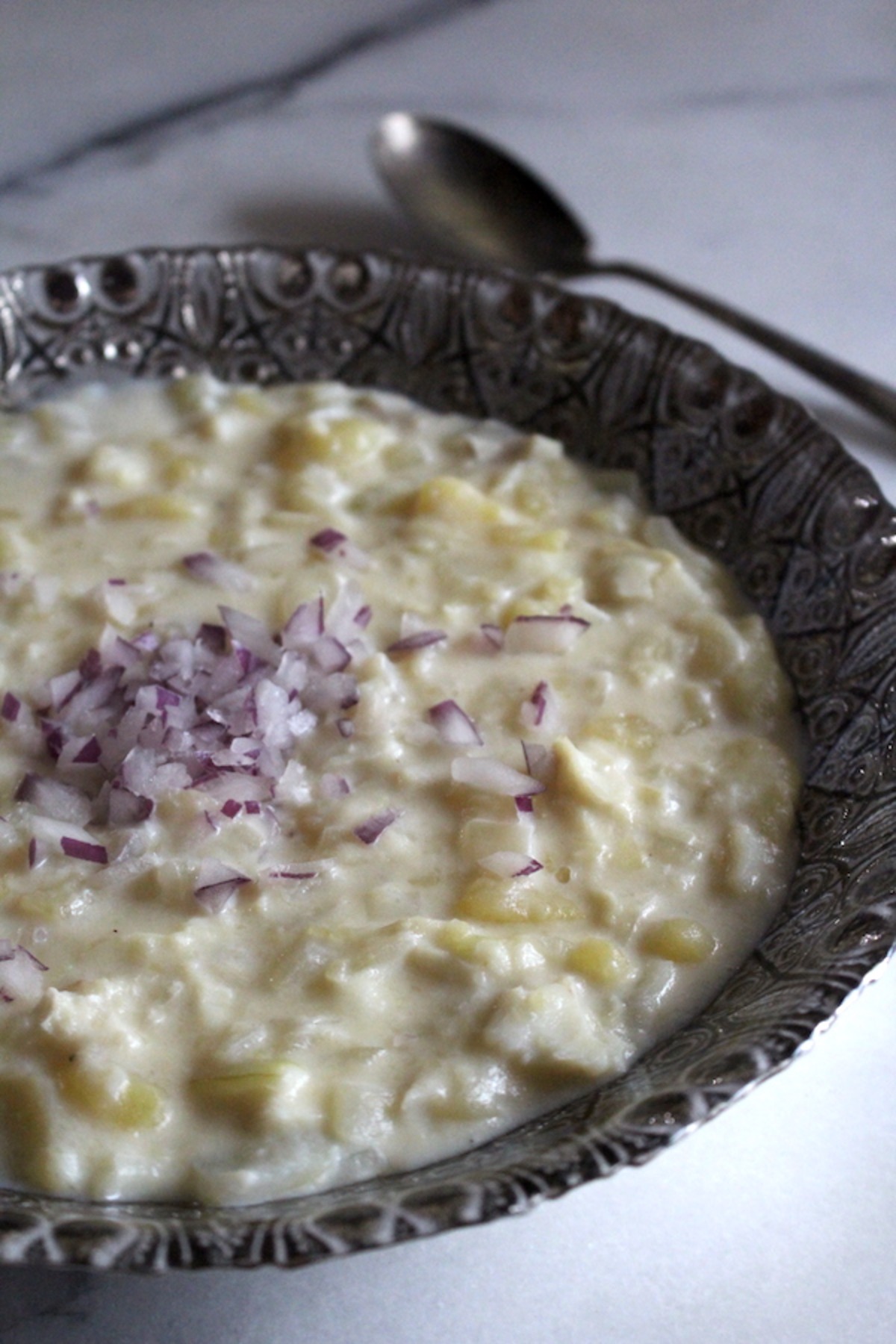
The name means something like “plucked fish,” for the way cooks pull the cooked fish apart into flakes. It’s a simple mix of white fish, potatoes and onion in a white sauce, seasoned with salt and plenty of pepper.
Magnus Nilsson writes in The Nordic Cookbook that plokkfiskur is an old dish, probably first made with salted or dried fish. Today most Icelandic cooks use fresh cod or haddock, poached just for the pot or left over from another meal.
English speakers often call it a stew, but plokkfiskur should be thick and creamy, never soupy. Icelanders eat it from a bowl or spread on buttered rye bread. If you’re craving a brothy fish dinner instead, a jar of canned fish chowder base gets you most of the way to chowder.
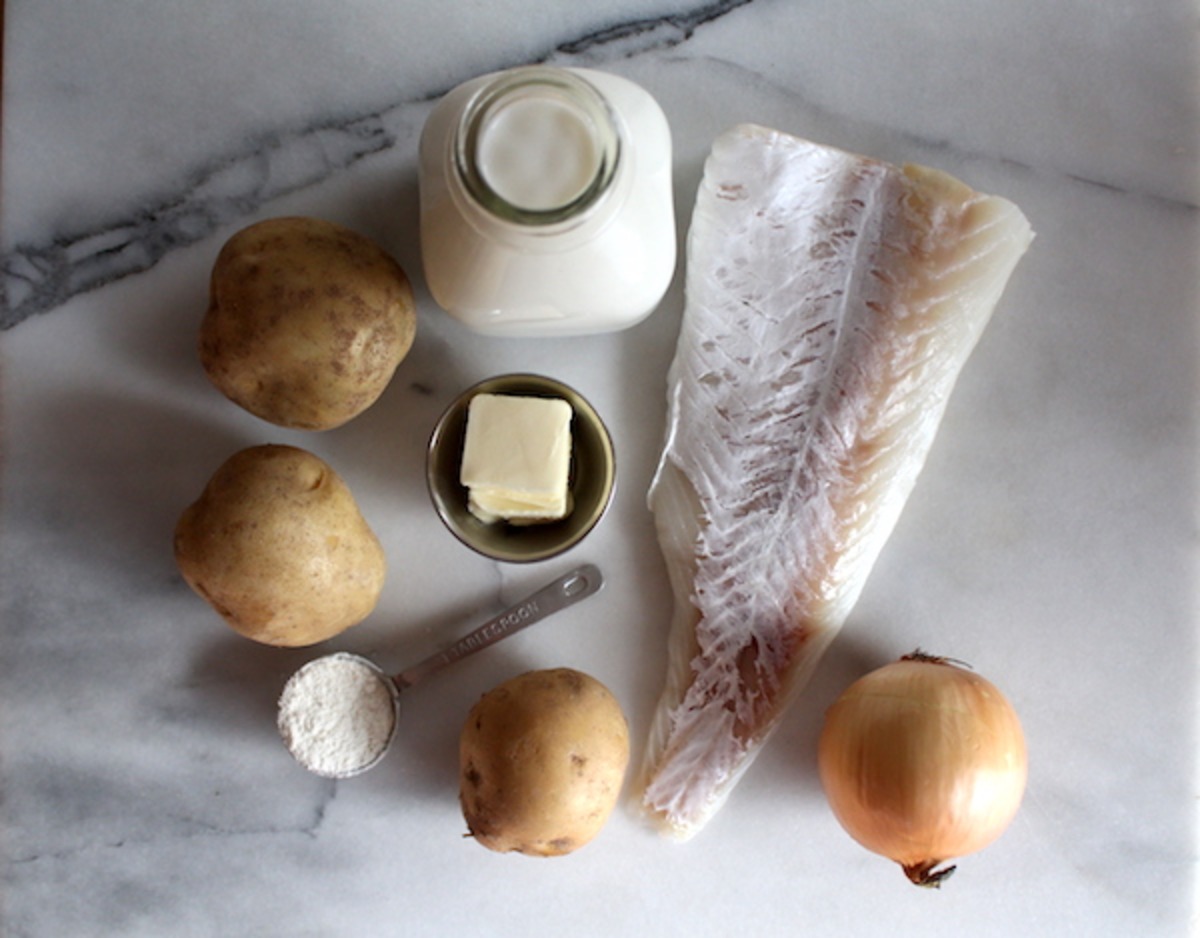
Ingredients for Plokkfiskur
Any mild white fish works here. Cod and haddock are traditional, and one reader had great results using halibut.
Both the fish and the potatoes go in already cooked, so this is a good home for leftovers. If you have extra boiled potatoes, Danish browned potatoes (brunede kartofler) are another good use for them.
- White fish: Cod or haddock is the classic choice. Halibut, pollock or any mild, flaky white fish works the same way, and soaked salt cod works too.
- Potatoes: Any boiling potato works. Waxy red potatoes hold their cubes, while starchy russets break down into a softer mash.
- Onion: A yellow onion is standard. Chop it fine so it melts into the sauce instead of staying crunchy.
- Butter: The base of the sauce, with the onion softened right in it. Salted or unsalted both work, so taste before salting if you use salted butter.
- Flour: It thickens the milk into a white sauce. Any all-purpose flour works.
- Milk: Whole milk makes the creamiest sauce. For a richer pot, swap in a little cream, or use some of the fish poaching water for part of the milk, the way many Icelandic cooks do.
- Salt and pepper: Season generously, since potatoes and white sauce take a lot of salt. White pepper is common in Icelandic recipes and disappears into the pale sauce, but black pepper is fine too.
Yield Notes
This makes 4 servings from 1 pound of cooked fish and 1 pound of boiled potatoes. If you’re cooking the fish fresh, start with about 1 1/4 pounds of raw fillets, since fish loses some weight as it poaches.
For a fishier plokkfiskur, use 1 1/2 pounds of cooked fish and cut the potatoes back to 1/2 pound. Keep the sauce the same.
My wife is half Icelandic, and I make this often and love it! It’s so simple. I usually make some sweet rye bread to go with it.
How to Make Plokkfiskur
Once you’ve cooked the fish and potatoes, plokkfiskur takes about 15 minutes in one saucepan. Most of that time goes to softening the onion and simmering the sauce.
If you’re starting from raw fish and potatoes, cook them first. The potatoes can boil while you poach the fish and chop the onion.
Cook the Fish and Potatoes
Boil the potatoes whole in salted water until a knife slides in easily, about 20 to 25 minutes for medium potatoes. Drain them, let them cool enough to handle, then peel them and cut them into small cubes.
Poach the fish in barely simmering salted water for about 8 to 10 minutes, until it’s opaque and flakes easily, or reaches the safe minimum temperature for fish of 145°F (63°C). Lift it out, pull off any skin and bones, and break it into flakes. Save a cup of the poaching water if you’d like to use some in the sauce.
Soften the Onion
Melt the butter in a medium saucepan over medium heat. Add the onion and cook it gently, stirring now and then, until it’s soft and translucent, about 5 to 7 minutes.
Keep the heat moderate so the onion never browns. Pale onions keep the sauce creamy white and mild.
Make the White Sauce
Sprinkle the flour over the onion and stir for a minute or two, until it bubbles and loses its raw smell. Then pour in the milk a little at a time, stirring hard with a whisk after each splash so no lumps form.
Simmer the sauce for 3 to 4 minutes, stirring often, until it’s thick and coats the back of a spoon heavily. It should look like a thick gravy, not a soup.
Fold in the Fish and Potatoes
Add the flaked fish and the potatoes, then season generously with salt and pepper. Stir it all together over low heat until it’s hot all the way through, about 5 minutes.
If it’s stiffer than you like, loosen it with a splash more milk. Plokkfiskur should be thick enough to hold its shape on a spoon, but still creamy.
Stir to Your Liking
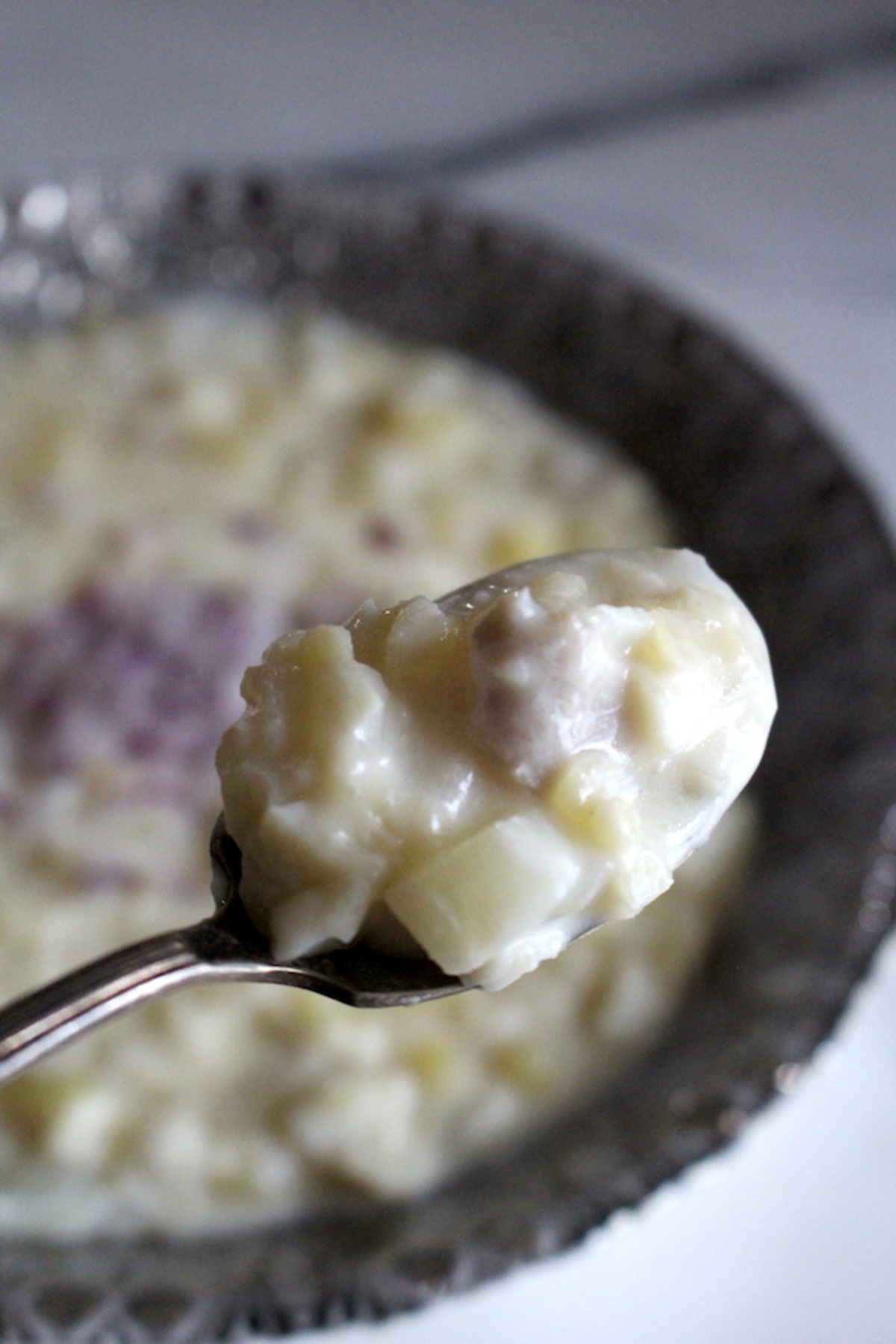
How much you stir decides the texture. A few gentle turns leaves chunks of fish and potato, and more stirring mashes it into a smoother, denser plokkfiskur.
Both styles are common in Iceland, so stir until it looks right to you. Taste it once more for salt and pepper before serving.
Tips for the Best Plokkfiskur
Warm the milk first. Warm milk blends into the butter and flour more smoothly than cold milk straight from the fridge, so the sauce stays smooth with less whisking.
Poach the fish gently. Barely simmering water keeps cod and haddock moist and tender. A hard boil tightens the flesh and leaves it dry.
Use some of the poaching water. A little of the fish’s cooking water in place of some milk gives the sauce more fish flavor, and it’s how many Icelandic home cooks make it.
Be generous with pepper. Potatoes and white sauce are mild, and a good amount of pepper keeps the whole pot from tasting flat.
Plokkfiskur Variations
Every Icelandic family seems to have its own plokkfiskur. Nilsson notes that older recipes used only onion and pepper for flavor, while newer ones add curry powder, Dijon mustard or grated cheese.
Curry powder turns the sauce a sunny yellow and adds gentle warmth. Mild grated cheese melts right in and makes it even creamier.
For a baked version, spread the plokkfiskur in a buttered baking dish, top it with cheese or buttered breadcrumbs, and bake it until it’s bubbly and golden. Some cooks top the baked version with béarnaise sauce instead.
Norway and Denmark have close cousins. Norwegian plukkfisk uses leeks instead of onion and comes topped with bacon or salt pork, and Danish plukfisk gets a spoonful or two of coarse mustard stirred into the sauce.
Serving Plokkfiskur
In Iceland, plokkfiskur usually comes with rúgbrauð, a dark, dense and slightly sweet rye bread, spread thick with butter. Some people spoon the plokkfiskur right on top of the bread.
Any dense rye bread works, including a homemade loaf like sourdough rye hearth bread. We eat it with rye bread, or with sliced onions and cucumbers on the side. Finely chopped red onion on top adds a little crunch and color, and a side of Scandinavian braised red cabbage (rødkål) brightens the plate.
Store leftovers covered in the fridge for 3 to 4 days. Reheat them gently on the stove with a splash of milk, stirring until they’re steaming hot, 165°F (74°C).
Plokkfiskur doesn’t freeze well. The potatoes turn mealy and watery, and the milk sauce can separate as it thaws.
For dessert, keep the meal Icelandic with Icelandic pancakes (pönnukökur) rolled in sugar, a plate of Icelandic donuts (kleina) with coffee, or a slice of Icelandic Christmas cake (jólakaka).
Icelandic Fish Stew (Plokkfiskur) FAQs
Readers ask most about whether plokkfiskur is really a stew, which fish to use and whether salt cod works.
Not really. English speakers call it Icelandic fish stew, but plokkfiskur is thick, creamy and spoonable, more like a loose mash than a soup. If yours comes out runny, let it simmer gently for a few more minutes, stirring, until it thickens.
Cod and haddock are traditional, but any mild, flaky white fish works. Readers have made it with halibut and with kelp greenling from the Pacific Northwest.
Yes, and the oldest versions were probably made that way. Soak it in cold water in the fridge, changing the water several times, for about a day for boneless pieces and up to two days for thick, bone-in ones. Then poach it like fresh fish. Taste the finished plokkfiskur before you add any salt.
Yes. Poach the fish and boil the potatoes up to a day ahead, and keep them covered in the fridge. The finished plokkfiskur also reheats well with a splash of milk.
More Icelandic Recipes
More everyday Icelandic cooking for your table.


If you tried this Icelandic Fish Stew (Plokkfiskur) recipe, or any other recipe on Adamant Kitchen, leave a ⭐ star rating and let me know what you think in the 📝 comments below!
And make sure you stay in touch with me by following on social media!
Icelandic Fish Stew (Plokkfiskur)
Ingredients
- 4 tbsp butter
- 1 onion, finely chopped
- 3 tbsp all-purpose flour
- 1 1/2 cups whole milk, plus a splash more if needed
- 1 lb cooked white fish, such as cod or haddock, skinned, boned and flaked
- 1 lb potatoes, boiled, peeled and cubed
- salt and pepper, to taste
Instructions
- If you’re starting with raw fish and potatoes, boil the potatoes in salted water until tender, then peel and cube them. Poach the fish in barely simmering salted water until it flakes easily (145°F, 63°C), then remove any skin and bones and break it into flakes.
- Melt the butter in a saucepan over medium heat. Add the onion and cook gently until soft and translucent but not browned, about 5 to 7 minutes.
- Sprinkle the flour over the onion and stir for 1 to 2 minutes, until it bubbles.
- Pour in the milk a little at a time, whisking constantly until no lumps remain.
- Simmer the sauce for 3 to 4 minutes, stirring often, until it’s thick and coats the back of a spoon heavily.
- Add the fish and potatoes and season generously with salt and pepper. Stir over low heat until hot all the way through, about 5 minutes, adding a splash more milk if it’s too stiff.
- Stir gently to keep chunks of fish and potato, or stir more for a smoother, denser texture.
- Serve with buttered rye bread, or with sliced onions and cucumbers.
Notes
Nutrition
Nutrition information is automatically calculated, so should only be used as an approximation.
More Scandinavian Recipes
Cozy Nordic cooking for every season, from cookies to suppers.



Find the perfect recipe
Searching for something else? Enter keywords to find the perfect recipe!




My wife is half Icelandic, I make this often and love it! It’s so simple. I usually make some sweet rye bread to go with it using homemade pear mollasses instead of store bought. I use Kelp Greenling from Washington state.
So glad you like it!
My mother used to make “codfish cakes” back in the 50s with dried codfish, soaked, and cooked potatoes. I wish I could find dried codfish so I could make it myself sometimes.
This recipe reminded me of them.
I had a fish stew when I was in Iceland and decided to try this recipe. Simple recipe, simple ingredients, great taste! I used halibut because it was what I had on hand. Not fishy and for someone who rarely cooks, I did well.