This post may contain affiliate links. Please see our disclosure policy.
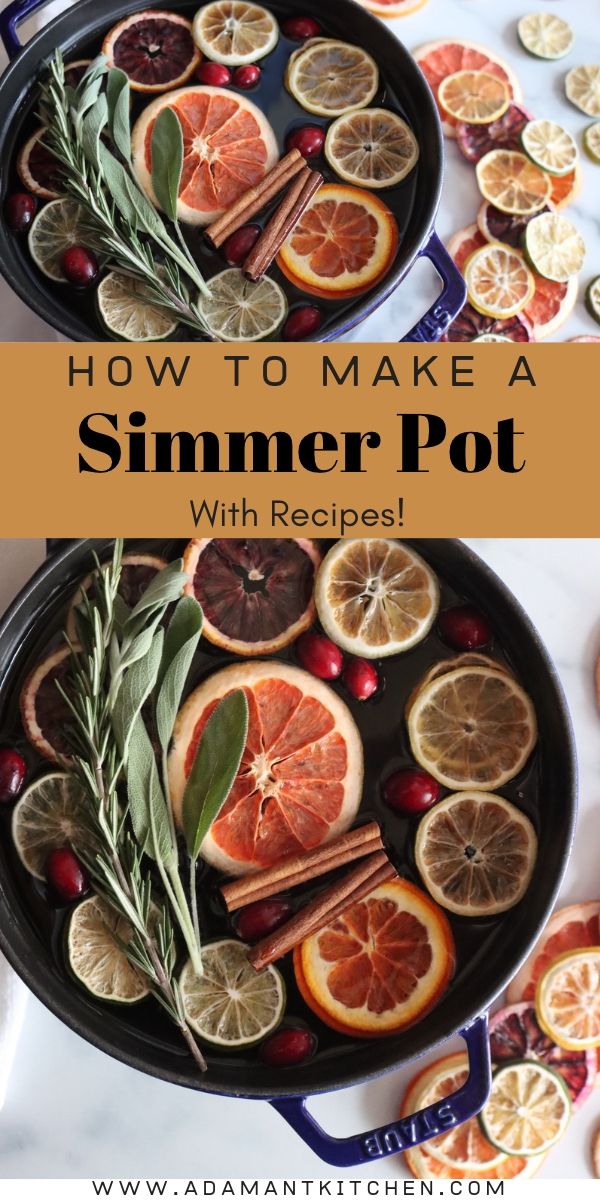
Simmer pots are pots of water with fruit, whole spices, and fresh herbs, kept just below a boil on the stove. They fill the house with the smell of citrus and spice, they cost less than a candle, and there’s nothing artificial in them. You can make one today with what’s already in your kitchen.
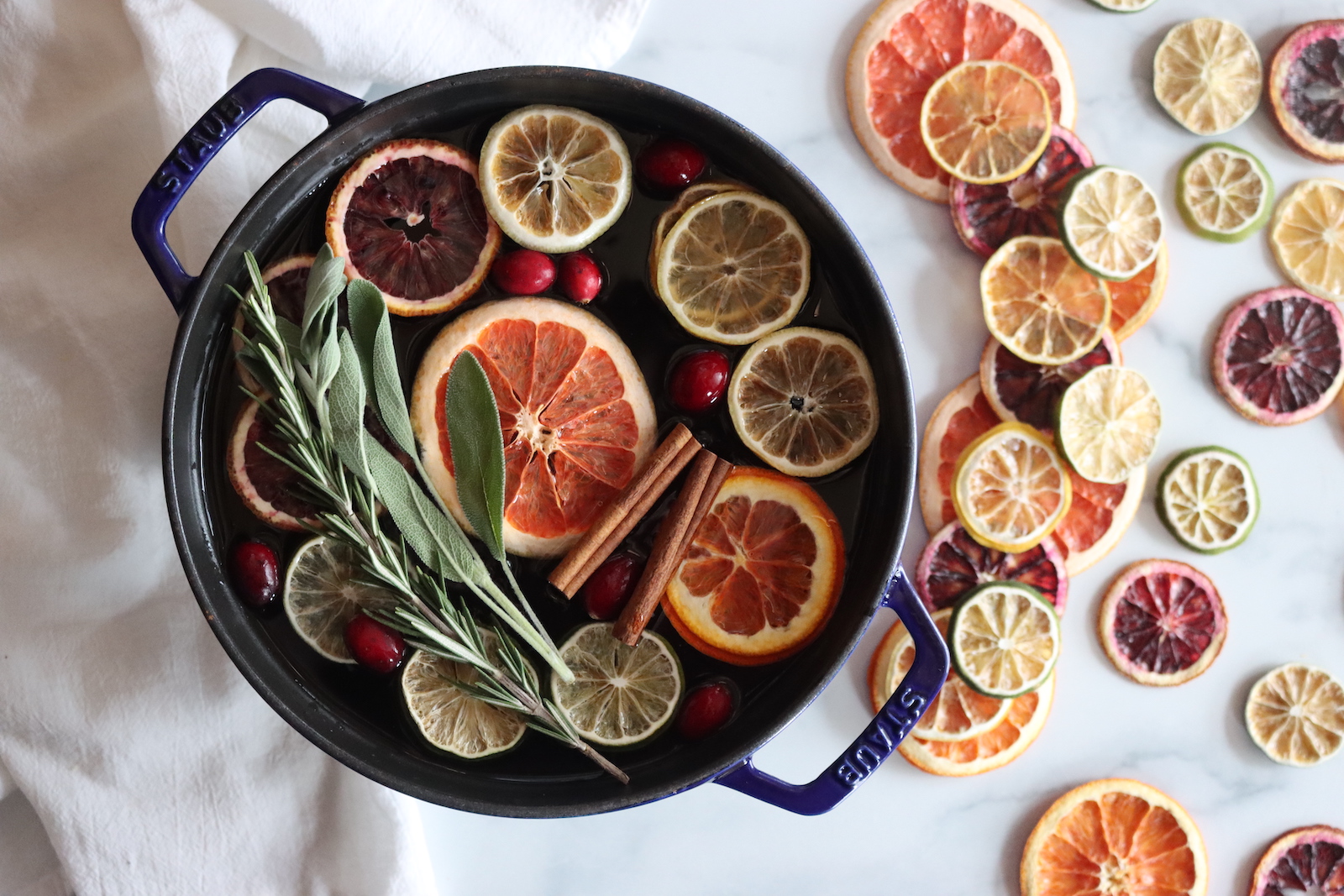
Table of Contents
Simmer pots go by a few names, and stovetop potpourri is another one you’ll see. The idea is simple: a few slices of citrus, some whole spices, and a sprig of something green sit in a pot of hot water. The steam carries the scent through the house.
Potpourri was a kitchen word first. According to Merriam-Webster, potpourri comes from the French for “putrid pot,” and it first meant a stew of meat and vegetables. It only came to mean a bowl of dried flowers in the mid-1700s, so a simmer pot puts potpourri back on the stove where it started.
It’s also a good use for odds and ends. The last few dried citrus slices, apple peels from a pie, a handful of cranberries left from cranberry orange sauce, and herb sprigs past their prime all work. In the middle of winter, the steam puts a little moisture back into dry indoor air, too.
I use dried citrus from my dehydrator. If you’d like to dry your own, I have guides to dehydrating oranges, lemons, limes, and grapefruit.
A simmer pot goes well with a day of holiday baking. There are 70+ Scandinavian holiday recipes and a long list of Christmas cookies from around the world to choose from. My notes on Danish Christmas traditions go with them, too.
Notes from My Kitchen

My daughter fell in love with simmer pots right after she finished her tea party era. Often, you can get all the cozy ambiance of a formal tea with just a few simple ingredients on the stove.
A smell can really make a place feel like home, warm and welcoming, no fancy china (or dressed-up teddy bears) required.
Ingredients for a Simmer Pot
Most simmer pots are some mix of fruit, whole spices, and fresh herbs. If it smells good in the kitchen, it’ll usually smell good in the pot.
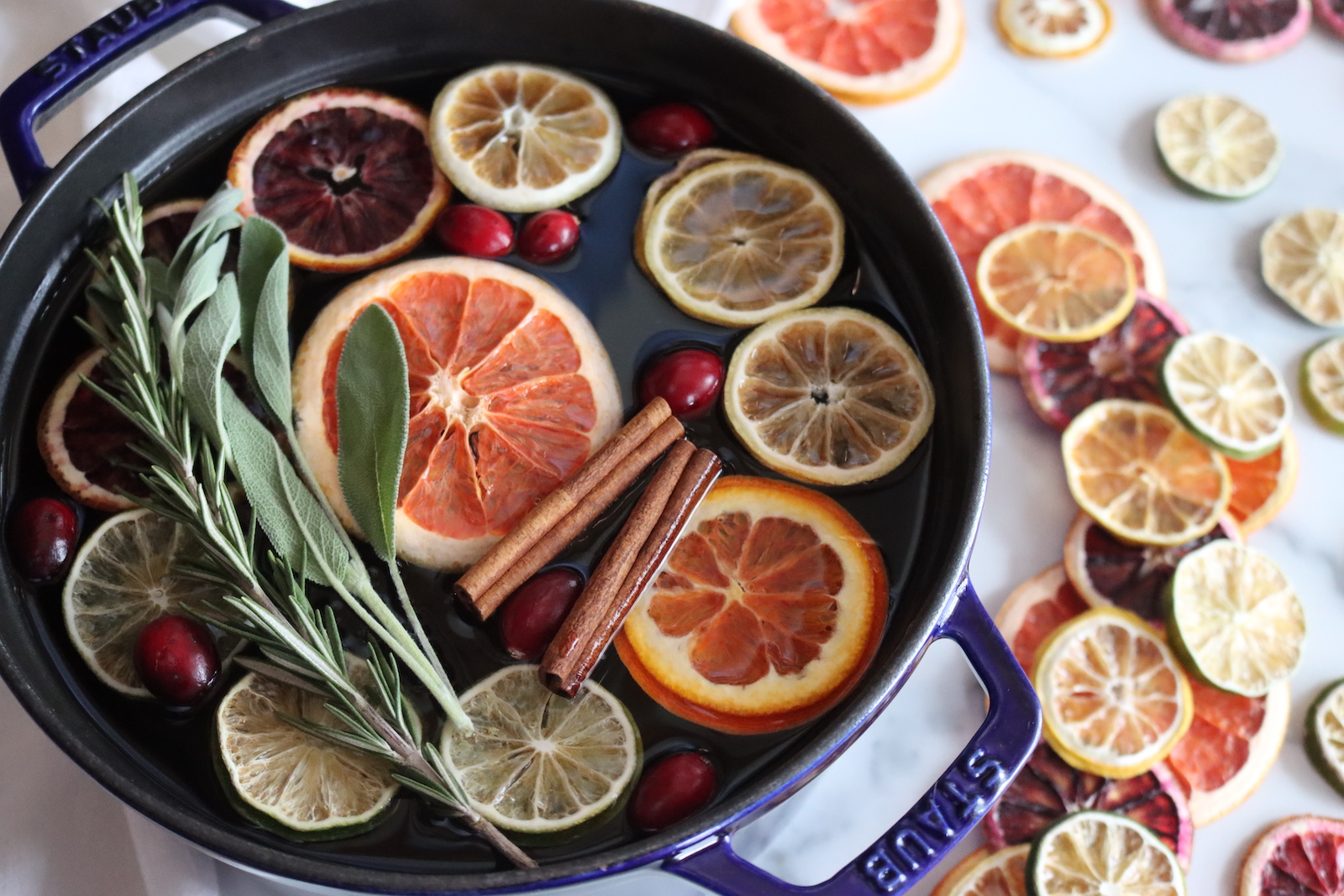
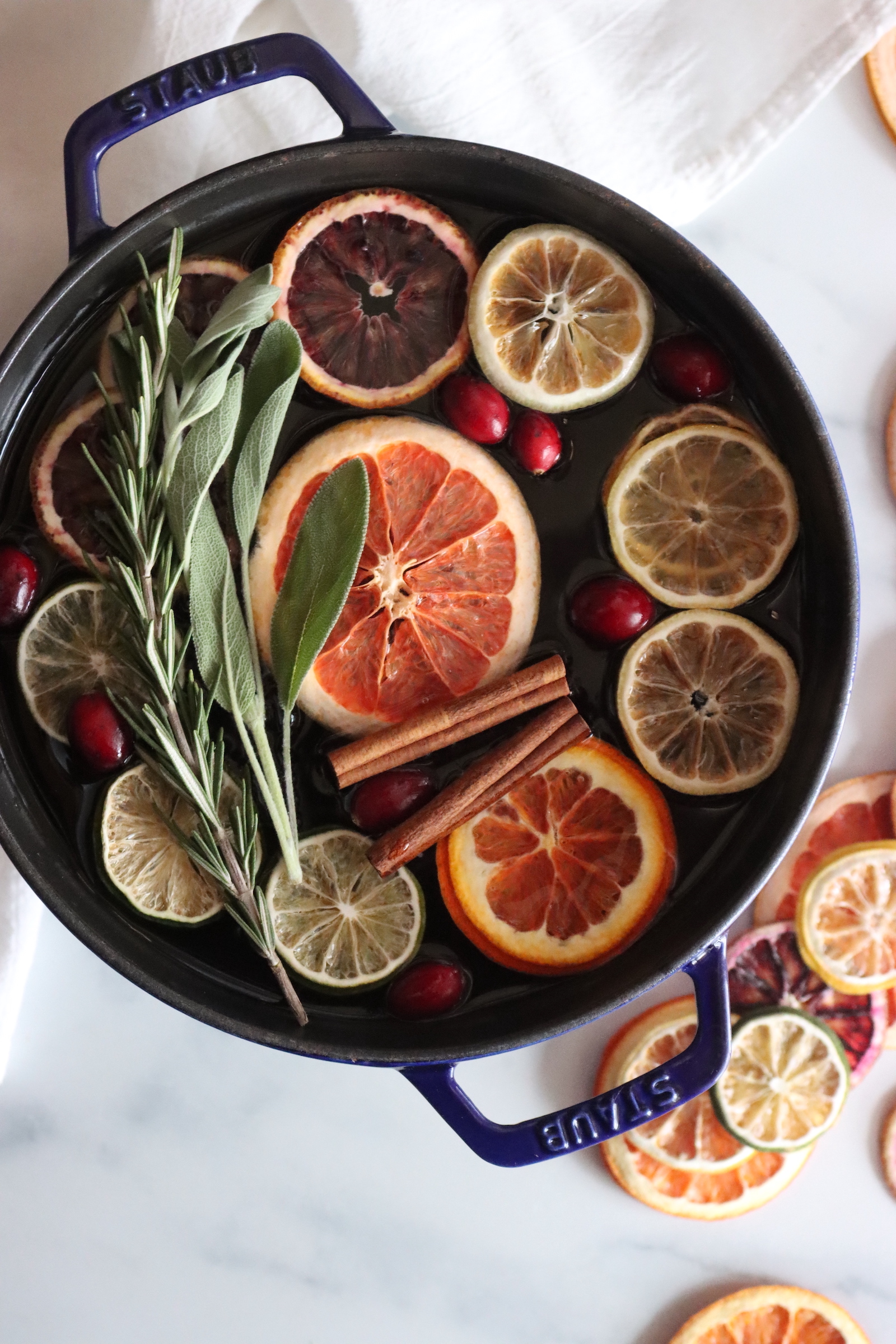
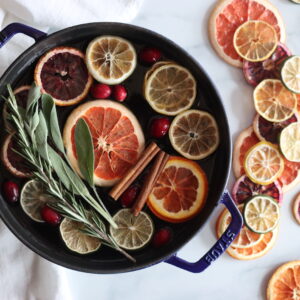
The pot in my photos is a winter mix of dried orange, blood orange, grapefruit, lemon, and lime slices, with fresh cranberries, cinnamon sticks, rosemary, and sage.
- Citrus: Orange, lemon, lime, and grapefruit slices give a clean, bright scent. Fresh slices are fine, though they go soft as they simmer. Dried slices keep in a jar for months, so you can start a simmer pot any time.
- Other fruit: Apple slices, apple peels and cores, pears, and fresh cranberries all work. Quince peels and cores left from poached quince are worth saving for this, since they’re so fragrant.
- Whole spices: Cinnamon sticks, whole cloves, star anise, allspice berries, cardamom pods, and whole nutmeg. Use them whole rather than ground. Ground spices cloud the water and settle on the bottom, where they can scorch.
- Fresh herbs: Rosemary, sage, thyme, and bay leaves hold up for hours in hot water. Mint, basil, and lavender fade faster, so they go in toward the end.
Evergreens and vanilla are optional extras. Water is the only thing every simmer pot needs.
- Evergreen sprigs: Spruce, fir, and pine smell like a fresh-cut Christmas tree. Only use evergreens you can identify, and leave out yew. NC State Extension lists its leaves, bark, berries, and seeds as highly poisonous.
- Vanilla and extracts: A splash of vanilla or almond extract softens the scent and makes it a little sweeter. Most of the alcohol in the extract cooks off as it simmers.
- Water: Plain tap water is fine. Use enough to float everything, and keep a kettle of hot water handy for topping it up.
How to Make a Simmer Pot
A simmer pot takes about five minutes to put together. After that, the only job is keeping water in the pot.
On the stove, the scent fills the house faster, but the pot needs more watching. The slow cooker version is a little more hands-off.
Choose a Wide Pot
A wide pot gives the steam more surface to rise from, so the scent spreads faster. A Dutch oven or a shallow braiser works well, and the pot in my photos is a braiser.
A small saucepan works too, but it holds less water, so you’ll top it up more often. Enameled cast iron and stainless steel are both good choices, since neither one reacts with the citrus.
Add the Fruit, Spices, and Herbs
Slice the citrus or other fruit into rounds, and drop them in with the whole spices. A mandoline slicer makes quick work of a big batch of citrus, and a sharp knife is fine for a few slices.
Twist the herb sprigs in your hands, or bruise them with the back of a knife, before they go in. Breaking the leaves a little lets out more of their scent.
Add Water and Bring It to a Simmer
Pour in enough water to float everything. Bring it up over medium heat, then turn it down until it barely bubbles.
Stoves vary, and mine runs hot, so go by the bubbles rather than the dial. At a hard boil, the water disappears fast and the fruit cooks to mush.
Keep the Water Topped Up
Leave the pot uncovered, and check it every 30 minutes or so. When the water drops, add more. Use hot water from a kettle, so the pot stays at a simmer instead of starting over.
Never let it boil dry. The sugar in the fruit scorches on the bottom, the pot starts to smoke, and an empty pot on a hot burner is a fire risk.
Turn It Off Before You Leave
A simmer pot is still a pot on the stove. The National Fire Protection Association says to check anything you’re simmering regularly, stay in the kitchen while it cooks, and use a timer as a reminder. It also says to keep towels, oven mitts, and curtains away from the stovetop.
According to the NFPA, Thanksgiving, Christmas Day, and Christmas Eve are the three biggest days of the year for home cooking fires, and that’s right in the middle of simmer pot season. Turn the burner off before you leave the house or go to bed, and start it again later.
Slow Cooker Simmer Pot
A slow cooker is the hands-off way to run a simmer pot, and I use mine for them too. Add everything to the crock, cover it with water, and set it to low.
Leave the lid off or tilted, so the scent can get out. The water goes down more slowly than on the stove, but it still goes down, so check it now and then and top it up.
With the lid off, a slow cooker can still run dry. Turn it off before you leave the house or go to bed, the same as the stove.
Tips for the Best Simmer Pot
Save scraps in the freezer. Keep a bag in the freezer for apple peels, citrus peels, ginger ends, and herb stems. When the bag is full, you have a simmer pot.
Crack the hard spices. Crack cardamom pods and whole nutmeg, and snap cinnamon sticks in half. More broken surface means more scent in the first hour.
Add soft herbs late. Mint, basil, and lavender lose their scent fast in hot water. Add them in the last hour, or drop in a fresh sprig each time you top up the water.
Refresh it before you start over. When the scent starts to fade, add a fresh slice of citrus or a new cinnamon stick. That often brings it back for another few hours.
Simmer Pot Recipes
Start with what’s in season, and don’t worry about exact amounts. A few slices of fruit, a few whole spices, and a sprig or two of herbs is plenty for a big pot.
Each one goes together the same way, on the stove or in the slow cooker.
Winter Citrus Simmer Pot
This is the pot in my photos. It has dried orange, blood orange, grapefruit, lemon, and lime slices, a handful of fresh cranberries, two cinnamon sticks, and a sprig each of rosemary and sage.
The cranberries add color, and the rosemary and sage keep it from smelling like dessert. If you end up with more citrus or cranberries than you need, there are plenty of citrus canning recipes and cranberry canning recipes for the rest.
Christmas Evergreen Simmer Pot
Combine orange slices with a few small sprigs of spruce, fir, or pine, a cinnamon stick, and a spoonful of whole cloves. Add a star anise pod if you have one.
Trimmings from the bottom of the Christmas tree work well, as long as you know what kind of tree it is. In spring, spruce trees put out tender new tips for spruce tip recipes.
Gingerbread Simmer Pot
Slice a knob of fresh ginger into coins, and add cinnamon sticks, whole cloves, allspice berries, a cracked whole nutmeg, and a splash of vanilla.
It smells like a tray of Norwegian gingerbread cookies in the oven, without turning the oven on. If it puts you in a baking mood, there are 20+ German Christmas cookies to choose from, too.
Rose and Vanilla Simmer Pot
Add a handful of dried rose petals to a lemon slice and a splash of vanilla. It’s a soft, flowery pot for Valentine’s Day.
Dried rose hips are another option in late winter, and they add color and a light, fruity scent. There are more rose hip recipes for the rest of the harvest.
Spring Lemon Herb Simmer Pot
Lemon slices with rosemary, thyme, and a splash of vanilla make a clean, fresh pot for spring. It’s a nice one to have going on a cleaning day.
A spoonful of dried chamomile flowers adds a soft, honey-like note, and there are plenty of other chamomile recipes to try. To dry your own herbs for later, my guide to drying herbs at home walks through it.
Summer Lime and Mint Simmer Pot
Lime slices, a handful of fresh mint, and a few basil leaves make a cool, green pot for summer. Add the mint and basil in the last hour, since they fade fast in hot water.
Key limes work in place of regular limes. If you’ve got a whole bag of them, there are 60+ key lime recipes for the rest.
Fall Apple Cinnamon Simmer Pot
Use apple slices, or the peels and cores left from a pie or applesauce, with cinnamon sticks, whole cloves, a star anise pod, and an orange slice.
A handful of crabapples works in place of the apples, and the rest of the crop can go into crabapple recipes. Dried apple slices from dehydrating apples work just as well.
Quince Peel Simmer Pot
Quince peels and cores have a strong, flowery scent, and they’re too good to throw out. Simmer them with a cinnamon stick and a split vanilla bean or a splash of vanilla.
Quince season is short, so freeze the peels and cores if you’re not ready to use them. There are lots of quince recipes for the fruit itself.
Chai Simmer Pot
Crack a few cardamom pods, and add them to cinnamon sticks, sliced fresh ginger, whole cloves, star anise, a few black peppercorns, and a splash of vanilla.
There’s no tea in it, but it smells like a pot of chai on the stove. It’s a good one for the short, dark afternoons of late fall.
Storing and Reusing a Simmer Pot
You can get another day out of a simmer pot. Let it cool, cover it, and keep it in the fridge overnight. Then bring it back to a simmer with fresh water the next day.
Don’t leave it sitting on the stove for days, since fruit in water at room temperature starts to mold. Once the fruit is soft and a fresh slice or spice doesn’t bring the scent back, compost it and start fresh.
Simmer Pot Gift Jars
A jar of dried simmer pot ingredients makes an easy holiday gift. Layer dried citrus slices, cinnamon sticks, whole cloves, star anise, and a sprig of dried rosemary or a few bay leaves in a clean jar.
Tie on a tag with the directions: cover it with water, and keep it at a low simmer. Add more water as it cooks down, and turn it off before leaving the house or going to bed.
Everything has to be completely dry, or it can mold in the jar. A dehydrator makes quick work of drying the citrus, and an herb drying rack works for the rosemary and bay.
For more to make with the dehydrator, there are 100+ dehydrator recipes to work through, and dried apple slices make a nice fall version of the jar.
Simmer Pot FAQs
A few practical questions come up about how long a simmer pot lasts and how to keep it safe.
A few hours at a time, as long as you keep water in it. Adding a fresh slice of citrus or a new cinnamon stick brings the scent back when it fades. You can also cool it, refrigerate it overnight, and simmer it again the next day with fresh water.
No. Turn it off before you go to bed or leave the house, on the stove or in a slow cooker. With the lid off, either one can run dry, and the NFPA says to check anything you’re simmering regularly and stay in the kitchen while it cooks.
Yes. Fresh citrus and apples work just as well, though they go soft as they simmer. Dried slices keep in a jar for months, so they’re the ones to use in gift jars.
It ran low on water, and the sugar from the fruit scorched on the bottom of the pot. Turn off the heat, let it cool, and start over with fresh ingredients in a clean pot. Next time, set a timer to check the water every 30 minutes.
More Holiday Recipes
Holiday baking and traditions to go with your simmer pot.


If you tried this Simmer Pot recipe, or any other recipe on Adamant Kitchen, leave a ⭐ star rating and let me know what you think in the 📝 comments below!
And make sure you stay in touch with me by following on social media!
How to Make a Simmer Pot
Equipment
- Dutch Oven
Ingredients
- 12 dried citrus slices, orange, blood orange, grapefruit, lemon, and lime
- 1/4 cup fresh cranberries
- 2 cinnamon sticks
- 1 sprig fresh rosemary
- 1 sprig fresh sage
- 6 cups water, plus more for topping up
Instructions
- Twist the rosemary and sage sprigs to bruise the leaves a little.
- Add the citrus slices, cranberries, cinnamon sticks, rosemary, and sage to a wide pot or Dutch oven.
- Pour in the water, and bring it to a simmer over medium heat.
- Turn the heat down until the water barely bubbles, and leave the pot uncovered.
- Check the water every 30 minutes, and add hot water whenever the level drops, so the pot never boils dry.
- Turn off the heat before you leave the house or go to bed.
- To use it again, let it cool, cover it, and refrigerate it overnight. Then bring it back to a simmer with fresh water.
Notes
Cinnamon and Spice Baking
Recipes that fill the kitchen with the same warm spices.


Find the perfect recipe
Searching for something else? Enter keywords to find the perfect recipe!