This post may contain affiliate links. Please see our disclosure policy.
Quince recipes can be hard to find, as this deliciously fragrant fruit isn’t used as much as it once was. Once you learn how to cook quince, I’m sure they’ll be a part of your cooking each year.
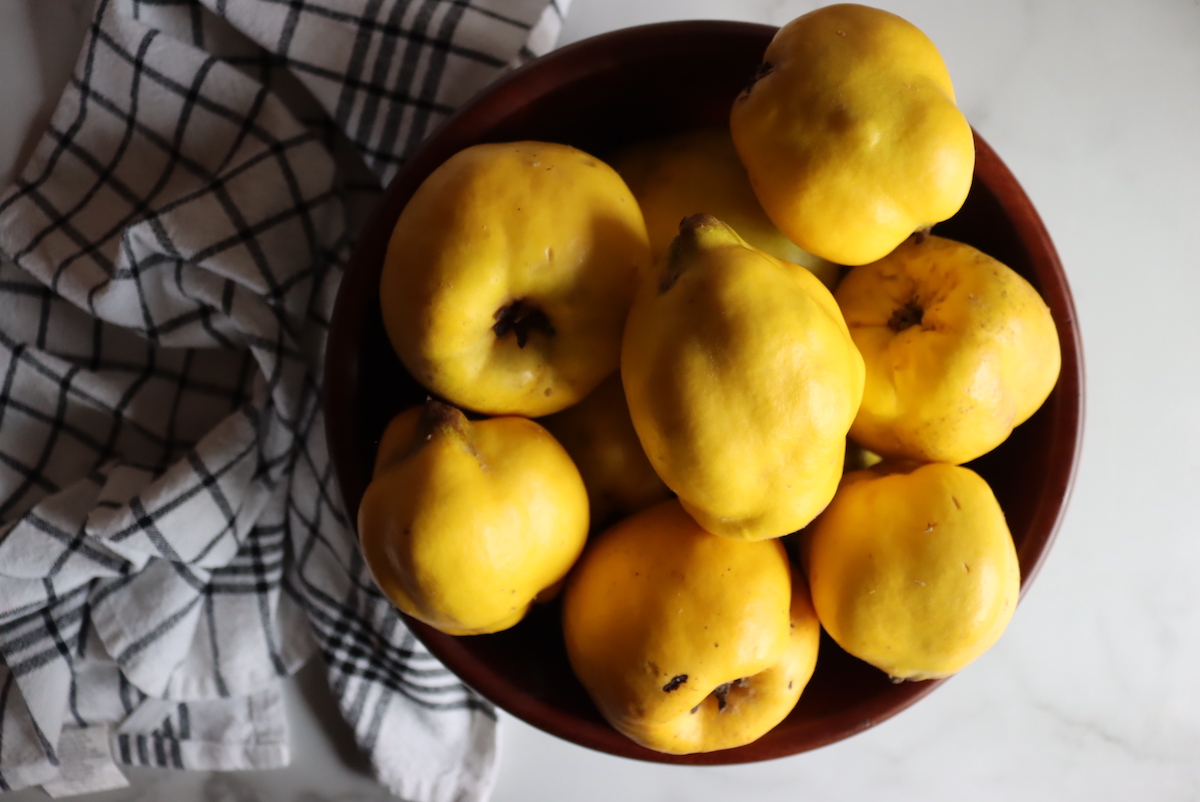
Quince are one of my husband’s favorite fruits, and he grew up eating them in all manner of quince preserves. They had a backyard tree when he was growing up, and he told me all about the wonderful scent of these delicious fruits…you could smell them across the yard.
We planted a quince tree as soon as we moved to our Vermont homestead, and I started looking into how to cook quince so I could re-create some of those memories.
When we had our first quince on the table, I smelled their amazing aroma, and I suddenly understood just how magical they could be.
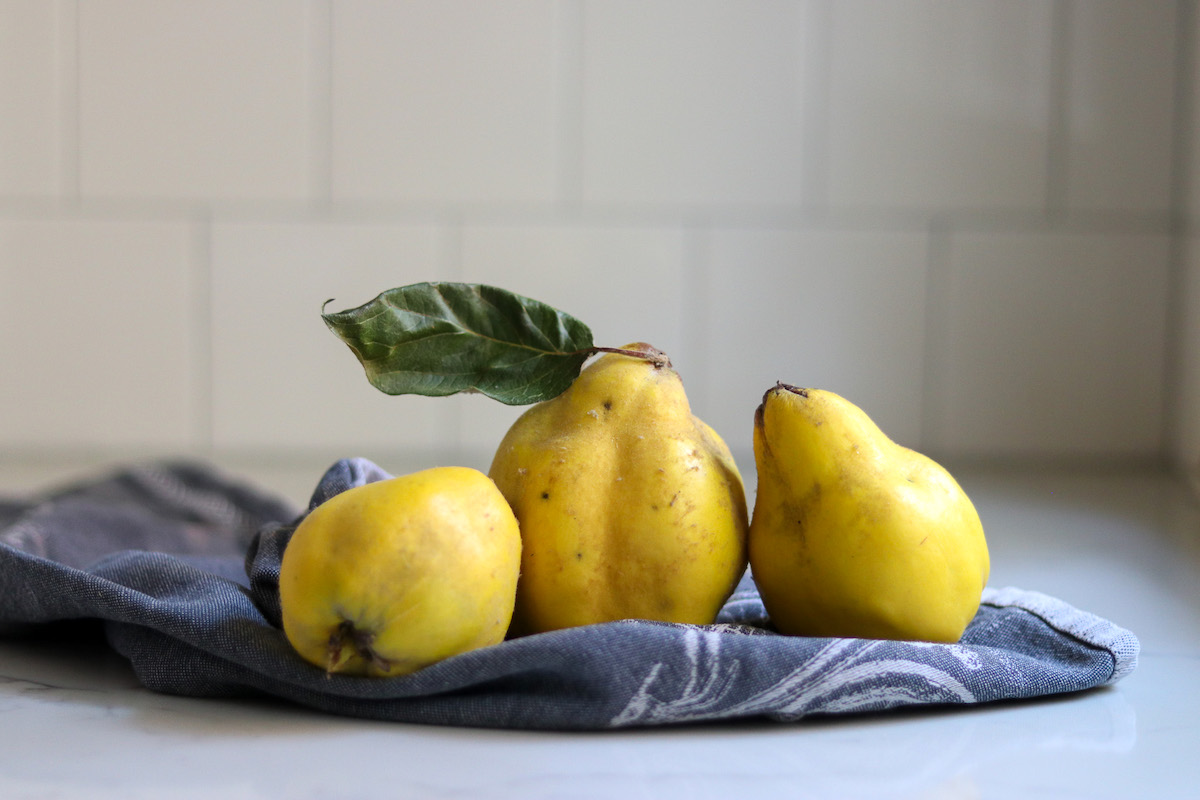
What are quince?
The quince fruit resembles a cross between an apple and a pear, and is actually related to these fruits, but it’s botanically unique in that it’s the only member of the genus Cydonia, which is in the Rosacea family (also known as the rose family). Quince trees are thought to have originated in Persia, where their cultivation spread across the Mediterranean and throughout Europe. Quince grow from hardy, deciduous trees and today they can be found growing in many countries worldwide.
Quince has a long and interesting culinary history. The fruit has been cultivated for thousands of years and was a staple in ancient Greek and Roman kitchens, where it was often preserved in honey for winter use. The use of quince was widespread in medieval times, where the fruit was combined with spices such as cloves, pepper, cinnamon, and nutmeg (which is how it is still prepared today in many recipes). By the Tudor and Stuart era, quince marmalade wrapped in gold foil was considered a luxurious gift, often presented to royalty and nobility on special occasions.
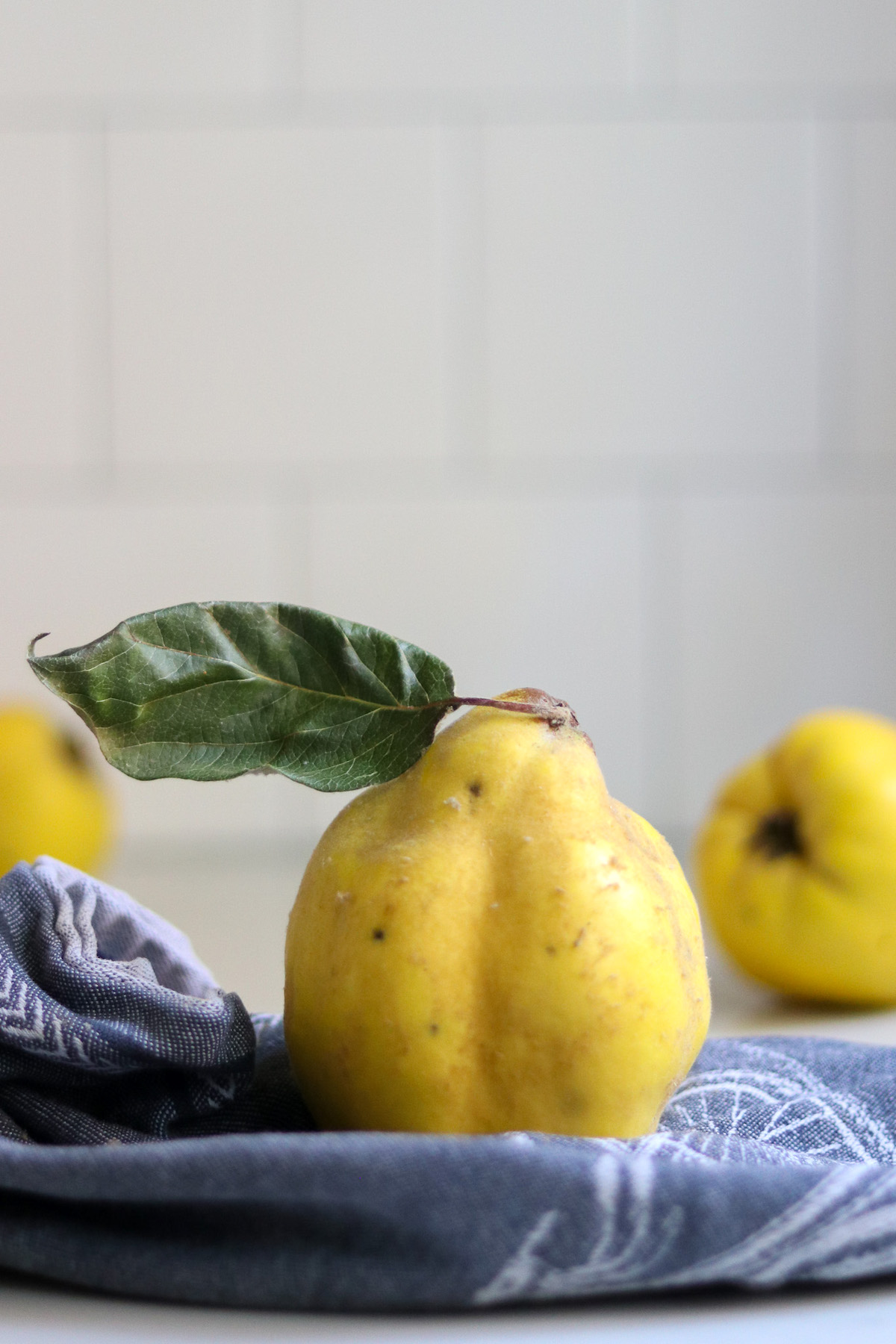
Due to their astringent, sour flavor and spongy, woody texture when raw, quince are best when cooked until soft, which can be achieved by poaching, slow-roasting, and baking. Quince have an unusually high pectin content, which makes the fruit ideal contenders for use in jellies and preserves.
Quince jelly is probably the fruit’s best-known application, but it can be used in a wide array of recipes. As you’ll see in this recipe roundup, this versatile fruit can be used in preserves, desserts, savory dishes, and even beverages.
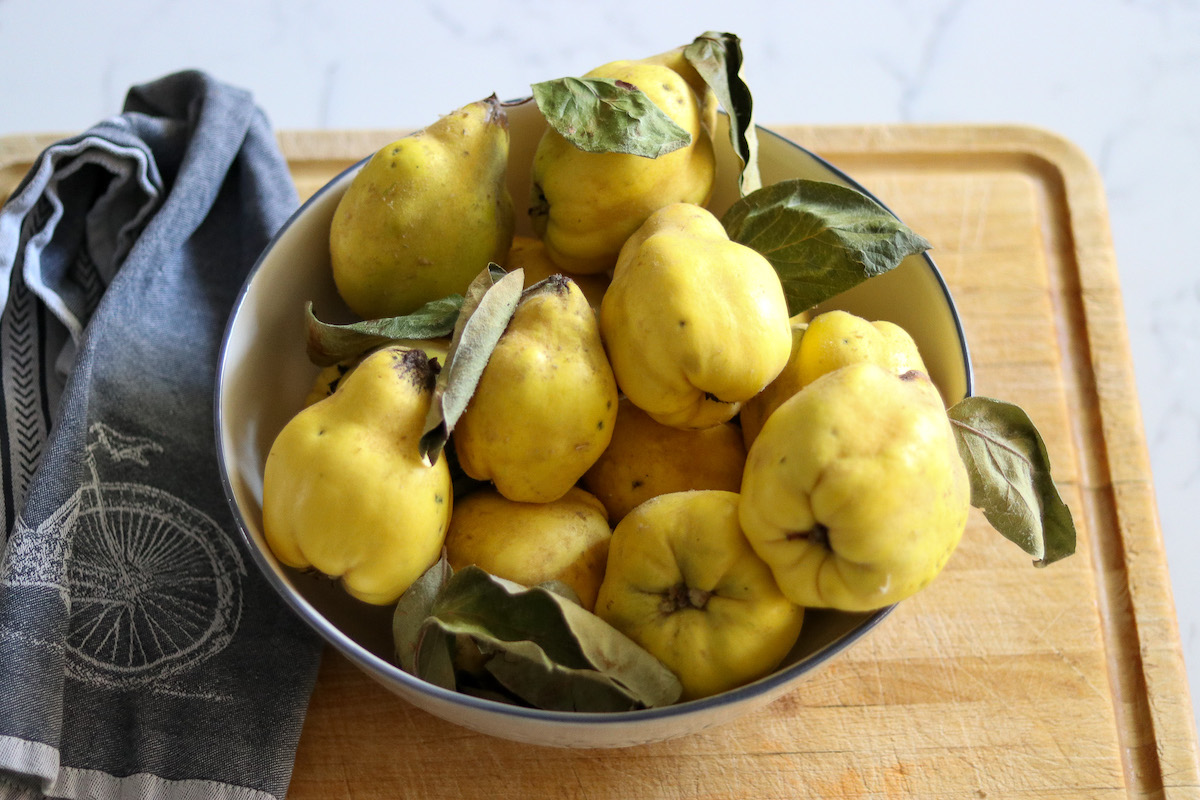
How do quince taste?
As I mentioned above, quince is one fruit you don’t want to eat raw. It’s tart, unpleasantly astringent, and woody-tasting. Essentially, it tastes like very raw, unripe fruit.
Once quince has been cooked, however, a whole world of beautiful flavor opens up, and the flesh turns from a creamy yellow to a stunning shade of pale, rosy pink. When cooked, quince has a comparable flavor to apples, pears, and guava; the flesh remains slightly (but pleasantly) sour.
How to prepare quince
Quince can be prepared using several different methods, but I tend to prioritize poaching when I’m making a recipe calling for quince. No matter the preparation method, you’ll want to begin by peeling the quince as its skin is fibrous and tough. I use a basic vegetable or Y-peeler for the task. It’s fairly quick work and you don’t need any special equipment.
One exception is worth knowing: if the recipe strains the fruit at the end, as jelly, syrup, and wine all do, leave the peels and cores in. That is where most of the pectin lives, and it gets filtered out anyway. Save them even when you are peeling, simmer them separately in a little water, and add that liquid back to the pot. It is the same trick I use with crabapples, and it is why quince sets without a box of pectin when most fruits need help.
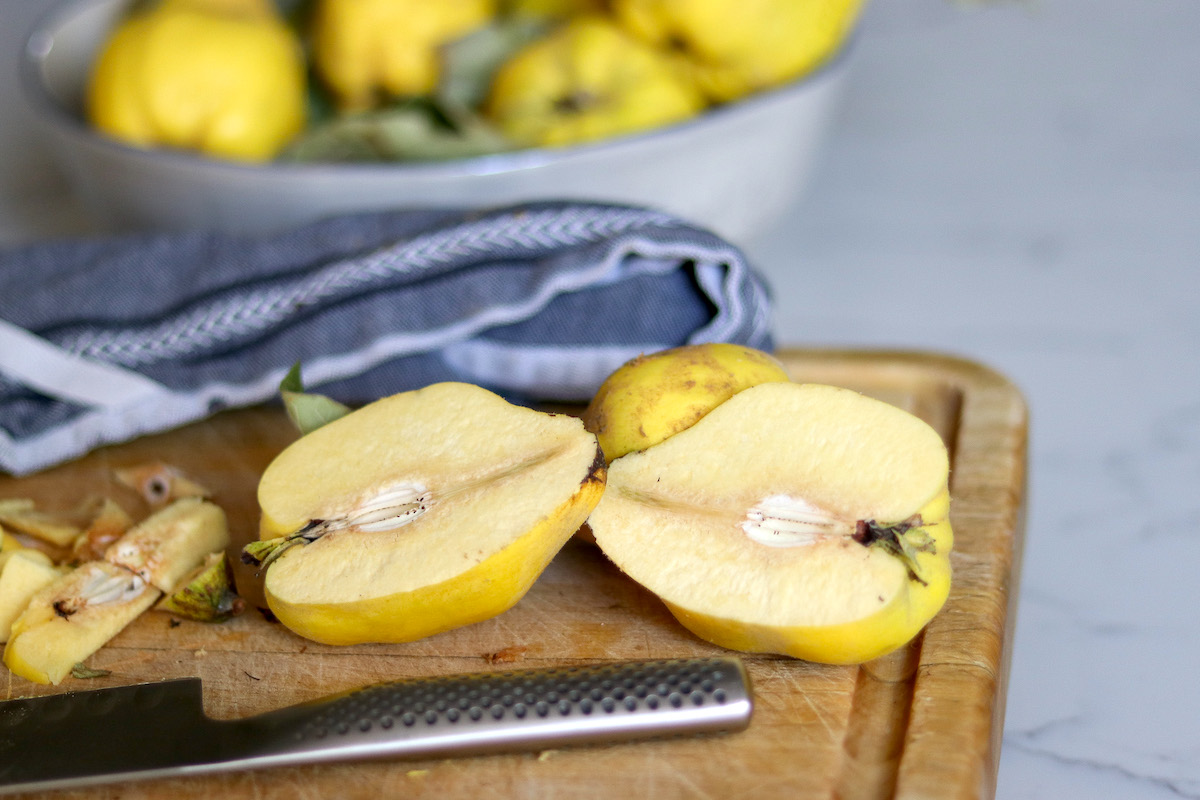
Using a sharp chef’s knife, cut the quince in half. Make sure your cutting board is firmly secured (I like to place a damp kitchen towel under the board to prevent it from slipping) as the fruit is quite firm and spongy. From there, cut the fruit into quarters and, working carefully, remove the woody core and seeds. The sharper your knife, the easier this task is.
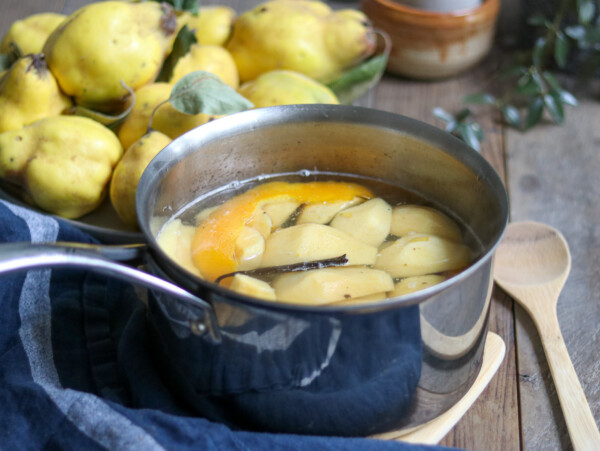
Prepare a liquid for poaching in large pot or saucepan. This could be a simple syrup preparation with water and sugar or you can add flavorings such as star anise, vanilla pods, whole cloves, or a cinnamon stick broken in half.
Bring the poaching liquid to a boil and add the quartered quince. Turn the heat down to low and poach the quince for about 50 minutes, the poaching liquid should barely be at a simmer. Cover the pot partially with a lid so that the liquid can thicken into a gorgeous pink syrup.
Test the quince with fork to make sure it’s tender. When the quince has softened, strain the poaching liquid from the fruit if you’re planning on using it right away, but keep the syrup in your fridge for use in drinks and desserts. If the cooked quince won’t be used right away, let the fruit and syrup come to room temperature before refrigerating them together for up to 1 week.
Notes from my kitchen

Everything on this list I have either made myself or would make tomorrow if the fruit showed up. Where I have my own tested version, I have linked that first, and where I have not written one yet I have sent you to the best source I could find that still has the recipe on it.
Preserves are where I started, because preserves are what my husband grew up on and what I was trying to get back to. Quince paste was the first one that really landed. Now a pot of it going on the stove fills the house the same way that tree in his parents’ yard filled theirs, which is more or less the whole reason this list exists.
Quince recipes
If you’re fortunate enough to get your hands on quince, you’ll find there’s an abundance of recipes for using this very special fruit. From traditional recipes for quince paste to savory braises to candied quince inspired by traditional Turkish recipes, there are so many ways to include quince in your cooking or baking repertoire.
The recipes below feature classic ways to cook with quince as well as innovative ideas and methods for getting this beloved fruit to the table. If you have more quince fruit than you know what to do with, don’t worry, I’ve also included some of my favorite canning recipes so that you can share your bounty with family and friends.
Preserving quince
Preserving is what quince was built for. The pectin does the structural work, the long cook does the color, and the high acid means almost everything here is safe for a water bath canner without any adjustment.
I have split this into four groups by what you end up with: sliceable pastes, jams and jellies and canned fruit, smooth spoonable butters and curds, and the vinegar and syrup preserves that go next to cheese and meat rather than on toast.
Quince paste and membrillo
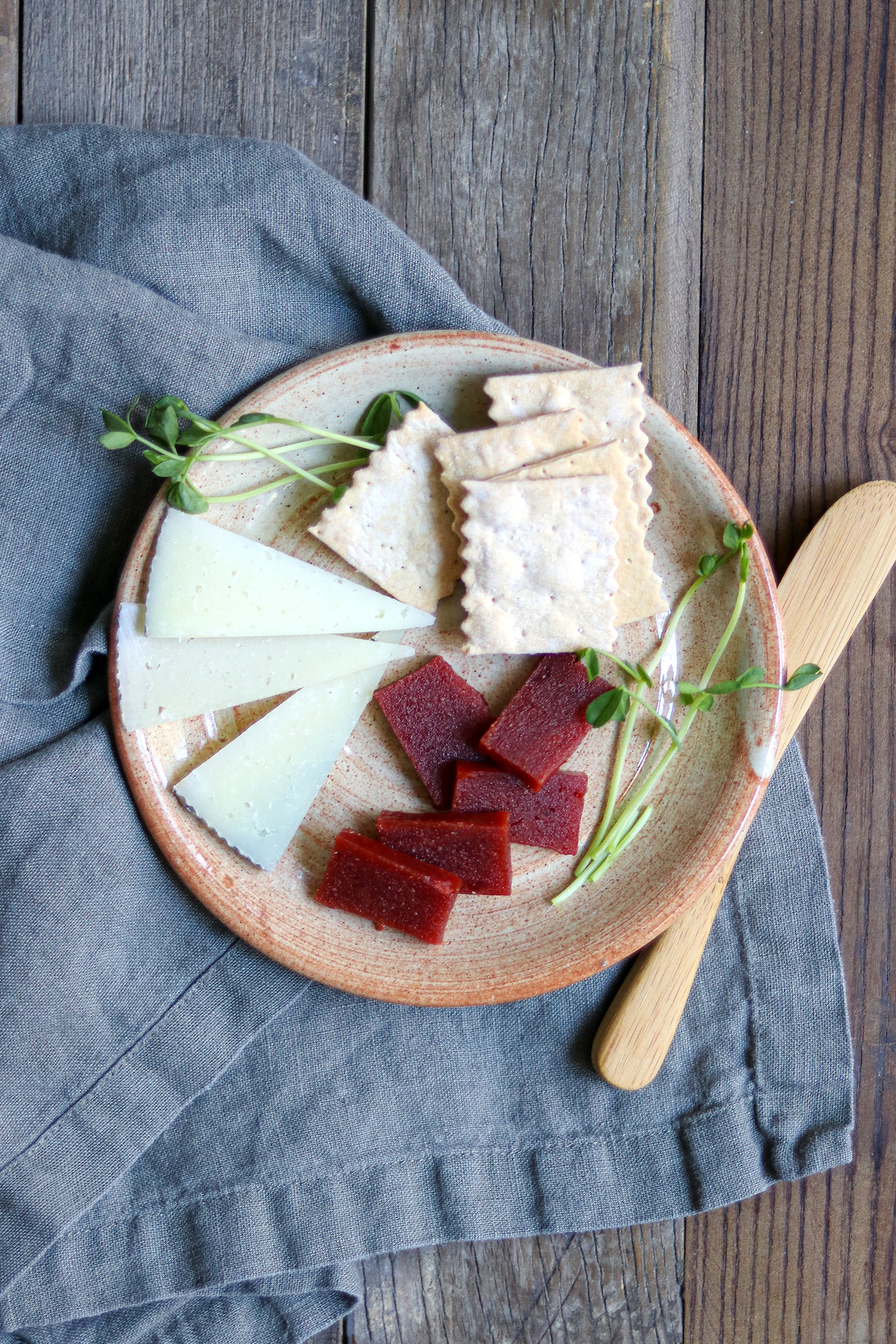
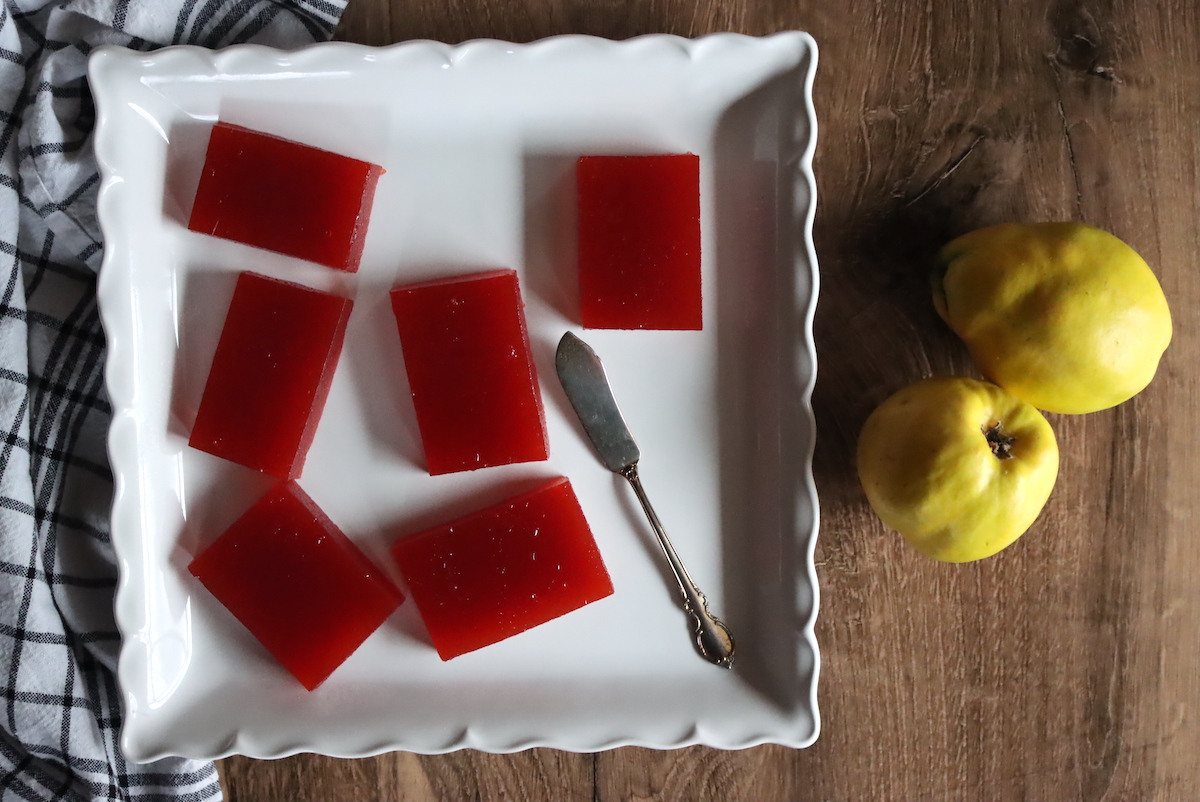
Quince paste is quince purée and sugar cooked down until it will hold a knife cut. Spain calls it membrillo, Portugal calls it marmelada, Italy calls it cotognata, and all three serve it in thin slices against a salty aged cheese. It is the single best argument for the fruit.
The rule for this group is simple: the fruit is puréed and cooked until it sets firm enough to slice. Nothing here is spreadable. If you can spoon it, it belongs in one of the sections below instead.
- Quince Paste (Spanish Membrillo, Portuguese Marmelada, Italian Cotognata) (my base recipe, three ingredients)
- Quince and Ginger Paste
- Cranberry Quince Paste (mulling spices and vanilla)
Quince jam, jelly, and canned quince
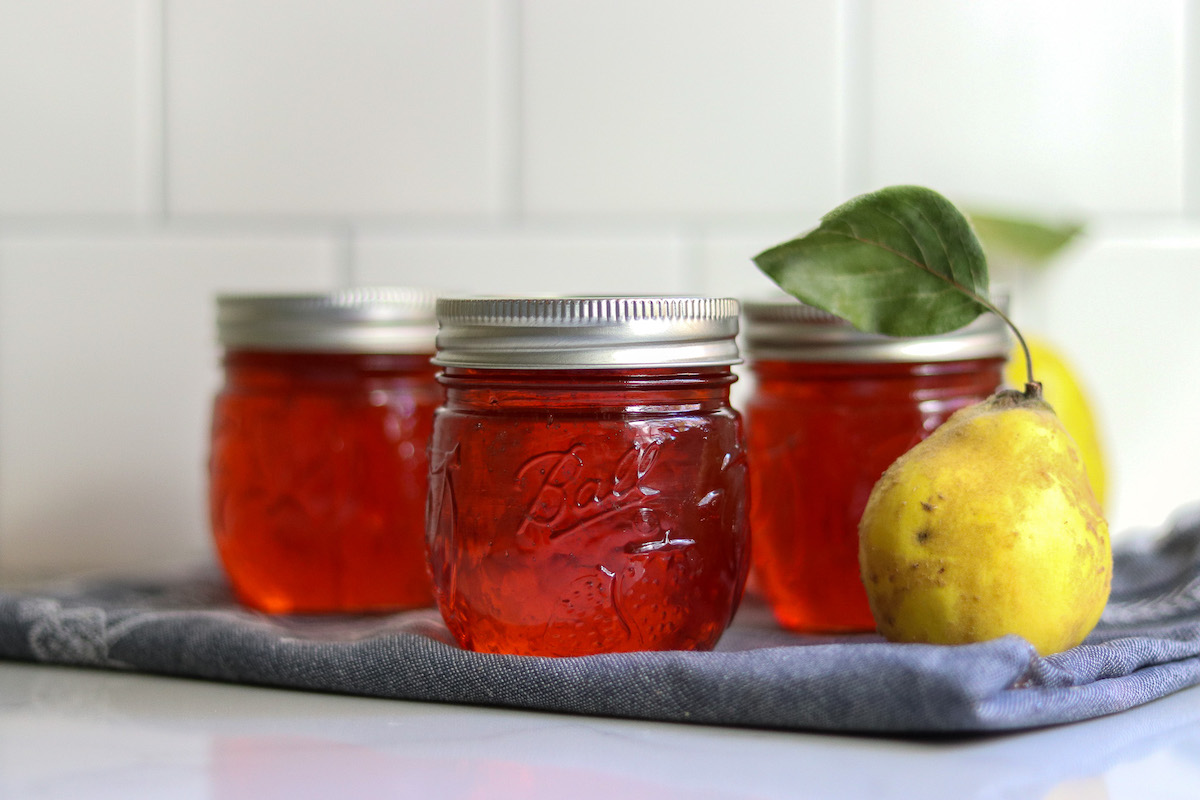
This is the water bath group: everything that goes into a jar, gets processed, and sits on a shelf for a year. Quince is high enough in acid that all three of these are safe in a boiling water canner with no added lemon beyond what the recipe calls for.
None of them need added pectin. The jelly sets from strained juice alone, the jam thickens from the fruit itself, and the canned slices hold their shape in syrup. If your jelly comes out too firm, that is a quince problem and the fix is less cooking time, not more sugar.
- Quince Jelly (no added pectin, sets from the fruit)
- Quince Jam (peeling optional, with a low sugar variation)
- Canning Quince (poached slices hot packed in syrup)
Quince butter, sauce, and curd
This group is the smooth, spoonable middle ground. Softer than paste, finer than jam, and all of it made by cooking quince down past the point where any texture survives. Quince butter is the one I make most, because it uses up the fruit that is too battered to slice.
The rule here is that the fruit gets puréed or passed through a food mill and then cooked without pectin or eggs until it thickens on its own, with the curd as the one exception since eggs and butter do that job instead. Everything in this group wants a long, low, stirred cook rather than a hard boil.
- Quince Butter with Rosemary
- Quince Curd (like lemon curd, with quince purée)
- Cinnamon and Vanilla Quince Compote
- Spiced Quince Sauce with Sherry and Ginger (savory, for roast meat)
Quince chutney, spoon sweets, and candied quince
These are the preserves you eat a spoonful at a time next to something else, rather than spreading on bread. Chutney brings vinegar and warm spice, Greek spoon sweets are whole pieces suspended in heavy syrup, and candied quince is fruit cooked in syrup until it is nearly a confection.
All three are cheese board and roast dinner food. They keep for months, they use up the fruit that is too knobbly to slice prettily, and they are the most forgiving thing on this page if your quince came in a little underripe.
- Quince Chutney (white wine vinegar, ginger, and golden raisins)
- Glyko Kydoni (Greek Quince Spoon Sweet with Almonds and Geranium)
- Candied Quince
Savory dishes with quince
Quince behaves like a cross between an apple and a lemon in a savory pot. It holds its shape through a two hour braise where an apple would dissolve, and it brings acid and perfume to fatty meat without any of the sweetness you would get from dried fruit.
The rule for this section is that quince is cooked together with the main protein or pulse, not served alongside as a condiment. I have split it by method, since a large cut of meat wants a roasting pan or a heavy casserole while the spiced stews want a covered pot and a longer, wetter cook.
Roasts and braises with quince
Pork and quince is the oldest pairing on this page and still the best one. The fruit cuts through the fat the way applesauce does, but it keeps its texture and adds a floral note that apple cannot manage. Lamb and goose work on exactly the same logic, which is why quince turns up in so many holiday roasts.
Venison and boar take it further. If you are cooking wild game, quince is the fruit to reach for: it stands up to a long braise and it takes the edge off anything gamey without masking it. Everything in this group goes into one pan with the meat and comes out at the same time.
- Pork with Savory Quince Compote
- Pork Chops with Apples, Quince, and Sage
- Slow Roast Pork Belly with Quince
- Pork Tenderloin with Quince, Prunes, and Chestnuts
- Venison Casserole with Quince Compote
- Venison, Cider, and Quince Stew with Herbed Butter Dumplings
- Slow Roast Wild Boar with Roasted Quince (a whole hog recipe, scale it down)
- Braised Lamb with Quince and Bay
- Roast Goose with Quince and Date Stuffing
Quince tagines and stews
Across Morocco, Greece, Turkey, and Iran, quince goes into the pot with warm spice, a long slow braise, and whatever protein is at hand: chicken, lamb, beef, or split peas and chickpeas. These are the recipes that made quince a staple crop for centuries, and they are still the easiest way to serve it to someone who has never had it.
The rule here is a covered pot and at least an hour. The quince goes in early, in large pieces, and comes out holding together but soft enough to cut with a spoon. Add it late and it stays woody.
- Kotopoulo me Kythonia (Greek Chicken Braised with Quince)
- Chicken, Quince, Lemon, and Almond Tagine
- Chickpeas with Quince Stew (with ras el hanout and tfaya)
- Khoresht-e Beh (Persian Quince and Split Pea Stew, vegetarian)
- Lamb Mkalli (Moroccan Lamb Tagine with Quince)
- Moschari Kydonato (Greek Beef Stew with Quince)
Quince for breakfast and savory sides
This is the category most people never think of, and it is where a jar of poached quince actually gets used up. Once the fruit is cooked and sitting in syrup in the fridge, it behaves like any other cooked fruit: it goes on porridge, into a scone, alongside a roast.
The rule for this section is that quince is a component rather than the point, and it is never the dessert. Every one of these starts from fruit that has already been poached or roasted, so they are the natural second use for a batch you made for something else.
- Autumn Porridge with Spiced Poached Quince
- Roasted Quince and Honey Scones
- Roasted Quince and Root Vegetables
- Quince Stuffed with Wheat Berries, Nuts, and Raisins
Quince desserts
Dessert is where the color change earns its keep. A quince that goes into the oven pale comes out somewhere between coral and garnet, and it does that on its own with nothing but time, sugar, and a little liquid.
I have split these by how much work the fruit is doing. In the first group the quince is the dessert. In the second it is baked into something, and in the third it sits under a crumb topping or gets folded into cream.
Baked and poached quince
The fruit itself is the dessert here, cooked whole or in halves and served with cream. This is the lowest effort thing on the page and the best introduction to quince, because nothing competes with the flavor.
Both methods run long and slow. An hour is the minimum, and the pieces should be soft enough to cut with the side of a spoon but still holding their shape. Undercooked quince is the most common way this goes wrong.
- Poached Quince (my method, with vanilla and citrus)
- Baked Quince with Brown Sugar and Honey
- Ayva Tatlisi (Turkish Poached Quince) (served with clotted cream and pistachios)
Quince cakes and tarts
Anything in this group bakes quince into a batter or onto pastry. The important step is that the fruit gets poached or roasted first. Raw quince will not soften in the time it takes a cake to bake, and you will end up with hard chunks in an otherwise finished crumb.
Almond turns up alongside quince over and over in this group, and it is not a coincidence. Both are in the rose family, and the almond picks up the floral note in the fruit rather than covering it. Where a recipe below does not call for almond, a handful of ground almonds worked into the pastry or the batter is rarely a mistake.
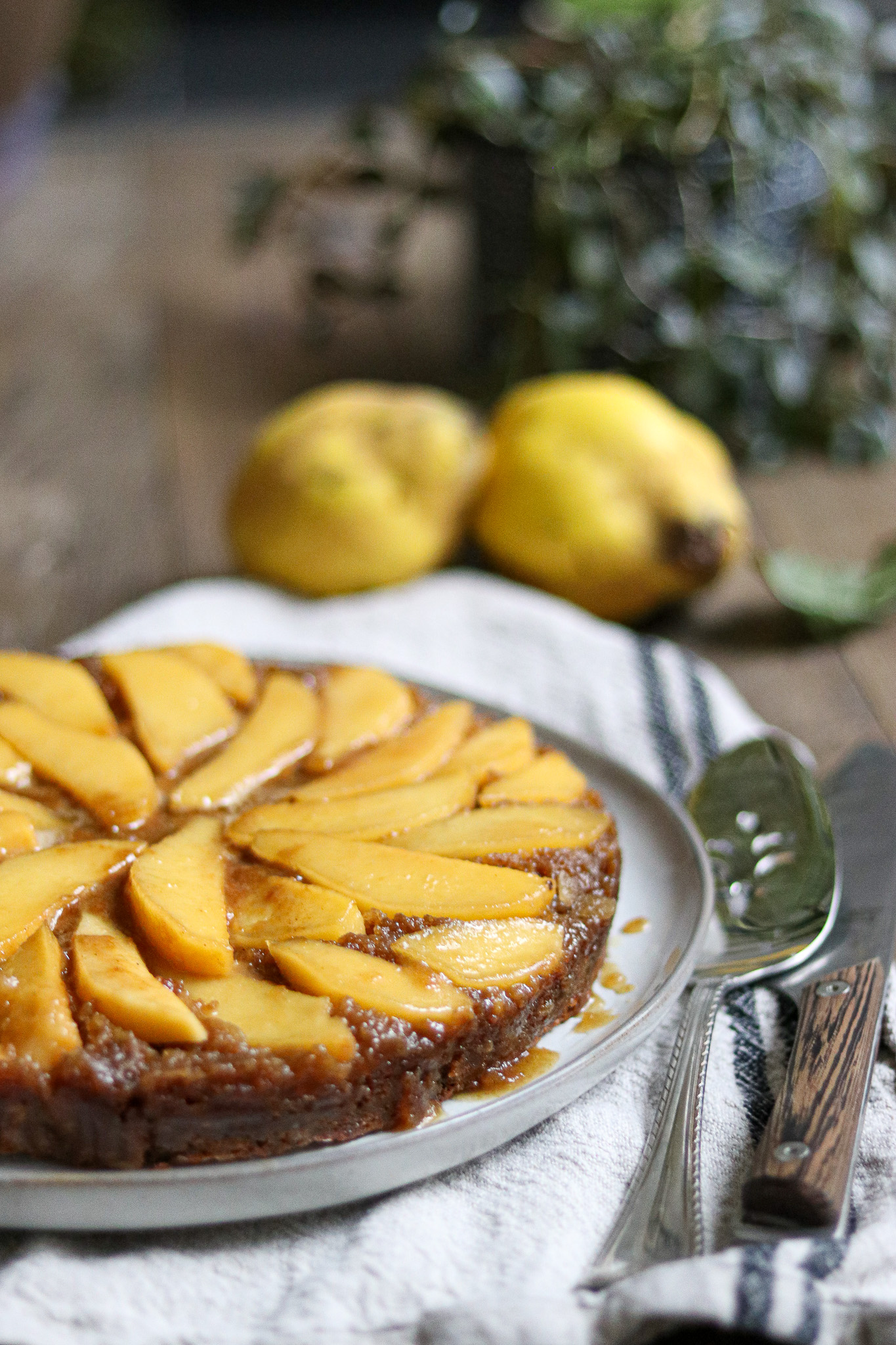
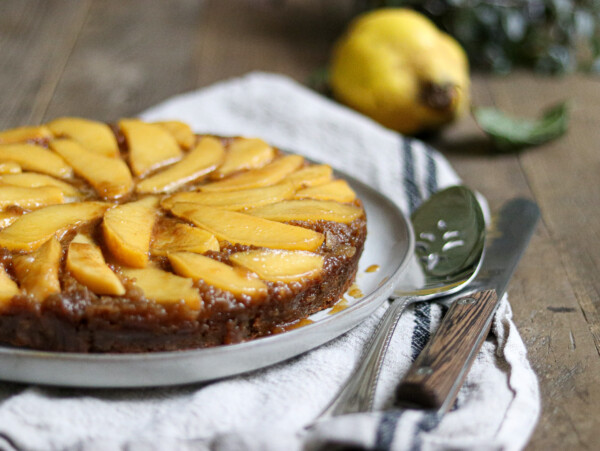
- Quince Upside Down Cake (spiced molasses batter under poached slices)
- Quince Tarte Tatin
- Quince and Almond Tart with Rosé
- Honey Poached Quince Pie
- Ricotta Crostata with Spiced Quince
- Chocolate Yoghurt Cake with Poached Quince
Quince crumbles, puddings, and fools
Here the quince sits under a crumb topping or gets folded into something soft. These are the puddings you make when the fruit is knobbly, bruised, or otherwise too ugly to arrange in a tart, because nobody sees it.
Quince and apple together is the classic combination for a crumble, and it solves a practical problem too. Apple gives you volume and quince gives you flavor and set, so a single quince will carry a whole pan.
- Quince and Apple Sponge Crumble
- Quince Pudding
- Red Wine Quince and White Chocolate Crumble
- Quince Fool
Quince drinks
Quince makes a better drink than it has any right to. The perfume that fills your kitchen carries straight into syrup, wine, and infused spirits, and because the fruit is so high in acid you rarely need to add lemon to balance anything.
One warning worth repeating: do not cook the fruit if you are making an infused liqueur. Heat releases all that pectin, which will cloud the bottle and can set the whole thing into a gel. Grate it raw instead. For syrup and wine, where the liquid gets strained and the pectin is not a problem, cook it as long as you like.
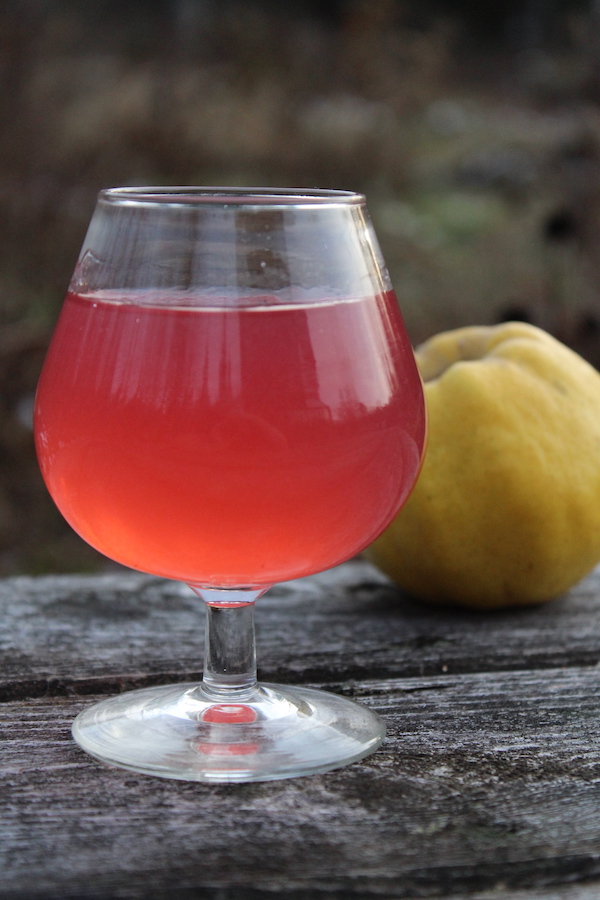
- Quince Liqueur (cold infused with rose petals, no cooking)
- Quince Wine and Quince Mead
- Greek Quince Syrup
- Quince Lemonade (alcohol free)
- Quince Punch
- Quince Gin Fizz
- Apple and Quince Sparkler
- Elderflower and Quince Basil Smash
Quince FAQs
Most people arrive at quince with the fruit already in hand and no idea what they are holding. The questions below are the ones I get asked most, and they are mostly about identification and safety rather than technique.
In order: whether you can eat quince raw, whether any part of it is poisonous, when to pick it, whether these recipes need added pectin, and why the fruit turns red while it cooks.
Not really. Raw quince is rock hard, chalky, and extremely astringent, and it does not soften or sweeten on the counter the way a pear does. There is no ripeness stage at which it becomes pleasant to eat out of hand. A tiny sliver shaved into a salad is edible, but every practical use of quince starts with cooking, usually for an hour or more.
The flesh and skin are not poisonous at all, just unpleasant raw. The seeds contain amygdalin, the same compound found in apple, cherry, and peach seeds, so do not crush or eat the seeds in quantity. Removing the core handles this completely, and for strained preparations like jelly the seeds are cooked whole and then filtered out, which is standard practice and considered safe.
Mid October into early November in most places, well after the apple harvest and often after the first light frost. Go by color and smell rather than feel, since quince stays hard no matter how ripe it is. You want the skin to have turned an even golden yellow with the gray fuzz rubbing off easily, and the fruit should be noticeably fragrant from a few feet away.
No. Quince is one of the highest pectin fruits you can cook with, which is why quince jelly and quince paste set firmly with nothing but sugar and lemon juice. If anything the risk runs the other way, and an overcooked batch can set too hard. Cook to temperature rather than by the clock, and if your jelly turns out rubbery, shorten the boil next time instead of adding more sugar.
Quince flesh is full of colorless tannins that oxidize and polymerize during long, slow cooking, gradually shifting the fruit from pale cream to coral to deep garnet. Nothing is added and no dye is involved. The change needs both time and gentle heat, so a quick simmer leaves the fruit pale while two or three hours at a bare simmer gives you the full red. If your batch came out pale, the answer is almost always a longer, slower cook.
More late fall fruit roundups
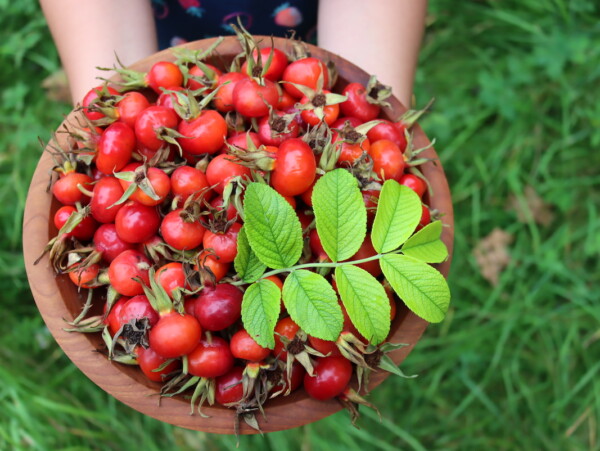
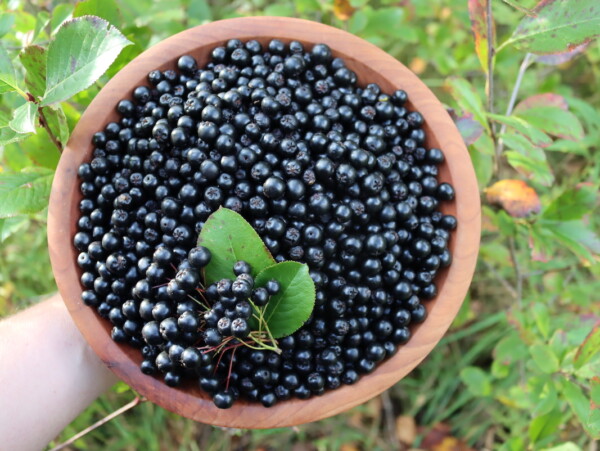
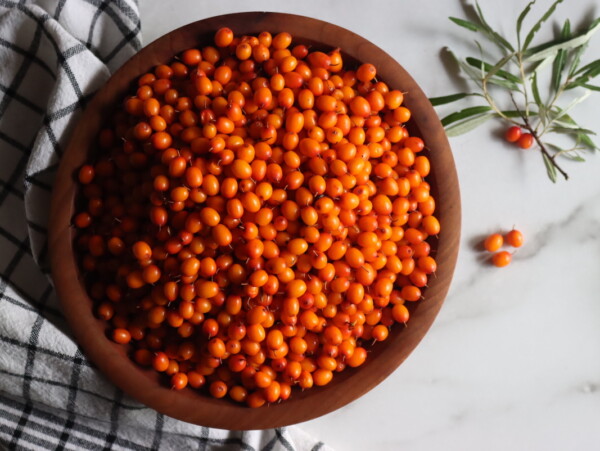
Quince belongs to a small group of fruits that come in after everything else is picked and refuse to be eaten straight off the plant. Rose hips, aronia, and sea buckthorn all share that problem, and all three reward the same treatment: cook them down, add sugar, and strain out what you do not want.
If you are already out in late October with a bucket, these three are worth knowing. Rose hips come after the first hard frost, aronia and sea buckthorn are both ready in September and hold on the bush well into fall.
Find the perfect recipe
Searching for something else? Enter keywords to find the perfect recipe!
3 Comments