This post may contain affiliate links. Please see our disclosure policy.
Crabapple recipes turn a tart, abundant, almost always free windfall into jelly, pies, cider, pickles, and a pantry full of preserves.
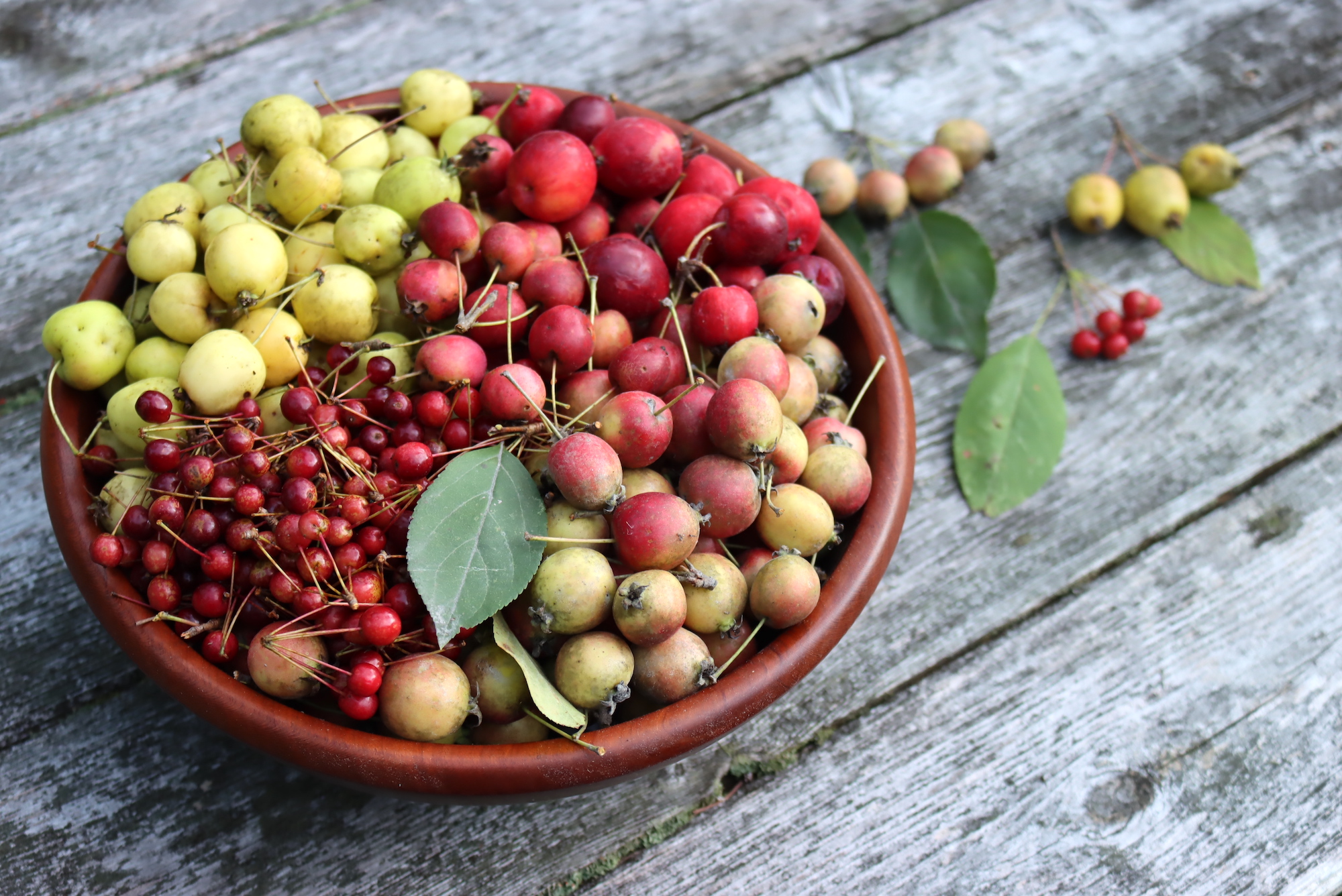
Here in Vermont, crabapple trees turn up everywhere. Front yards, old farmsteads, the edges of parking lots, roadside hedgerows. Come October, the ground underneath them is carpeted in fruit that nobody picks, which is a shame, because crabapples are one of the most useful fruits you can put in a canning pot.
A crabapple is just an apple that stayed small. Botanically, there’s no difference between the two, only size: anything under about two inches across is a crabapple, and anything bigger is an apple. That’s the whole distinction.
And to answer the question everyone asks first: yes, they’re safe. Every true Malus species produces edible fruit. Some taste far better than others, and a few are so astringent you’ll want to spit, but none of them will hurt you. The seeds contain the same trace cyanogenic compounds as regular apple seeds, which is to say a few swallowed whole are a non-issue.
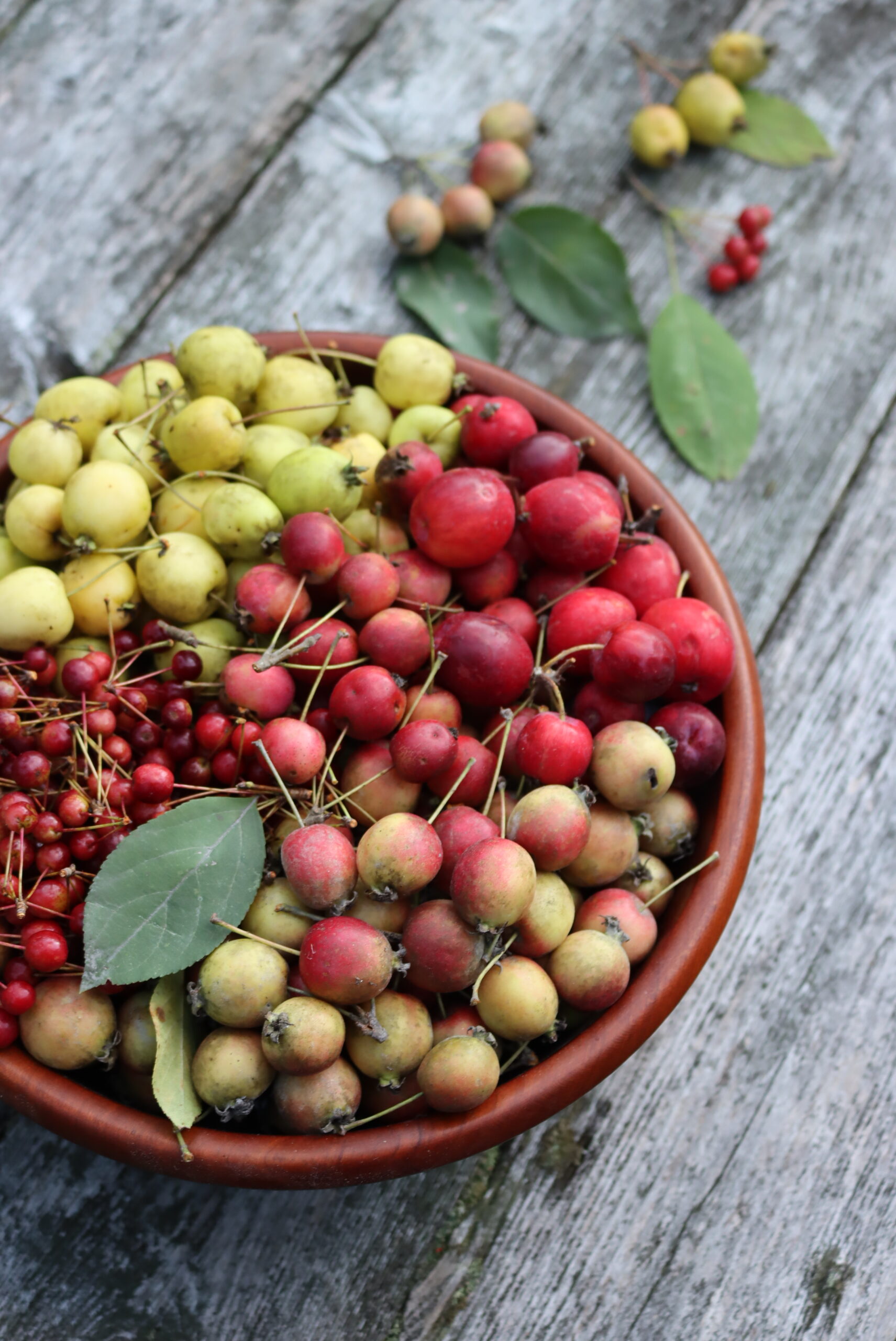
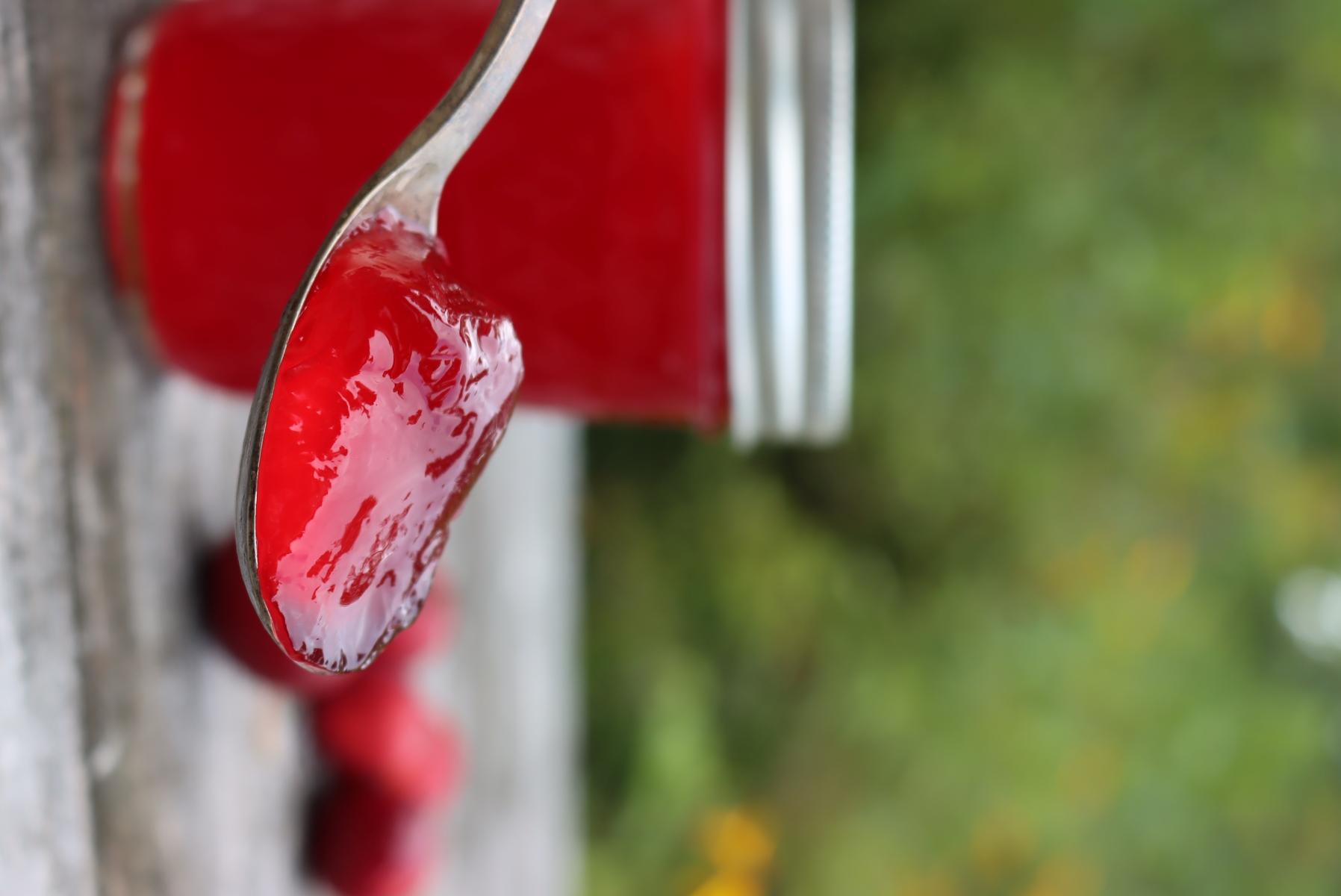
What makes them worth the trouble is pectin. Crabapples are loaded with it, and they’re acidic enough to set a jelly on their own. My crabapple jelly often starts to gel before it even reaches a full boil, with nothing in the pot but fruit and sugar. Old-time cooks kept crabapples on hand specifically to stiffen up low-pectin fruits like strawberries and peaches, and you can still use them that way.
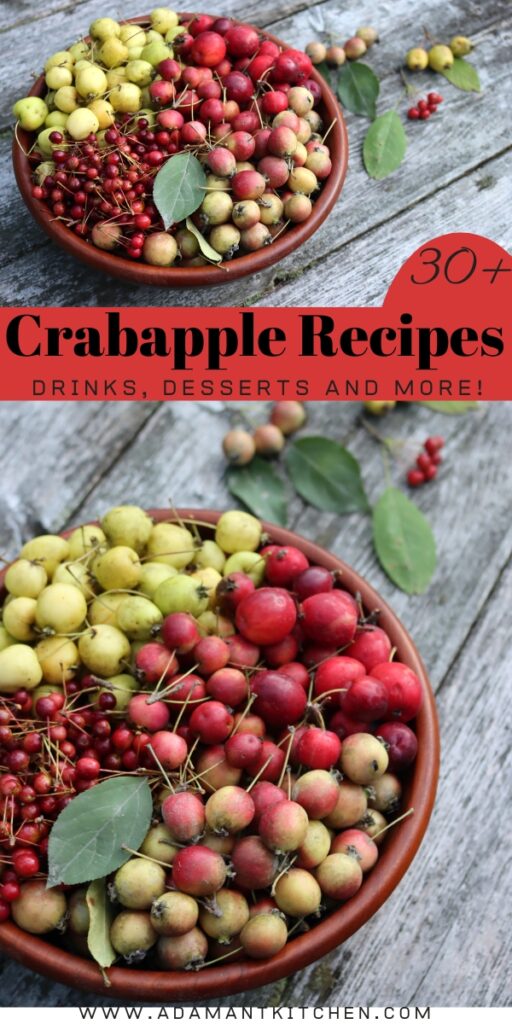
The color range runs from green to gold to deep scarlet, sometimes with a purple cast. Darker varieties tend to be more tannic and more sour. All of them are too sharp to eat out of hand in any quantity, so crabapples get cooked, sweetened, fermented, or pickled.
If you’re planting a tree specifically to cook from, Dolgo crabapples are the ones I’d pick. They’re hardy to 40 below and taste like a sugar-coated cranberry.
Notes from my kitchen

Everything on this list I’ve either made myself or would make. Where I have my own tested version on one of my sites, I’ve linked that first.
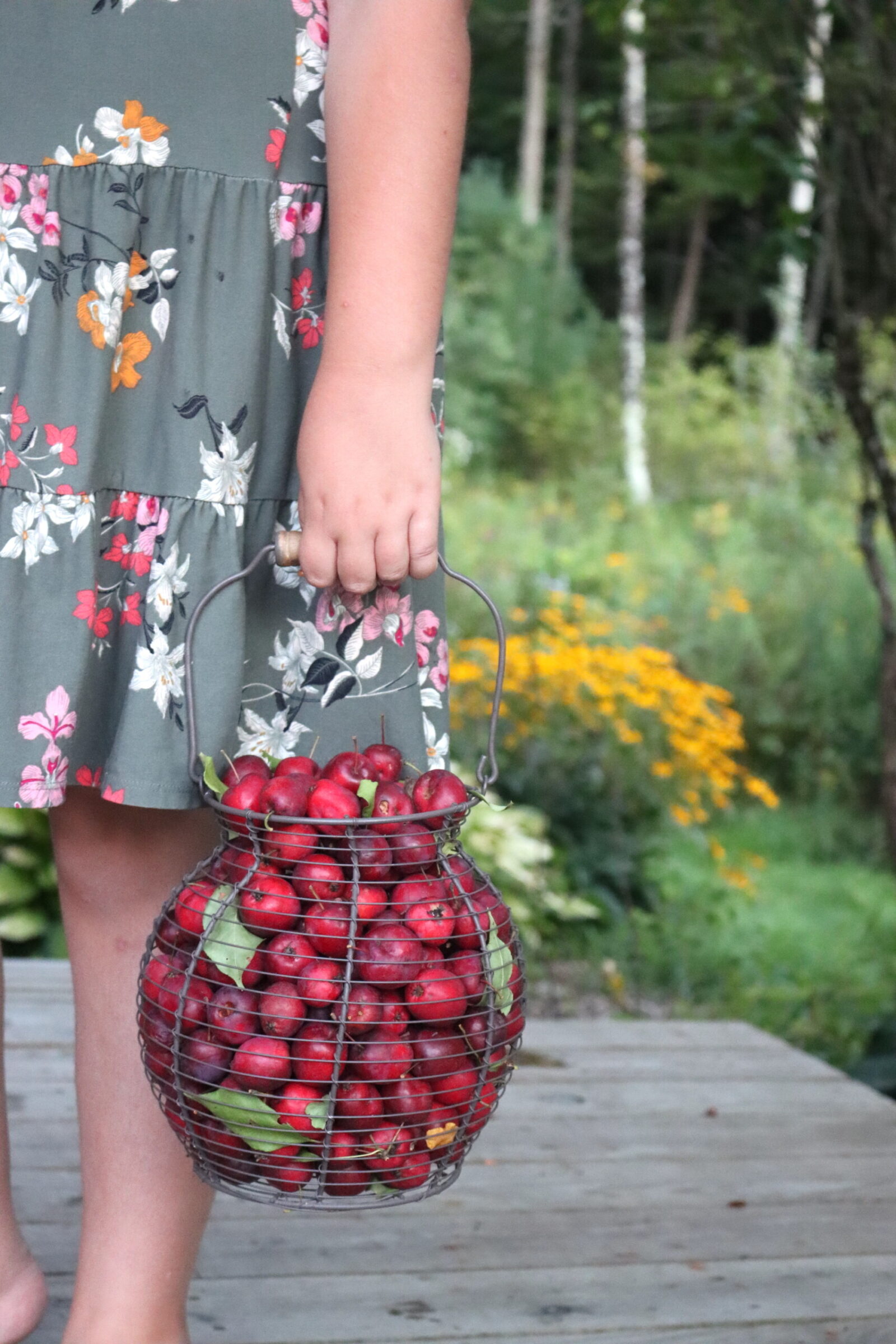
We have a Dolgo crabapple in the yard that out-produces just about everything else we grow. The kids strip the low branches in an afternoon, and I am left with more fruit than I planned for, which is how I ended up writing a jelly recipe, a canning recipe, and a wine recipe for something most people rake up and throw away.
Choosing the best crabapples
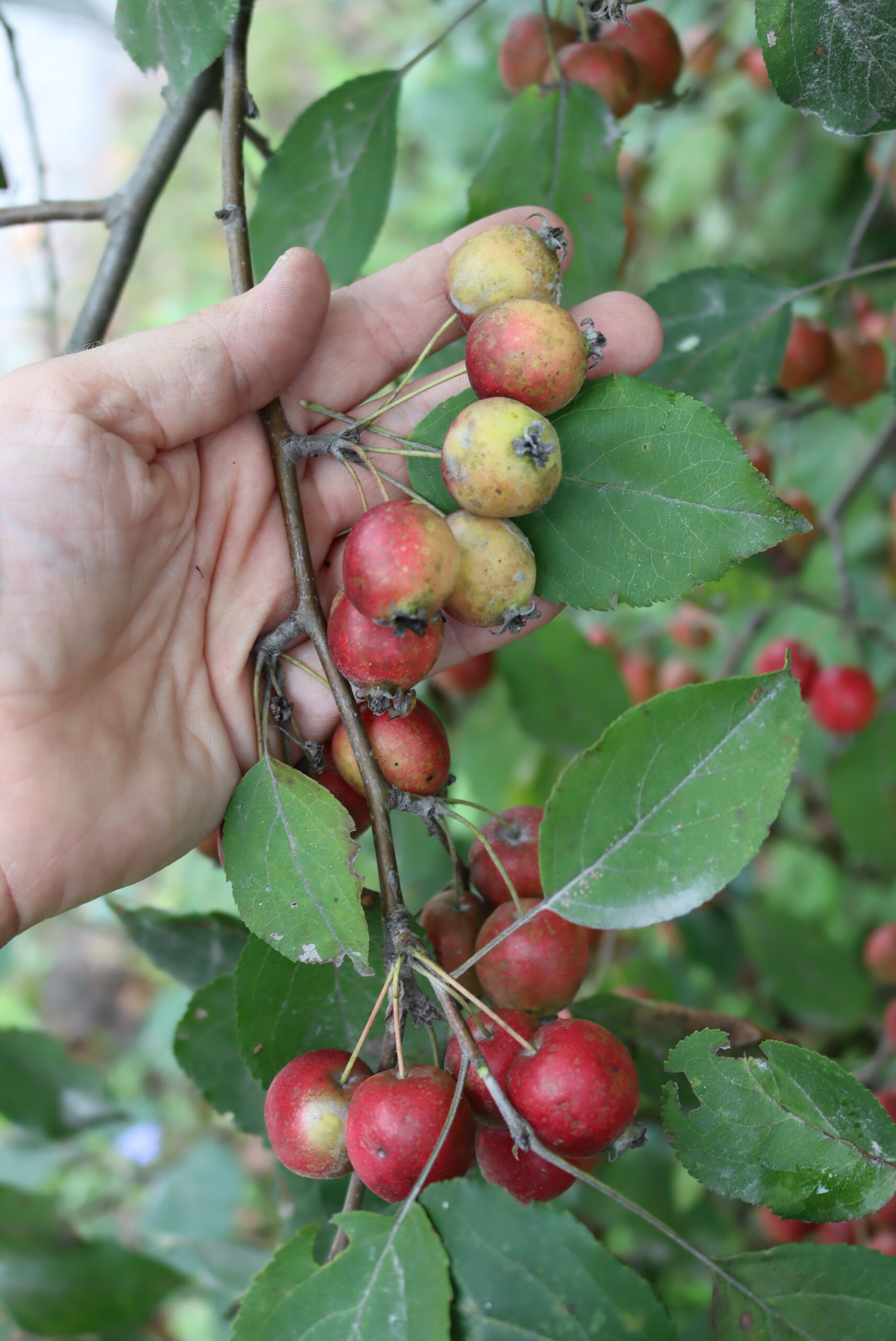
Crabapples ripen anywhere from late August through October depending on the variety and how far north you are. Some foragers swear by waiting until after the first hard frost, or even holding out until winter. Frost breaks down some tannins and starches, so the fruit tastes sweeter and less puckering.
The tradeoff is that deer, turkeys, and cedar waxwings are working the same schedule you are. If a tree is loaded and the birds have found it, pick now and sweeten later.
To check ripeness, cut a few in half and look at the seeds. Dark brown seeds mean ripe fruit. Pale beige, green, or white seeds usually mean it’s early, though a handful of varieties do keep light seeds, so treat this as one signal rather than the verdict.
Beyond that, go by feel and taste. The fruit should be firm but not rock hard, with crisp flesh rather than mealy. It should taste sour and tart. Bitter is a different thing, and bitter fruit is usually underripe. Once you’ve picked a particular tree for a season or two you’ll know its timing without checking anything.
Skip anything from a tree that’s been sprayed, and skip fruit that’s been sitting on the ground for more than a day or two.
Crabapple recipes
How you prep crabapples depends entirely on what you’re making, and this is where most people waste an afternoon they didn’t need to spend.
For anything that gets strained (jelly, juice, syrup, cider, wine), do not core them. Pull the stems, halve the fruit, and throw the whole thing in the pot. The cores and seeds are where a good share of the pectin lives, and it all gets strained out at the end anyway.
For anything you’ll eat whole (pies, breads, sauces, butters), trim the stem and blossom ends and slice the flesh away from the core. Chop coarsely for pies and quick breads, finely for cookies, pancakes, and muffins. A box grater is faster than a knife if you’re doing volume.
Crabapples brown fast once cut, so work in batches and drop them into acidulated water if you’re prepping more than a quart at a time.
Preserving crabapples
Crabapple trees are famously feast or famine. A tree that gave you a colander last year will bury you the next. When that happens, the fastest move is to get the fruit stable and decide what it’s becoming later.
Whole crabapples hold their shape in the jar and take a light syrup well, with no peeling or coring required. Juice is the other good holding pattern. Run the fruit through, can the juice, and you’ve bought yourself a year to turn it into jelly, syrup, or cider whenever you have the time.
- Canning Crabapples (whole, in a light syrup)
- Freezing Fruit
- Dehydrating Apples
Jams, jellies, and syrup
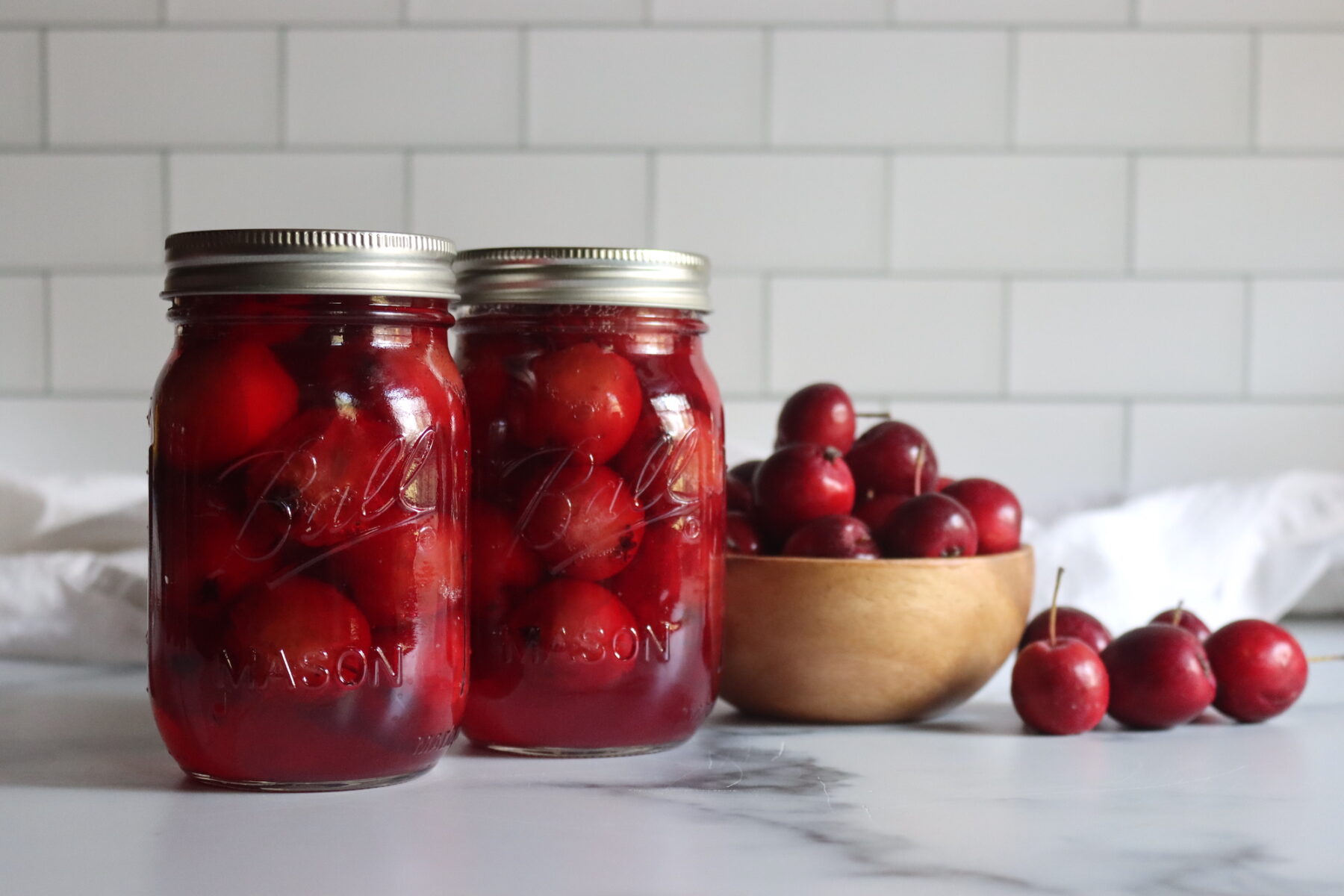
This is what crabapples were made for. The base recipe needs nothing but fruit, sugar, and water, and everything below is a variation on that.
Jelly is the easiest of the three, because you strain the pulp and never have to deal with cores or seeds. Jam takes real work by comparison, since you have to mill the cooked fruit to get a smooth pulp. Syrup is the jelly stopped early, before it sets, and it is also where a batch of jelly that refused to set ends up.
- Crabapple Jelly (no added pectin)
- Crab Apple Jelly with Scotch Whisky
- Crabapple Jam
- Rose Hip Crabapple Jam
- Crabapple Juice and Syrup
Crabapple butter and sauce
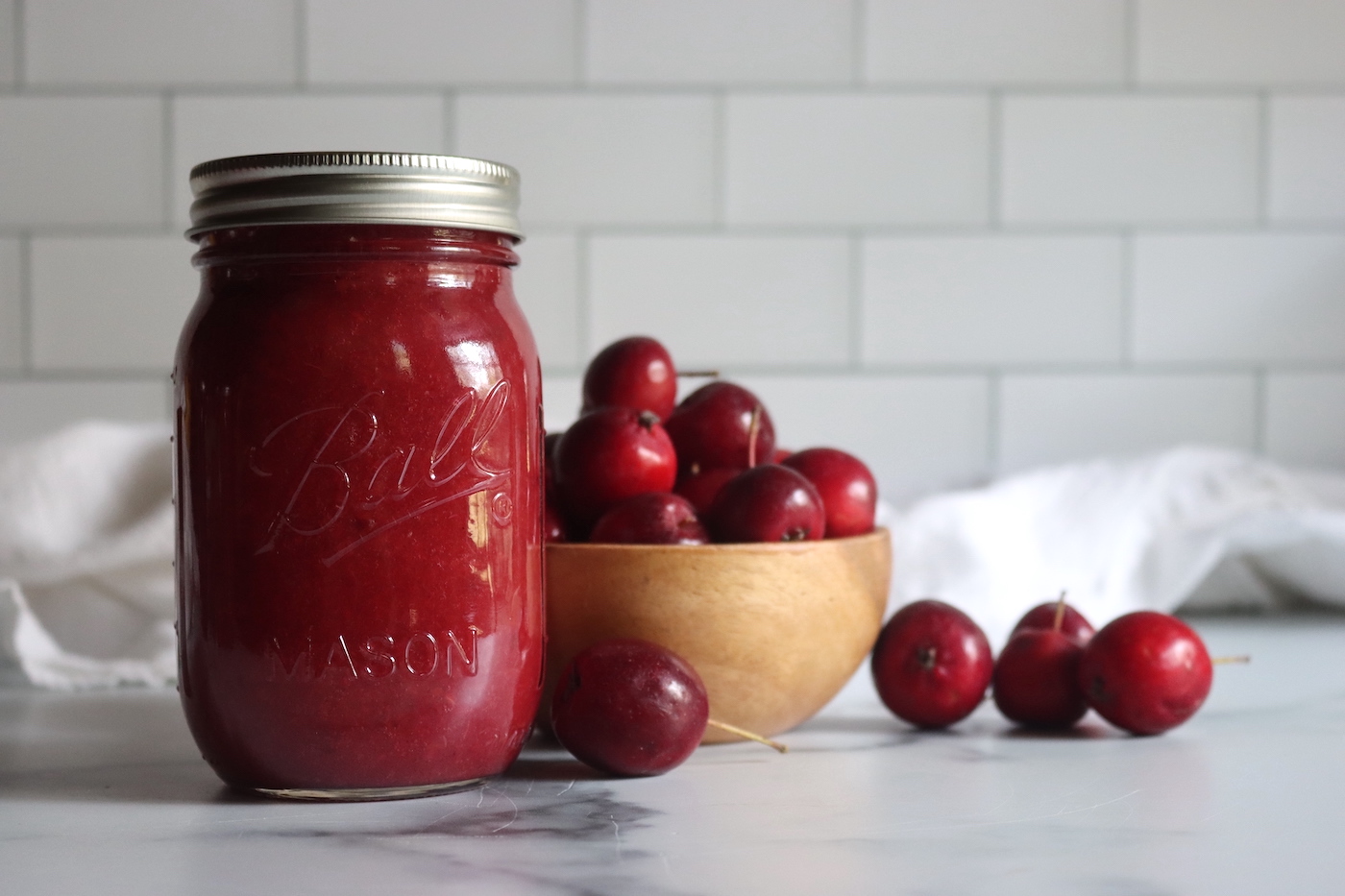
Cooked down with sugar and a little cinnamon, crabapples make a sauce that’s several shades pinker and considerably more interesting than ordinary applesauce. The skins do the coloring, so leave them on. Cook it further, and it becomes fruit butter.
Either one is good on pancakes or yogurt, and both are excellent on a cheese board next to something sharp and a little salty. Sauce also freezes well if you don’t want to run the canner, and it makes a decent shortcut pie filling in a pinch.
Pickled crabapples
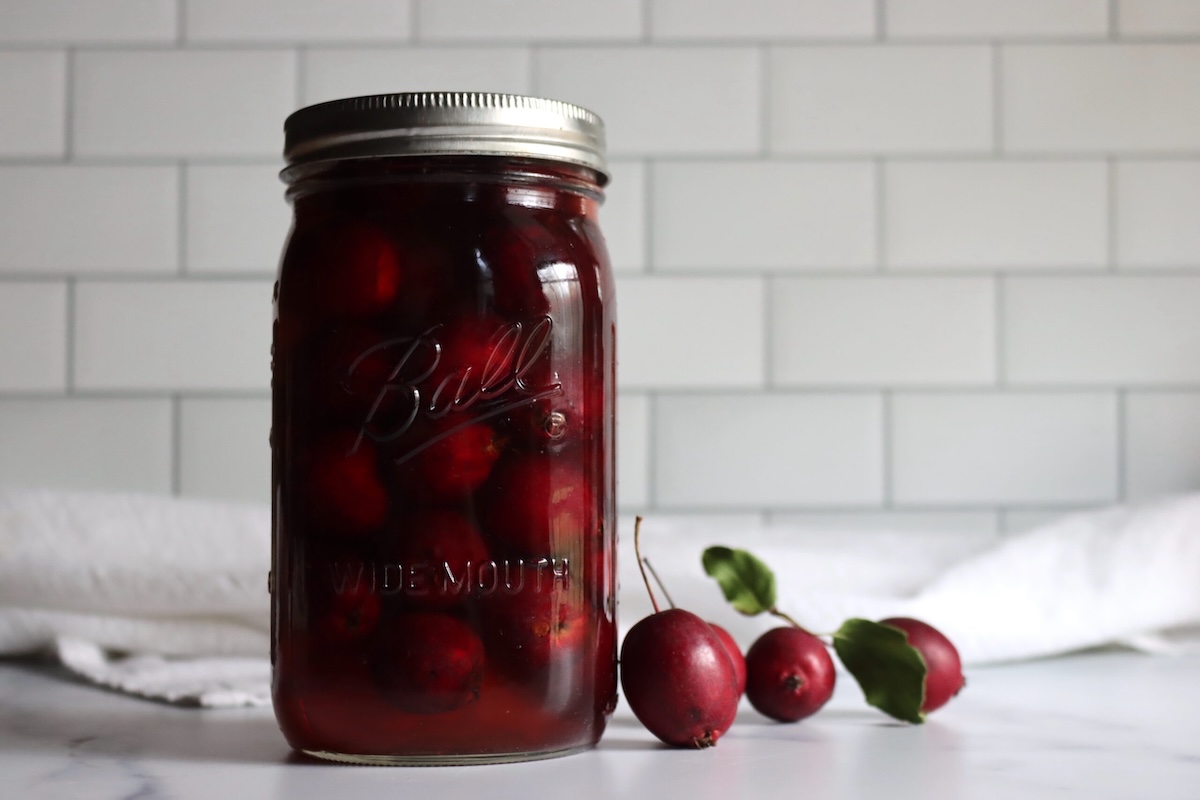
Spiced pickled crabapples are one of the great forgotten preserves. Whole fruit in a sweet vinegar brine with cinnamon, cloves, and allspice, put up in fall and set out next to a holiday roast. They look like something from another century, which they more or less are.
Underripe crabapples work here too, so this is a good use for fruit picked before its time. Leave the stems on if you can. They give people something to hold, and the jars look far better for it.
Crabapple pies, tarts, and bread
Crabapples make a sharper pie than dessert apples do, and that sharpness is the point. You’ll want more sugar than a standard apple pie calls for, and the high pectin means the filling sets up thick without much help from flour or tapioca.
The honest catch is the prep. It takes a lot of small fruit to fill a nine-inch pie, and coring them one at a time is the whole job. Put a podcast on, or cheat and start from crabapple sauce. The skins are thin enough that peeling is never worth it.
- Crabapple Pie
- Crabapple Hand Pies
- Amaretto Raisin Crabapple Pie
- Crabapple Rose Pie
- Crabapple Strawberry Tart
- Crabapple Bread
Crabapple breakfast recipes
Crabapple syrup is the one to make first. Juice the fruit, cook the juice down with sugar, and you have a tart pink syrup for waffles and French toast that tastes like nothing you can buy.
Past that, finely chopped or grated crabapple folds into pancakes, fritters, and muffins the same way a regular apple would, but with enough acidity that the batter around it tastes brighter. Grate on the coarse side of a box grater and work around the core instead of cutting it out first.
- Crabapple Pear Compote
- Crabapple Fritters
- Crabapple Pancakes
- Crabapple Muffins
- Crabapple Crumble Muffins
Crabapple savory main courses
Crabapples do the same job in a savory dish that a squeeze of lemon or a spoonful of mustard does. They cut fat. That makes them a natural with pork, goose, duck, and anything roasted in its own drippings.
The simplest version is to scatter halved crabapples around a roast for the last 30 minutes and let them collapse into the pan juices. A spoonful of crabapple jelly stirred into the drippings afterward makes a glaze with almost no effort.
- Roasted Chicken with Chestnuts and Crabapples
- Crabapple Jelly Glazed Chicken
- Spiced Pork Shoulder with Roast Crabapples
- Turkey Stuffing Salad with Arugula and Crabapples
Crabapple drink recipes
Crabapple juice is more tannic than regular cider, closer to what English cidermakers call a bittersharp. Warmed with cinnamon and cloves, it makes a mulled drink with real backbone. Chilled, it’s tart enough to drink like lemonade.
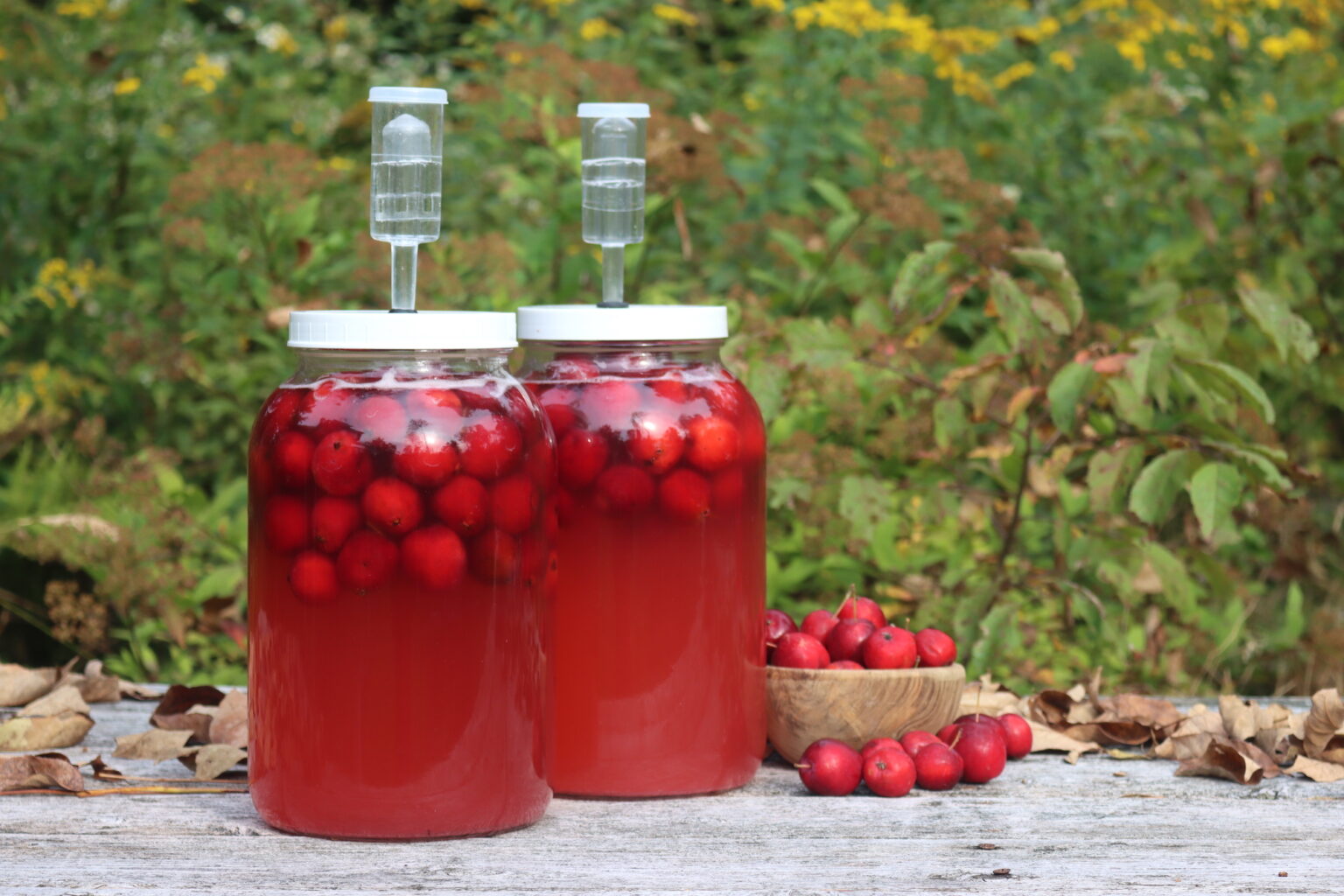
That same tannin is what makes crabapples worth fermenting. Tannin gives cider and wine structure, the quality that keeps a glass from tasting flat and sweet, and it’s exactly what dessert apples lack. No press required either, since the fruit is small enough to break down by hand or in a food processor.
- Crabapple Juice
- Mulled Crabapple Cider
- Crabapple Wine and Mead
- Hard Cider from Whole Apples, Without a Press
- Crabapple Whisky
- Crabapple Liqueur with Cinnamon
Crabapple snack recipes
Fruit leather is the best use for a batch of crabapples that turned out too sour to do much else with. Cook them down, run the pulp through a food mill to catch the seeds and skins, sweeten to taste, and spread it thin.
Blending with a sweeter fruit like plum or pear takes the edge off without adding much sugar. Dried crabapple slices dusted with cinnamon sugar are the other easy option, good eaten as is or dropped into oatmeal. Slice them across the equator and you get little wheels with a star at the center.
Crabapple dessert recipes
Whole crabapples baked with butter and brown sugar until they slump are about as easy as dessert gets, and the tartness holds up against ice cream in a way a baked dessert apple never quite does.
Chopped, they go into bundt cakes, zucchini bread, and bread pudding. Candied whole, they make a striking topper for a cake. And a spoonful of crabapple jelly brushed over a finished apple cake gives you a glaze the color of stained glass.
- Baked Caramelized Crabapples
- Maple Syrup Candied Crabapples with Oat Pecan Crumble
- Apple Cake Glazed with Crabapple Jelly
- Crabapple Bread Pudding
- Crabapple Yogurt Bundt Cake
- Crabapple Whisky Cake
- Frozen Crabapple Mousse with Black Walnut Streusel
- Crabapple Ice Cream
Crabapple FAQs
Crabapples generate more questions than almost any other fruit I write about, mostly because people have a tree in the yard and no idea whether they’re allowed to eat what falls off it.
Here are the ones I get asked most, roughly in the order they come up: is the fruit safe, can I eat it off the tree, does my ornamental tree count, and will it set without pectin.
No. There is no toxic crabapple. Every true Malus species produces edible fruit, and that includes every ornamental variety planted for its flowers, so the worst a crabapple will do is taste unpleasant. The seeds contain the same trace cyanogenic compounds found in every apple seed, which is not a concern in the amounts anyone swallows by accident, and any seeds that end up in a jelly pot get strained out long before the jar is filled.
Yes, they are safe to eat raw. Whether you will enjoy it depends entirely on the tree. Most crabapples are sour enough that one bite is plenty, and the tannic varieties will dry your mouth out the way an unripe persimmon does. A few are genuinely good fresh: Chestnut and Whitney crabapples are grown specifically for eating out of hand, and Dolgo is tart but pleasant. Taste one before you plan a whole recipe around fresh fruit.
Yes. Ornamental describes how the tree got planted, not what species it is. Those trees were selected for their blossoms rather than their fruit, so the crabapples tend to be smaller and more tannic, but they cook down into jelly exactly like any other. With an ornamental tree the thing to check is the spray schedule. Trees in commercial landscaping, parking lots, and municipal plantings are often treated with things you would not want in a jar, so ask before you pick.
No, and adding it usually makes things worse. Crabapples are high in natural pectin and acidic enough to gel on their own, which is why my crabapple jelly needs nothing but fruit, water, and sugar. They are so reliable that crabapples were historically used as a pectin source for other fruit, so if you are making jam from something low in pectin, a handful of crabapples in the pot will do the same job as a box of commercial pectin.
Fall fruit recipes
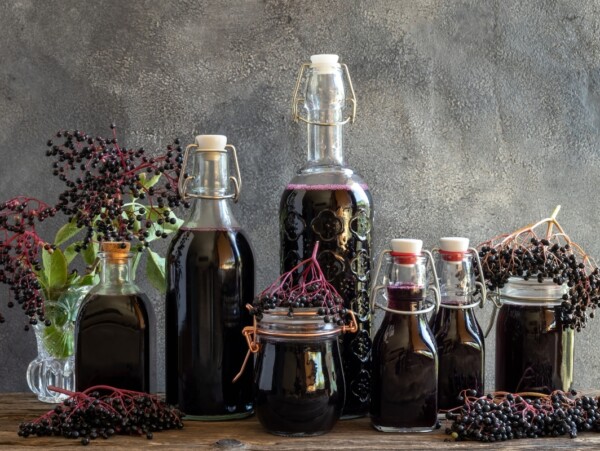
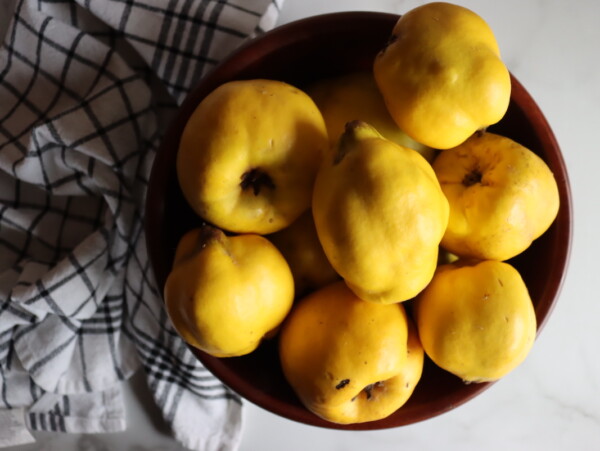
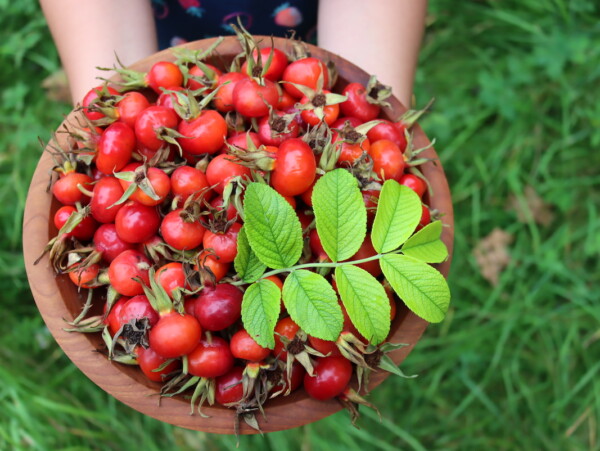
Crabapples come in alongside a whole crowd of tart fall fruit, most of it just as overlooked. Quince, rose hips, and elderberries all ripen in roughly the same window, and they all want the same treatment: cook them, sweeten them, and put them in a jar.
If you’re already standing over a canner this month, these are the guides worth having open next to you.
Find the perfect recipe
Searching for something else? Enter keywords to find the perfect recipe!
One dessert from my youth that I miss, I did not find in your list. I was very young but I remember, it’s so simple;
Just wash them very well, (when mine are ripe they fall to the ground). Boil them with stems and all.. When they are soft enough stick a whole cloves in each apple. Check for sweetness, (mine don’t need much sweetener like the varieties from my youth). You can use a pressure cooker for the rest to reduce amount of water. Cook until the skin breaks on most.
We kids loved this treat, we could pick one at a time by the stem, pull the flesh off in our moths and spit out the core. No waste, and fun for picnics.
Hello. Some of your recipes, the chilli pickle/ chutney opens to a P*** site. Thought you may like to know. 🤔🙁
Oh my goodness! It looks like that site got hacked. That’s so unfortunate. I deleted the link, thank you so much for letting me know!