This post may contain affiliate links. Please see our disclosure policy.
Braised red cabbage simmers low and slow until it turns soft, glossy and gently sweet and sour, with a hint of Christmas spice. In Denmark it’s called rødkål, and it sits beside the roast at nearly every holiday dinner. One pot gives you a cozy side for hearty winter meals all season long.
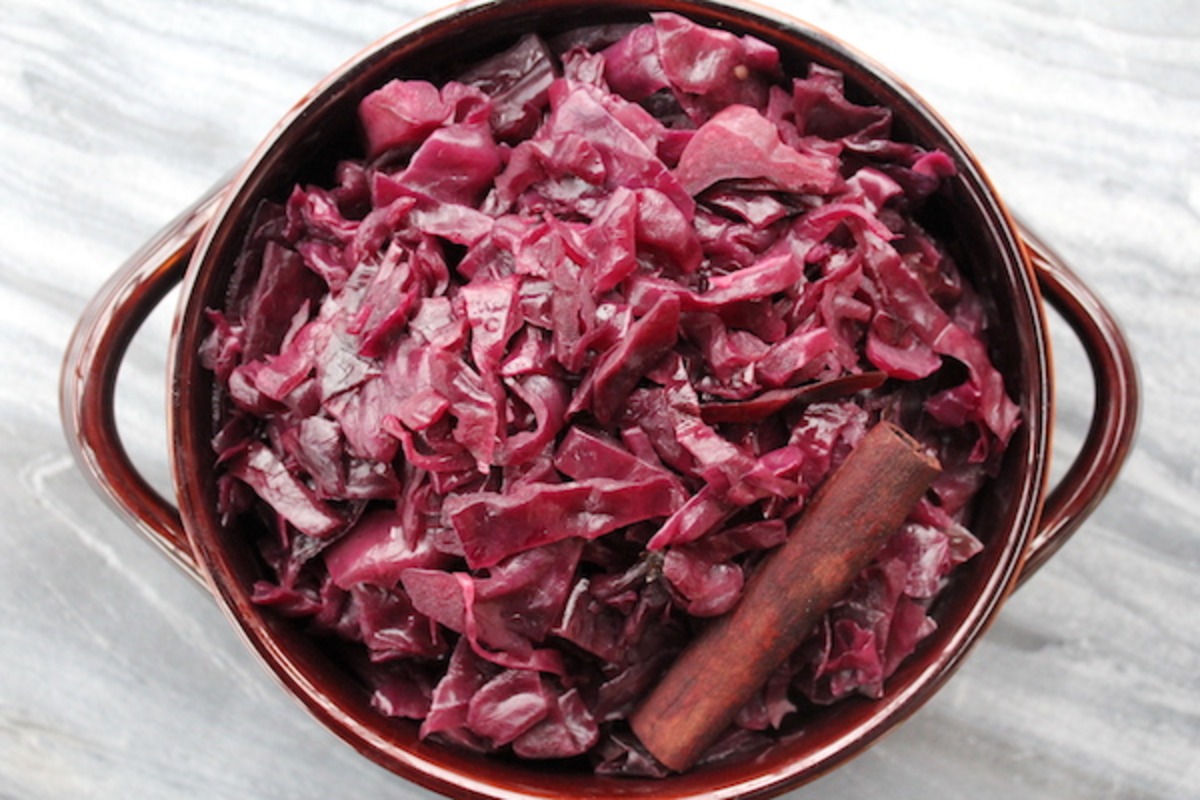
Rødkål simply means red cabbage in Danish, but at the holidays it means this dish. The cabbage braises with butter, sugar, vinegar and currant until it’s tender all the way through. It tastes sweet and tart at the same time, with a little warmth from cinnamon and cloves.
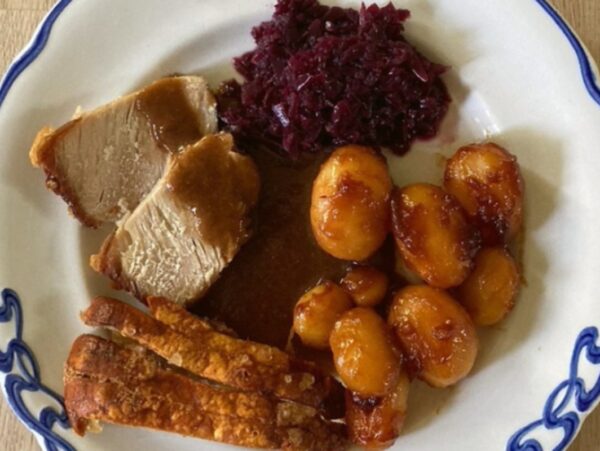
That balance is why it goes so well with rich food. Danes serve it on Christmas Eve with roast pork or duck, potatoes and plenty of gravy, and the bright, fruity cabbage cuts right through all of it.
Red cabbage became a Danish Christmas dish in the 1800s, during a wave of national pride. According to the official website of Denmark, the idea was for the red cabbage and white potatoes on the plate to echo the red and white of the Danish flag.
I first came across rødkål in The Nordic Cookbook, and even in a book with more than 700 recipes, it caught my eye. It’s a Christmas staple all over the Nordic countries, and the rest of the year it goes with meatballs and open-faced sandwiches.
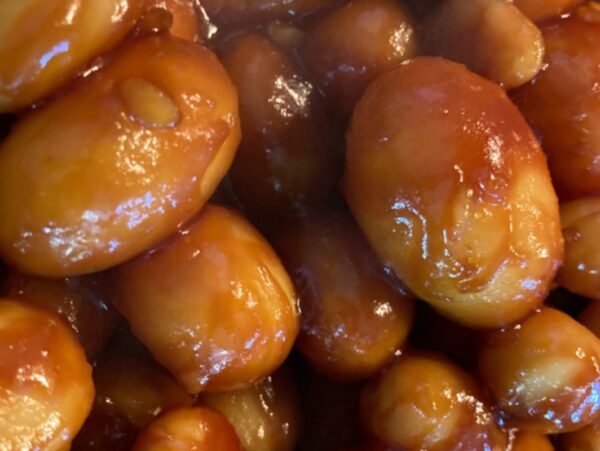
For the full Christmas Eve plate, serve it with Danish browned potatoes and a crackling-topped Danish flæskesteg. You’ll find the rest of the menu, desserts and all, among my Danish Christmas recipes. For a wider Nordic table, browse these Scandinavian holiday recipes too.
Notes from My Kitchen

Our Vermont winters get bitterly cold, and some nights it’s 20 below outside. That’s when I crave heavy comfort food, and most vegetable sides just don’t satisfy. A bowl of warm, spiced rødkål is one that does.
We grow both red and black currants, so there’s usually homemade cassis or red currant jam in my pantry to stir in. It’s just the kind of dish my Norwegian grandmother would have made. Rødkål is a Christmas tradition, but to me it simply tastes like warmth.
Ingredients for Rødkål
The currant is what gives rødkål its Danish flavor. If you can’t find blackcurrant cordial, red currant jelly melted into the water works just as well, and so does cassis liqueur.
The rest is simple pantry food. Slice the cabbage thin, and grate the apple right before it goes in the pot.
- Red cabbage: Look for a firm head that feels heavy for its size, with tight, shiny leaves. Thin slices turn soft and silky as they braise.
- Apple: Grated apple melts into the cabbage and adds a gentle, natural sweetness. A tart variety like Granny Smith balances the sugar nicely.
- Butter: Gives the braise its richness. Danes often use duck fat from the holiday roast instead, and it’s lovely here if you have some.
- Sugar: Balances the vinegar. Brown sugar or honey work too, with a slightly deeper flavor.
The liquid and the spices give rødkål its sweet, tangy and spiced flavor. Keep the spices whole, so they’re easy to pick out before serving.
- Blackcurrant cordial or cassis: Cordial here means a concentrated blackcurrant syrup, like Ribena, not a liqueur. Cassis works the same way, and you can make your own homemade blackcurrant liqueur.
- Red wine vinegar: Brings the tart half of sweet and sour. The acid also keeps the cabbage a deep red-purple instead of turning blue. Apple cider vinegar works too.
- Cinnamon and cloves: One cinnamon stick and a few whole cloves give the cabbage its Christmas warmth. Star anise, allspice berries or a bay leaf can stand in.
- Salt and pepper: Season lightly at the start, then taste again at the end.
Yield Notes
One small red cabbage, about 1 1/2 pounds, makes 6 servings as a side dish. For a crowd, a large 3 pound head doubles everything, as long as your pot is big enough.
To use red currant jelly in place of the cordial, melt 1/4 cup of jelly into the 1/3 cup of water. Store-bought jelly is fine, or make your own red currant jelly.
I’ve been to Iceland, and this is indeed quite lovely! I’m so happy to have found this recipe.
How to Make Rødkål
Rødkål needs only about 15 minutes of slicing and grating, then a long, slow braise on the stove. Plan on at least an hour and a half from start to finish, or closer to 3 hours for the softest cabbage.
It reheats well, so it’s easy to make a day or two before a holiday dinner. Danish cooks often make it ahead on purpose, since the flavors blend overnight.
Slice the Cabbage and Apple
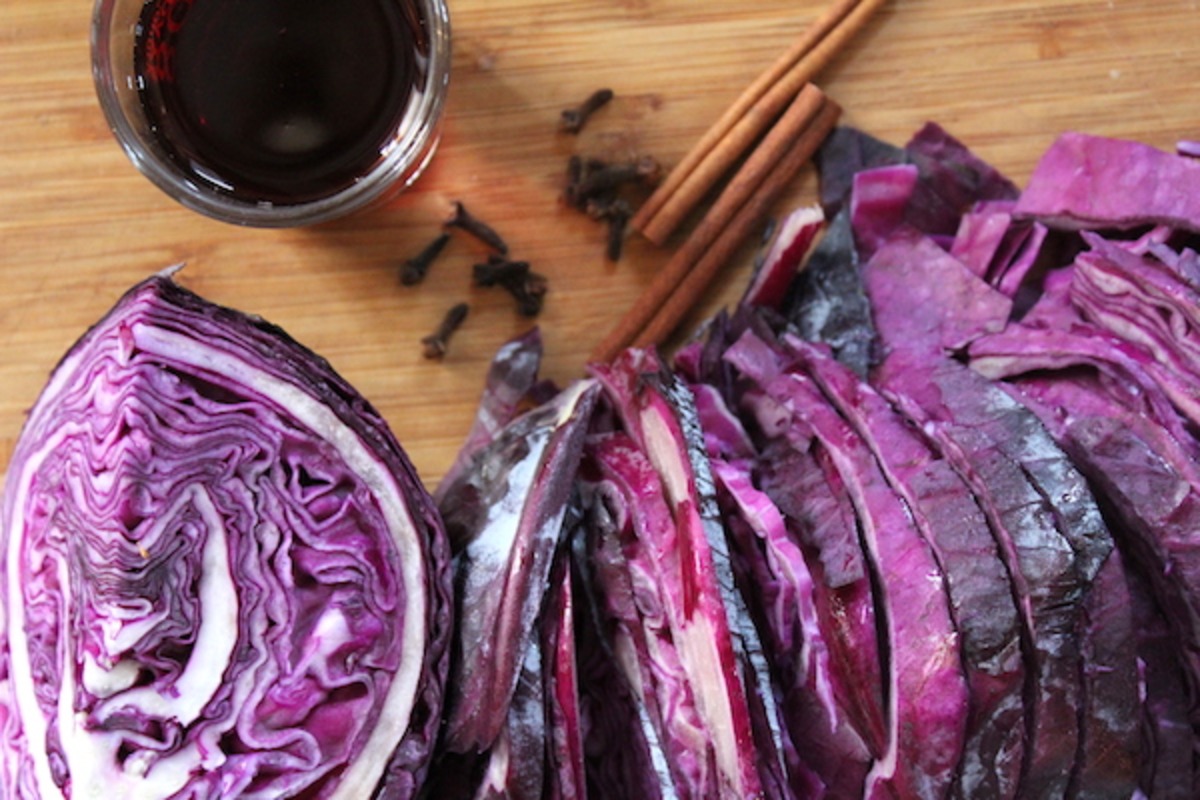
Pull off any bruised outer leaves, then quarter the cabbage and cut out the hard core. Slice each quarter as thin as you can with a sharp chef’s knife on a cutting board, or use a mandoline slicer.
Peel and core the apple, then grate it on the large holes of a box grater. The grated apple disappears into the cabbage as it cooks.
Fill the Pot
Put the cabbage, apple, butter, sugar, cordial, water, vinegar, cinnamon stick and cloves in a Dutch oven or a large saucepan with a lid. Add a pinch of salt and pepper.
The pot will look very full at first, but the cabbage wilts quickly. Bring it to a boil over medium-high heat, stirring once or twice, then cover it and turn the heat down to a low simmer.
Braise Low and Slow
Let the cabbage simmer, covered, for at least an hour, and preferably 2 to 2 1/2 hours. Stir it now and then, and add a splash of water whenever the liquid in the bottom drops below about 1/2 inch.
My stove runs hot, so I keep it at the lowest bubble I can get and check the liquid often. The cabbage is ready for the next step when it’s tender all the way through and a deep purple.
Cook Off the Liquid
Take off the lid and turn the heat up to medium-high. Let it bubble for 20 to 30 minutes, until almost all the liquid has cooked away and the cabbage looks glossy.
Stir more often near the end. Once the liquid is nearly gone, the sugar can catch on the bottom of the pot.
Taste and Adjust
Taste a forkful and adjust the balance. Add a splash of vinegar if it’s too sweet, or a little sugar if it’s too sharp, then season with salt and pepper.
Rødkål should taste both sweet and tangy, with neither one taking over. Serve it warm, or cool it and keep it in the fridge for the next day.
Tips for the Best Braised Red Cabbage
Make it a day ahead. The flavors blend and mellow overnight, and the cabbage soaks up more of the sweet and sour liquid. Reheat it gently with a small knob of butter.
Slice it thin and even. Thin shreds braise into soft ribbons, while thick ones stay chewy in the middle. A mandoline makes quick work of a whole head.
Choose an enameled or stainless pot. Vinegar can react with bare cast iron or aluminum and give the cabbage a metallic taste. An enameled Dutch oven handles the acid with no trouble.
Taste again after reheating. The vinegar mellows as rødkål sits, so it may want another splash before it goes on the table.
Variations on Rødkål
Danish cooks each have their own way with it. Some stir in orange zest and star anise, and others finish the pot with a spoonful of red currant jelly or a little duck fat from the roast.
Swedish cooks often add sliced onion along with the apple. Norwegian versions sometimes add a pinch of caraway, which gives it a gentle rye-bread flavor.
Serving Rødkål
On Christmas Eve in Denmark, rødkål sits beside roast pork, roast duck or a whole roast goose, with potatoes and gravy. Dinner ends with Danish risalamande, a cold rice pudding with warm cherry sauce and one hidden almond. It’s one of the sweetest Danish Christmas traditions.
The rest of the year, it’s an easy weeknight side for meatballs, sausages and pork chops. For a second vegetable on a holiday table, roasted Brussels sprouts on the stalk look festive right beside it.
Leftovers are good piled on rye bread with sliced roast pork for an open-faced sandwich. Rødkål also fits right into leftover goose recipes, and it brightens up cold roast duck the next day.
Keep leftover rødkål covered in the fridge for 3 to 4 days. It freezes well too, so you can tuck a container away for a winter dinner later on.
Rødkål (Danish Braised Red Cabbage) FAQs
These are the questions readers ask me most often about rødkål, from servings to swaps.
It makes 6 servings as a side dish, from one small red cabbage of about 1 1/2 pounds. For a bigger crowd, use a large head of about 3 pounds and double everything else.
Yes, and it tastes even better that way. Make it a day or two ahead, keep it covered in the fridge, and reheat it gently on the stove with a little butter. Taste it again before serving, since the vinegar mellows as it sits.
Yes. Let it cool, pack it into freezer containers, and freeze it for up to 3 months. Thaw it in the fridge overnight, then warm it in a pot over low heat.
Red currant jelly is the easiest swap. Melt 1/4 cup of jelly into the water in place of the cordial. Cassis liqueur works too, and in a pinch, a splash of red wine, grape juice or brandy, or a spoonful of cranberry sauce, gives a similar fruity tang.
Red cabbage gets its color from natural pigments that change with acidity. Without enough acid, they turn blue or even blue-green as the cabbage cooks. The vinegar and currant keep rødkål a deep red, so if yours looks blue, stir in a little more vinegar.
Danish Christmas Dinner
More dishes for a Danish Christmas Eve dinner.

If you tried this Rødkål recipe, or any other recipe on Adamant Kitchen, leave a ⭐ star rating and let me know what you think in the 📝 comments below!
And make sure you stay in touch with me by following on social media!
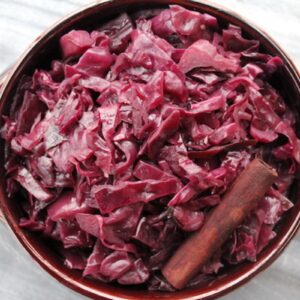
Rødkål ~ Braised Red Cabbage
Equipment
- Dutch Oven or a covered saucepan
Ingredients
- 1 small red cabbage, finely sliced, about 1.5 lbs
- 1 apple, peeled, cored and grated
- 3 tbsp butter
- 1/4 cup sugar
- 1/3 cup blackcurrant cordial or redcurrant jelly diluted in water
- 1/3 cup water
- 3 tbsp wine vinegar
- A few whole cinnamon sticks, star anise, allspice berries, or other warm spices
- salt
- pepper
Instructions
- Add all ingredients to a covered dutch oven or saucepan. Bring to a boil, then turn down heat to a simmer.
- Simmer on low for at least an hour, but preferably 2 to 2 1/2 hours. Add water periodically to be sure the pot always has about 1/2 inch at the bottom.
- Once the cabbage is cooked, remove the lid and turn up the heat. Cook without a lid until almost all the liquid has evaporated, about 20 to 30 minutes.
- Check seasoning, and adjust sweet/sour balance by adding vinegar or sugar to your taste.
Notes
Nutrition
Nutrition information is automatically calculated, so should only be used as an approximation.
More Scandinavian Recipes
Nordic cooking for the holidays and beyond.
Find the perfect recipe
Searching for something else? Enter keywords to find the perfect recipe!


Is this actually only ONE serving?
No, it makes about 6 servings as a side dish.
I’ve been to Iceland and this indeed quite lovely!💕 I’m so happy to have found this recipe.
Wonderful, glad you enjoyed it!
Hi! This recipe sounds wonderful!
Are the 2 cook books authentic, not americanized? I too am swedish decent and miss my mothers limpa bread. Thank you in advance and I love your website!
Both are written by Scandinavian authors living there, and are published in that language too. They’re authentic, then translated to English.