This post may contain affiliate links. Please see our disclosure policy.
Icelandic pancakes, or pönnukökur, are thin, lacy pancakes that turn golden brown on a hot, well-seasoned pan. Roll them up with a sprinkle of sugar or fold them around jam and whipped cream, and you have an easy Nordic breakfast that’s just as good with afternoon coffee.
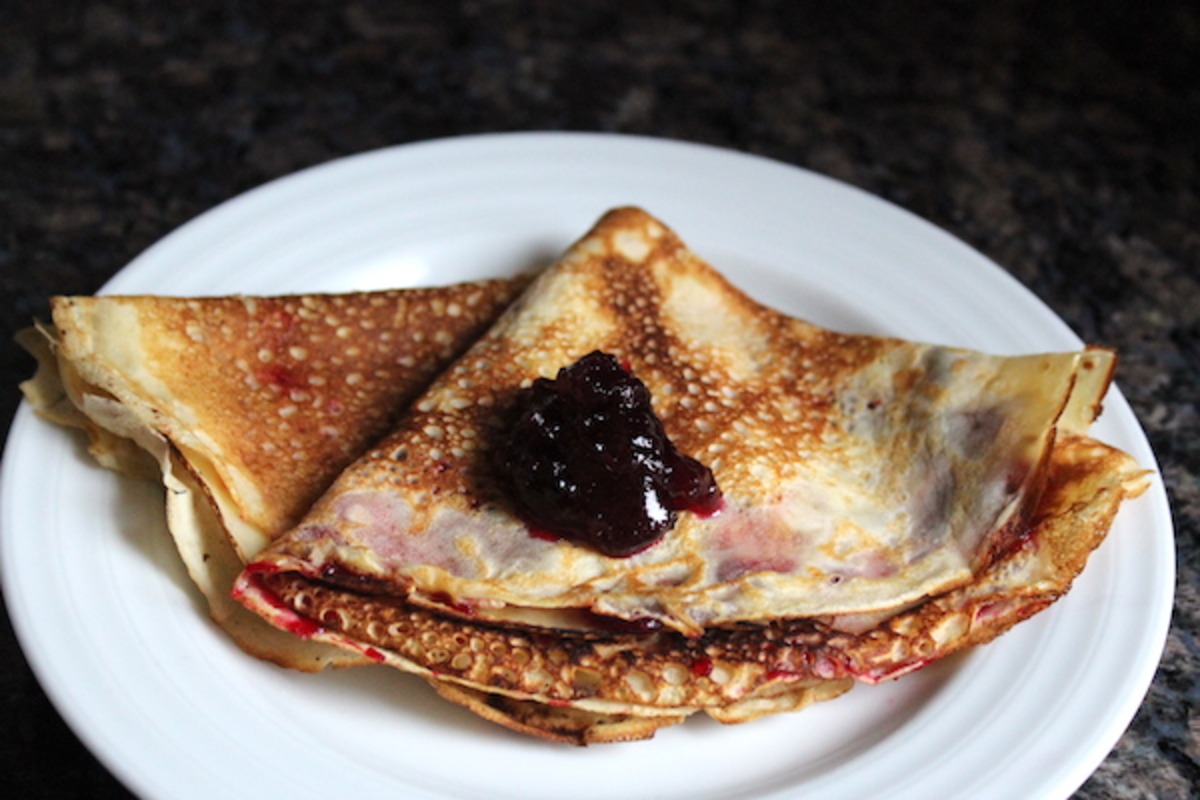
Table of Contents
- Notes from My Kitchen
- Pönnukökur vs. French Crepes
- Ingredients for Icelandic Pancakes
- Yield Notes
- How to Make Icelandic Pancakes
- Tips for the Best Icelandic Pancakes
- Serving Icelandic Pancakes
- Variations
- Storage and Make Ahead
- Icelandic Pancakes (Pönnukökur) FAQs
- More Nordic Pancakes
- Icelandic Pancakes (Pönnukökur) Recipe
- More Scandinavian Recipes
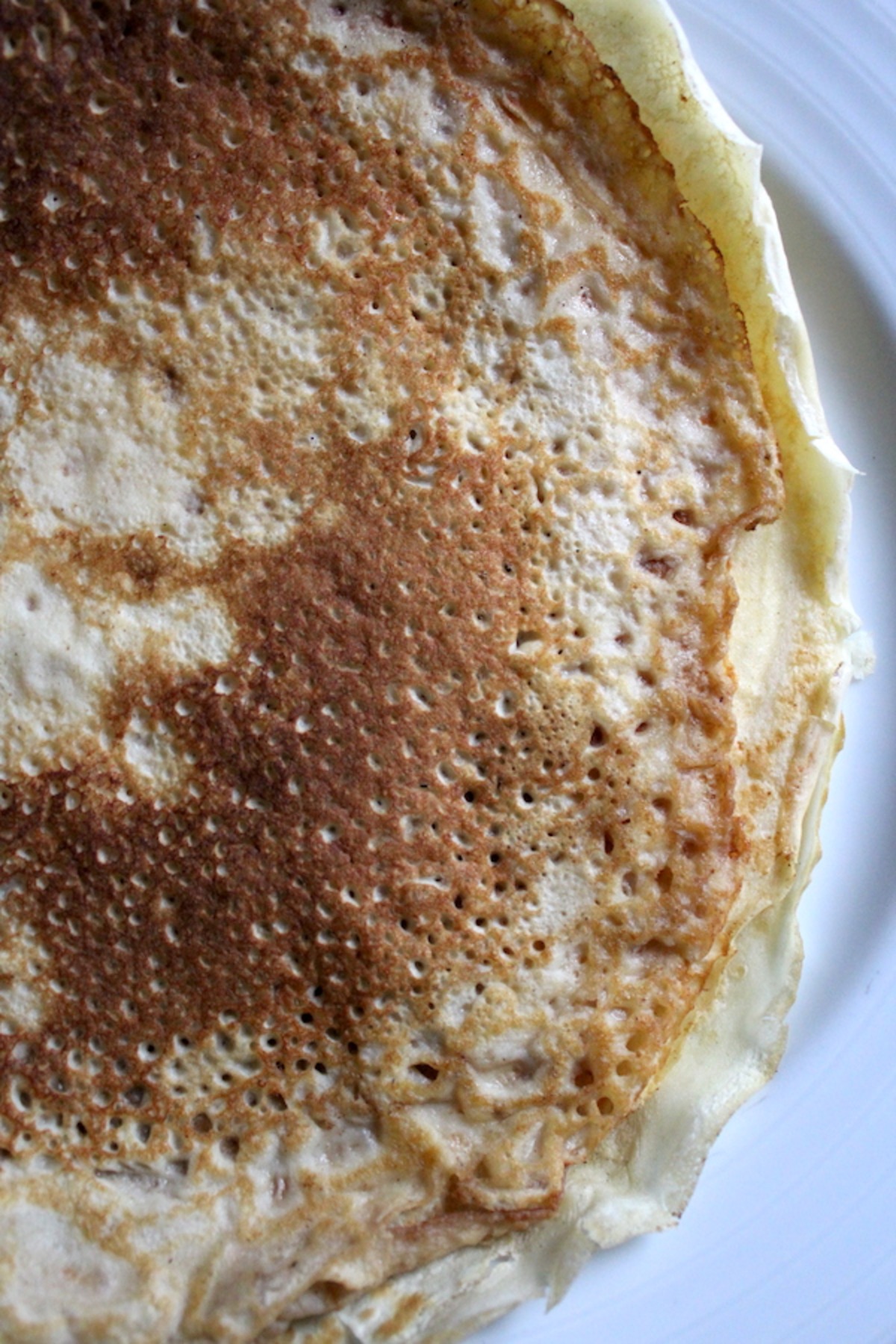
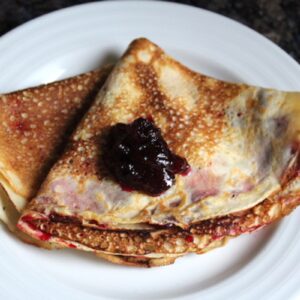
Pönnukökur are Iceland’s version of the crepe, made as thin as the pan allows. They cook up more golden brown than pale, custardy French crepes, with a lacy pattern on the underside that soaks up sugar and jam.
In Iceland they’re a fixture of the coffee table. They come out for Sunday visits and festive occasions, either rolled up with sugar or folded into quarters around jam and whipped cream.
The traditional pan is a pönnukökupanna, which literally means pancake pan. Icelandic cooks never wash it after use. They just wipe it out, so the seasoning keeps building and the pan gets more nonstick over time.
Families often hand these pans down through the generations, and outside of Iceland they’re pretty well impossible to find. I cook mine on a round cast iron griddle instead, and I wipe it with a buttered towel after each batch to condition it for the next use.
The recipe here is my adaptation of the one in The Nordic Cookbook, an exhaustive book of all things Nordic with over 700 recipes. It’ll be a while before I’m done cooking from it.
For a thicker Icelandic pancake made with leftover oatmeal, try lummur. And if you’re planning a Nordic table for the holidays, there are plenty more ideas in my Scandinavian holiday recipes.
Notes from My Kitchen

I’ve had trouble flipping French crepes in the past, but pönnukökur are a different story. They crisp up nicely and hold together beautifully when I flip them. So far, they’re the easiest style of crepe I’ve worked with.
What I’d really love is a real pönnukökupanna, but one Icelandic reader told me families usually inherit them. She still flips her pancakes with her grandfather’s spatula. Until I find a pan of my own, my griddle does the job, and it gets a little more nonstick every time I use it.
Pönnukökur vs. French Crepes
Both start with a pourable batter of eggs, milk and flour, and you can fill and fold them the same ways. The real difference is at the stove, where French crepes usually cook over moderate heat and stay pale and tender. Pönnukökur go onto a hotter pan and come off with deep golden lace on the first side.
This batter is rich in eggs and has no leavening, so the pancakes stay flat and sturdy. That’s why they flip so easily, and why they roll up around a filling without tearing.
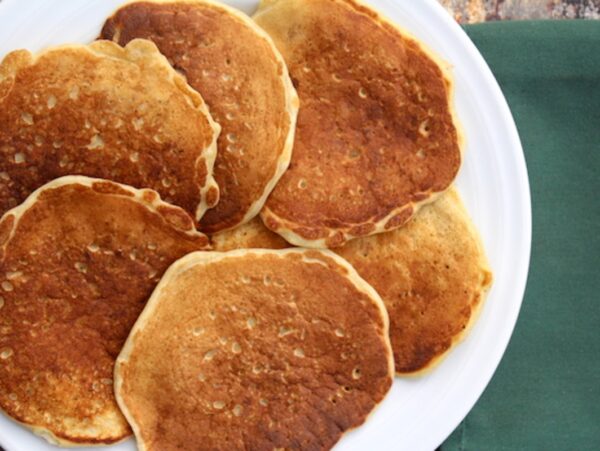
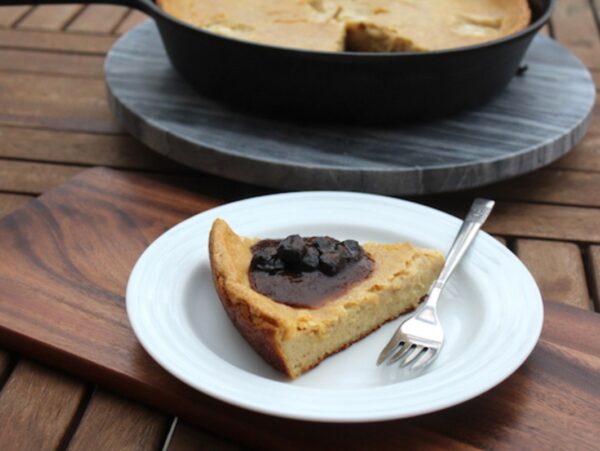
Other Nordic pancakes sit somewhere in between. Norwegian pancakes are a little thicker and softer, and Danish cooks fry small, thick klatkager from leftover rice porridge. Finland’s ålandspannkaka isn’t thin at all, since it bakes in the oven into a thick, custardy pancake.
Ingredients for Icelandic Pancakes
Pönnukökur take a short list of everyday ingredients, and you likely have them all on hand already.
Many Icelandic home cooks use fewer eggs and stir a little melted butter into the batter. That version works well too, and it makes a slightly softer pancake.
- Eggs: This batter uses plenty of eggs. They give the pancakes their golden color and the strength to flip without tearing.
- Milk: Whole milk makes the richest pancakes, and 2 percent works fine too. The milk thins the batter enough to swirl across the pan in a thin layer.
- All-purpose flour: Plain flour is all you need. There’s no baking powder here, so the pancakes stay thin and flat.
- Sugar and salt: Just a little of each. The sugar helps the pancakes brown without making them sweet, and the salt keeps them from tasting flat.
The only other thing you need is butter for the pan. A small pat keeps each pancake from sticking and browns the underside into lace. Salted or unsalted both work, so use whatever you keep in the fridge.
Most of the sweetness comes from what you put on the pancakes, so the batter itself stays plain. That leaves plenty of room for sugar, jam or whatever you like to roll inside.
Yield Notes
This batter makes about 4 cups, enough for around 14 pancakes when you cook them on a 10 1/2-inch griddle. That works out to a generous 1/4 cup of batter for each pancake.
A smaller crepe pan takes a little less batter and gives you a few more pancakes. Plan on two or three per person for breakfast, or one or two each with coffee.
How to Make Icelandic Pancakes
Pönnukökur come together quickly once the batter has rested. Nearly all the work happens at the stove, and it’s mostly a matter of rhythm.
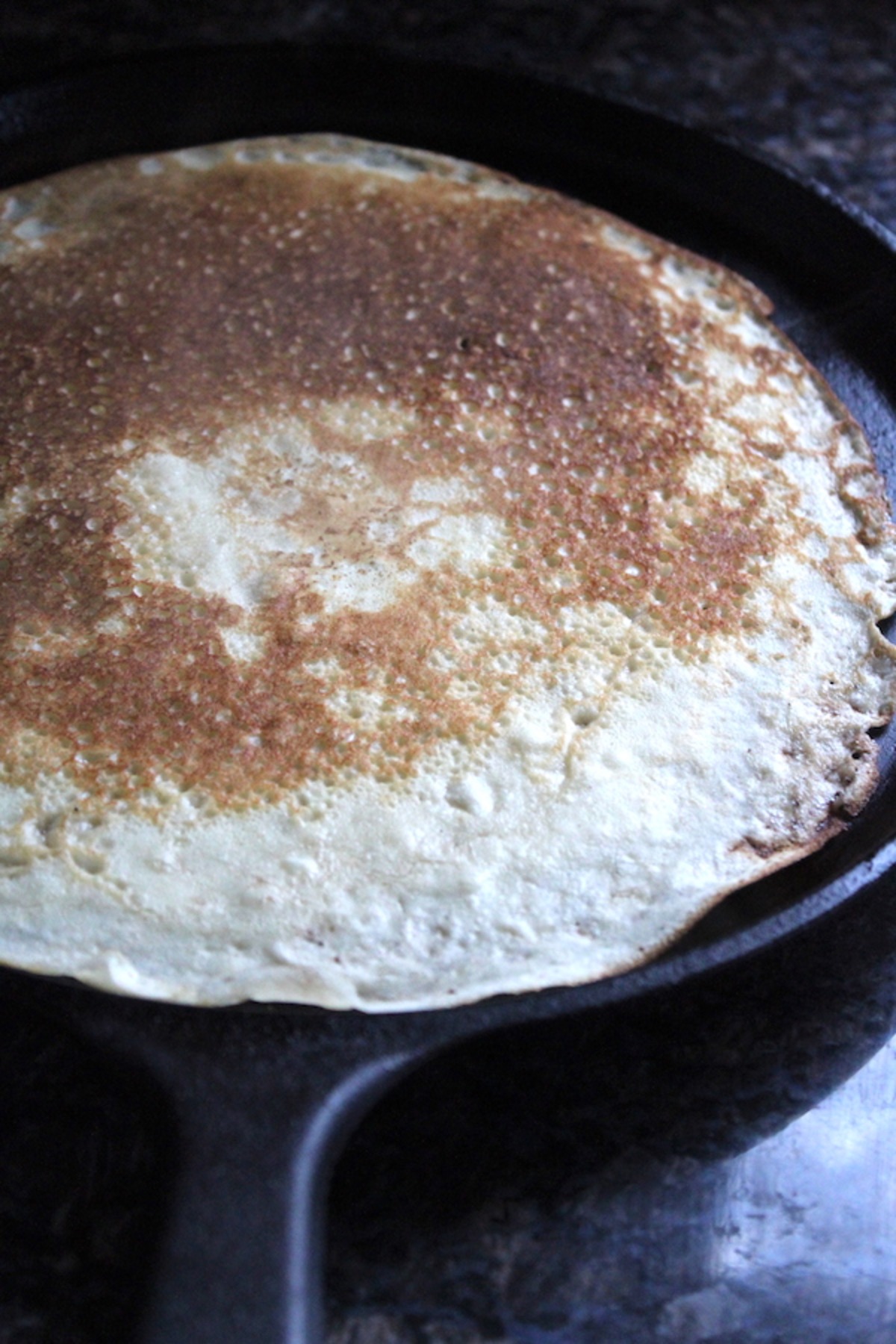
The trick to really thin pancakes is to keep the pan moving as you pour. That’s hard to photograph, since it’s hot and moving fast, so expect the first pancake or two to be practice while you learn how much batter your pan needs.
Whisk the Batter
Whisk the milk and eggs together in a large bowl until smooth, about 30 seconds. A whisk is all you need here, with no mixer to clean.
Add the flour, sugar and salt a little at a time, whisking as you go. Stop as soon as the batter is smooth, about 30 seconds to a minute. Try not to beat air into it or overwork it.
Let the Batter Rest
If you can, let the batter stand for 30 minutes. The flour absorbs more of the liquid while it sits, and the air bubbles rise out of the mix.
Rested batter pours a little smoother and cooks into an even, thin pancake. If you’re short on time, though, go ahead and start cooking.
Heat the Pan
Set a cast iron griddle or crepe pan over medium-high heat. Let it preheat for about 5 minutes, until it’s very hot but not smoking.
Add a small pat of butter. It should melt and sizzle right away. If it smokes or browns in a few seconds, turn the heat down a notch before you pour.
Pour and Swirl
Lift the pan and hold it just above the burner. Pour a ladle of batter into the center, and start tilting the pan as soon as the batter hits it.
Keep the pan moving in a circle so the batter runs all the way out to the edges. Ideally there’s just enough batter to coat the whole pan in a thin layer, and it takes a bit of practice to learn exactly how much that is.
I have a ladle that’s just right for my 10 1/2-inch pan. When only a little batter is still liquid on top, tilt the pan so it runs onto any bare spots, then set the pan back on the burner.
Cook Until the Edges Lift
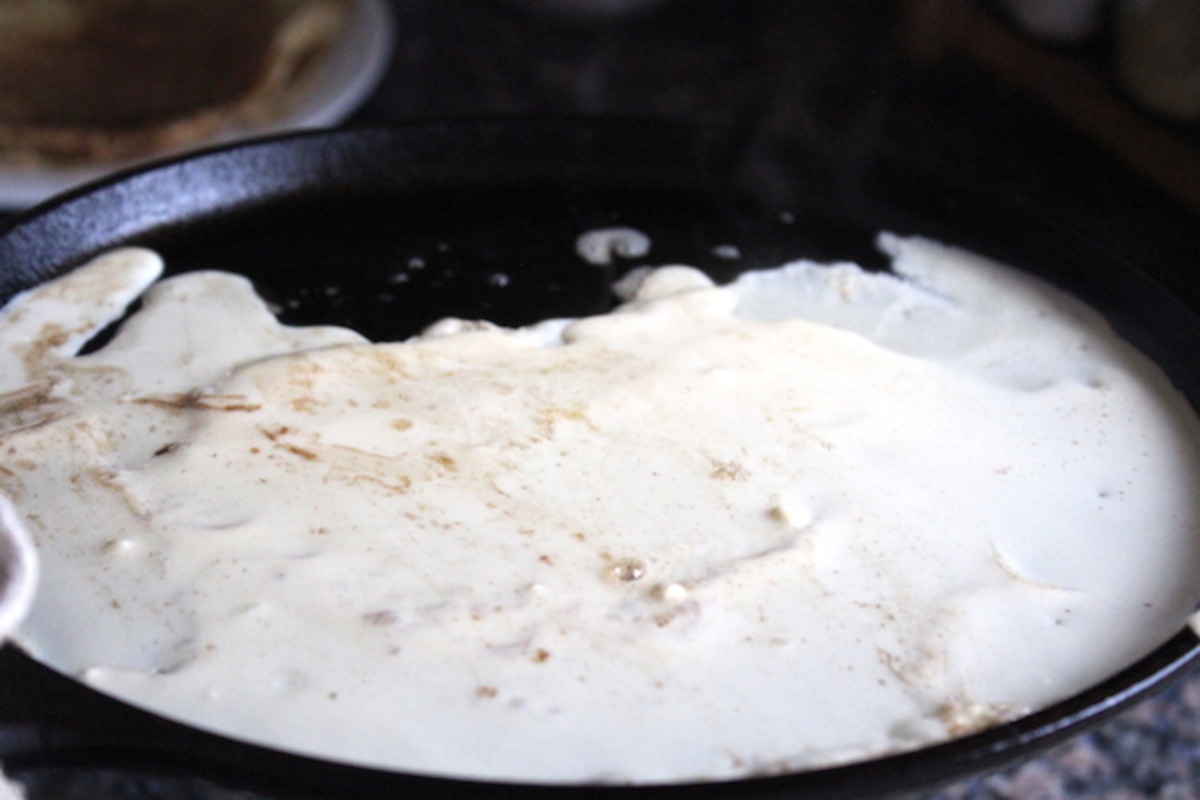
These are very thin pancakes, so the first side takes only 30 seconds to 1 minute. Watch the color of the batter across the whole pan. It changes slightly as it cooks, and any underdone patches are easy to spot.
While you’re learning, the edges are the easiest sign to read. They’ll begin to brown and pull away from the pan a little when it’s ready.
Slide a spatula under one edge and take a peek. The underside should be a lace of crisp, golden brown spots.
Flip and Finish
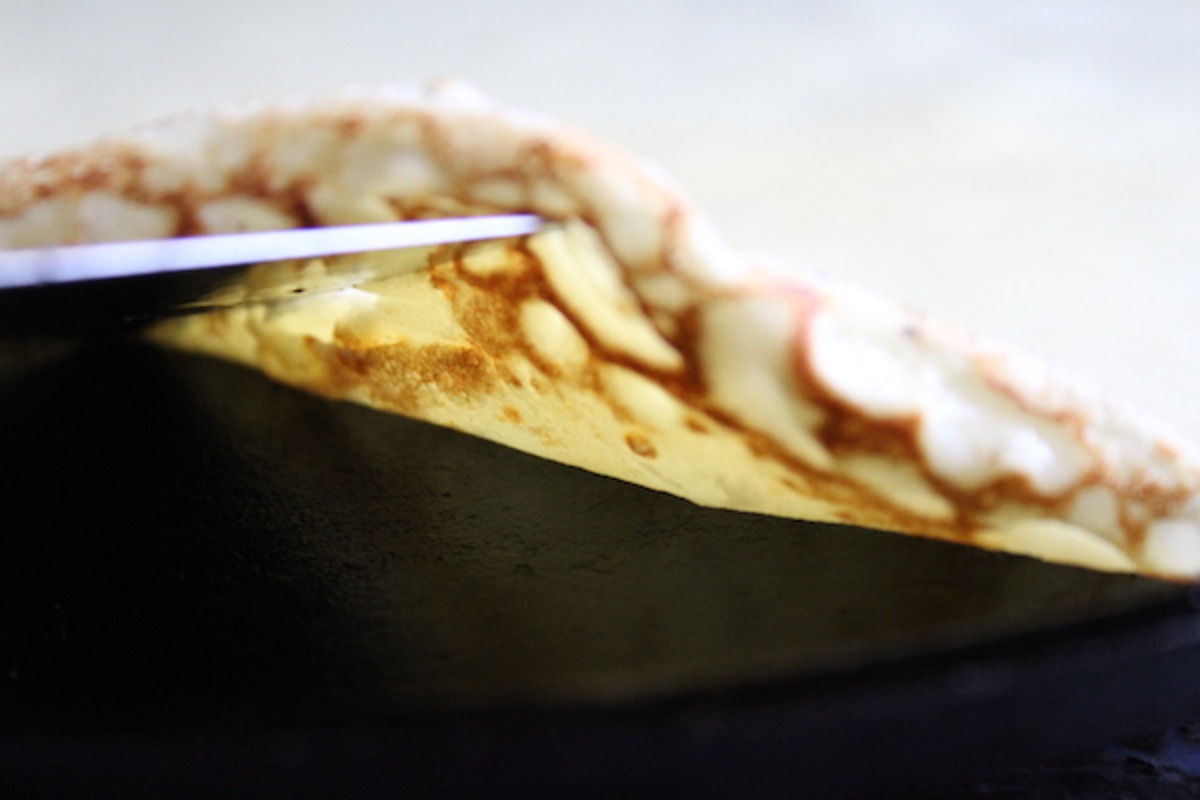
Slide a long, thin crepe spatula under the pancake and flip the whole thing in one quick motion. The first side crisps enough to hold the pancake together, so it turns over easily once you get the feel for it.
Give the second side another 30 seconds to 1 minute, then slide the pancake onto a plate. Butter the pan again after every second pancake or so, and repeat until you’ve used all the batter.
Tips for the Best Icelandic Pancakes
Let the first one be a test. It tells you whether the heat and the amount of batter are right. If it’s pale and soft, give the pan another minute, and if the batter sets in ridges before it covers the pan, pour faster or lower the heat a little.
Thin the batter if it won’t spread. The batter should be about as thin as heavy cream. If it’s thick enough to leave ridges, whisk in a splash of milk before the next pancake.
Wipe the pan instead of washing it. After the last pancake, wipe the warm pan with a buttered paper towel and put it away. Icelandic cooks don’t wash a pönnukökupanna either, and the seasoning on cast iron builds up the same way.
Stack them for soft pancakes. A warm stack on a plate keeps the pancakes soft and easy to roll. If you like crisp edges, serve each one straight from the pan.
Serving Icelandic Pancakes
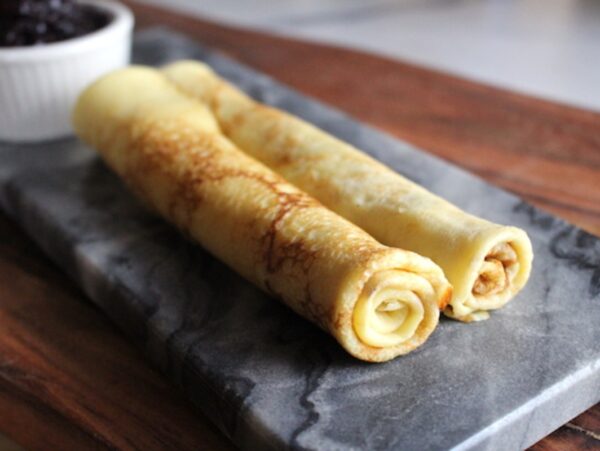
The simplest way to serve pönnukökur is to sprinkle them with sugar and roll them up tight. Icelanders often serve them this way with coffee, and it takes no planning at all.
For something fancier, spread a pancake with jam, add a spoonful of whipped cream and fold it into quarters. Let the pancakes cool first, or the cream will melt.
Rhubarb jam is the classic choice in Iceland, and blueberry and strawberry jam are common too. Homemade rhubarb jam or blueberry jam works beautifully here.
I always hear people mention lingonberry jam as a traditional topping for anything Nordic, but it can be hard to find. Lingonberries are close cousins of cranberries, so whole berry cranberry sauce makes a good substitute.
We make our own homemade cranberry sauce with just a hint of cinnamon, and it’s great in these pancakes. A bright cranberry orange sauce is another good match. We grow a few lingonberry plants too, and they’re easy to grow at home in cold climates.
To eat them, fold each pancake neatly into quarters or roll it up around the filling. A spoonful of thick, tangy skyr on the side turns them into a heartier breakfast.
Pönnukökur also make a light dessert after a bowl of Icelandic lamb soup or a plate of plokkfiskur. For an Icelandic coffee table, set them out with kleina and a slice of jólakaka.
Variations
Icelandic cooks make pönnukökur a little differently from house to house, and these changes all work with this batter.
- Fewer eggs: Use fewer eggs and a bit more flour, then whisk some melted butter into the batter. The pancakes come out a touch softer and less eggy.
- Vanilla or cardamom: Icelandic recipes often add a little vanilla or cardamom extract to the batter. A pinch of ground cardamom works too if you can’t find the extract.
- Thick pancakes: For small, thick Icelandic pancakes, make lummur with leftover oatmeal instead.
Storage and Make Ahead
The batter keeps in the refrigerator for up to 2 days. It thickens as it sits, so whisk it well and add a splash of milk if it won’t spread thin.
Cooked pönnukökur keep in the fridge for up to 3 days, stacked and wrapped tightly. To freeze them, layer the cooled pancakes with parchment paper so they don’t stick together, and freeze them for up to 2 months.
Warm them in a dry pan for a few seconds per side, or cover the stack and microwave it briefly. Add the fillings after they’re warm.
Icelandic Pancakes (Pönnukökur) FAQs
These are the questions that come up most about Icelandic pancakes, from the right pan to the traditional jam.
Icelandic cooks make pönnukökur thin and cook them on a hot pan, so they come out more golden brown than French crepes, with a crisp, lacy underside. This batter also has plenty of eggs, which makes the pancakes sturdy and easy to flip.
No. A traditional pönnukökupanna is hard to find outside of Iceland, but a well-seasoned cast iron griddle, a crepe pan or a nonstick skillet all work. A pan with a low rim makes swirling the batter and sliding the spatula underneath much easier. Mine is a round cast iron griddle that’s 10 1/2 inches across.
Most often sugar, rolled up tight, or jam and whipped cream folded inside. Rhubarb jam is the classic choice, and blueberry and strawberry jam are common too.
Yes. Many Icelandic home cooks use fewer eggs and a bit more flour, with melted butter and a little vanilla or cardamom extract whisked into the batter. The pancakes come out a little softer and less eggy.
More Nordic Pancakes
Thin, thick or baked, here are more pancakes from the Nordic kitchen.
If you tried this Icelandic Pancakes (Pönnukökur) recipe, or any other recipe on Adamant Kitchen, leave a ⭐ star rating and let me know what you think in the 📝 comments below!
And make sure you stay in touch with me by following on social media!
Icelandic Pancakes (Pönnukökur)
Equipment
- Cast Iron Griddle 10 1/2 inch round
Ingredients
- 5 large eggs
- 2 1/2 cups milk
- 1 1/4 cups all-purpose flour
- 1 Tbsp sugar
- 1/2 tsp salt
- butter, for the pan
Instructions
- Whisk the milk and eggs together in a large bowl until smooth, about 30 seconds.
- Add the flour, sugar and salt a little at a time, whisking just until the batter is smooth, 30 seconds to 1 minute. Try not to beat air into the batter.
- Let the batter rest for 30 minutes if you have time, so the flour absorbs the liquid and the air bubbles rise out. If you’re short on time, start cooking right away.
- Heat a cast iron griddle or crepe pan over medium-high heat for about 5 minutes, until very hot but not smoking. Add a small pat of butter.
- Lift the pan and pour a ladle of batter into the center (see notes). Tilt the pan right away and keep it moving until the batter covers the pan in a thin layer.
- Set the pan back on the burner and cook until the batter looks set and the edges brown and pull away from the pan, 30 seconds to 1 minute.
- Flip with a long, thin spatula and cook the second side for 30 seconds to 1 minute. Slide the pancake onto a plate.
- Repeat with the rest of the batter, adding a little butter to the pan every pancake or two.
- Serve rolled up with sugar, or spread with jam, topped with whipped cream and folded into quarters.
Notes
Nutrition
Nutrition information is automatically calculated, so should only be used as an approximation.
More Scandinavian Recipes
Bring a little more of the Nordic table home with these recipes.

Find the perfect recipe
Searching for something else? Enter keywords to find the perfect recipe!

Hi! Love that you have Icelandic recipes, the oatmeal
Pancakes turned out great 🙂
Just wanted to say that we also have a special pancake spatula called “pönnukökuspaði” and the traditional jam is rhubarb. The pans are inherited down generations but now one company has finally started to make them! I f.ex have a new pan but inherited the spatula from my grandfather.
Ps we actually dont use so many eggs, usually its 4dl (1 and 3/4 cups) flour and 2 eggs 🙂
um i want your recipe lol