This post may contain affiliate links. Please see our disclosure policy.
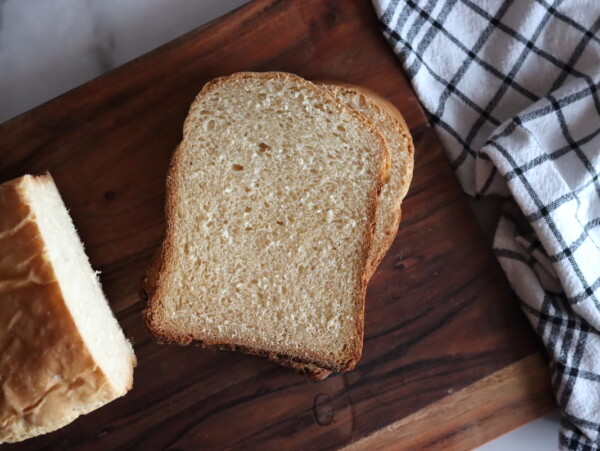
Sourdough Pullman loaf bakes in a lidded pan, so every slice comes out square, with a soft, even crumb and a thin crust. The dough comes together in a single day with no fussy shaping. It’s homemade sandwich bread that fits the toaster and the lunchbox.

Table of Contents
- Notes from My Kitchen
- Ingredients for Sourdough Pullman Loaf
- Yield Notes
- Equipment for Sourdough Pullman Loaf
- How to Make Sourdough Pullman Loaf
- Overnight Sourdough Pullman Loaf
- Baking a Pullman Loaf Without the Lid
- Tips for the Best Sourdough Pullman Loaf
- Serving Sourdough Pullman Loaf
- Sourdough Pullman Loaf Variations
- How to Store Sourdough Pullman Loaf
- Sourdough Pullman Loaf FAQs
- More Sourdough Recipes
- Sourdough Pullman Loaf (Pain de Mie Sandwich Bread) Recipe
- Homemade Bread Recipes
Most homemade sourdough bakes up round and crusty, like my Spanish sourdough bread. That’s lovely next to a bowl of soup, but it’s a lot to chew in a packed lunch. A Pullman loaf is tall and square instead, with straight sides and a flat top, so it slices just like store-bought sandwich bread.
By most accounts, the name comes from the Pullman railroad dining cars, where square, flat-topped loaves stacked neatly in the cramped kitchens. In France, the same bread is pain de mie, named for its soft crumb (la mie) rather than its crust.
Classic pain de mie is a yeasted bread, enriched with milk, butter, and sugar. This one is a lean sourdough loaf. Potato flakes or milk powder keep the crumb soft without any butter, and the pan’s lid traps steam the way a Dutch oven does for a round loaf.
I adapted this sourdough Pullman loaf from the same-day sandwich loaf in Elaine Boddy’s Easy Everyday Sourdough Bread Baking. Mix it in the morning, and it’s out of the oven by mid-afternoon.
If you don’t have a Pullman pan, my soft sourdough bread also bakes as a sandwich loaf in a regular loaf pan, and so does my beginner sourdough loaf bread. Both need an active starter, just like this one. If you don’t have a starter yet, my whole wheat sourdough starter gets you there.
That same active starter makes dinner too, since my same-day sourdough pizza crust rises in an afternoon. And when you’re ready for something besides bread, there are 100+ sourdough recipes to try, from biscuits to cakes and cookies.
Notes from My Kitchen

My little ones aren’t fans of a thick, crunchy crust. Hand them a slice of rustic sourdough, and they’ll eat out the soft middle and leave the crust behind.
So the sourdough I bake for their lunches goes in a pan. I ordered my Pullman pan from King Arthur Baking, and with the lid on, the crust bakes up thin and the slices come out square. That’s just what a lunchbox sandwich needs.

Ingredients for Sourdough Pullman Loaf
Potato flakes and milk powder do the same job here, so use whichever is in your pantry. If you have neither, plain milk works too.
- Active sourdough starter: Feed it a few hours ahead so it’s bubbly and at least doubled when you mix. This loaf uses twice the starter of Elaine’s standard loaf, which, along with the warm water and a warm spot, lets it rise in a single day.
- Warm water: Water around 100°F (38°C) gives the dough a warm start and speeds up the rise. It should feel comfortably warm on your wrist, not hot.
- Bread flour: The extra protein gives the dough the strength to rise tall and hold a square shape. King Arthur bread flour is a good one. Elaine calls it strong white bread flour, the British name for the same thing.
The rest of the list is small, but each one matters.
- Potato flakes or milk powder: Plain instant mashed potato flakes hold onto moisture and keep the crumb soft for days, so pick unseasoned ones. Milk powder softens the crumb too. Nonfat and whole both work, since the small amount in this loaf adds very little fat.
- Salt: The teaspoon amount on the card is for fine sea salt or table salt. Kosher salt has bigger, lighter crystals, so a teaspoon of it holds less salt. Weigh it instead.
- Oil: A little neutral oil for the pan and lid, if you’d rather not line the pan with parchment.
Yield Notes
One batch makes one 9 by 4 by 4 inch Pullman loaf, about 2 pounds (907 g) of dough. It cuts into about 16 slices.
For a 13 by 4 by 4 inch Pullman pan, make a batch and a half. The longer pan holds about 1 1/2 times as much dough.
In grams, the recipe is 100 g starter, 325 g water, 450 g bread flour, 25 g potato flakes or milk powder, and 7 g salt. Cup measures vary a lot from one baker to the next, flour most of all. A digital scale takes the guesswork out, and it’s how you get the same dough every time.
Equipment for Sourdough Pullman Loaf
You’ll need a 9 by 4 by 4 inch Pullman pan with its sliding lid. Mine is the Pullman loaf pan from King Arthur Baking, which comes in a 9-inch and a 13-inch size.
Line the pan with parchment paper, or brush the pan and the inside of the lid lightly with oil. The top of the loaf presses right against the lid, so don’t skip it.
For mixing, a large bowl and a Danish dough whisk or a sturdy spoon are all it takes. A bench scraper helps when you shape the soft dough, and an instant-read thermometer like the ThermoPop 2 tells you when the center is done.
Once the loaf is out of the pan, set it on a wire cooling rack so steam can escape from every side. A serrated bread knife cuts clean, even slices.
This has definitely become a favorite recipe for me. It’s easy to put together and always comes out soft and delicious with a nice crumb.
How to Make Sourdough Pullman Loaf
This is a same-day bread, and most of that day is waiting. You’ll mix the dough in the morning, fold it three times over the next hour and a half, then leave it alone to rise.
Plan on about 8 to 9 hours from mixing to slicing, including an hour to cool. A warm spot around 77°F (25°C) keeps it on that schedule.
A proofing box works, or an oven with just the light on and the door cracked. Check it with a thermometer first, since some oven lights get too warm.
Mix the Dough
Put the starter, warm water, flour, potato flakes or milk powder, and salt in a large bowl. Mix them roughly with your hand, a spoon, or a dough whisk until there’s no dry flour left. The dough will be shaggy and sticky, and that’s normal at this point.
Cover the bowl with a clean kitchen towel and set it in your warm spot for 30 minutes. The rest gives the flour and potato flakes time to soak up the water, so the dough is easier to handle.
Do Three Sets of Pulls and Folds
A set of pulls and folds takes about a minute. Wet your hand so the dough doesn’t stick, grab the far edge of the dough, stretch it up, and fold it over into the middle. Turn the bowl a quarter turn and do it again.
Keep going around the bowl until the dough tightens up into a soft ball and starts to resist the stretch. Then stop, cover it, and set it back in the warm spot.
Do the second set 30 minutes later, and the third set 30 minutes after that. The dough gets smoother and bouncier each time, though it’ll still feel soft and a little tacky. Potato doughs are like that, so wet your hand again rather than adding flour.
Let the Dough Rise Until Doubled
After the third set, leave the covered bowl in the warm spot until the dough doubles in size. At 77°F, that usually takes about 3 hours. A cooler kitchen can take an hour or two longer.
Go by the dough rather than the clock. It’s ready when it has doubled, the top is gently domed, and you can see bubbles along the sides of the bowl. Soft is fine, but it shouldn’t be floppy or soupy, which usually means it rose too long or too warm.
Shape the Loaf
Line the Pullman pan with parchment, or brush the pan and lid with oil. Give the dough one last, firm set of pulls and folds to pull it into a ball.
Turn it out onto a lightly floured counter, pat it into a rough rectangle, and roll it up into a log about the length of the pan. Pinch the seam closed.
Set the log in the pan seam side down, so the smooth side faces up. A bench scraper helps if it sticks to the counter. Don’t worry if the dough slumps a little, since the pan is what gives this loaf its shape.
Let It Rise in the Pan
Cover the pan with the towel and set it back in the warm spot. Let the dough rise until the top is about 1 inch (2.5 cm) below the rim, usually 1 1/2 to 2 hours.
Watch it toward the end, and don’t let it go much higher. With the lid on, the dough has nowhere to go. An overproofed loaf presses hard against the lid and can bake up dense around the edges.
Bake with the Lid On
You can bake this loaf in a preheated oven or start it in a cold one. To preheat, heat the oven to 400°F (200°C), or 360°F (180°C) on convection.
Slide the lid onto the pan. In a preheated oven, bake for 45 minutes. For a cold start, put the covered pan in the cold oven, set it to the same temperature, and bake for 50 minutes, counting from when it goes in.
Check That It’s Done
Slide off the lid and turn the loaf out onto a rack. It should be golden on all four sides and sound hollow when you tap the bottom. An instant-read thermometer in the center should read 200 to 205°F (93 to 96°C).
If it’s pale or not quite there, set the loaf straight on the oven rack, out of the pan, for another 5 to 10 minutes. The extra time out of the pan browns the sides.
Cool Before Slicing
Let the loaf cool on the rack for at least an hour before you cut it. The inside keeps cooking as it cools, and slicing it warm squashes the crumb and leaves it gummy.
For a softer crust, drape a clean towel over the loaf while it cools.
Overnight Sourdough Pullman Loaf
The rise in the pan can also happen in the fridge when your day gets away from you. Shape the dough, set it in the pan, cover it, and refrigerate it for up to 24 hours.
The cold slows the rise way down and brings out a little more sourdough tang. When you’re ready to bake, check how high the dough has climbed.
If it’s about 1 inch below the rim, bake it straight from the fridge. If not, leave it on the counter until it gets there. If it has risen higher than that, leave the lid off and bake it uncovered instead.
A cold start suits a chilled loaf. Put the pan in the cold oven, set it to 400°F (200°C), and bake for 50 minutes. Check the center with a thermometer, since a loaf straight from the fridge can need a few extra minutes.
Baking a Pullman Loaf Without the Lid
Without the lid, the same dough bakes into a tall sandwich loaf with a rounded, golden top. Elaine bakes her standard sandwich loaf this way, in a Pullman pan with the lid off.
Let the dough rise until it’s level with the rim, instead of an inch below it, then bake it uncovered at the same temperature for 45 to 50 minutes, or 50 to 55 minutes from a cold start. The top browns more, and the crust comes out a little firmer.
No Pullman pan at all? Bake it uncovered in a 9 by 5 inch loaf pan. King Arthur Baking sizes that pan for about the same amount of flour as this recipe.
Tips for the Best Sourdough Pullman Loaf
Weigh the flour. A cup of flour scooped straight from the bag weighs quite a bit more than a spooned one. In a lidded pan, that’s the difference between a soft, square loaf and a dense one.
Mix when the starter peaks. A starter that’s bubbly and doubled gets this dough to the oven the same day. A sluggish one can add hours to the rise.
Use the thermometer twice. Check the warm spot before the dough goes in, and check the center of the loaf before it comes out. Both take the guessing out of a same-day bread.
Serving Sourdough Pullman Loaf
Square slices make tidy sandwiches, from grilled cheese to egg salad, and they toast evenly right out to the corners.
Serve thick slices with a bowl of Icelandic lamb soup, German goulash soup, or nettle soup with potatoes and leeks. Toasted, they make a sturdy base for chanterelle toast.
For breakfast, spread your toast with any of the jams in my guide to how to make jam, or with a spoonful of maple whiskey pear butter. Day-old slices make good French toast, since the tight crumb soaks up the custard without falling apart.
Sourdough Pullman Loaf Variations
A few easy swaps, plus a couple of other sourdough loaves to try.
- Milk instead of milk powder: Skip the powder and use warm milk for all of the water. The dough is a little firmer, and the loaf browns a bit more.
- No potato flakes or milk powder: Leave them out and add the same weight of bread flour instead. The crumb won’t be quite as soft, but it’s still a good sandwich loaf.
- Some whole wheat: Swap up to half the bread flour for King Arthur golden wheat flour (white whole wheat). Add a splash more water if the dough feels stiff.
- Rye or a swirl loaf: One reader has made marble rye and a cinnamon raisin swirl bread with this dough. For a heartier rye loaf, try my sourdough rye hearth bread.
How to Store Sourdough Pullman Loaf
Keep the cooled loaf in a bread bag or plastic bag on the counter for up to 3 days. The bag keeps the crust soft. A bread box keeps it a little crisper.
Don’t put it in the fridge. Bread goes stale faster in the refrigerator than at room temperature.
For longer storage, slice the loaf first and freeze the slices in a freezer bag for up to 3 months. The square slices go straight from the freezer into the toaster.
Sourdough Pullman Loaf FAQs
Readers ask about the potato flakes and milk powder more than anything else, followed by the sticky dough and the crust.
No. They make the crumb softer, but the loaf works without them. Use the same weight of bread flour in their place, or skip the milk powder and use warm milk for all of the water. With milk, the dough is a little firmer.
Some stickiness is normal, because potato flakes make a soft, tacky dough. Wet your hand for each set of pulls and folds instead of adding flour, and keep folding until the dough tightens into a ball. If it’s still soupy, weigh the flour and water next time, and check that the dough isn’t rising too long or in too warm a spot.
No, nonfat, low-fat, and whole milk powder all work. Higher-fat milk powder can make the bread a touch softer, but there’s so little in this recipe that I don’t think you’ll notice.
Bread flour and a long, hot bake give this loaf a slightly chewy crust. For a softer one, brush the hot loaf with melted butter, cool it under a towel, and store it in a bag. All-purpose flour also makes a more tender loaf.
Yes, make a batch and a half. The 13-inch pan has the same width and height as the 9-inch one, but the longer loaf may need 5 to 10 minutes more. Check the center with a thermometer to be sure it’s done.
More Sourdough Recipes
Other recipes for your sourdough starter.

If you tried this Sourdough Pullman Loaf recipe, or any other recipe on Adamant Kitchen, leave a ⭐ star rating and let me know what you think in the 📝 comments below!
And make sure you stay in touch with me by following on social media!

Sourdough Pullman Loaf (Pain de Mie Sandwich Bread)
Equipment
- Mixing Bowls
- Parchment Paper
Ingredients
- 1/2 cup active sourdough starter, bubbly and at least doubled
- 1 1/3 cups warm water
- 3 3/4 cups bread flour, spooned and leveled
- 1/4 cup potato flakes or milk powder, see notes
- 1 1/4 tsp fine sea salt or table salt, see notes
- oil, for the pan, or use parchment
Instructions
- Mix the starter, warm water (about 100°F), flour, potato flakes or milk powder, and salt in a large bowl until there’s no dry flour left. Cover with a clean kitchen towel and leave in a warm spot, about 77°F (25°C), for 30 minutes.
- With a wet hand, do a set of pulls and folds: stretch the far edge of the dough up and fold it into the middle, turn the bowl, and repeat until the dough tightens into a soft ball. Cover and return it to the warm spot for 30 minutes.
- Do a second set of pulls and folds, cover, and wait 30 minutes. Then do the third set.
- Cover the bowl and let the dough rise in the warm spot until it has doubled, with a domed top and bubbles at the sides, about 3 hours, or longer in a cooler kitchen.
- Line a 9 by 4 by 4 inch Pullman pan with parchment, or brush the pan and the inside of the lid with oil. Give the dough a final firm set of pulls and folds, pat it into a rectangle, roll it into a log the length of the pan, and set it in seam side down.
- Cover with the towel and let it rise in the warm spot until the dough is about 1 inch below the rim, 1 1/2 to 2 hours. Or refrigerate it for up to 24 hours and bake it once it reaches that height.
- Slide the lid on. Bake at 400°F (200°C), or 360°F (180°C) on convection, for 45 minutes in a preheated oven, or 50 minutes from a cold start.
- Turn the loaf out of the pan. If it’s pale or the center reads under 200°F (93°C), bake it directly on the oven rack for 5 to 10 minutes more. Cool on a wire rack for at least 1 hour before slicing.
Notes
Nutrition
Nutrition information is automatically calculated, so should only be used as an approximation.
Homemade Bread Recipes
More homemade breads for your table.
Find the perfect recipe
Searching for something else? Enter keywords to find the perfect recipe!
Adapted with permission from Easy Everyday Sourdough Bread Baking by Elaine Boddy. Page Street Publishing Co. 2023. Photo credit: James Kennedy.


when you say “Cover the pan with the same cover and place it back in your warm place” What same cover are you talking about?
It’s the same cover you used on the bowl in the first steps, and a clean kitchen towel works well. The pan’s own lid goes on right before baking.
This has definitely become a favorite recipe for me. It’s easy to put together and always comes out soft and delicious with a nice crumb.
Wonderful!
Does it matter if the milk powder is nonfat, low fat, or full fat variety? Thanks!
Any will work fine, there’s not enough in the recipe for the small amount of fat there to make much difference. Higher fat tends to give better crust browning and a bit softer bread, but in this case, I don’t think you’ll notice.
This recipe is super versatile and fail-safe. I have substituted rye flour, whole wheat flour, high gluten flour – it always comes out perfectly. I’ve made marble rye and cinnamon raisin swirl bread. Definitely a go-to in my kitchen.
I’m so glad you like it!