This post may contain affiliate links. Please see our disclosure policy.
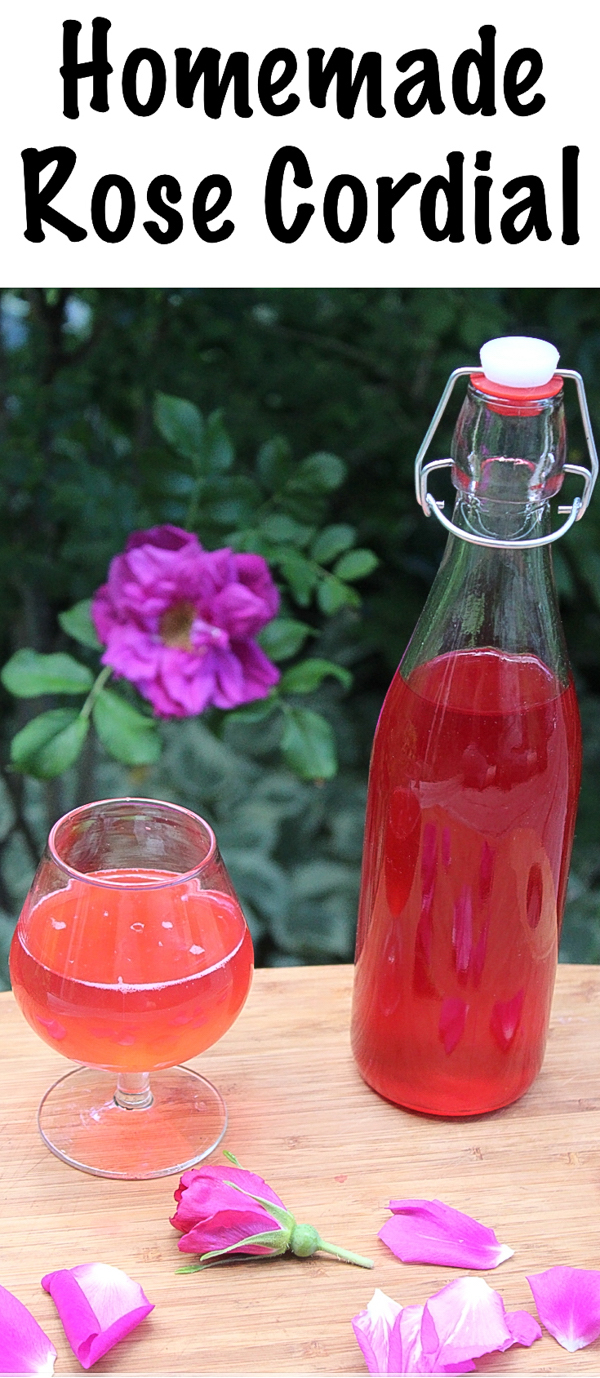
Rose cordial is a fragrant rose-flavored simple syrup, made with rose petals, sugar, water, citrus, and a small amount of citric acid for tartness and preservation. It’s not a liqueur (no alcohol), so it comes together in 24 hours and turns into a beautiful pink soda the moment you splash it into seltzer.
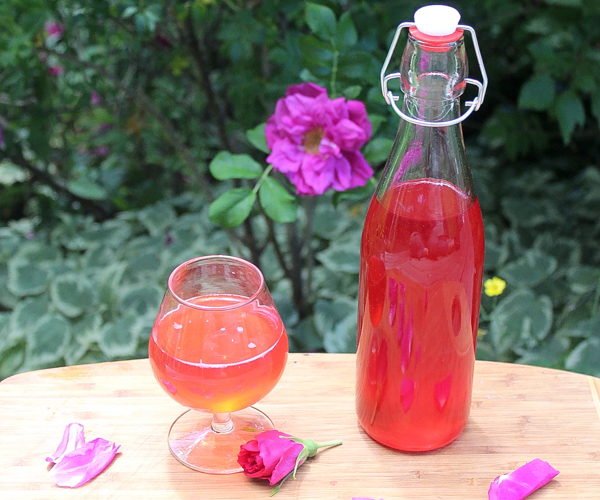
Despite the old-fashioned name, rose cordial is essentially a rose-infused simple syrup. The technique is the same as any flavored simple syrup: dissolve sugar in hot water, add the flavoring (rose petals plus citrus), then let it steep at room temperature for 24 hours. After straining, you have a fragrant pink syrup that turns plain seltzer into a beautiful pink soda, mixes into mocktails and cocktails, drizzles over ice cream, and dresses up a glass of sparkling wine.
This is a faster cousin to my rhubarb liqueur and dandelion liqueur, which take 4 to 6 weeks to fully infuse because the alcohol pulls flavor out slowly. Sugar syrup pulls flavor and color out of rose petals in less than a day, so you can pick rose petals in the morning and have a finished bottle by the next afternoon. If you’re new to working with edible flowers, my elderflower cordial is built on the same technique with a different flower.
The recipe makes 3 to 4 cups, infused at room temperature in a single overnight steep. A tablespoon or two stretches into a full glass, so a single batch lasts a long time and goes a long way at a tea party.
Why you’ll love this family favorite recipe!

This is the bottle I reach for whenever the kids want a “fancy drink” at a tea party. A tablespoon of rose cordial in a teacup, topped with cold seltzer or chilled herbal tea, looks completely magical to a five-year-old and tastes far better than anything I’d buy in a bottle. The pale pink color, the floral fragrance, and the fact that it came from real roses growing on the edge of our woods makes a stuffed-animal-and-doll tea party feel like a real occasion. Adults get the grown-up version with a splash of gin or sparkling wine, but the same bottle serves both. After harvesting petals for cordial in early summer, the same wild rose patches give us rose hips in the fall, so almost nothing goes to waste.
Quick Look at the Recipe
- Makes: 3 to 4 cups of finished cordial (about 24 to 32 servings, 1 tablespoon each)
- Active prep: 15 minutes
- Steep time: 24 hours at room temperature
- Rose petals: 2 cups fresh, unsprayed (or 1/4 cup dried edible rose petals or buds)
- Sugar and water: 2 cups each, dissolved into a simple syrup
- Citrus: 1 thinly sliced orange + 1 thinly sliced lemon, or 2 lemons for a sharper, less sweet finish
- Storage: Refrigerator only, 4 to 6 weeks. Not shelf stable.
Ingredients for Rose Cordial
The recipe makes about 3 to 4 cups of finished cordial. Everything goes into a single saucepan and then a jar to steep. The most important sourcing rule is that the rose petals must be unsprayed; see the note below.
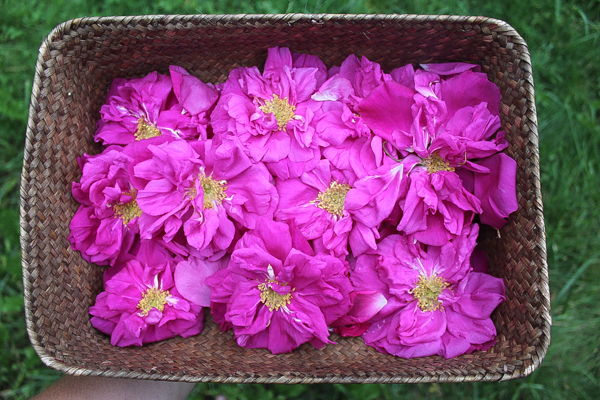
- Rose petals (2 cups fresh, tightly packed, OR 1/4 cup dried edible rose petals or rose buds): Fresh wild or unsprayed garden roses give the most fragrance and color. Dried edible rose petals or buds are far more concentrated, which is why the dried amount is much smaller. Both produce excellent cordial; fresh has more delicate floral character, dried has a deeper, slightly more medicinal note.
- Granulated sugar (2 cups): Plain white sugar lets the rose color show. The 1:1 sugar-to-water ratio is the most stable simple syrup; reducing the sugar will shorten the shelf life and dull the color.
- Water (2 cups): Plain tap water is fine. Filtered water if your tap water has strong chlorine or mineral flavors.
- Citric acid (1/2 teaspoon): This is the key ingredient most rose cordial recipes get wrong, including an earlier version of this one. Citric acid does two jobs: it adds the bright tartness that balances the heavy sweetness of a simple syrup, and it lowers the pH enough to extend shelf life from about 1 week to roughly 4 to 6 weeks under refrigeration. The amount comes from Herbal Academy’s home cordial preservation guideline of 1/4 teaspoon per pint, scaled to this batch’s 3 to 4 cup yield. Bulk citric acid is the most affordable way to keep some on hand.
- Citrus (1 lemon + 1 orange, sliced thin, OR 2 lemons for a brighter, less sweet finish): The orange version reads softer and more floral, like a tea-party drink; the all-lemon version is sharper and more grown-up, closer to what you’d want in a cocktail. Either works, and you can split the difference (2 lemons + 1/2 orange) if you prefer.
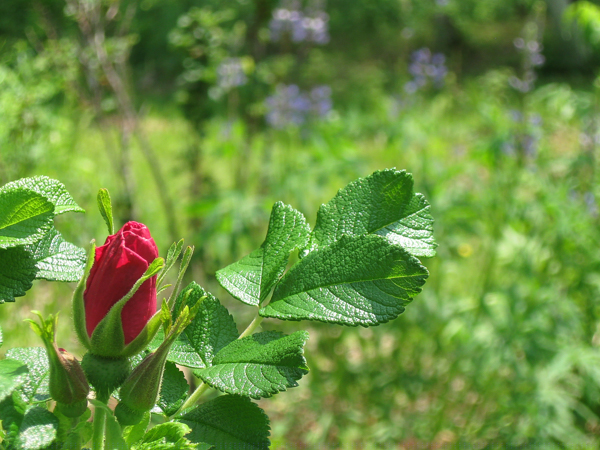
A note on the roses: Use only roses that are completely unsprayed, ideally from a wild patch or a garden you know hasn’t been treated with anything. Cultivated florist or garden-center roses are routinely sprayed with fungicides and systemic insecticides that can be absorbed through the skin and definitely should not be steeped into a drink. Wild roses (the single-petal kind that grow on roadsides and in sunny edge habitat) are a great alternative and are often more fragrant than ornamental cultivars. If you don’t have access to fresh unsprayed roses, dried food-grade rose petals or rose buds from an herb supplier are the safest substitute.
How to Make Rose Cordial
The whole process is hot simple syrup poured over rose petals and citrus, steeped overnight, then strained and bottled. Less than 15 minutes of active work and a single overnight wait.
Step 1. Make the simple syrup. Combine 2 cups water and 2 cups sugar in a saucepan over medium heat. Stir until the sugar fully dissolves and the syrup is clear, then remove from heat. You don’t need to boil it; just heat enough to dissolve.
Step 2. Cool the syrup slightly. Let the syrup cool for about 10 minutes off the heat. You want it warm but not boiling when it hits the rose petals; pouring boiling syrup directly onto fresh petals will scorch out the volatile aromatics that give rose its character.
Step 3. Combine with the petals, citrus, and citric acid. Add the rose petals (2 cups fresh or 1/4 cup dried), the sliced citrus (1 lemon + 1 orange, or 2 lemons), and 1/2 teaspoon citric acid to a large heatproof bowl or a half gallon mason jar. Pour the warm simple syrup over the top and stir gently to combine.
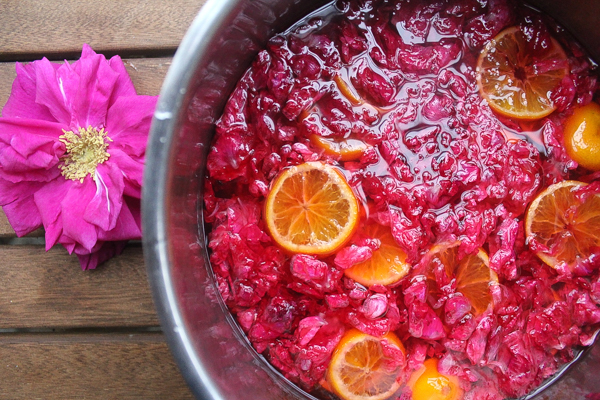
Step 4. Cover and steep at room temperature for 24 hours. Cover loosely with a lid or plate and leave on the counter, out of direct sunlight. The simple syrup will pull color and flavor out of the rose petals overnight. No need to refrigerate during the steep; the high sugar content keeps everything safe at room temperature for this short window.
Step 5. Strain through a fine mesh strainer. Press gently on the rose petals and citrus to extract the last bit of flavored syrup. For a perfectly clear cordial, run a second pass through cheesecloth; for a soda or cocktail use, the mesh-strained version is fine.
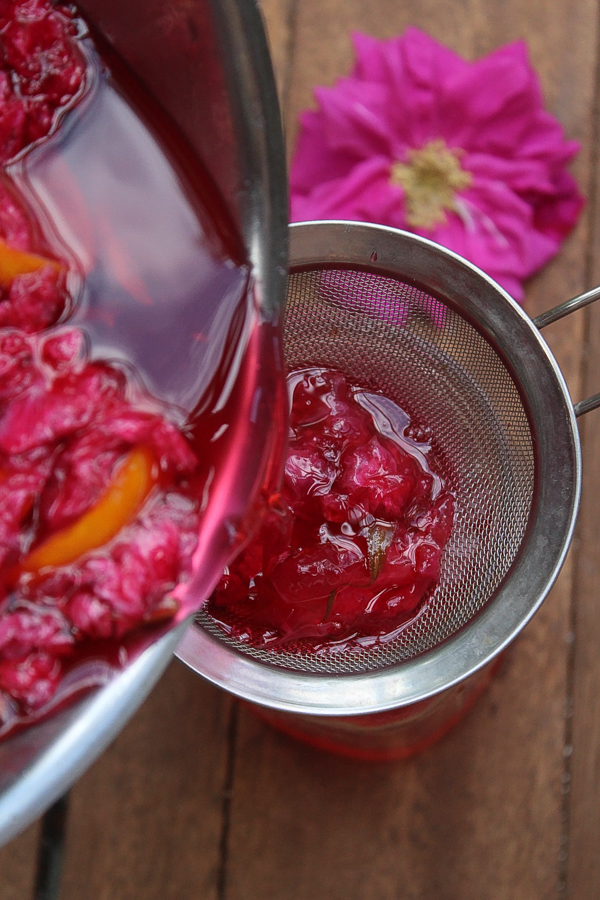
Step 6. Bottle and refrigerate. Use a brewing funnel to fill clean glass bottles. The cordial keeps in the refrigerator for 4 to 6 weeks. It is not shelf stable; this is a non-alcoholic syrup that needs cold storage.
Recipe Tips
Pick fragrant, fully open roses. The rule of thumb is: if you can smell a rose from a few feet away, it’ll make a flavorful cordial. If you can’t smell it at all, it won’t. Most modern hybrid tea roses have been bred for looks at the cost of fragrance, which is why wild roses and old-fashioned “antique” varieties make better cordial than most cultivated florist roses. Pick mid-morning, after the dew has dried but before the heat of the day, when the volatile oils are at their peak.
Citric acid is for both flavor and preservation. A simple syrup tastes one-dimensional and cloying without a little acid to balance the sugar. Citric acid is what every commercial cordial uses for that bright tartness, and it’s also what gives the syrup its 4-to-6-week refrigerator shelf life (without it, you’re looking at a week or two before fermentation starts). Don’t skip it, but don’t overdo it either; the 1/2 teaspoon in this recipe is the right amount for a 3-to-4-cup batch.
The color depends on the petals. Deep red and dark pink rose petals give the most dramatic pink cordial. Pale pink and white petals give a softer, almost amber syrup. Wild roses are usually pale pink and produce a delicate rose color; cultivated red roses produce a more saturated pink. Both taste excellent.
Refrigerate, period. Unlike my rhubarb liqueur or other alcoholic infusions that are shelf-stable thanks to the alcohol, this is a sugar syrup with no preservative beyond citric acid. Store it in the fridge from the moment you bottle it, and toss any bottle that develops bubbles, off smells, or a fizzy fermented character.
Variations
The base recipe (rose, sugar, water, citrus, citric acid) takes well to small additions. A few that work:
- Two lemons instead of lemon and orange: Cuts the perceived sweetness and gives a sharper, more grown-up finish. Best if you’ll mostly use the cordial in cocktails or with sparkling wine instead of as a kid soda.
- Dried rose petals or rose buds: Substitute 1/4 cup dried edible rose petals or buds for the 2 cups fresh. Dried petals are roughly 8 times more concentrated than fresh, which is why the substitution ratio is so different. The flavor is slightly deeper and more tea-like.
- Rose-cardamom cordial: Add 4 lightly crushed cardamom pods with the petals in step 3. Beautiful for chai-style mocktails and over yogurt or ice cream.
- Strawberry rose cordial: Add 1 cup of hulled, sliced strawberries with the petals in step 3. The strawberries deepen the pink color and round out the floral note. (For a different way to use that combination, see my maple strawberry rhubarb pie.)
- Alcoholic rose cordial: If you want a shelf-stable, longer-keeping version, infuse 2 cups vodka with rose petals and citrus zest separately for 4 to 6 weeks, then blend with simple syrup to taste. The technique is the same as my dandelion liqueur, with rose subbing for dandelion.
Rose Cordial Drinks
Use rose cordial anywhere you’d use a flavored simple syrup. A tablespoon or two is enough to flavor a full glass; this is a concentrate, not a finished drink. A few starting points:
- Rose soda: 1 to 2 tablespoons rose cordial, top with cold seltzer or sparkling water, garnish with a fresh rose petal or a lemon slice. The simplest, prettiest tea-party drink.
- Rose lemonade: 2 tablespoons rose cordial stirred into a tall glass of fresh or store-bought lemonade.
- Rose iced tea: 1 to 2 tablespoons rose cordial in a glass of cold black, green, or hibiscus tea. Hibiscus is especially gorgeous because both turn the drink a deeper pink.
- Rose 75 (rose French 75): 1 oz gin, 1/2 oz lemon juice, 1/2 oz rose cordial, top with sparkling wine. Garnish with a rose petal.
- Rose gin and tonic: 1 1/2 oz gin, 1 tablespoon rose cordial, top with tonic water and ice. Squeeze of lemon.
- Rose mocktail spritz: 1 tablespoon rose cordial, 1 tablespoon lemon juice, top with seltzer and ice. The non-alcoholic version of a French 75.
It’s also lovely drizzled over fresh fruit, vanilla ice cream, plain yogurt, or a slice of pound cake. Anywhere a teaspoon of floral sweetness would help.
For more garden-fresh drinks, try my elderflower cordial (similar technique, different flower), quince liqueur (which also uses a few rose petals for color), knotweed gin and tonic, or my collection of rhubarb cocktails.
Yes. Substitute 1/4 cup dried edible rose petals or buds for the 2 cups fresh. Dried petals are roughly 8 times more concentrated, which is why the amount is so much smaller. The flavor is slightly deeper and more tea-like, but the technique and steep time are exactly the same.
4 to 6 weeks in the refrigerator, thanks to the citric acid and the high sugar content. Without the citric acid you’d get about 1 to 2 weeks before fermentation starts. This is not a shelf-stable cordial; refrigerate from the moment you bottle it.
No. Steep at room temperature, out of direct sunlight. The high sugar content keeps everything safe for the 24-hour window, and room temperature extracts more rose flavor than refrigerator temperature. Refrigerate after straining and bottling.
An earlier version of this recipe called for far too much citric acid (2 tablespoons instead of 1/2 teaspoon), which is why some readers found it inedibly tart. The corrected amount is 1/2 teaspoon for a 3 to 4 cup batch, scaled from Herbal Academy’s standard cordial preservation guideline of 1/4 teaspoon per pint. If a batch turns out too sour, you can rescue it by stirring in additional simple syrup until balanced.
No, unless you specifically know they were grown without sprays. Florist and garden-center roses are routinely treated with fungicides and systemic insecticides that can be absorbed through the skin and definitely should not be steeped into a drink. Use wild roses, garden roses you grew yourself without spraying, or food-grade dried rose petals from an herb supplier.
Edible Flower Recipes
If you tried this Rose Cordial recipe, or any other recipe on Adamant Kitchen, leave a ⭐ star rating and let me know what you think in the 📝 comments below!
And make sure you stay in touch with me by following on social media!
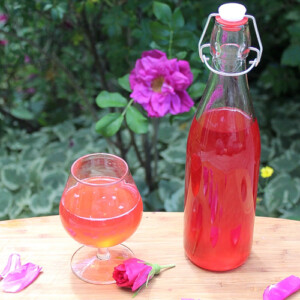
Rose Cordial
Equipment
Ingredients
- 2 cups fresh rose petals, tightly packed (or 1/4 cup dried edible rose petals or rose buds)
- 2 cups sugar
- 2 cups water
- 1/2 teaspoon citric acid
- 1 large lemon, sliced thin
- 1 large orange, sliced thin (or substitute a second lemon for a sharper, less sweet finish)
Instructions
- Combine sugar and water in a saucepan over medium heat. Stir until the sugar fully dissolves and the syrup is clear, then remove from heat.
- Let the syrup cool for about 10 minutes off the heat. You want it warm, not boiling, when it hits the rose petals.
- Place the rose petals, sliced citrus, and citric acid in a half gallon mason jar or large heatproof bowl. Pour the warm syrup over the top and stir gently.
- Cover loosely and steep at room temperature, out of direct sunlight, for 24 hours. No need to refrigerate during the steep.
- Strain through a fine mesh strainer, pressing gently on the petals and citrus to extract all the syrup. For a perfectly clear cordial, run a second pass through cheesecloth.
- Bottle in clean glass bottles and refrigerate. Use within 4 to 6 weeks.
Notes
Nutrition
Nutrition information is automatically calculated, so should only be used as an approximation.
Find the perfect recipe
Searching for something else? Enter keywords to find the perfect recipe!
Bonjour ! J’adore votre site, je le recommande à plein de gens mordus de la cueillette. Est-ce que le cordial de rose maison peut se congeler ? Et pouvez-vous me dire si on peut manger toutes les sortes de roses. J’ai trouvé une petite rose sauvage, style ancestral, et je me demande si elle est consommable ? Merci pour votre super site. Cordialement Colette 😉
Hello! I love your site, I recommend it to a lot of people who are passionate about picking. Can homemade rose cordial freeze? And can you tell me if we can eat all kinds of roses? I found a small wild rose, ancestral style, and I wonder if it is consumable? Thank you for your great site. Best regards.
Merci beaucoup Colette ! Oui, le cordial de rose se congèle très bien. Laissez un peu d’espace en haut du contenant, ou congelez-le dans des bacs à glaçons pour en utiliser un peu à la fois. Au réfrigérateur, il se garde de 4 à 6 semaines.
Toutes les vraies roses sont comestibles, y compris les roses sauvages, à condition qu’elles n’aient pas été traitées. Assurez-vous simplement qu’il s’agit bien d’une rose. Le goût varie beaucoup d’une variété à l’autre : plus la rose est parfumée, meilleur sera le cordial. Les petites roses sauvages simples sont souvent très parfumées et donnent un excellent cordial. Évitez seulement les roses de fleuriste ou de jardinerie, qui sont souvent traitées. Bonne cueillette !
Thanks so much, Colette! Yes, rose cordial freezes very well. Leave a little headspace at the top of the container, or freeze it in ice cube trays so you can use a little at a time. In the fridge, it keeps for 4 to 6 weeks.
All true roses are edible, including wild roses, as long as they haven’t been sprayed. Just make sure it really is a rose. The flavor varies a lot from one variety to another: the more fragrant the rose, the better the cordial. Small wild single roses are often very fragrant and make an excellent cordial. Just avoid florist or garden center roses, which are often treated. Happy foraging!
How long would you say the shelf life for this syrup is?
1 to 2 weeks refrigerated.
I read your blog. Having very use full information help me a lot. I will read more articles on your blog.