This post may contain affiliate links. Please see our disclosure policy.
Smreka is a probiotic juniper soda from the Balkans, made with just two ingredients (juniper berries and water) and about a month of patient counter-fermentation. It’s a simple wild ferment, requires no yeast or starter culture, and produces a lightly fizzy drink that tastes more like herbal lemonade than gin. The juniper berries themselves carry the wild yeast that does all the work; you provide the jar, the water, and the time.
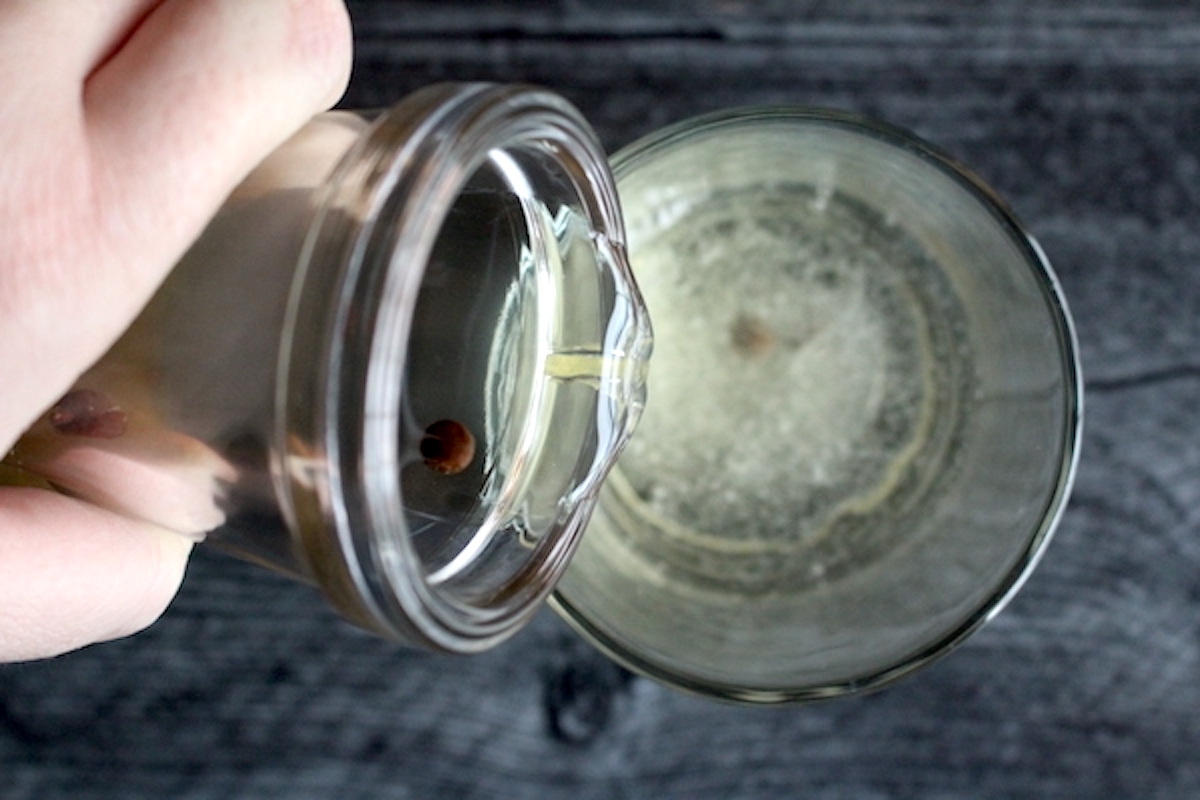
Juniper berries are best known as the dominant botanical in gin, but smreka doesn’t taste piney or resinous. The slow cool-water ferment pulls out a much softer side of the juniper, somewhere between a lightly herbal lemonade and a gentle tonic water. There’s a faint forest note in the background, but the overall impression is bright and clean, not medicinal.
This recipe is grounded in the version Sandor Katz documents in The Art of Fermentation, with the technique notes I’ve worked out across several years of brewing it on our Vermont homestead. Smreka is a niche drink even in Bosnia, where it’s traditionally made, and it’s one of those recipes I keep coming back to specifically because it’s so unfussy. There’s no boiling, no airlock required, no temperature monitoring, no pinch of yeast to add at exactly the right moment. You put juniper berries in a jar of water, cover it with a cloth, and wait. After about four weeks, you have soda.
This recipe makes 2 quarts, which is enough for several days of cold drinks or about a dozen cocktail servings. Scale up or down as your jar size allows; the ratio is roughly 1 cup of dried juniper berries per 2 quarts of water.
Notes from My Kitchen

I keep a smreka jar on the back counter most of the year, the way some people keep a sourdough starter alive on the windowsill. It doesn’t ask for anything. The juniper berries float on the surface for the first couple of weeks, gradually sink as the ferment progresses, and by the time they’re all on the bottom, the soda is ready. I find it satisfying that something this old, this elemental, requires nothing more than a quart of water and a handful of berries. There’s no part of this recipe that depends on a packet of anything. It’s fermentation with nothing extra: wild yeast, sugar (from the berries themselves), and time.
Quick Look at the Recipe
- Makes: About 2 quarts (8 servings of 1 cup each)
- Active prep: 5 minutes
- Ferment time: About 4 weeks at room temperature
- Juniper berries: Dried, edible variety (Juniperus communis preferred)
- Water: Non-chlorinated spring or filtered water
- Equipment: Half-gallon jar or narrow-necked carafe, plus cheesecloth or a coffee filter
- Storage: Refrigerated; drinks well for several weeks once strained
Ingredients for Smreka
Two ingredients, and both of them matter. The juniper berry variety affects flavor; the water source affects whether the ferment works at all.
- Juniper berries (dried, edible variety): Use dried whole juniper berries from an edible species. Juniperus communis (common juniper) is the culinary juniper berry sold in spice aisles and bulk bins, and it’s what you’ll find online too. A few other species have edible berries, including J. drupacea and J. californica, but some junipers have toxic berries, J. sabina among them. If you’re foraging your own, identify the plant carefully or stick with store-bought berries. The wild yeast living on the unwashed surface of the berries is what carries the entire fermentation, so don’t rinse them before using.
- Water (non-chlorinated): This is the ingredient most likely to cause a failed batch. Chlorinated tap water kills the wild yeast on the juniper berries and the ferment never starts. Use spring water, filtered water that removes chlorine, bottled water, or tap water that’s been left uncovered overnight to let the chlorine off-gas. If your municipal water uses chloramine instead of chlorine (chloramine doesn’t off-gas the same way), use filtered or bottled water instead.
A note on foraging your own juniper berries: Common juniper berries start out green and take two years to ripen on the bush, sometimes three, turning a dusty blue-black. Pick only the ripe berries. The unripe green ones are bitter and resinous in a way the ripe berries aren’t. If you’re new to juniper identification, a good field guide is essential, because some junipers that aren’t edible grow in similar places and their berries can look alike.
How to Make Smreka
Five minutes of active work, then four weeks of patient counter-time. The ferment mostly takes care of itself; your only ongoing job is to glance at the jar every few days and make sure nothing’s gone sideways.
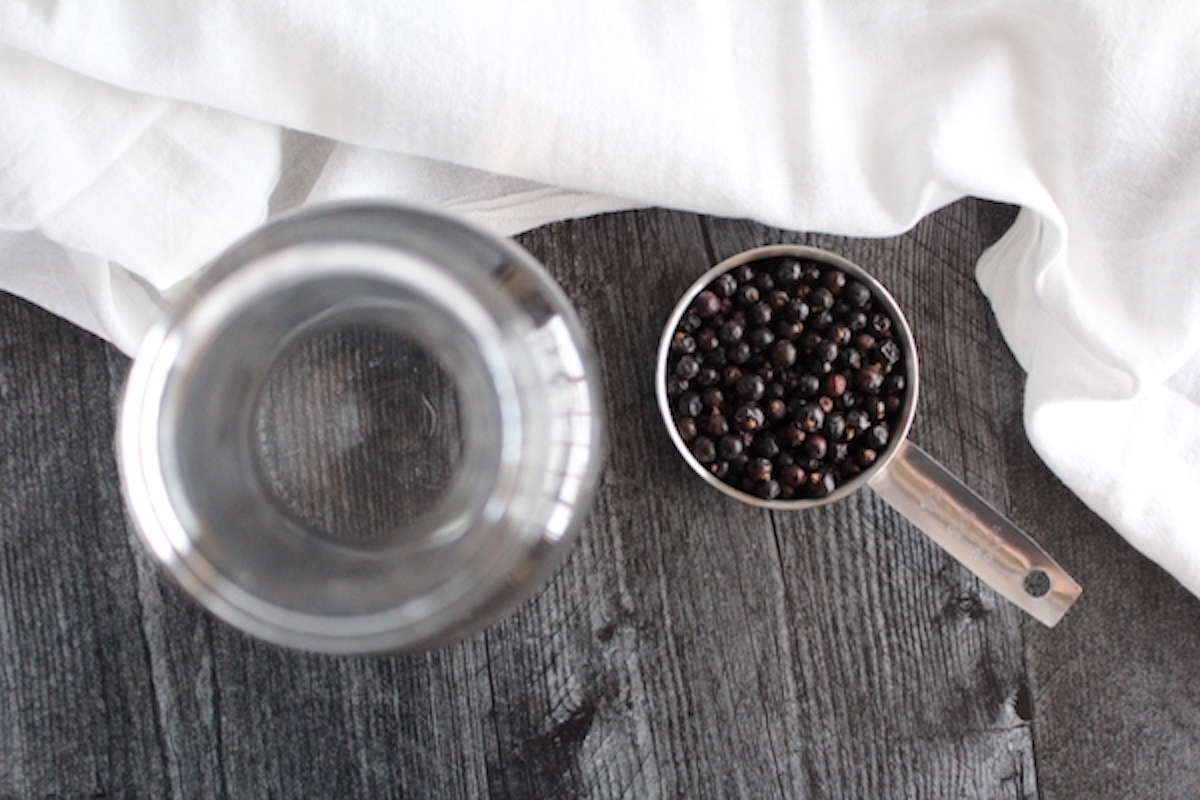
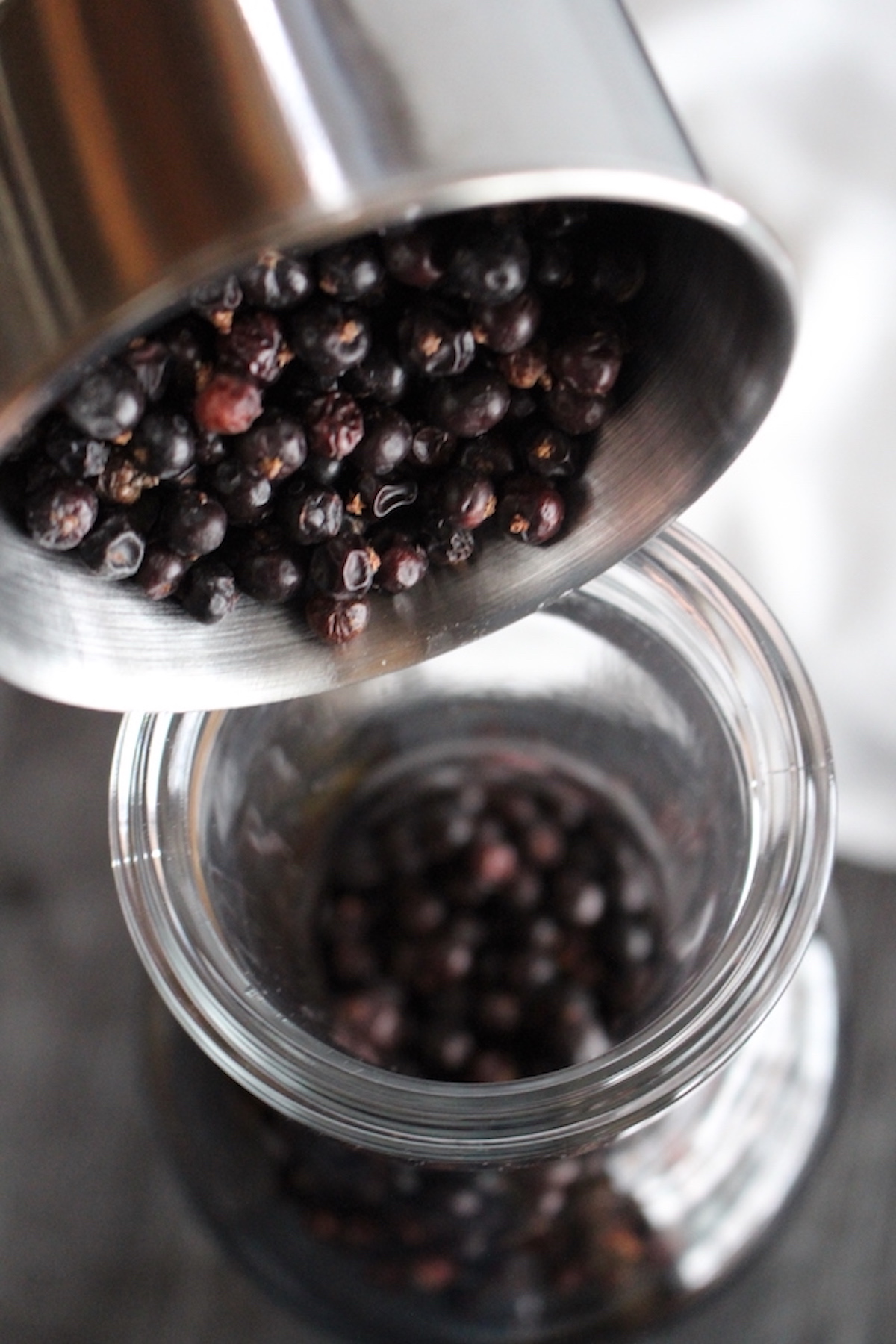
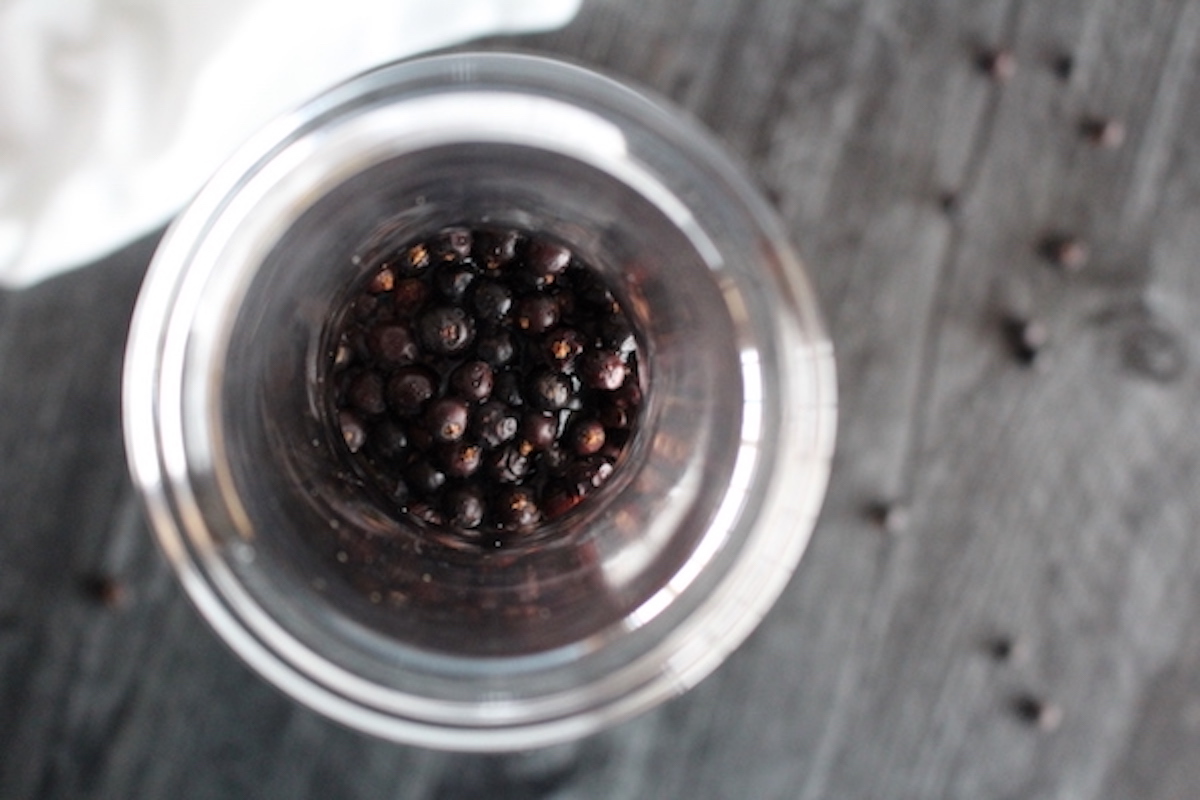
Step 1. Add the juniper berries to a clean jar. Use a half-gallon mason jar, a narrow-necked carafe, or any glass container that holds at least 2 quarts plus a few inches of headspace. Add 1 cup of dried juniper berries to the bottom of the jar. Don’t rinse the berries first; the wild yeast living on the surface is what makes this work.
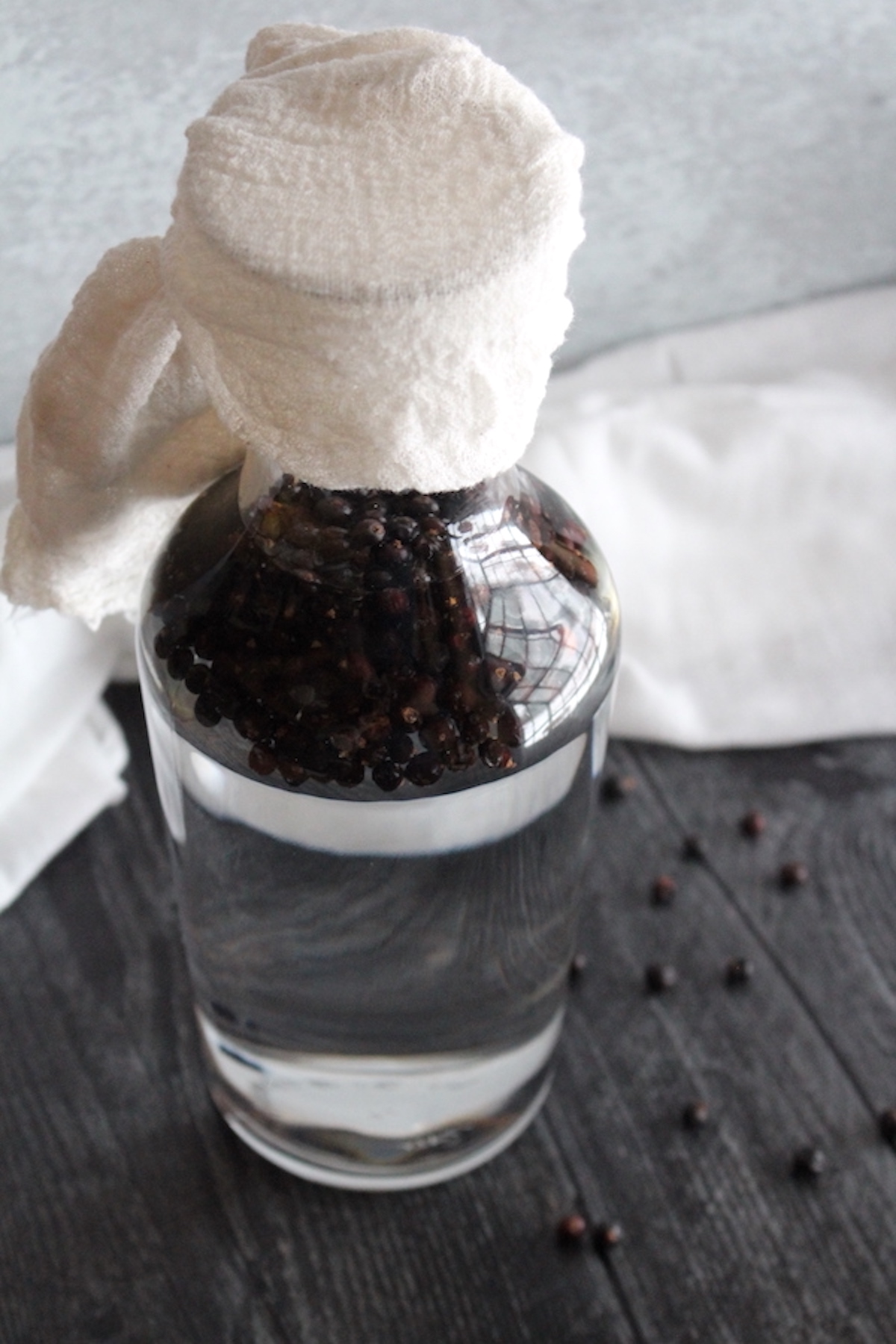
Step 2. Cover with non-chlorinated water. Pour 2 quarts of room-temperature spring or filtered water over the juniper berries, leaving 1 to 2 inches of headspace at the top of the jar. The berries will float at first; that’s expected. They’ll gradually sink as the ferment progresses, which is the visual cue you’re tracking.
Step 3. Cover the jar with cheesecloth or a coffee filter. Drape a layer of cheesecloth or a clean coffee filter over the mouth of the jar and secure it with a rubber band, twine, or the screw-on band of a mason jar lid (without the flat metal disc). The cover keeps fruit flies out while letting CO2 escape and oxygen in. Do not seal the jar tightly; this is an open-air ferment and needs to breathe.
Step 4. Set the jar somewhere out of direct sunlight. A kitchen counter, pantry shelf, or back of the cupboard all work. Room temperature (65 to 75°F) is ideal; warmer rooms ferment faster and cooler rooms ferment slower. Direct sunlight can make the temperature swing too much and can also encourage off-flavors, so keep the jar somewhere shaded.
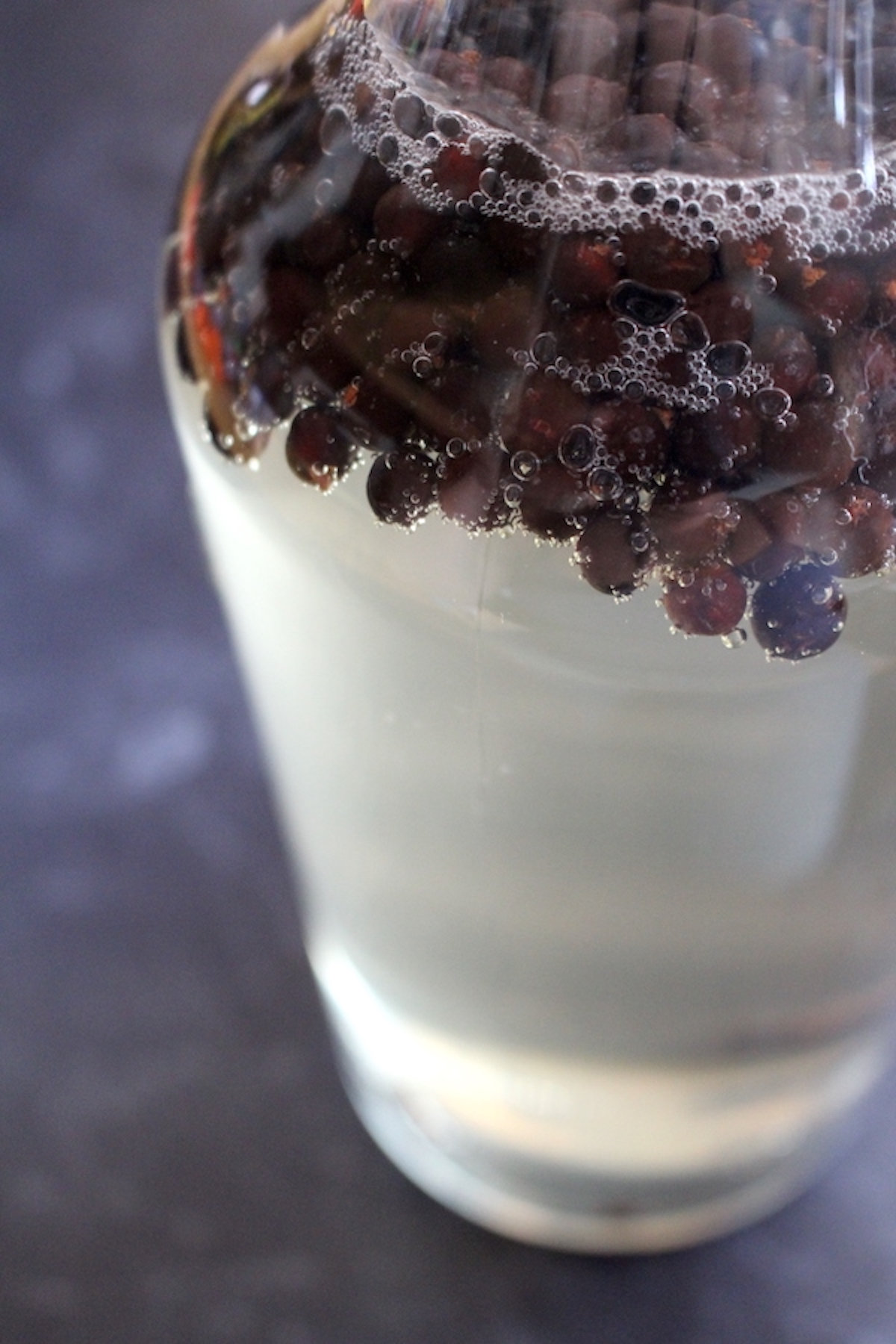
Step 5. Wait, and check on it every few days. For the first week or two, the berries will mostly float and not much will appear to be happening. Around week 2 or 3, you’ll start to see small bubbles forming on the surface and rising up the sides of the jar; this is the wild fermentation getting going. Give the jar a gentle swirl each time you check it, so the floating berries get wet again. Mold grows best on whatever sits above the liquid, where there’s the most air.

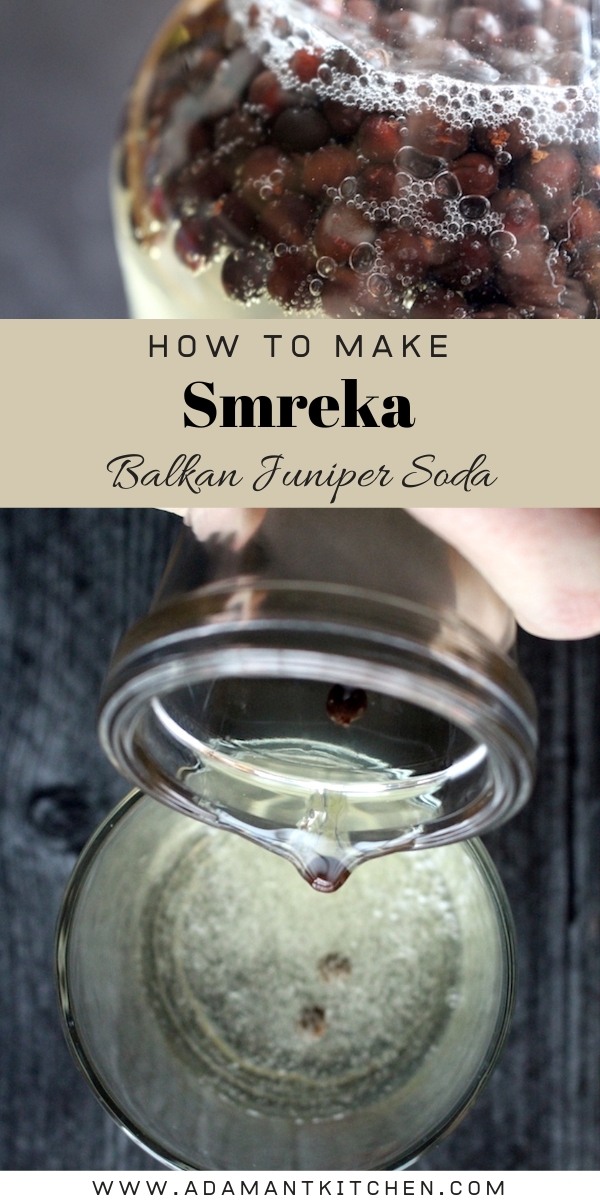
Step 6. Smreka is done when all the berries have sunk to the bottom. This usually happens around the four-week mark, but warm conditions can have it ready in three weeks and cool conditions can stretch it to five or six. The water will turn a pale yellow-green and the surface will be calm rather than bubbly. The berries on the bottom of the jar are the visual finish line.
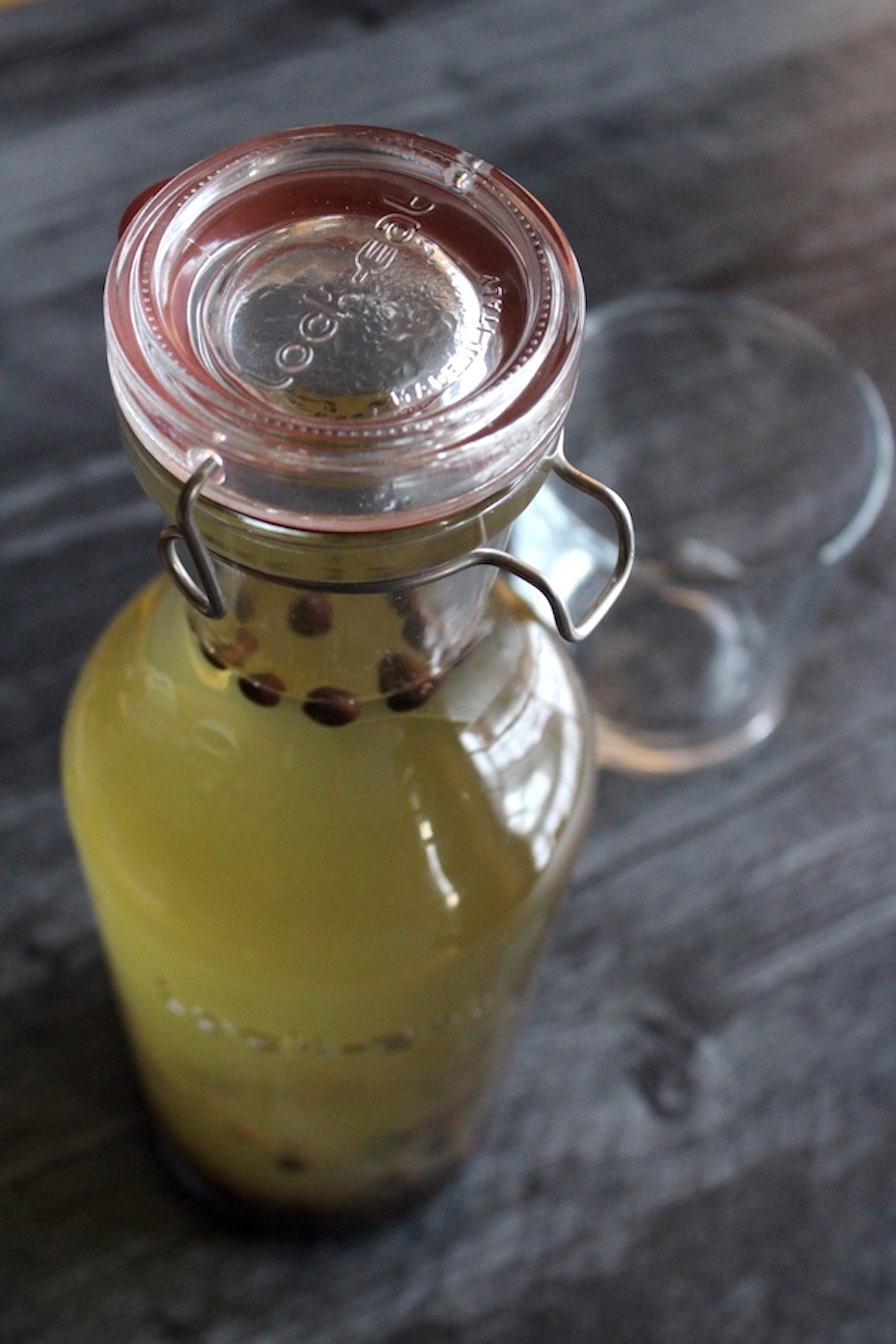
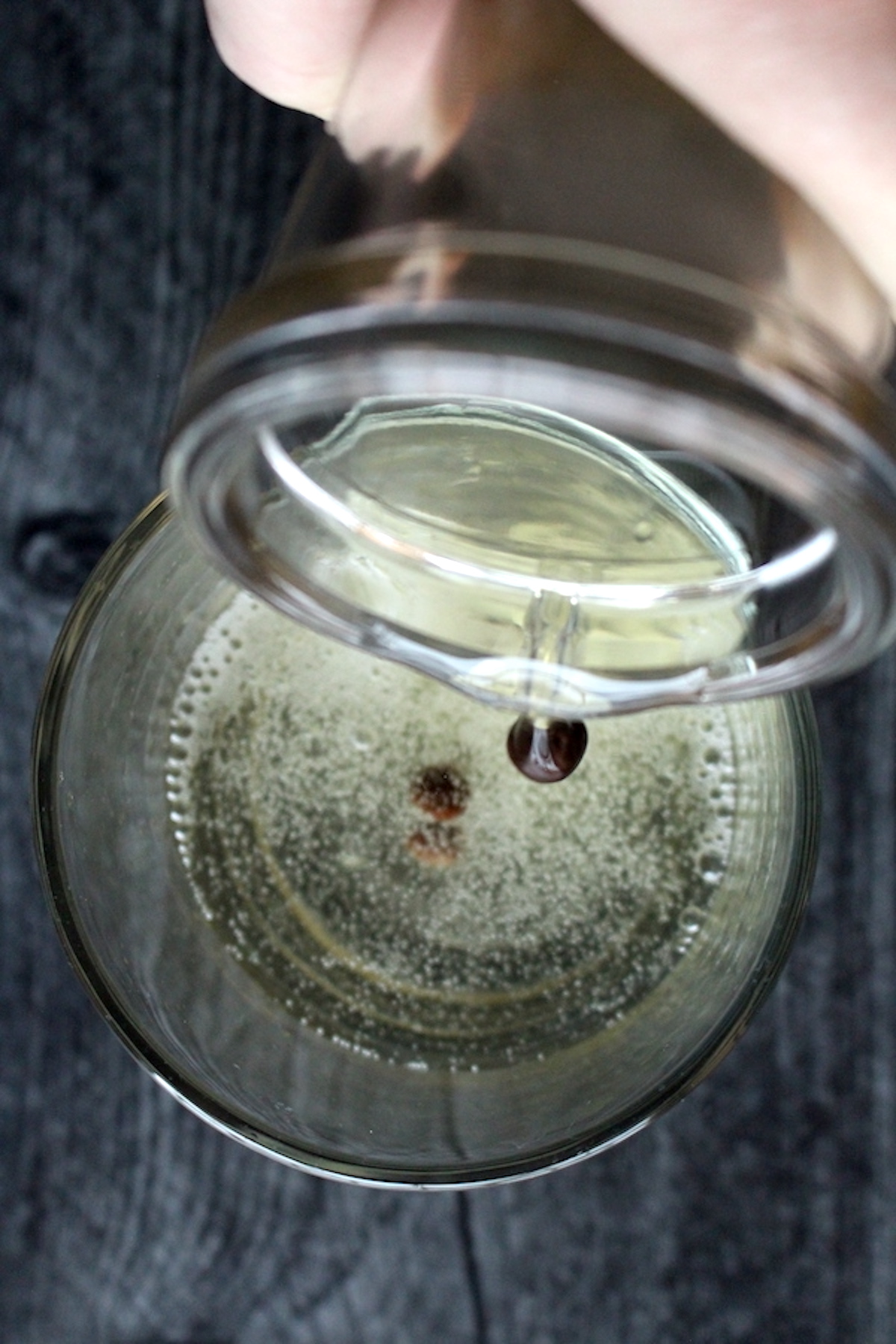
Step 7. Strain and store. Pour the smreka through a fine mesh strainer into a clean jug or bottles. The strained smreka keeps in the refrigerator for at least a few weeks. The flavor stays bright for the first week or two and slowly mellows after that; some people prefer the longer-aged version, which develops a more pronounced piney note over time.
Recipe Tips
Don’t rinse the juniper berries. The wild yeast on the unwashed surface of the berries is the entire fermentation engine. Rinsing the berries before adding them to the jar washes off the yeast and leaves you with a jar of juniper-flavored water that won’t ferment. Buy from a source you trust (organic bulk bins, herbal suppliers) and skip the wash entirely.
Watch the berries, not the calendar. The 4-week timeline is approximate. The actual finish line is when all the juniper berries have sunk to the bottom of the jar; that can happen at three weeks in a warm kitchen or five-plus weeks in a cool basement. The sinking is caused by the berries losing buoyancy as the wild yeast consumes their internal sugars and the small CO2 pockets that initially held them up dissolve away. Trust the visual cue, not the date.
Know kahm yeast from mold. A flat white film on the surface that isn’t fuzzy is kahm yeast. It’s harmless, but it can change the flavor, so skim it off. Fuzzy growth, or spots of green, blue or black, is mold, and the whole batch goes out, even if it’s only on a few floating berries. Mold roots reach farther than you can see, so scooping out the moldy berries doesn’t make the rest safe. Swirling the jar every few days helps keep mold from getting started.
Use an airlock for longer or warm-weather batches. The cheesecloth-cover method is traditional and works fine for most batches, but if you’re fermenting in a hot kitchen or planning to age the smreka for an extended period (8+ weeks for a stronger pine flavor), consider switching to a fermentation jar with an airlock. The airlock keeps most of the oxygen out, which makes surface mold much less likely on a long ferment.
Chlorine is the silent killer. If a batch fails to ferment after 3 to 4 weeks (no bubbles, berries still floating), the most likely reason is chlorinated water. Municipal water systems vary widely in chlorine and chloramine levels, and some are high enough to inhibit wild fermentation entirely. The fix is to use spring water, bottled water, or filtered water that specifically removes chlorine; a Brita filter does not remove chloramine, but a carbon filter rated for chloramine removal will. Tap water left uncovered overnight will off-gas chlorine but not chloramine.
Variations
The base recipe is intentionally minimal, but it adapts well to a few traditional and modern variations:
- Sweetened smreka: Some Balkan recipes call for sugar or honey added at the start of the ferment, which gives the wild yeast more food and produces a slightly more carbonated, slightly more alcoholic finished drink. Add 1/4 to 1/2 cup of sugar or honey to the jar before adding water. The flavor is sweeter and more soda-like.
- Lemon smreka: Add the juice and sliced peel of one lemon to the jar at the start of the ferment, or stir in lemon juice and a splash of simple syrup just before serving. The lemon brightens the herbal juniper flavor and pulls the drink closer to a true lemonade. This is the most common modern variation.
- Aged smreka (longer ferment): Let the smreka continue fermenting past the 4-week mark for a more pronounced pine-and-juniper flavor. The drink becomes drier, more bracing, and noticeably more potent. An airlock is recommended for any aging beyond 8 weeks. Some traditional Balkan brewers age smreka for 3 to 6 months for a deeply herbal, almost medicinal finish.
- Smreka with juniper and elderberry: Add 1/4 cup of dried elderberries along with the juniper berries at the start. The elderberries contribute a deep red-purple color and a fruitier flavor while the juniper provides the wild yeast that carries the ferment.
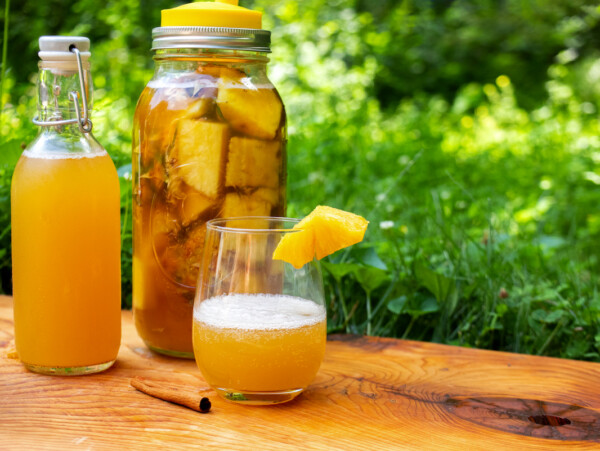
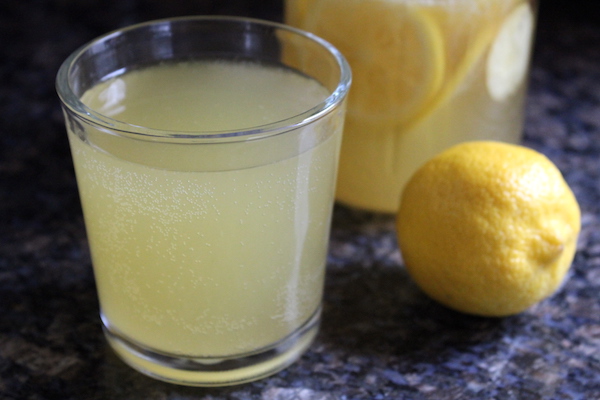
- Other fermented drinks: Once you’ve made smreka, it’s easy to branch out. Tepache uses pineapple skins instead of juniper, sima uses raisins and lemon, and water kefir uses reusable kefir grains to make a natural soda.
Recipes Using Juniper Berries
Once you have dried juniper berries on hand for a batch of smreka, you’ll likely have plenty left over. Juniper berries are wonderful in both savory and sweet applications. A few ways to use them:
- Juniper berry rubs for game meats: Crush a tablespoon of juniper berries with sea salt, black pepper, and fresh thyme; rub onto venison, duck, or pork before roasting. The juniper cuts the richness of game meats beautifully and is the traditional pairing in Northern European cooking.
- Juniper-cured gravlax: Add crushed juniper berries to the standard salt-and-sugar cure for gravlax (along with dill and lemon zest) for a Nordic-inflected cured salmon.
- Juniper sauerkraut and choucroute: A teaspoon of whole juniper berries added to a quart of homemade sauerkraut at the start of the ferment is the traditional Alsatian addition. The juniper carries through clearly in the finished kraut and pairs beautifully with sausages and pork.
- Juniper-infused gin: Crush a tablespoon of juniper berries and add to a 750 ml bottle of vodka for a homemade gin substitute, ready in about a week. Strain and use anywhere you’d use commercial gin.
- Juniper berry mead: Add 2 to 3 tablespoons of juniper berries per gallon of basic homemade mead at the start of the ferment for a long-aged honey wine with a deeply herbal, juniper-forward finish.
- Juniper marinades for braised dishes: Crushed juniper berries are excellent in marinades for beef stews, lamb shanks, and braised cabbage. The flavor is woodsy and warm, particularly suited to long, cold-weather cooking.
Serving Smreka
Smreka is traditionally served chilled, straight from the fridge, with a bit of lemon or sugar. The clean herbal flavor stands up well on its own.
Pour smreka cold into a tall glass, no ice (the ice dilutes the subtle flavor too much). Garnish with a lemon wheel if you’d like a hint of brightness. Serve with savory snacks or cheese rather than sweets. In the Balkans, that might be bread with feta and a spoonful of homemade ajvar, a roasted red pepper and eggplant spread.
For more homemade drinks, try my Finnish sima, tepache, rhubarb liqueur, and dandelion gin, plus traditional bread kvass.
Smreka FAQs
Not much like gin. It isn’t piney or juniper-forward; it’s closer to a lightly herbal lemonade with a soft forest note in the background. The slow cool-water ferment pulls a much gentler side out of the juniper berries than the alcohol extraction used to make gin. The flavor is bright, clean, and refreshing, not medicinal or resinous.
Barely. Smreka is a wild ferment with very limited sugar (only what’s naturally present in the juniper berries themselves), so the alcohol content stays low, typically around 0.5 to 1.5%. It’s far below the threshold that classifies a beverage as alcoholic in most jurisdictions, comparable to kombucha or kefir. If you want a more alcoholic version, add sugar or honey at the start (see Variations) and ferment longer.
Almost always, the answer is chlorinated water. Chlorine and especially chloramine in municipal tap water can kill the wild yeast on juniper berries before fermentation gets going. Switch to spring water, bottled water, or properly filtered water that removes chloramine, and start a new batch. A second possibility is rinsed berries; the wild yeast lives on the unwashed surface of the berries, and rinsing them off removes the fermentation engine. A third, much rarer cause is irradiated juniper berries (some commercial spices are irradiated for sterilization, which kills the wild yeast); choose organic or bulk-bin sources to avoid this.
Yes, with adjustments. Fresh ripe juniper berries (the deep blue-purple ones, not the green unripe ones) carry even more wild yeast than dried berries and ferment somewhat faster, often finishing in 2 to 3 weeks instead of 4. Use about 1 1/4 cups of fresh berries to replace 1 cup dried, since fresh berries contain more water and slightly less concentrated flavor. The technique is otherwise identical.
Yes, but expect a much weaker result. The first batch consumes most of the wild yeast and extractable flavor; a second batch made with the same berries will be milder, slower to ferment (often 6 to 8 weeks instead of 4), and less aromatic. Some traditional brewers do this to stretch a small juniper supply, but for the best flavor, use fresh dried berries each batch. The spent berries can be added to a venison roast or a sauerkraut ferment instead.
Fermented Drinks
If you tried this Smreka (Balkan Juniper Soda) recipe, or any other recipe on Adamant Kitchen, leave a ⭐ star rating and let me know what you think in the 📝 comments below!
And make sure you stay in touch with me by following on social media!
Smreka (Balkan Juniper Soda)
Ingredients
- 1 cup dried juniper berries, J. communis or other edible variety
- 2 quarts non-chlorinated spring or bottled water
- Sugar and/or lemon, for serving (optional)
Instructions
- Add the dried juniper berries to a clean half-gallon glass jar or narrow-necked carafe. Do not rinse the berries; the wild yeast on the surface is what carries the fermentation.
- Pour 2 quarts of room-temperature non-chlorinated water over the berries, leaving 1 to 2 inches of headspace. The berries will float at first; they will gradually sink as fermentation progresses.
- Cover the jar with cheesecloth or a coffee filter, secured with a rubber band or twine. Do not seal tightly; this is an open-air ferment that needs to breathe.
- Set the jar somewhere out of direct sunlight at normal room temperature (65 to 75°F).
- Wait approximately 4 weeks, checking every few days. If any berries on the surface develop white tufts of mold, swirl the jar to resubmerge them or scoop them out with a clean spoon.
- The smreka is ready when all juniper berries have sunk to the bottom of the jar and the water has turned a pale yellow-green.
- Strain through a fine mesh strainer into a clean jug or bottles. Refrigerate.
Notes
Nutrition
Nutrition information is automatically calculated, so should only be used as an approximation.
Find the perfect recipe
Searching for something else? Enter keywords to find the perfect recipe!
Hi I just made Smerka. I’m not sure how it should taste. It’s weird. It doesn’t taste piney. It’s a taste I can’t describe. I added some lemon juice to drink it but still a little weird.
I usually save and try a lot of your fermenting recipes. Thanks.
Smreka does have its own unique taste, and it’s not strongly piney. I’d describe it as somewhere between a light herbal lemonade and tonic water, with just a faint forest note in the background. I happen to love it, but it’s definitely not for everyone, so it may just not be your thing.
That said, it should taste bright and clean. If yours tastes off or funky rather than just unfamiliar, or you saw mold growing through the liquid (not just a little on the floating berries), something may have gone wrong in the ferment. When in doubt, throw it out and try another batch. Thanks so much for trying so many of my recipes!
1