This post may contain affiliate links. Please see our disclosure policy.
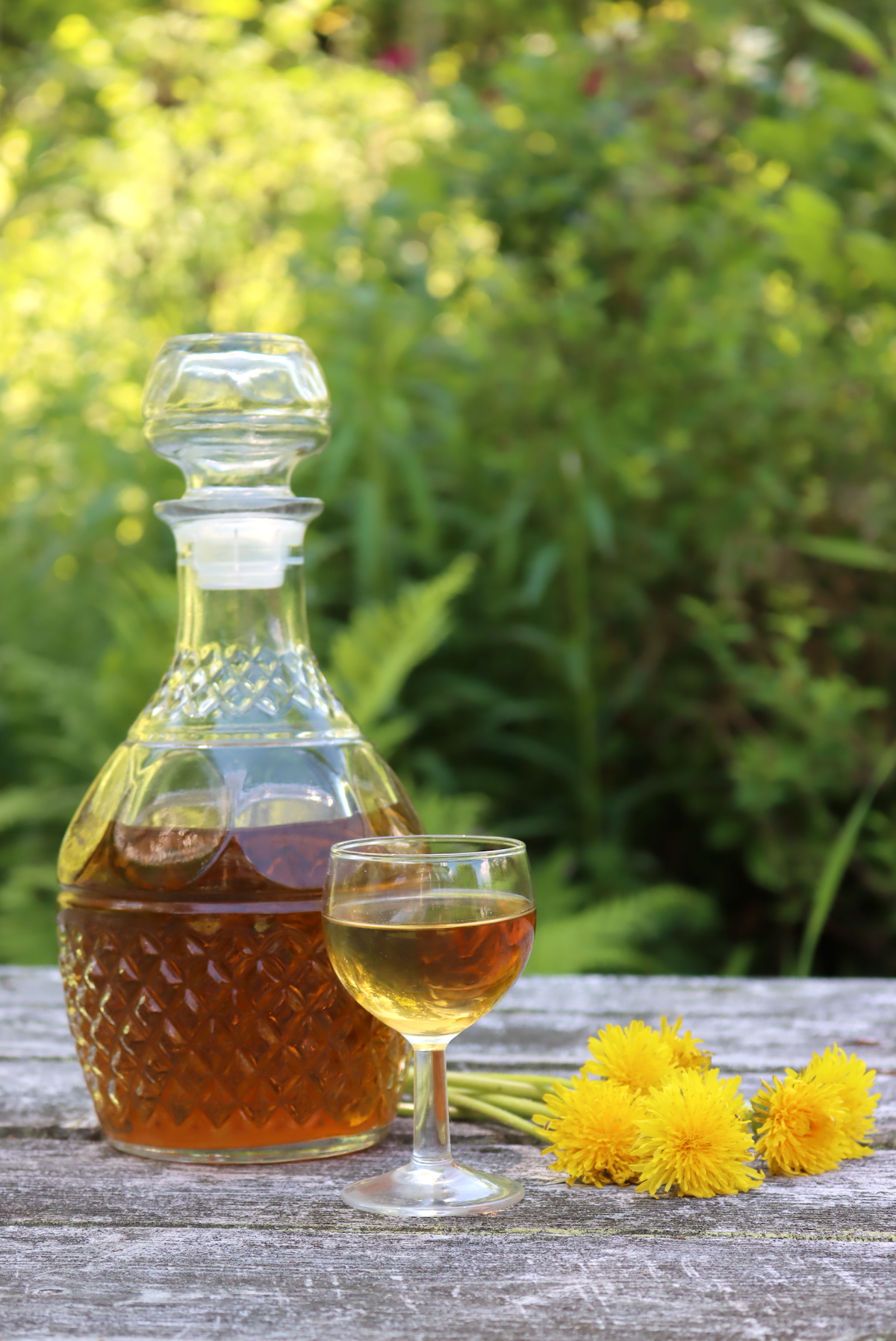
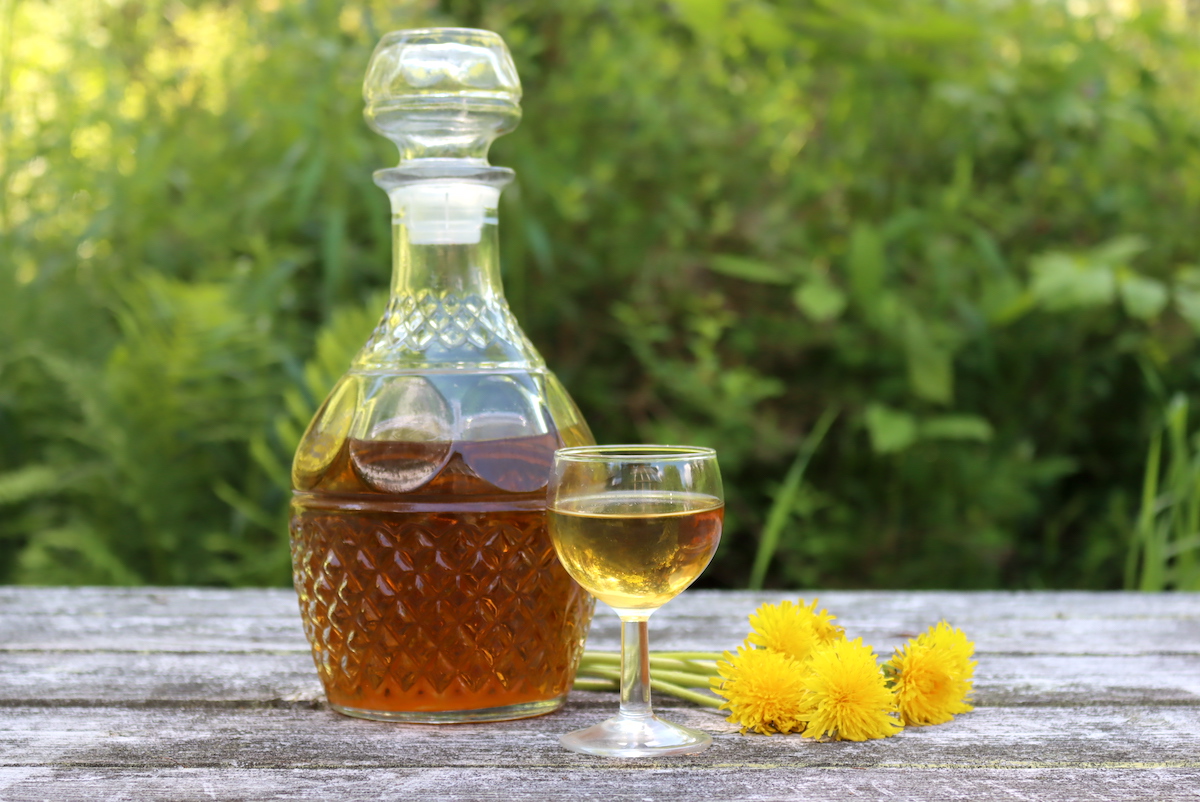
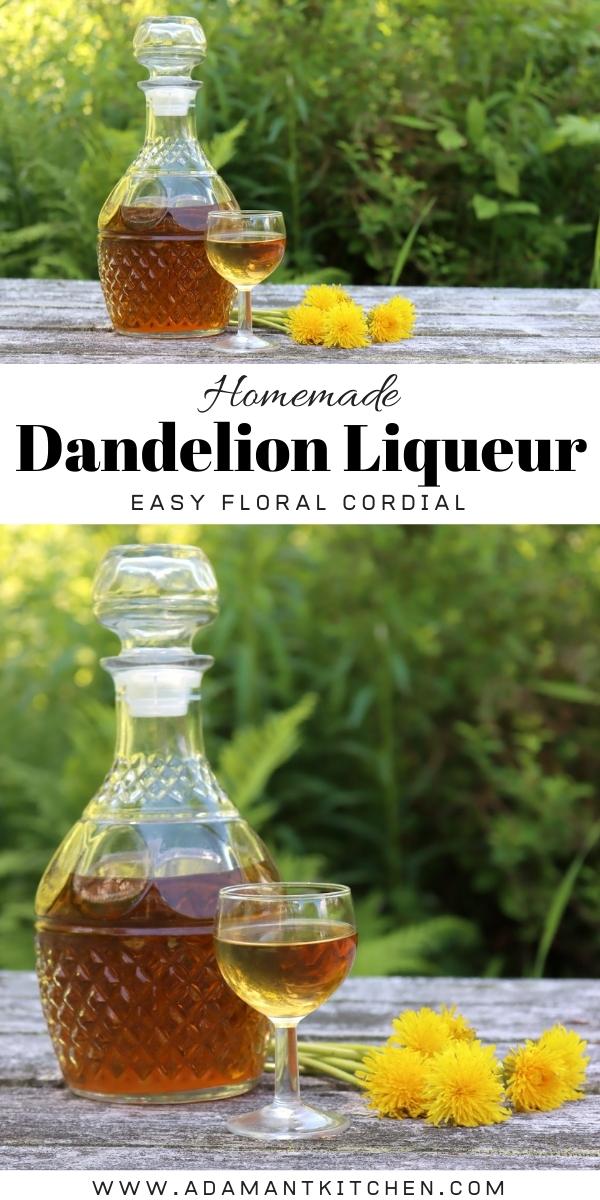
Dandelion liqueur captures the bright honey-like flavor of spring dandelion petals in a golden vodka infusion. About 30 minutes of work (mostly pulling petals from the green bases), 3 weeks of room-temperature infusion, and you have a foraged liqueur that’s a little like Chartreuse and a lot like spring in a glass.
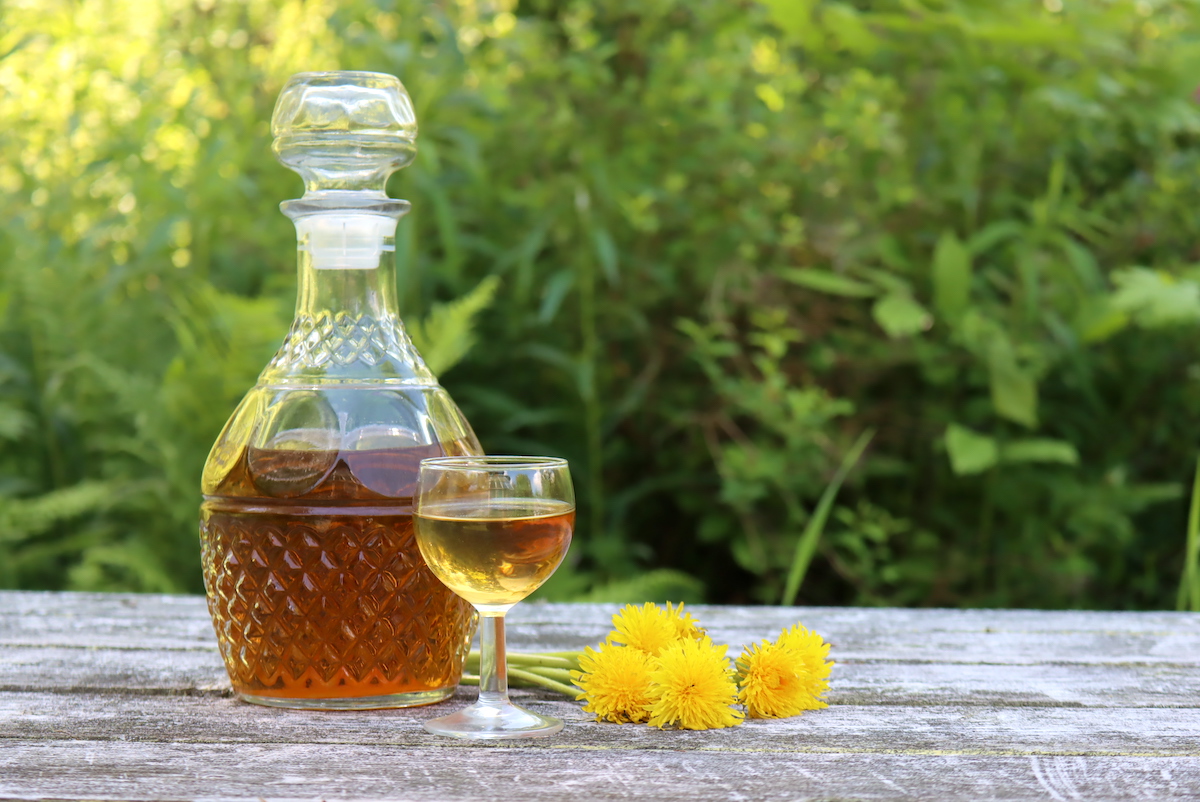
Dandelion blossoms are some of the very first wildflowers to bloom every spring, and once you know what to do with them, the whole “weed” framing falls apart. The petals taste a little like honey (or maybe honey tastes like dandelions, depending on how you look at it), and they make a beautiful golden liqueur that’s somewhat like a foraged Chartreuse in character.
This is one of the easier ways to preserve dandelion season. Most years we go all-out on dandelion wine, which is gorgeous but takes months and requires winemaking equipment. Dandelion liqueur skips all of that: the alcohol is already finished, the recipe is a simple cold infusion in vodka, and it’s ready to drink in about 3 weeks. If you’ve made my rhubarb liqueur with me before, the technique is identical, just swap rhubarb for dandelion petals.
This recipe makes a single quart batch (about 3 cups of finished liqueur after straining), enough for a season of cocktails, gift-giving, or a sip on the porch through the winter when you need a reminder that spring is coming. Scale it up if you have the dandelions and the patience to pluck the petals.
Why you’ll love this family favorite recipe!

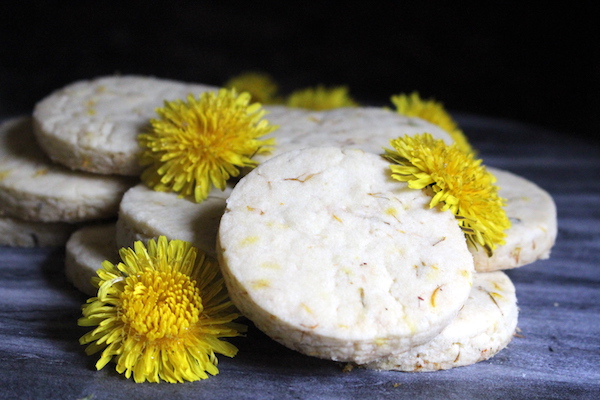
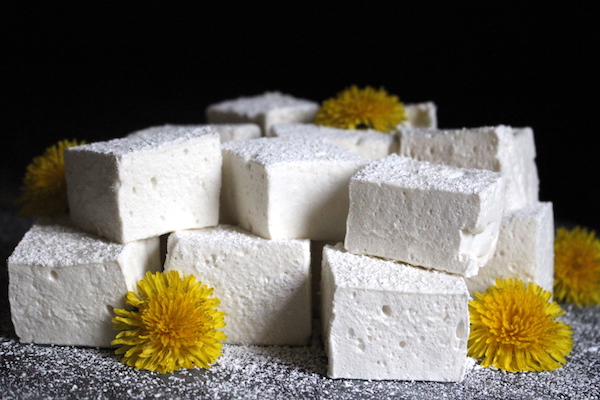
Dandelions are the very first flower the kids and I forage every spring, and they pick more than I could ever use. The kids’ share goes into dandelion cookies, dandelion ice cream and dandelion marshmallows but this one’s for mama.
Up here in Vermont we wait what feels like forever for the dandelions to come up, and then suddenly the whole pasture is yellow for two weeks and gone again. A jar of dandelion liqueur is how I keep that two-week window with us through the rest of the year.
Quick Look at the Recipe
- Makes: About 3 cups of finished liqueur (24 servings, 1 oz each)
- Active prep: 30 minutes (mostly pulling petals from the green bases)
- Infusion time: 2 to 3 weeks at room temperature
- Dandelion petals: 1 cup cleaned petals (from about 1 quart of whole blossoms)
- Alcohol base: 750 ml vodka or other neutral spirit, 80 proof or higher
- Sweetener: 1/4 cup light honey (or 1/3 cup sugar), added after straining
- Storage: Shelf stable at room temperature; best flavor within 1 year
Ingredients for Dandelion Liqueur
Three ingredients plus an optional lemon peel. The whole recipe fits in a single quart jar, so a wide-mouth quart mason jar is the only specialty equipment you really need.
- Dandelion petals (1 cup cleaned, from about 1 quart of fresh blossoms): Use only the yellow petals; the green sepals are bitter and will make the liqueur taste medicinal. From a heaping quart of fresh whole blossoms you’ll get about 1 cup of cleaned petals once you’ve stripped them off the bases. Pick from a yard, pasture, or field that hasn’t been sprayed with herbicides or pesticides; if you’d never let your dog drink from a puddle there, don’t make liqueur with the dandelions.
- Vodka (750 ml, about 3 1/4 cups): A mid-grade 80 proof vodka is exactly right. Cheap vodka has off-flavors that will come through in the finished liqueur; top-shelf is wasted on an infusion. Higher-proof spirits (90 to 100 proof) extract a touch more quickly and give a slightly stronger finish.
- Light honey (1/4 cup), or sugar (1/3 cup): Added after straining, not at the start. A light honey like clover, alfalfa, or wildflower complements the natural honey notes in dandelion; darker honeys like buckwheat will overpower the dandelion flavor. If you’d rather use sugar, demerara or turbinado give a little caramel character; plain white sugar gives a cleaner taste.
- Lemon peel (1 lemon, zest only, optional): A long strip of lemon peel added with the petals brightens the finished liqueur and balances the honey sweetness. Skip it if you want a pure-dandelion flavor; add it if you’d like something a little more aperitif-style.
A note on the petals: Pick on a sunny morning when the blossoms are fully open. Dandelion flowers close up within a few hours of being picked, and once they close, the petals are nearly impossible to pull out. Process the blossoms within an hour or two of picking, or freeze the cleaned petals (not the whole blossoms) until you have enough for a batch. The cleaned petals freeze well in a zip-top bag and can be added straight to the jar from frozen.
How to Make Dandelion Liqueur
The active work is at the start (picking and processing the petals) and the very end (straining and sweetening), with 2 to 3 weeks of room-temperature infusion in between. Plan on about 30 minutes of hands-on time on day one and another 15 minutes on bottling day.
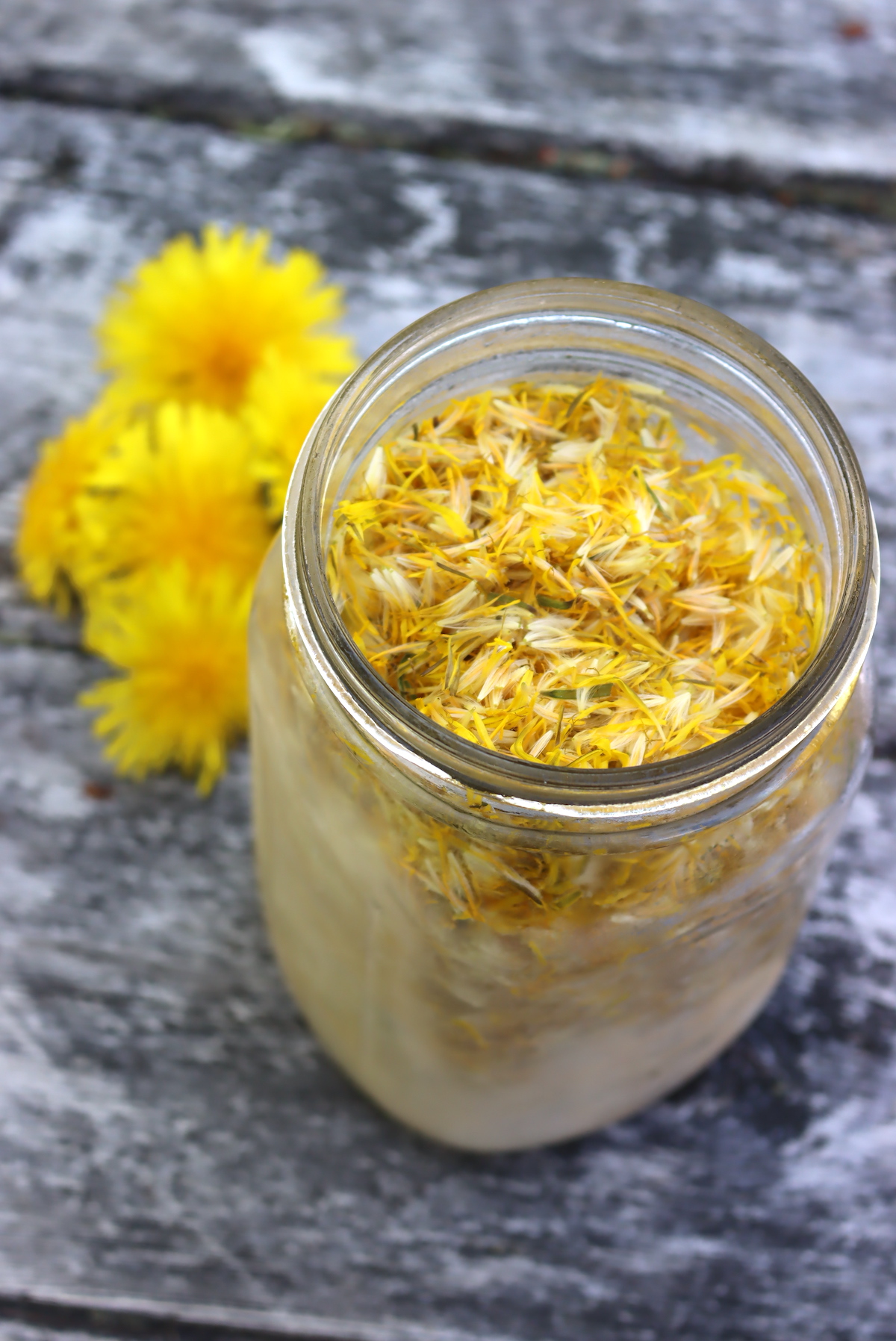
Step 1. Pick and process the dandelion blossoms. Forage about 1 quart of fresh, fully open dandelion blossoms from an unsprayed area. Pinch off the green base and pull the yellow petals out with your fingers. Discard the green parts; they’re bitter. You’re aiming for about 1 cup of cleaned petals once everything is processed.
Step 2. Add petals (and lemon peel) to a quart jar. The petals should fill the jar about 1/4 to 1/3 full. If you’ve got way more, save the rest for dandelion gin or freeze them for next year’s batch. Adding more petals to this batch won’t make a stronger liqueur; it just makes the result taste vegetal and overwhelming. If using lemon peel, add a long strip now.
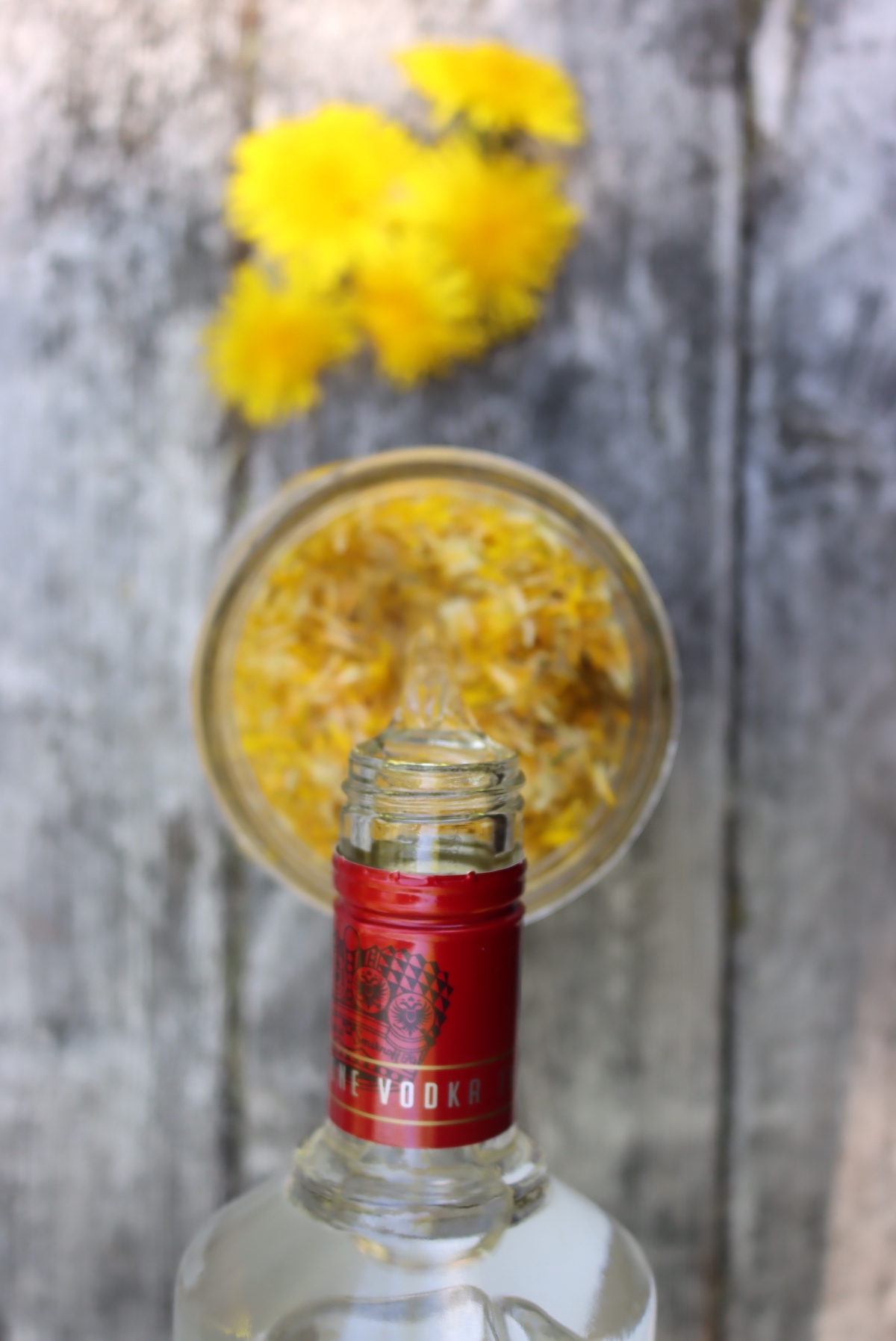
Step 3. Pour the vodka over the petals. Add the entire 750 ml of vodka, filling the jar to within an inch of the top. Cap tightly and shake gently to mix.
Step 4. Infuse at room temperature for 2 to 3 weeks. Store the jar somewhere out of direct sunlight (a kitchen cabinet or pantry shelf is ideal). Give it a gentle shake every few days. The vodka will pull color and flavor out of the petals slowly; by the end of week one it will be pale yellow, by week three it should be a clear honey-gold.
Step 5. Strain. Pour the infusion through a fine mesh strainer into a clean bowl or measuring cup, pressing gently on the petals to extract the last bit of liqueur. For a perfectly clear finish, run a second pass through cheesecloth or a coffee filter. You should end up with about 3 cups of strained dandelion-infused vodka.
Step 6. Sweeten to taste. Stir in 1/4 cup light honey (or 1/3 cup sugar) until fully dissolved. Taste, and add more sweetener a tablespoon at a time if you want a sweeter finish. Honey integrates more cleanly if you warm it slightly first; sugar dissolves easily into the room-temperature liqueur with a few minutes of stirring.
Step 7. Bottle and store. Use a brewing funnel to fill clean glass bottles. Flip-top Grolsch bottles work well for everyday use; smaller swing-top bottles are perfect for gift-giving. The vodka keeps the finished liqueur shelf stable at room temperature; store out of direct sunlight, and plan to use it within a year for peak flavor.
Recipe Tips
Pull the petals immediately after picking. Dandelion blossoms close up within a few hours of being picked, and once closed, the petals are nearly impossible to extract. If you can’t process the whole basket in one sitting, pull the petals from as many as you can while they’re open, freeze the cleaned petals in a zip-top bag, and toss the unopened blossoms back outside (or into the compost). Don’t try to freeze whole blossoms and process them later; it doesn’t work.
The white fluff under the petals is fine. Several readers have asked about this. Even the freshly opened blossoms have a little white fluff around the base of the petals. That’s normal flower structure, not an indication that the dandelion is going to seed. It won’t affect the flavor of the liqueur and you don’t need to clean it off the petals.
Less is more on the petals. The temptation is to fill the jar with as many petals as you’ve worked hard to pick, but a fuller jar makes a worse liqueur. About 1/4 to 1/3 of a quart jar is the sweet spot. More than that and the liqueur takes on a slightly vegetal note that fights the honey character of the dandelion. If you have a heroic harvest, double the recipe (use a half-gallon jar and a full liter and a half of vodka) instead of stuffing more petals into the same jar.
Sweeten after straining, not before. Adding sugar or honey at the start interferes with how the alcohol pulls flavor out of the petals; the infusion goes faster and cleaner with plain vodka. Sweetening at the end also lets you taste the unsweetened liqueur first and decide how much sweetness you actually want.
Plant identification matters. Common dandelion (Taraxacum officinale) is the one you want. Look-alikes including coltsfoot, hawkbit, hawksbeard, and cat’s ear all have superficially similar yellow blossoms but different leaves and stems. Real dandelions have a single hollow stem with no branches, no leaves on the stem, and a basal rosette of jagged-edged leaves. If you’re unsure, this guide to identifying dandelions covers the lookalikes in detail.
Variations
The base recipe takes well to small additions. A few that work:
- Dandelion gin (also called dandelion-infused gin): Substitute gin for vodka. The juniper plays unexpectedly well with the honey notes in dandelion. See my full recipe for dandelion infused gin, which uses a slightly different technique adapted from Danny Childs’ Slow Drinks.
- Spiced dandelion liqueur: Add 1 cinnamon stick and 3 whole cloves to the jar with the vodka and petals. Strain everything out together at the end. Beautiful for hot toddies in the winter.
- Vanilla dandelion liqueur: Split half a vanilla bean lengthwise and add it with the vodka. The vanilla deepens the honey notes and makes the finished liqueur taste like a sippable spring dessert. Or, easier, stir 1 teaspoon vanilla extract into the bottled liqueur after straining.
- Other flowers, same method: The technique works for almost any fragrant edible flower. Rose petals need a different (sugar-based, non-alcoholic) approach because they need sugar to release color, but elderflower, lilac, honeysuckle, and violet all work in this same vodka-infusion format.
- Dandelion wine instead: If you have a serious harvest and want a more traditional foraged drink, dandelion wine is the deeper project. It takes 2 to 4 months and some basic winemaking equipment, but produces a fuller, more wine-like finish.
Dandelion Liqueur Cocktails
Once you have a bottle on hand, dandelion liqueur slips into all the same drink slots as Chartreuse, St-Germain, or Bénédictine: anywhere a honey-herbal note would help. A few starting points:
- Dandelion sour: 2 oz dandelion liqueur, 3/4 oz lemon juice, 1/2 oz simple syrup, shake with ice and strain into a coupe.
- Dandelion hot toddy: 1 1/2 oz dandelion liqueur, 1 tsp honey, juice of half a lemon, top with hot water. The classic winter use; warms you up and tastes like spring.
- Dandelion spritz: 1 1/2 oz dandelion liqueur, top with prosecco or sparkling wine, garnish with a lemon twist. Bright and floral, perfect for spring brunch.
- Dandelion gin and tonic: 1 oz dandelion liqueur, 1 1/2 oz gin, top with tonic water and ice. Add a slice of cucumber if you have one.
- Dandelion martini: 2 1/2 oz dandelion liqueur, served straight from the freezer in a chilled martini glass, no garnish. Sip slowly.
- Dandelion bee’s knees: 2 oz gin, 3/4 oz dandelion liqueur, 3/4 oz lemon juice, shake with ice and strain. The dandelion liqueur replaces the honey syrup in a classic bee’s knees.
For more foraged-drink ideas, try my rhubarb cocktails, elderflower cordial, or knotweed gin and tonic.
Dandelion liqueur tastes like vodka with bright honey and herbal notes. The dandelion petals contribute a flavor that’s somewhere between honey and chamomile, with a slight floral bitterness that balances the sweetness. People who’ve had Chartreuse will recognize a family resemblance, though dandelion liqueur is far simpler and less herbaceous than Chartreuse’s complex herb blend.
No. The vodka keeps the finished liqueur shelf stable at room temperature, both during the 2 to 3 week infusion and after bottling. Store out of direct sunlight to preserve the golden color, and plan to use it within a year for peak flavor. The flavor will start to fade slowly after about a year, but the liqueur won’t spoil.
No. The little bit of white fluff at the base of the petals is normal flower structure, present even in freshly opened blossoms. It’s not seed material and it won’t affect the flavor or the safety of the liqueur. You don’t need to clean it off; just strip the petals away from the green sepals and use them as the recipe directs.
Gin works beautifully (the juniper plays well with the honey notes in dandelion); see my dandelion gin recipe for a slightly different technique. White rum also works and adds a touch of natural sweetness. Whiskey and brandy will dominate the delicate dandelion flavor and aren’t recommended for this recipe.
2 to 3 weeks at room temperature is the sweet spot. After 2 weeks the liqueur tastes pleasantly floral; at 3 weeks it’s noticeably stronger and more honey-forward. You can extend the infusion up to a year if you forget about it, and it will continue to deepen in flavor without going bad. Just remember to give the jar a shake every few days during the active infusion period.
Dandelion Recipes
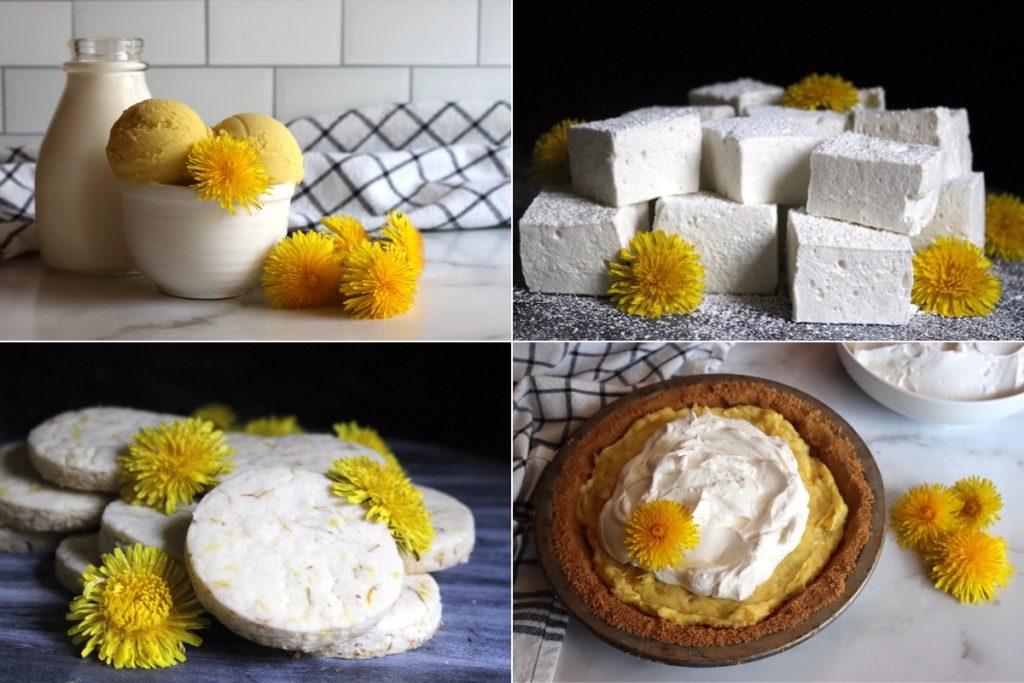
20+ Dandelion Desserts
Dandelion recipes come in all flavors, but the really magical ones are the dandelion desserts! Most of them use the…
If you tried this Dandelion Liqueur recipe, or any other recipe on Adamant Kitchen, leave a ⭐ star rating and let me know what you think in the 📝 comments below!
And make sure you stay in touch with me by following on social media!
Dandelion Liqueur
Equipment
Ingredients
- 1 cup cleaned dandelion petals, from about 1 quart of fresh blossoms
- 750 ml vodka, or other neutral spirit, 80 proof or higher
- 1/4 cup light honey, or 1/3 cup sugar, added after straining
- 1 large strip lemon peel, optional
Instructions
- Forage about 1 quart of fully open dandelion blossoms from an unsprayed area. Pick on a sunny morning when the flowers are fully open.
- Pull the yellow petals away from the green base of each blossom and put them in a quart mason jar. Discard the green parts. You should end up with about 1 cup of cleaned petals; the jar should be about 1/4 to 1/3 full.
- If using lemon peel, add a long strip to the jar with the petals.
- Pour 750 ml vodka over the petals, filling the jar to within an inch of the top. Cap tightly and shake gently to mix.
- Store at room temperature, out of direct sunlight, for 2 to 3 weeks. Shake the jar gently every few days.
- Strain through a fine mesh strainer, pressing gently on the petals to extract the last bit of liqueur. For a clearer finish, run a second pass through cheesecloth or a coffee filter.
- Stir in 1/4 cup light honey (or 1/3 cup sugar) until fully dissolved. Taste, and adjust sweetness to your preference.
- Bottle in clean glass bottles. Store at room temperature, out of direct sunlight. Use within 1 year for peak flavor.
Notes
Nutrition
Nutrition information is automatically calculated, so should only be used as an approximation.
Find the perfect recipe
Searching for something else? Enter keywords to find the perfect recipe!
Dear Ashley,
I picked a large batch of dandelion flowers and removed the petals and found even with the just opened ones, there was a fair amount of white fluff under the petals. Will this affect the flavor of the liqueur?
Merri
The white fluff part under the petals is normal, it’s part of how the flower develops. That wont impact your recipe. Enjoy!