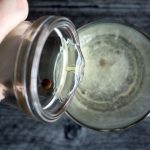
Smreka (Balkan Juniper Soda)
A traditional probiotic juniper soda from the Balkans, made with just two ingredients (juniper berries and water) and about a month of patient counter-fermentation. No yeast or starter culture required.
Servings: 2 quarts
Ingredients
- 1 cup dried juniper berries J. communis or other edible variety
- 2 quarts non-chlorinated spring or bottled water
- Sugar and/or lemon for serving (optional)
Instructions
- Add the dried juniper berries to a clean half-gallon glass jar or narrow-necked carafe. Do not rinse the berries; the wild yeast on the surface is what carries the fermentation.
- Pour 2 quarts of room-temperature non-chlorinated water over the berries, leaving 1 to 2 inches of headspace. The berries will float at first; they will gradually sink as fermentation progresses.
- Cover the jar with cheesecloth or a coffee filter, secured with a rubber band or twine. Do not seal tightly; this is an open-air ferment that needs to breathe.
- Set the jar somewhere out of direct sunlight at normal room temperature (65 to 75°F).
- Wait approximately 4 weeks, checking every few days. If any berries on the surface develop white tufts of mold, swirl the jar to resubmerge them or scoop them out with a clean spoon.
- The smreka is ready when all juniper berries have sunk to the bottom of the jar and the water has turned a pale yellow-green.
- Strain through a fine mesh strainer into a clean jug or bottles. Refrigerate.
Notes
Use Filtered Water. Chlorinated municipal tap water can kill the wild yeast on juniper berries and prevent fermentation entirely. Use spring water, filtered water that removes chloramine, bottled water, or tap water that's been left uncovered overnight to off-gas chlorine.
Don't rinse the berries. The wild yeast on the unwashed surface of the juniper berries is the entire fermentation engine. Rinsed berries won't ferment.
Edible juniper varieties only. Juniperus communis is the standard culinary juniper and what's sold in spice aisles and bulk bins. A few juniper species (notably J. sabina) are toxic and should not be used. If foraging your own berries, identify carefully or stick with grocery-store sources.
Storage. Strained smreka keeps in the refrigerator for at least several weeks. The flavor stays bright for the first week or two and slowly mellows after that. Some people prefer the longer-aged version with its more pronounced pine note.
Sweetened or lemon variations. Some Balkan recipes call for 1/4 to 1/2 cup of sugar or honey added at the start, which produces a sweeter, more carbonated finished drink. Lemon juice and peel can be added at the start of the ferment or stirred in at serving time for a brighter, more lemonade-like finish.
Nutrition
Calories: 7kcal | Carbohydrates: 1g | Protein: 0.1g | Fat: 0.4g