This post may contain affiliate links. Please see our disclosure policy.
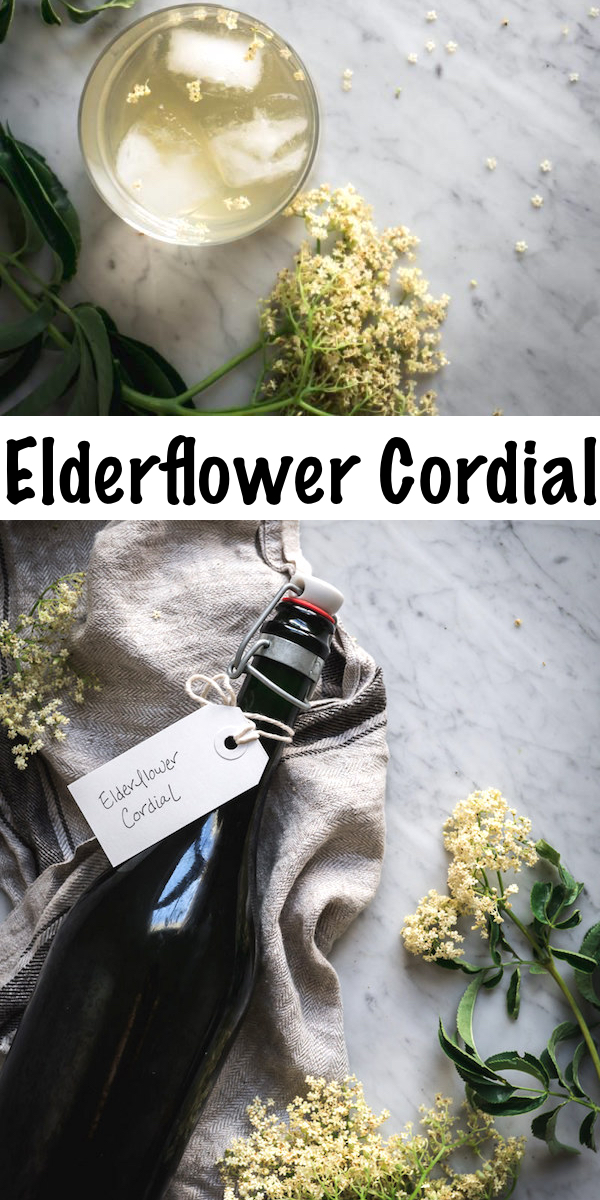
Elderflower cordial is a fragrant non-alcoholic syrup made from foraged elderflower heads, sugar, lemon, and citric acid. A tablespoon or two added to seltzer turns into the most refreshing summer drink on the porch, and the whole batch comes together with about 20 minutes of work plus an overnight steep.
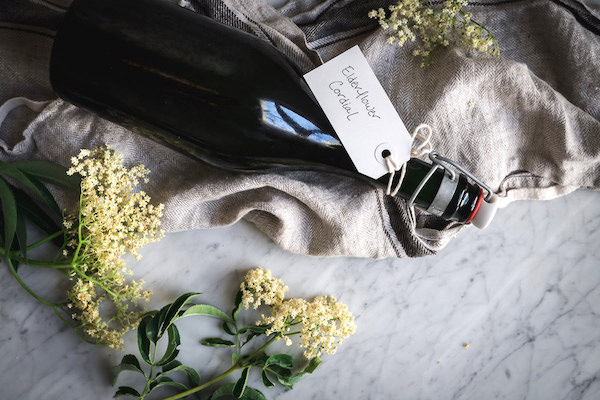
Despite the old-fashioned name, elderflower cordial is essentially a flavored simple syrup. It’s the same drink they pour into Hugo cocktails and elderflower spritzes across Europe, and once you’ve made a batch you’ll find a hundred uses for it: a splash in sparkling water, a couple of tablespoons in lemonade, a quick pour over a glass of prosecco, or drizzled over fruit salad and pound cake.
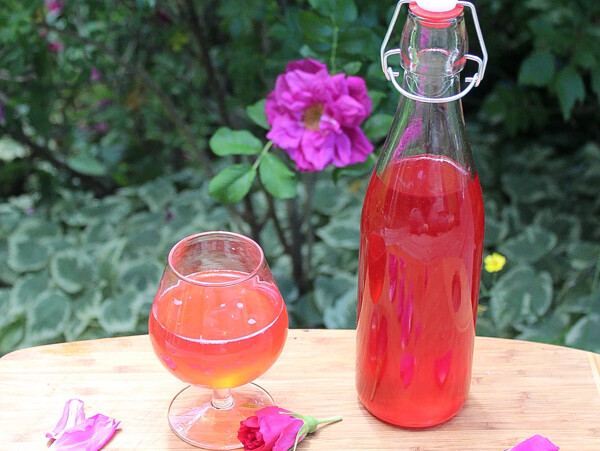
It’s also one of the easiest ways to preserve elderflower season. Wild elder blooms here in Vermont for about three weeks in mid-June and then it’s done for the year, but a single afternoon of foraging elderflower can fill the fridge with enough cordial to last well into August. Use this same technique with my rose cordial recipe later in the summer when wild roses bloom, and you’ve got two batches of garden-flower syrup carrying you through the whole growing season.
This recipe makes about 8 to 10 cups of finished cordial, infused at room temperature in a 24-hour steep, with citric acid for both the characteristic sharp tartness and a 4-to-6-week refrigerator shelf life. It’s a non-alcoholic recipe, suitable for kids and grown-ups alike. If you’d rather make a shelf-stable alcoholic version (essentially a homemade St-Germain), I’ll be posting an elderflower liqueur recipe separately.
Why you’ll love this family favorite recipe!

Elderflower cordial is one of the few drinks where the kid version and the adult version come out of the exact same bottle. A tablespoon in cold seltzer with a slice of lemon is the kids’ favorite “fancy drink” of the summer; the same bottle plus an inch of gin and a splash of tonic is what we drink on the porch after they’ve gone to bed.
The flowers come from a wild elder bush at the edge of our pasture that I race the birds for every June, and the whole house smells like summer for the 24 hours the jar is steeping on the counter. It’s the kind of recipe where the work is mostly the picking, and the cordial itself takes about as long to make as a pot of soup.
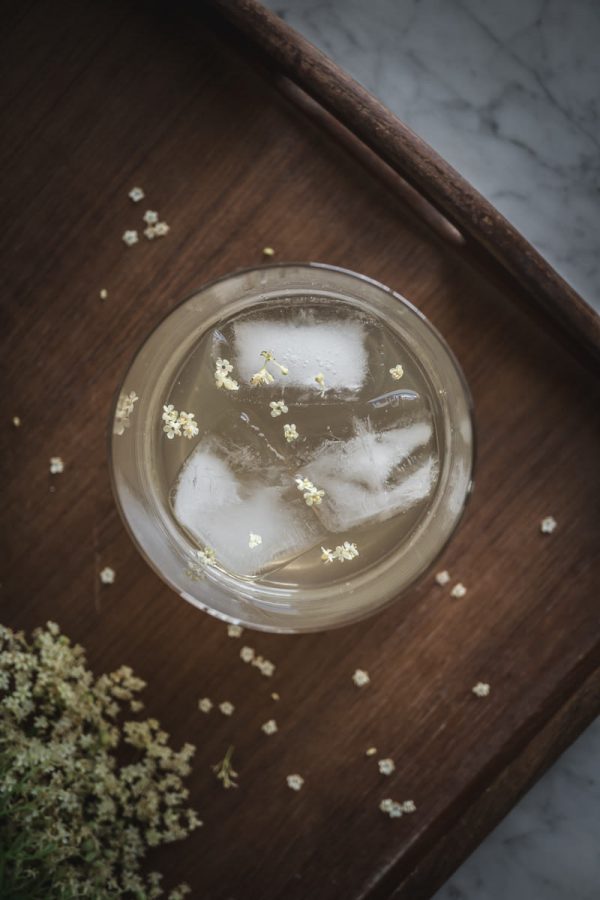
Quick Look at the Recipe
- Makes: 8 to 10 cups of finished cordial (about 64 to 80 servings, 2 tablespoons each)
- Active prep: 20 minutes
- Steep time: 24 hours at room temperature (up to 48 hours for stronger flavor)
- Elderflowers: 25 fresh heads, fully open and fragrant (or 1 cup dried)
- Sugar and water: 6 cups each, dissolved into a 1:1 simple syrup
- Citrus and acid: 3 unwaxed lemons (sliced, including zest) + 2 tablespoons citric acid
- Storage: Refrigerator only, 4 to 6 weeks. Not shelf stable.
Ingredients for Elderflower Cordial
The recipe makes about 8 to 10 cups of finished cordial, plenty for a season’s worth of seltzers, lemonades, and cocktails. Five ingredients, all of them flexible except the citric acid, which does real work in this recipe.
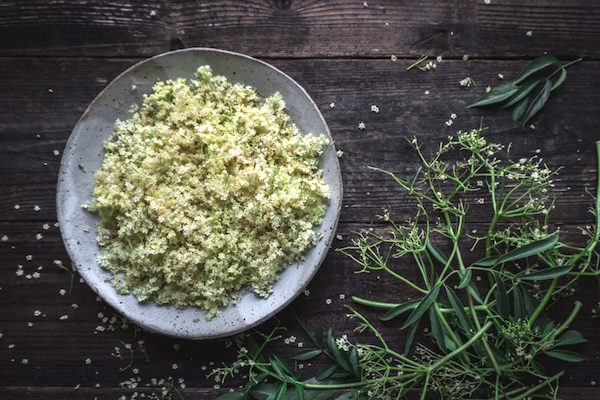
- Elderflowers (25 fresh heads, fully open and fragrant, OR 1 cup dried): Pick on a sunny morning when the heads are creamy white and the pollen is at its peak. Don’t wash them; just shake gently to dislodge insects (washing strips the pollen, which is where most of the flavor lives). Dried store-bought elderflowers work in a pinch but produce a less aromatic cordial.
- Granulated sugar (6 cups): Plain white sugar gives the cleanest flavor and the palest color. The 1:1 sugar-to-water ratio is what makes this a true simple syrup; reducing the sugar will shorten the shelf life and produce a thinner cordial.
- Water (6 cups): Plain tap water is fine. Filtered water if your tap water has noticeable chlorine or mineral flavors.
- Citric acid (2 tablespoons): This is the ingredient that transforms a sweet flower syrup into a proper cordial. Citric acid does three jobs: it adds the bright sharp tartness that defines the elderflower cordial flavor, it lowers the pH enough to extend shelf life from about 2 weeks to a full 4 to 6 weeks under refrigeration, and it helps extract more flavor from the flowers during the steep. Bulk citric acid keeps for years in a cupboard and is the most affordable way to keep some on hand.
- Unwaxed lemons (3, sliced thin including the zest): Lemons add their own brightness and a lemon-floral complement to the elderflower. Unwaxed (or organic) is important because the whole sliced lemon goes into the steep, peel and all. If you can only find waxed lemons, scrub them well with hot soapy water before slicing.
A note on the foraging: Only the elderflowers are edible raw. The leaves, stems, bark, and unripe berries of the elder plant all contain cyanogenic glycosides and are mildly toxic. When you process the flower heads, snip the individual blossoms off the stems with scissors or pinch them off with your fingers; a few of the tiniest stem pieces in the flower clusters won’t hurt anything, but you don’t want a jar full of green stems steeping into your drink. Forage from plants you know aren’t sprayed and that are well away from busy roads, and confirm you’ve correctly identified Sambucus canadensis or Sambucus nigra; the related red elderberry (Sambucus racemosa) is more toxic and shouldn’t be used.
How to Make Elderflower Cordial
The whole process is hot simple syrup poured warm (not boiling) over flowers and citrus, steeped overnight, then strained and bottled. About 20 minutes of active work and a single overnight wait.
Step 1. Process the elderflowers. Snip or pinch the individual blossoms off the stems into a large heatproof bowl or a half-gallon mason jar. A few tiny stem fragments in the flower clusters are fine, but pull off as much of the green stems as you reasonably can. You’re aiming for roughly 4 cups of loose blossoms once they’re off the stems.
Step 2. Make the simple syrup. Combine 6 cups water and 6 cups sugar in a large saucepan over medium heat. Stir until the sugar fully dissolves and the syrup is clear, then bring to a brief simmer and remove from heat.
Step 3. Cool the syrup briefly. Let the syrup cool for about 15 minutes off the heat. You want it warm, not boiling, when it hits the elderflowers. Pouring boiling syrup directly onto fresh blossoms scorches out the volatile aromatics that make elderflower cordial taste like elderflower.
Step 4. Combine flowers, citrus, and citric acid. Add the sliced lemons (rind and all) and 2 tablespoons of citric acid to the bowl with the elderflowers. Pour the warm syrup over the top and stir gently to combine, pressing the flowers and lemon slices down so everything is submerged.
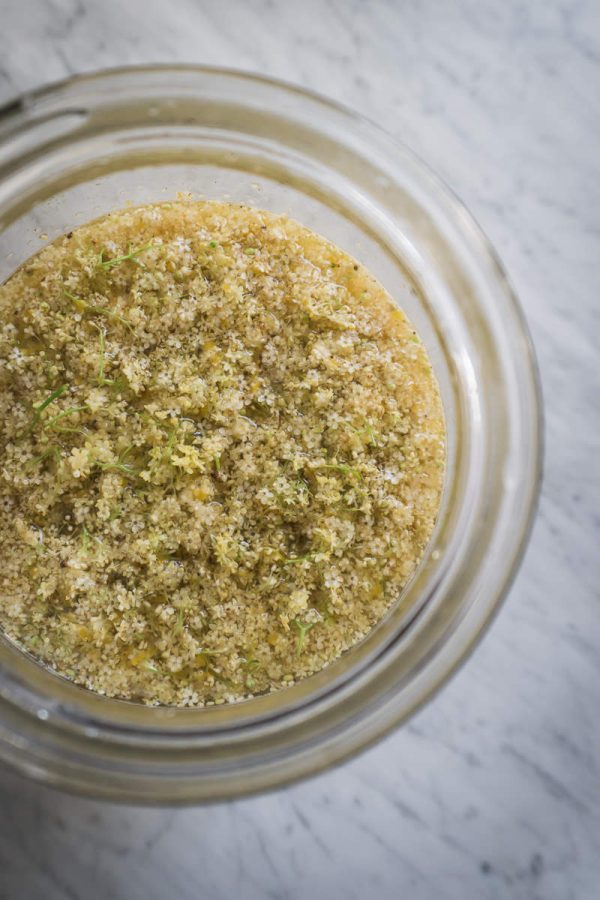
Step 5. Cover and steep at room temperature for 24 hours. Cover the bowl loosely with a lid, plate, or clean tea towel, and leave on the counter out of direct sunlight. The syrup will pull color, fragrance, and flavor out of the flowers overnight. After 24 hours the cordial should smell strongly of elderflowers; if you want a more concentrated flavor, you can extend the steep up to 48 hours.
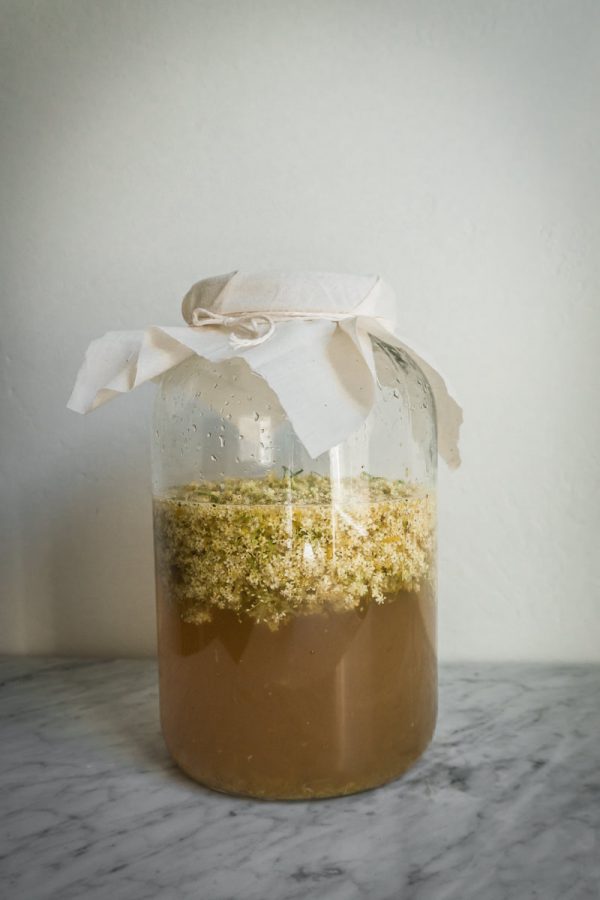
Important: Do not steep longer than 48 hours at room temperature. Past that point the high sugar content stops being protective and you risk mold or wild fermentation on top of the cordial. If you can’t strain it at the 48-hour mark, move the whole jar to the fridge until you can finish the recipe.
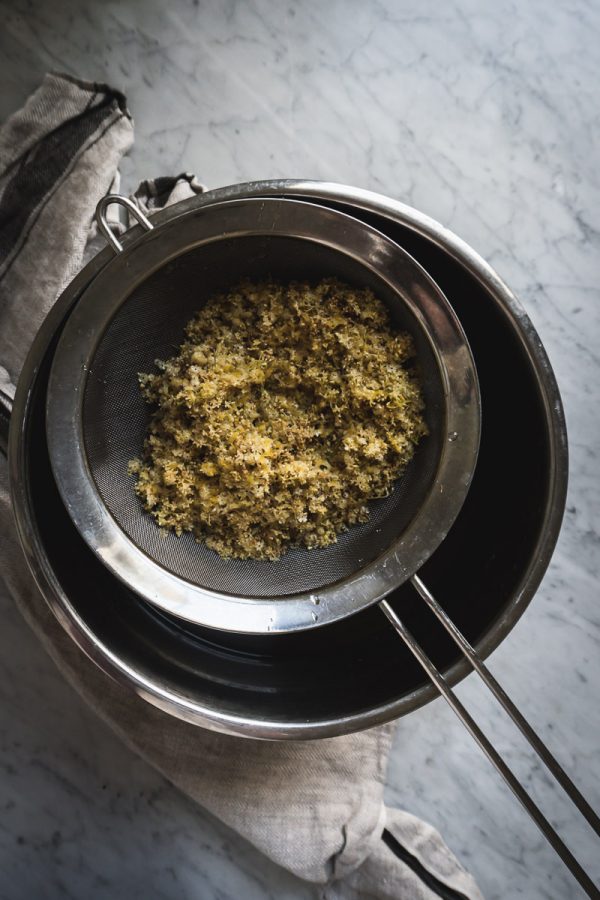
Step 6. Strain through a fine mesh strainer. Press gently on the flowers and lemon slices to extract every last bit of flavored syrup. For a perfectly clear cordial, run the strained syrup through cheesecloth or a clean jelly bag for a second pass; for everyday seltzer use, the mesh-strained version is fine.
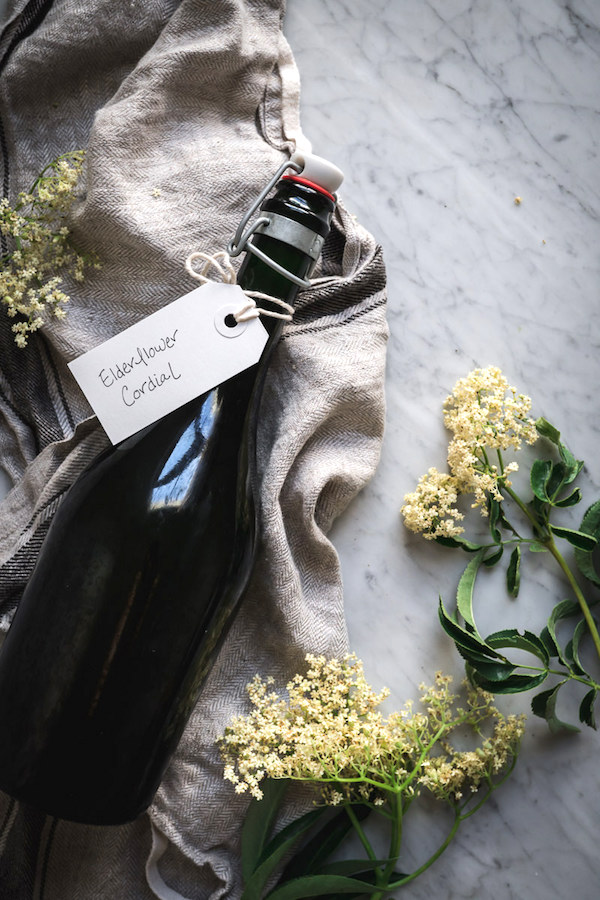
Step 7. Bottle and refrigerate. Use a brewing funnel to fill clean glass bottles. Flip-top Grolsch bottles are perfect for this; reused wine bottles with new corks also work. The cordial keeps in the refrigerator for 4 to 6 weeks. It is not shelf stable; refrigerate from the moment you bottle it.
Recipe Tips
Pick on a sunny morning, after the dew has dried. Elderflower fragrance peaks mid-morning on a warm dry day. Pick heads that are creamy white, fully open, and visibly dusted with pollen. Avoid heads that are still green-tinged (not ready yet) or browning at the edges (past their peak; can develop a faintly catty smell).
Don’t wash the flowers. A gentle shake to dislodge insects is enough. Washing strips off the pollen, which is where most of the flavor and fragrance lives. If you find the occasional bug in your finished cordial, that’s why you strain.
Citric acid is doing real work, not just adding tang. The 2 tablespoons in this recipe gives the cordial its characteristic sharp finish, lowers the pH enough to push the refrigerator shelf life out to 4 to 6 weeks, and helps pull more flavor out of the flowers during the steep. If you skip it, the cordial will taste mostly like sweet flower water and ferment within 1 to 2 weeks. You can substitute the juice of an extra 2 lemons in a pinch, but the flavor will tilt more lemon than elderflower.
Watch the 48-hour limit. A reader once left their cordial steeping on the counter for 3 days and came back to mold on top. The high sugar protects you for 24 to 48 hours but stops being reliable past that. If life gets in the way and you can’t strain in time, move the whole jar to the fridge; you can finish the recipe later.
Elder is one of several edible flowers worth foraging. If you enjoyed making this, the same general technique works with rose petals (see my rose cordial) and dandelion blossoms (see my dandelion liqueur). For broader options, this overview of edible flowers covers what’s safe to eat and what to avoid.
Variations
The base recipe takes well to small additions and substitutions. A few that work:
- Without citric acid: Substitute the juice of 2 additional lemons (so 5 lemons total) for the citric acid. The cordial will taste more lemon-forward and the refrigerator shelf life drops to about 1 to 2 weeks. For a longer shelf life without citric acid, freeze the cordial in plastic bottles or ice cube trays.
- With orange: Substitute 1 unwaxed orange for one of the lemons. The orange softens the sharp citrus note and gives a slightly more floral, less acidic finish.
- Reduced sugar: Cut the sugar to 4 cups (instead of 6) for a less sweet cordial. Shelf life drops to about 2 to 3 weeks because the lower sugar concentration is less protective; use it up faster or freeze in portions.
- Elderflower-mint cordial: Add 1/2 cup loosely packed fresh mint leaves with the elderflowers in step 4. Beautiful for mojito-style mocktails and iced tea.
- Strawberry-elderflower cordial: Add 1 cup hulled, sliced strawberries with the elderflowers in step 4. Turns the cordial pink and works perfectly in elderflower strawberry popsicles or summer spritzers.
- Alcoholic version: If you want a shelf-stable, longer-keeping version, vodka-infused elderflower liqueur (essentially homemade St-Germain) takes a different technique. I’ll be posting that recipe separately; this one is the classic non-alcoholic British-style cordial.
Elderflower Cordial Drinks
Use elderflower cordial anywhere you’d use a flavored simple syrup. A tablespoon or two is enough to flavor a full glass; this is a concentrate, not a finished drink. A few of our favorites:
- Elderflower spritz: 2 tablespoons elderflower cordial, top with cold seltzer or sparkling water, garnish with a lemon slice and a sprig of mint. The simplest, most refreshing summer drink there is.
- Elderflower lemonade: 2 tablespoons cordial stirred into a tall glass of fresh or store-bought lemonade. Tastes like the fanciest lemonade stand on earth.
- Hugo cocktail: 1 oz elderflower cordial, 4 oz prosecco, splash of soda water, fresh mint and lime. The classic Italian aperitivo, easy to make at home.
- Elderflower 75: 1 oz gin, 1/2 oz lemon juice, 1/2 oz elderflower cordial, top with sparkling wine. A floral take on the French 75.
- Elderflower gin and tonic: 1 1/2 oz gin, 1 tablespoon elderflower cordial, top with tonic water and ice. A squeeze of lemon and a slice of cucumber finishes it.
- Elderflower mocktail: 1 tablespoon elderflower cordial, 1 tablespoon lemon juice, top with seltzer and ice. The non-alcoholic version of the elderflower 75.
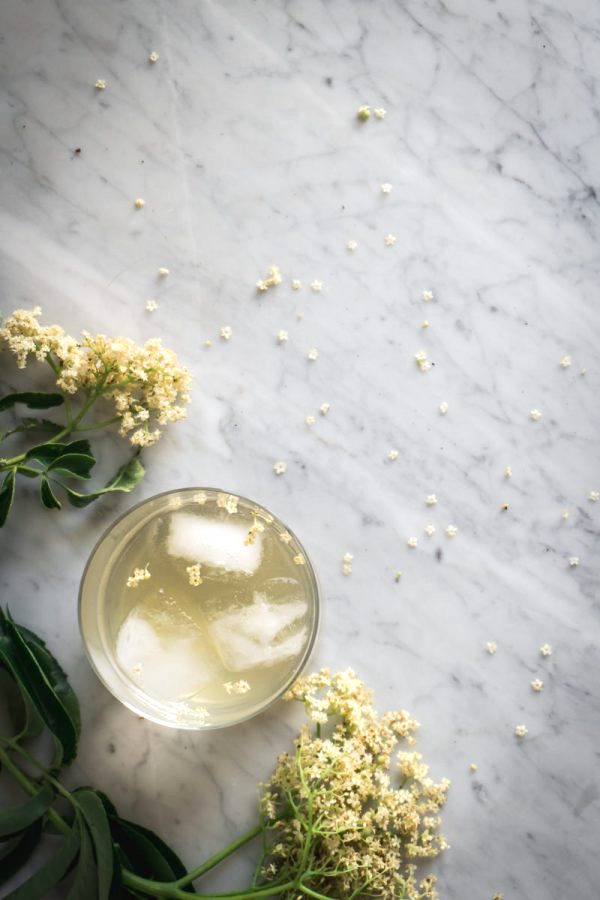
Beyond drinks, elderflower cordial is lovely drizzled over fresh fruit, vanilla ice cream, or pound cake; whisked into vinaigrettes for summer salads; or splashed into the poaching liquid for stone fruit. For more ideas, see my full collection of elderflower recipes, or pair this cordial with my rhubarb cocktails and other quince liqueur drinks for a full summer-into-fall cocktail rotation.
I made this with blossoms from a wild Elder bush growing right outside my door. It’s great! I finally experienced the flavor of elderblossom! It’s kind of like vanilla cake. The cool infusion was a better plan.
No. Traditional elderflower cordial is a non-alcoholic flavored simple syrup made from elderflowers, sugar, water, lemon, and citric acid. It contains no alcohol and is suitable for kids. There’s a separate alcoholic drink called elderflower liqueur (the most famous brand is St-Germain) that’s made by infusing elderflowers in vodka or another spirit, but that’s a different recipe.
Yes, but the flavor and shelf life will both change. Substitute the juice of 2 additional lemons (so 5 lemons total) for the citric acid. The cordial will taste more lemon-forward and less of that characteristic sharp elderflower-cordial flavor. Refrigerator shelf life drops from 4-6 weeks to about 1-2 weeks. To extend the shelf life of a citric-acid-free cordial, freeze it in plastic bottles or ice cube trays.
4 to 6 weeks in the refrigerator with citric acid, or 1 to 2 weeks without it. The high sugar content and low pH together keep the cordial stable, but it’s not shelf stable; this is a non-alcoholic syrup that needs cold storage. To keep cordial longer, freeze it in plastic bottles (leave headspace for expansion) or in ice cube trays for easy single-serving use.
Yes. Substitute 1 cup of dried elderflowers for the 25 fresh heads. The technique is the same. Dried flowers produce a less aromatic cordial because so much of elderflower flavor lives in the volatile oils on fresh pollen, but it’s still a worthwhile recipe and a good option if you don’t have access to fresh foraged blooms.
All parts of the elder plant except the flowers and the cooked ripe berries contain cyanogenic glycosides, which break down into cyanide compounds in the body. The amounts in the leaves and stems are mild and you’d have to consume quite a lot to get sick, but they’re enough to cause nausea and stomach upset. When you process elderflowers, snip the individual blossoms off the stems and discard the green parts. A few tiny stem fragments in the flower clusters won’t hurt anything, but you don’t want a jar full of green stems steeping into your drink.
More Drinks and Cordials
If you tried this Elderflower Cordial recipe, or any other recipe on Adamant Kitchen, leave a ⭐ star rating and let me know what you think in the 📝 comments below!
And make sure you stay in touch with me by following on social media!
Elderflower Cordial
Equipment
Ingredients
- 25 large fresh elderflower heads, or 1 cup dried elderflowers
- 6 cups sugar
- 6 cups water
- 2 tbsp citric acid
- 3 large lemons, unwaxed, sliced thin (including zest)
Instructions
- Snip the individual elderflower blossoms off the stems into a large heatproof bowl or half-gallon mason jar. Discard the stems. You should have roughly 4 cups of loose blossoms.
- Combine sugar and water in a large saucepan over medium heat. Stir until the sugar fully dissolves and the syrup is clear, then bring to a brief simmer and remove from heat.
- Let the syrup cool for about 15 minutes off the heat. You want it warm but not boiling when it hits the flowers.
- Add the sliced lemons and citric acid to the bowl with the elderflowers. Pour the warm syrup over and stir gently, pressing flowers and lemons down so everything is submerged.
- Cover loosely and steep at room temperature, out of direct sunlight, for 24 hours. For stronger flavor, extend up to 48 hours, but no longer.
- Strain through a fine mesh strainer, pressing gently on the solids to extract every drop of syrup. For a clearer cordial, run a second pass through cheesecloth.
- Bottle in clean glass bottles and refrigerate. Use within 4 to 6 weeks.
Notes
Find the perfect recipe
Searching for something else? Enter keywords to find the perfect recipe!
I made this with blossoms from a wild Elder bush growing right outside my door. It’s great! I finally experienced the flavor of elderblossom! It’s kind of like vanilla cake. I tried another recipe a couple of years ago, and all I could taste was lemon. Maybe because it said to boil the blossoms in the syrup. The cool infusion was a better plan. Thank you!
Wonderful, so glad you enjoyed it!
Hey Ashley, thank you so much for sharing this recipe, it is very thorough.
I am like you about too much sugar and also how people use the mild toxic stems so unaware.
Off to the shops to buy some lemons for making my cordial today.
No problem. I’m so glad you enjoyed it!
Looks refreshing! Can’t wait to try this at home especially this coming Summer season. Thanks a lot for sharing this recipe with us!