This post may contain affiliate links. Please see our disclosure policy.
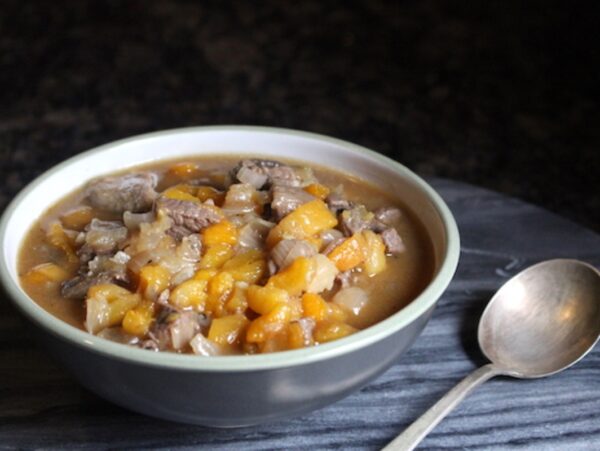
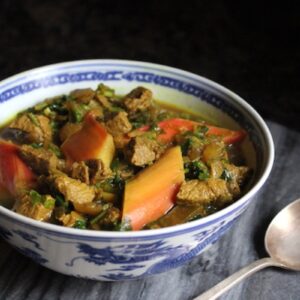
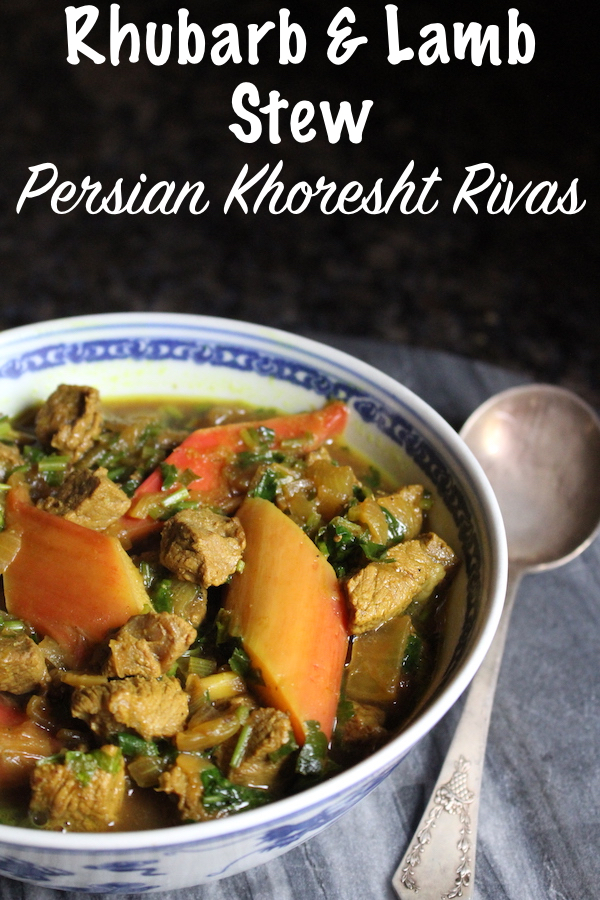
Khoresht rivas is a Persian lamb stew simmered in a green sauce of parsley and mint, with rhubarb added at the very end. The rhubarb stays in big tart pieces that cut right through the rich lamb. It’s a savory way to enjoy rhubarb season, and it’s special enough for company.
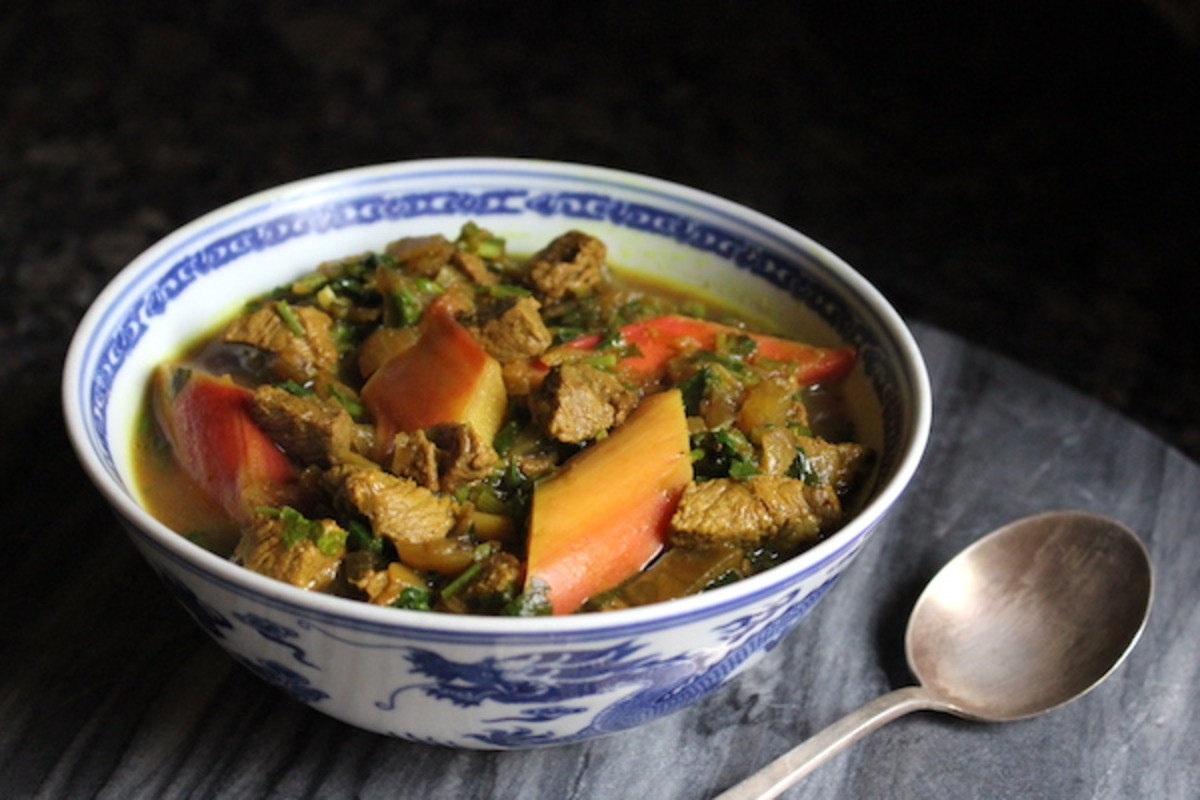
Table of Contents
- Notes from My Kitchen
- What Is Khoresht Rivas?
- Ingredients for Khoresht Rivas
- Yield Notes
- How to Make Khoresht Rivas
- Tips for the Best Khoresht Rivas
- Khoresht Rivas Variations
- Serving Khoresht Rivas
- Khoresht Rivas FAQs
- More Middle Eastern Recipes
- Persian Lamb and Rhubarb Stew (Khoresht Rivas) Recipe
- More Rhubarb Recipes
Most rhubarb in American kitchens ends up in dessert. It goes into maple strawberry rhubarb pie, rhubarb upside-down cake and Amish rhubarb custard pie, always with plenty of sugar to soften the sour.
Botanically, rhubarb is a vegetable, and Persian cooks treat it like one. In Iran, its sharp, lemony bite goes into savory stews, where it does the same job a squeeze of lemon would.
Khoresh is the Persian word for a stew served over rice, and rivas means rhubarb. This one pairs tender lamb with a big pile of fresh herbs, so the sauce comes out green, savory and tangy all at once.
Lamb and fruit have gone together across the Middle East for centuries. My Turkish lamb and apricot stew is sweet with dried apricots, while this one is tart and bright.
If you love lamb stews, make Lebanese lamb stew with eggplant next. And when the rhubarb keeps coming, there are plenty more savory rhubarb recipes to try, from barbecue sauce to chutney.
Notes from My Kitchen

My kids have loved rhubarb since they were tiny. When they were toddlers, they’d sit in the afternoon shade after a long day in the garden, chewing on raw stalks and puckering at every bite. My daughter is older now, and she still loves rhubarb, sour and all.
Most of our rhubarb went into pies and cakes, so one spring I went looking for savory ways to cook it. That search led me to Persian cooking and this stew. It’s simple to make and mostly hands-off, but it’s pretty enough to set in front of guests.
What Is Khoresht Rivas?
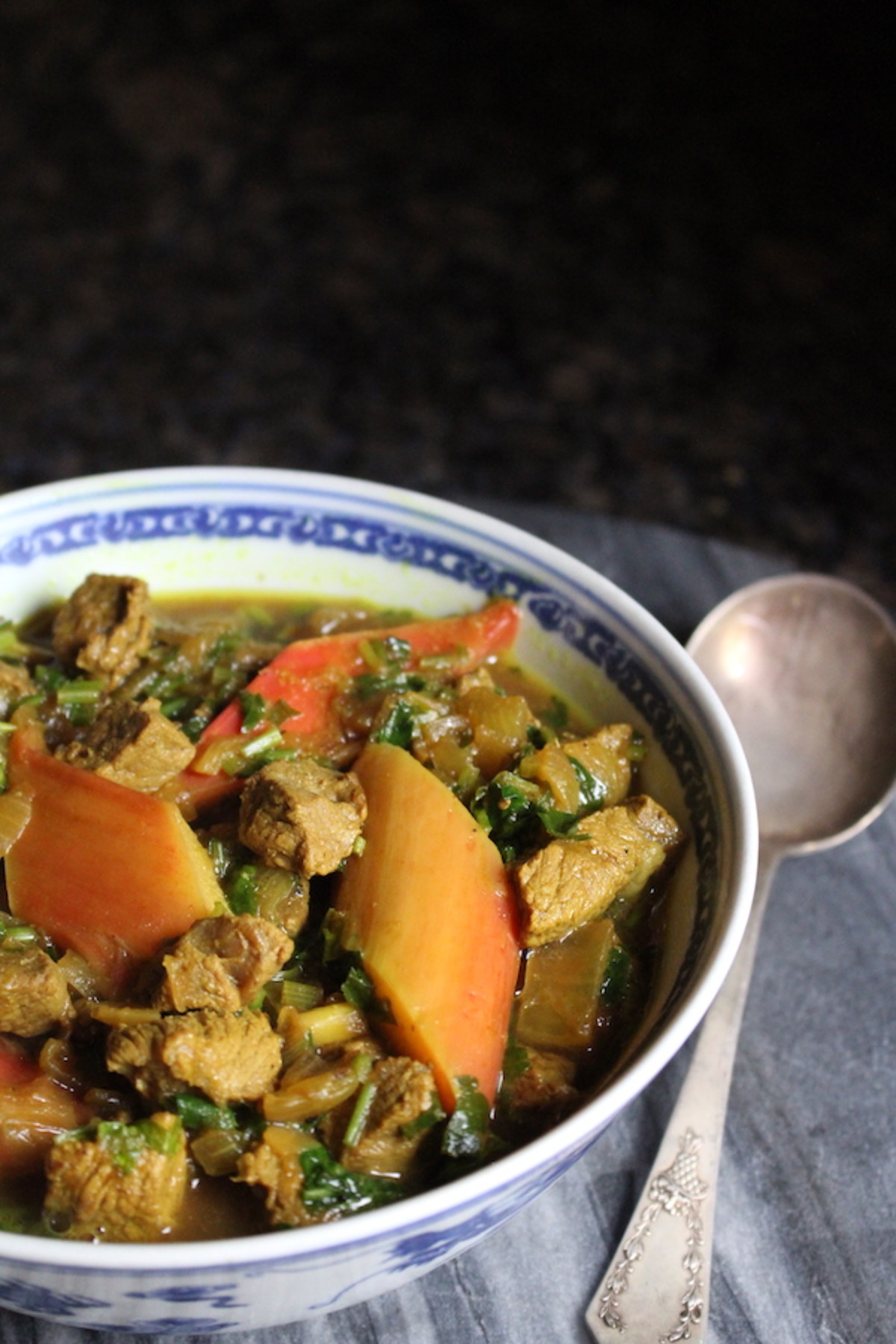
Khoresh (also written khoresht) is a whole family of Persian stews, and cooks serve nearly all of them over rice. There are versions built around eggplant, celery, quince and green herbs. Many pair rich meat with something sour, like dried limes, sour grapes or pomegranate.
In spring, rhubarb fills that sour role. Its Persian name is rivas, and wild rhubarb grows in northwestern Iran, where people gather the young stalks in early spring.
Rhubarb has a long history in Persian kitchens. A Safavid-era cookbook written around 1520 includes ash-e rivas, a thick soup made with rhubarb. In Zoroastrian myth, the first man and woman even grew from a rhubarb plant.
You’ll see the name spelled khoresh rivas, khoresh-e rivas or khoresht-e rivas. They’re all the same lamb, herb and rhubarb stew.
Ingredients for Khoresht Rivas
Beef stew meat works in place of lamb, and frozen rhubarb works when fresh isn’t in season. The herbs are the one place not to cut corners, since they make up most of the sauce.
Everything else is easy to find at a regular grocery store. Look for rhubarb at farmers markets in spring, or in the freezer case the rest of the year.
- Lamb stew meat: Boneless lamb shoulder or leg in 1-inch cubes. Shoulder has a little more fat and stays juicier as it simmers. If you can’t find lamb locally, you can order grass-fed lamb online.
- Onions: Yellow onions, diced and cooked until golden. They sweeten as they cook and soften the sharp edge of the rhubarb.
- Olive oil: For browning the onions and lamb, with a little extra for frying the herbs. Butter or ghee are traditional choices too.
- Turmeric: The base spice of most Persian stews. It turns the onions and lamb golden and gives the sauce its warm color.
- Stock: Chicken, beef or lamb stock all work. Plain water is traditional, since the lamb makes its own broth as it simmers.
- Fresh parsley: Flat-leaf parsley, finely chopped, and plenty of it. It’s the backbone of the green sauce.
- Fresh mint: A cool, bright note against the lamb. Dried mint works in a pinch. Add it to the pan during the last minute of frying so it doesn’t scorch.
- Rhubarb: Fresh stalks, cut into 2-inch pieces. Red stalks keep a pretty pink color, but green ones taste just as good. For a patch of your own, a couple of Starkrimson rhubarb plants grow happily in a sunny corner of the yard, and you can also try growing rhubarb from seed.
- Salt: Season at the end, once you can taste how tart your rhubarb is.
Use the stalks only. Rhubarb leaves contain oxalic acid and aren’t safe to eat, according to MedlinePlus. Trim them off and compost them, and the stalks themselves are perfectly safe to cook and eat.
Yield Notes
This recipe calls for 1 pound (450 g) of lamb stew meat and 2 pounds (900 g) of rhubarb, twice as much rhubarb as meat by weight, a ratio many older Persian recipes use. It makes 4 generous servings over rice.
The sauce takes 2 to 3 onions, 2 cups (120 g) of finely chopped parsley, 1/2 cup (25 g) of chopped mint and 2 cups (475 ml) of stock. The recipe doubles easily in a large Dutch oven.
How to Make Khoresht Rivas
Most of the cooking time is hands-off simmering. Plan on about 20 minutes of chopping and browning, then an hour and a half while the lamb turns tender.
A heavy pot with a lid, like a Dutch oven, keeps the simmer gentle and even. A wide sauté pan is handy for frying the herbs, though any skillet works.
Brown the Onions
Heat the olive oil in the pot over medium heat and add the diced onions. Cook, stirring often, until they’re soft and golden at the edges, 10 to 15 minutes.
Golden onions are the starting point for nearly every Persian khoresh, and they give the sauce a mellow sweetness. My stove runs hot, so I go by their color more than the clock.
Brown the Lamb with Turmeric
Stir in the turmeric and cook for about 30 seconds, until it smells toasty. Add the lamb and turn the pieces until they’re brown on all sides, 8 to 10 minutes.
If you’ve doubled the recipe, brown the lamb in batches. A crowded pot steams the meat instead of searing it, and you lose the browned bits on the bottom.
Simmer the Lamb
Pour in the stock and scrape up anything stuck to the pot. Bring it to a simmer, cover, and lower the heat. Let it simmer gently for 1 hour.
Peek in once or twice, and top it up with a little water if the pot looks dry. You want a lazy bubble, not a rolling boil, so the lamb turns tender instead of tough.
Fry the Herbs
While the lamb simmers, heat the extra olive oil in a skillet over medium heat. Add the parsley and mint and fry, stirring, for 3 to 5 minutes, until the herbs darken a shade and smell fragrant.
Frying takes the raw, grassy edge off the parsley and turns it rich and savory. It’s the same step cooks use for ghormeh sabzi, the Persian herb stew, and it gives the sauce its deep green flavor.
Add the Herbs and Simmer Until Tender
Stir the fried herbs into the pot. Simmer uncovered for another 20 to 30 minutes, until the lamb is fork-tender and the sauce has thickened a little.
Taste a piece of lamb before you add the rhubarb. If it’s still chewy, give it another 10 to 15 minutes, since the rhubarb only needs a few minutes at the end.
Add the Rhubarb
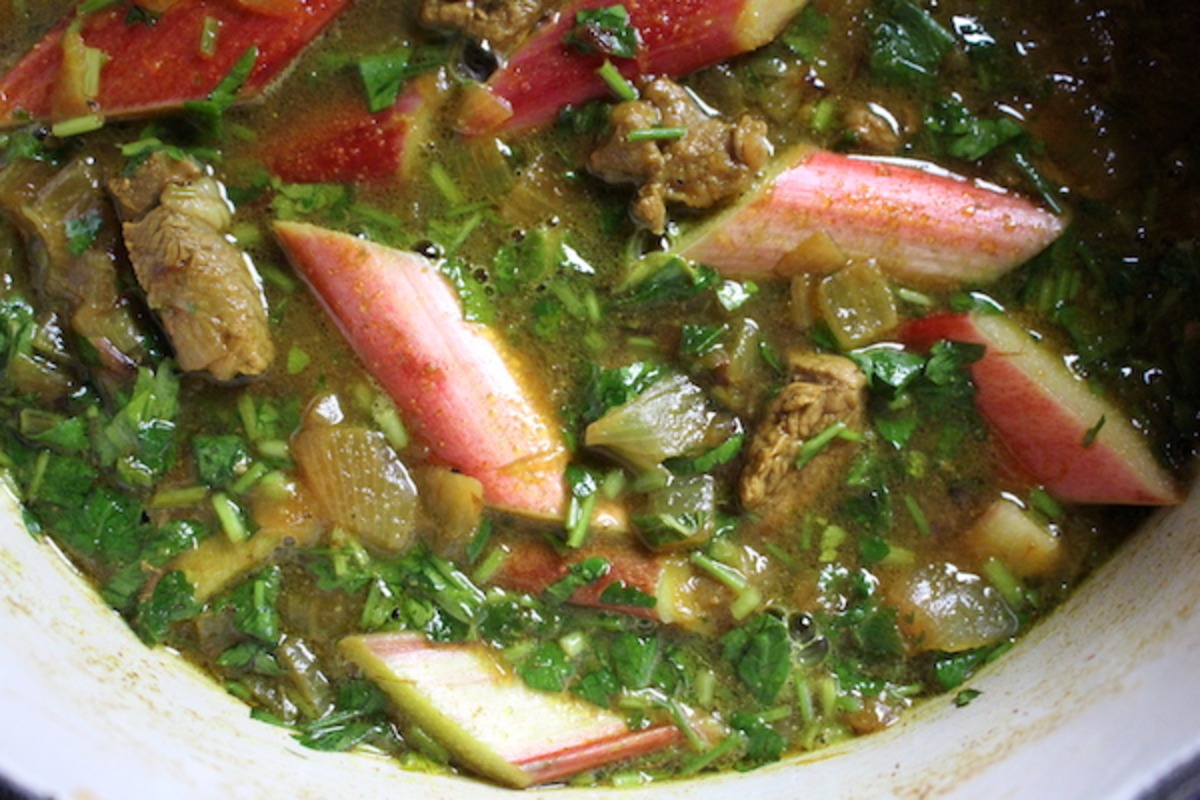
Lay the rhubarb pieces on top of the stew and gently press them down into the sauce. Simmer on low for 5 to 8 minutes, without stirring, until the rhubarb is just tender when you poke it with a fork.
Rhubarb goes from firm to falling apart in a matter of minutes, and stirring breaks it up. I cut it in big 2-inch pieces and leave it alone, so it holds its shape in the bowl.
Season and Serve
Taste the sauce and add salt until the tart rhubarb and rich lamb taste balanced. A squeeze of lemon perks up mild rhubarb, and a pinch of sugar softens very sour stalks.
Serve it right away over rice, while the rhubarb is still in whole pieces. Spoon it gently into bowls, scooping from the bottom of the pot so the rhubarb on top doesn’t break.
Tips for the Best Khoresht Rivas
Cut the rhubarb big. Two-inch pieces survive the last few minutes in the pot, while small pieces dissolve into the sauce. It still tastes good, but you lose those bites of tart rhubarb.
Choose lamb shoulder if you can. Shoulder has more fat and connective tissue than leg, so it turns silky over a long simmer. Leg works too, and it’s leaner.
Make the base ahead. Cook the lamb and herbs a day early and refrigerate the pot. Rewarm it gently the next day, then add the rhubarb just before serving so it stays whole.
Taste your rhubarb first. Garden rhubarb varies a lot from plant to plant. Nibble a raw piece before you start, so you know how much balancing the sauce might need at the end.
Khoresht Rivas Variations
Beef stew meat works well too, with about the same simmer time. Bone-in chicken thighs work too, though they turn tender faster, so give them less time before the herbs go in.
For a more festive pot, steep a few saffron threads in a spoonful of hot water and stir them in with the herbs. Many Persian cooks add saffron to khoresh, and it gives the sauce a golden color and a floral aroma.
Chickpeas make a good meatless version with vegetable stock. Add them with the herbs, since they only need to warm through and soak up the sauce. For another vegetable stew with Middle Eastern spices, try Lebanese butternut squash stew.
Khoresh karafs, the Persian celery stew, is a close cousin made with the same fried parsley and mint. Some cooks add a few stalks of rhubarb to it in season for extra tang.
Serving Khoresht Rivas
In Iran, khoresh is almost always served over chelow, fluffy steamed basmati rice, often with a crisp golden crust called tahdig from the bottom of the pot. Plain basmati is just right for a weeknight.
Set out a plate of fresh herbs, radishes and feta, called sabzi khordan, along with a bowl of plain yogurt. A simple cucumber and tomato salad keeps things fresh, and warm flatbread is good for the last of the sauce.
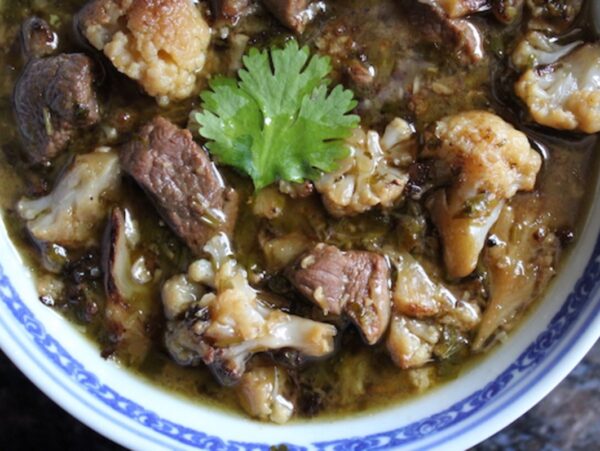
For a bigger Middle Eastern spread, add saç kavurma, spiced lamb sautéed in a hot pan, or cauliflower stew with lamb. A bowl of pomegranate seeds looks lovely on the table, and there are plenty more ideas in my pomegranate recipes.
Storage: Leftovers keep in a covered container in the fridge for 3 to 4 days. The rhubarb softens as it sits, so reheat the stew gently on the stove and stir as little as possible.
Freezing: The lamb and herb base freezes well for up to 3 months, but rhubarb that’s already cooked falls apart when it thaws. Freeze the base on its own, then thaw it in the fridge, rewarm it and add fresh rhubarb at the end.
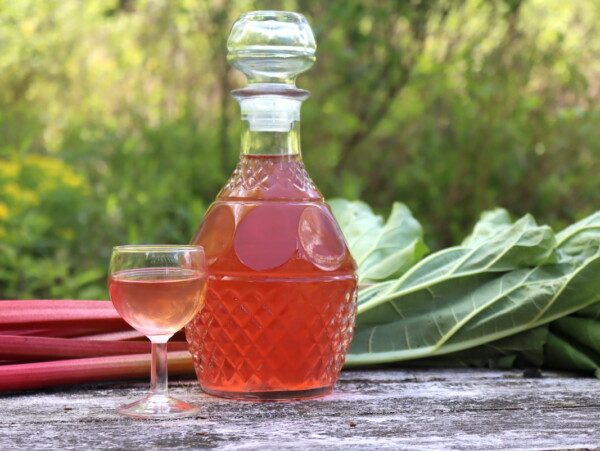
And if there’s still rhubarb in the fridge after dinner, turn it into rhubarb liqueur or a round of rhubarb cocktails. There are dozens more ideas in my sweet and savory rhubarb recipes, and rhubarb canning recipes for putting some up.
Khoresht Rivas FAQs
Most questions about this stew come down to the rhubarb: whether frozen or canned works, and how to keep the pieces whole.
Yes. Add it straight from the freezer during the last few minutes, without thawing it first. Frozen rhubarb is softer than fresh, so check it after a few minutes. It’s easy to freeze rhubarb in spring for stews like this one.
Probably! I can rhubarb myself, but always in syrup for baking, since the sugar helps it stay firm. Rhubarb canned in plain water tends to fall apart, so the stew would taste the same but lose its big pieces. If you use syrup-packed rhubarb, drain it well and expect a sweeter stew.
Not for this stew. I almost always peel rhubarb for jam, where the strings get in the way of a smooth texture, but here the peel keeps the pink color and helps the big pieces hold together. Late-season stalks have tougher skins, so those are worth peeling. There’s more on when to peel rhubarb in my guide.
Rhubarb breaks down fast once it’s hot. It turns to sauce if you stir it after it goes in, cut it too small, or cook it much past 8 minutes. Use big 2-inch pieces, press them gently into the stew and leave the pot alone.
Rhubarb is a vegetable to a botanist, because we eat its leaf stalks. A US customs court called it a fruit in 1947 for import duties, since Americans mostly used it as one. Persian cooks use it both ways, in sweet drinks and savory stews.
More Middle Eastern Recipes
More lamb stews from across the Middle East to try next.
If you tried this Persian Lamb and Rhubarb Stew recipe, or any other recipe on Adamant Kitchen, leave a ⭐ star rating and let me know what you think in the 📝 comments below!
And make sure you stay in touch with me by following on social media!
Persian Lamb and Rhubarb Stew (Khoresht Rivas)
Equipment
Ingredients
- 2 to 3 onions, diced
- 3 to 4 tbsp olive oil, divided
- 1 lb lamb stew meat, cubed, see notes
- 1 tsp turmeric
- 2 cups stock
- 2 cups parsley, finely chopped
- 1/2 cup mint, finely chopped
- 2 lb rhubarb, cut in large pieces, see notes
- salt, to taste
Instructions
- Heat most of the olive oil in a Dutch oven over medium heat, saving a little for the herbs. Add the onions and cook, stirring often, until golden, 10 to 15 minutes.
- Stir in the turmeric and cook about 30 seconds. Add the lamb and brown it on all sides, 8 to 10 minutes.
- Add the stock and scrape up the browned bits. Bring to a simmer, cover and simmer on low for 1 hour, adding a splash of water if the liquid gets low.
- Meanwhile, heat the remaining olive oil in a sauté pan over medium heat. Fry the parsley and mint, stirring, for 3 to 5 minutes, until fragrant and slightly darkened.
- Stir the herbs into the stew and simmer uncovered for 20 to 30 minutes more, until the lamb is tender.
- Lay the rhubarb on top and gently press it into the sauce. Simmer on low without stirring for 5 to 8 minutes, until just tender, since stirring breaks up the rhubarb.
- Season with salt and serve right away over rice.
Notes
Nutrition
Nutrition information is automatically calculated, so should only be used as an approximation.
More Rhubarb Recipes
Sweet, savory and boozy ways to use the rest of your rhubarb.


Find the perfect recipe
Searching for something else? Enter keywords to find the perfect recipe!
So this recipe can be made with a pint of ‘just add water’ canned rhubarb?
Thank you
Probably? We actually can rhubarb ourselves here, but we always can it in syrup for baking, and the sugar helps it stay firm. I believe if you canned it in water it’d fall apart, so the recipe would still have the same flavor, but not the texture of the dish with fresh. Still, it’d probably be good.
1
Something possessed me to buy and plant rhubarb into the garden about three years ago. I liked the huge leaves as contrast.
I have never cared for it since childhood, when someone gave me a piece of rhubarb and strawberry pie. YUCK! (I think I was about 7 years old at the time.)
On a whim, I recently brought in some rhubarb stalks and began to play with them in the kitchen. I forget the recipe, it was tasteless and not exciting. However, I then I took what was left of the chopped stalks and cooked them with sugar to make a rhubarb preserve; just one small pot, WOW! I am making a whole batch to put up this week, because I really liked it. So, did my taste buds grow up, or lose some of their receptivity at age 69? I don’t know, but I am now willing to try some new recipes with it, and as lamb is one of our favorite meats to cook I am starting here. It sounds divine!
I’ll be back to try more of your recipes before rhubarb season ends. 🙂
Hi Lynda! I’m so glad you’re giving rhubarb another chance! Enjoy!