This post may contain affiliate links. Please see our disclosure policy.
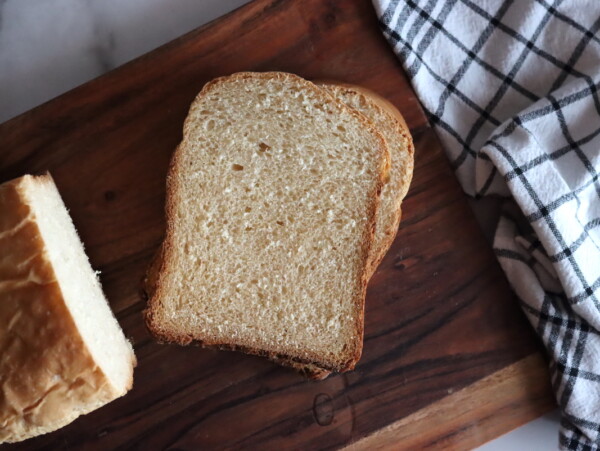
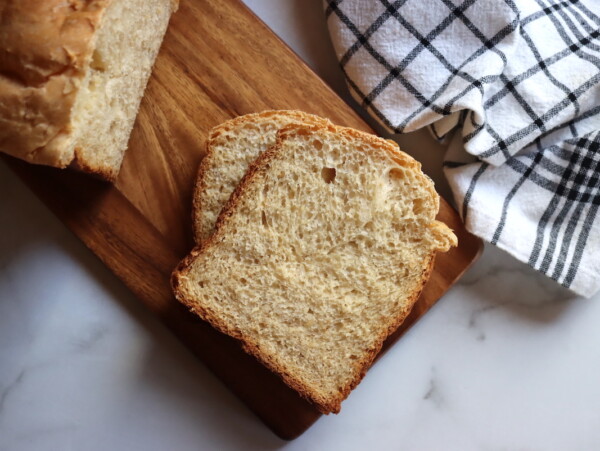
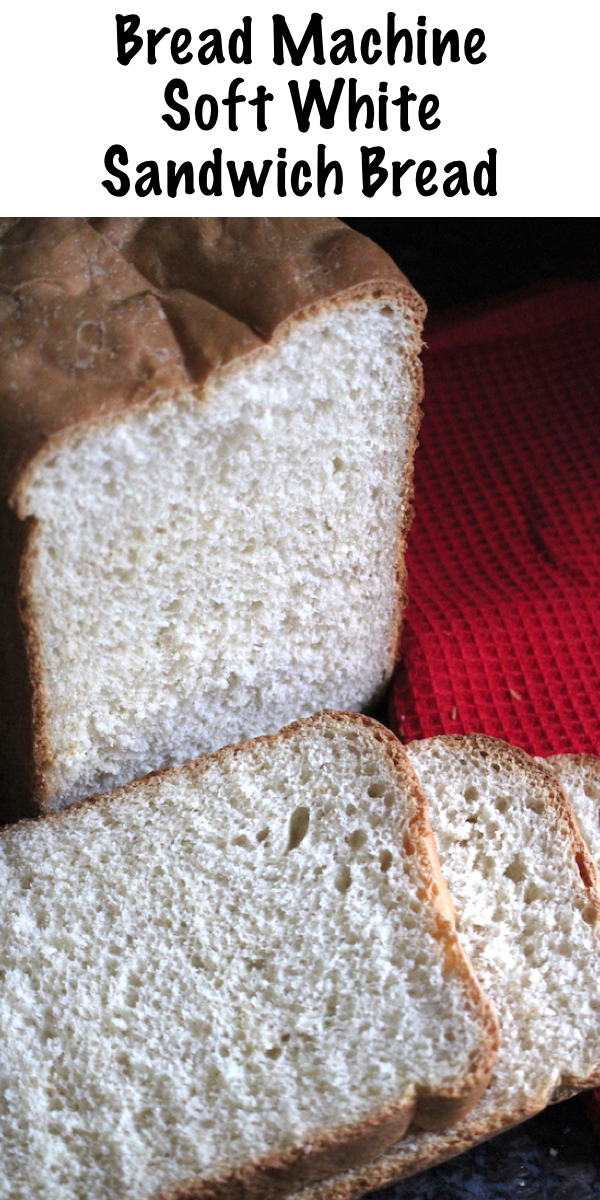
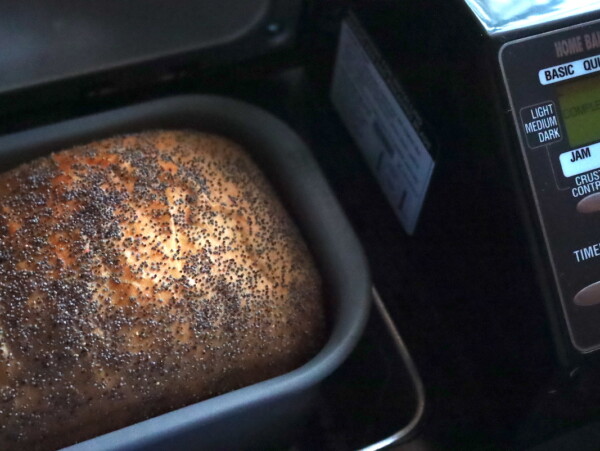
Bread machine white bread is an easy, soft sandwich loaf you can make at home. Five minutes of active prep, three hours start to finish, and you get a fluffy, golden loaf that’s good for sandwiches, toast, and lunch boxes.
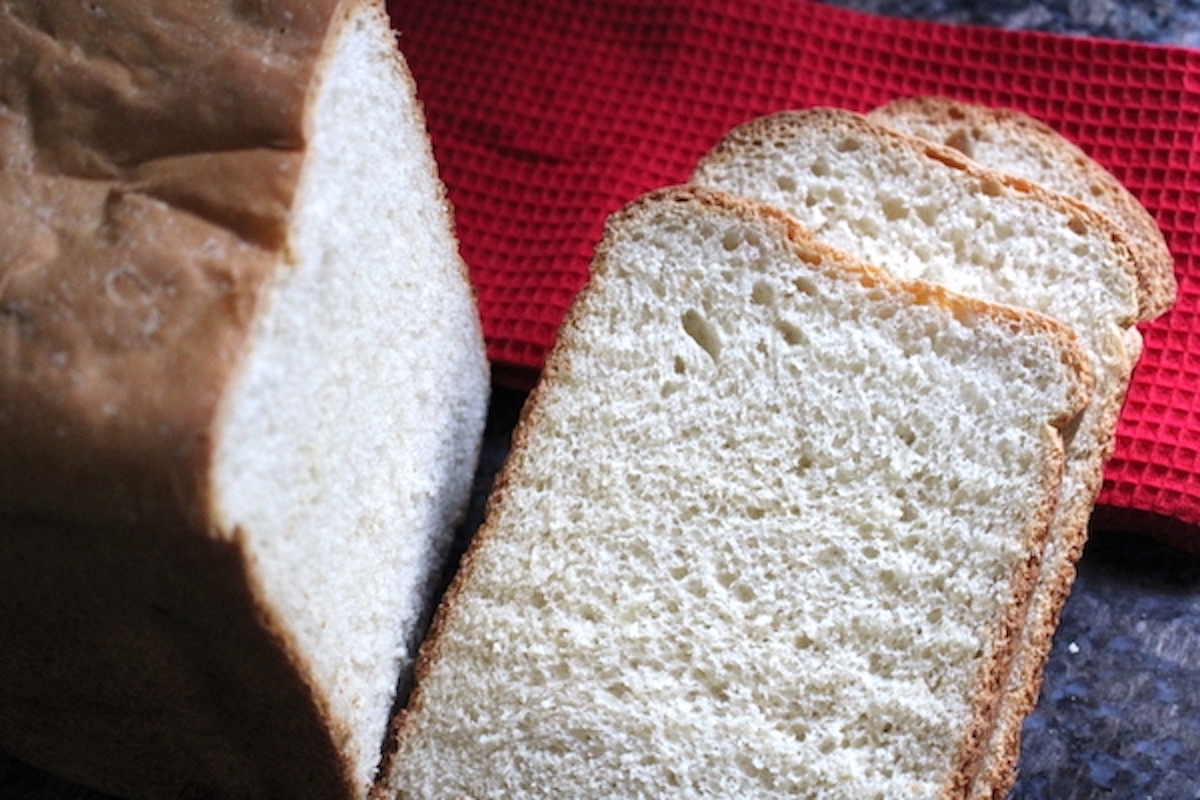
This is the recipe I make most often, the one my kids ask for by name, and the one I recommend to anyone who’s just bought their first bread machine. The dough is forgiving, the crumb is soft and tender, and the result tastes like the platonic ideal of homemade white sandwich bread. Better than anything in the grocery store bread aisle, and made with five minutes of work.
The recipe works in any bread machine (also called a bread maker), and the recipe card has both 2-pound and 1 1/2-pound loaf amounts, with notes for 1-pound machines. I’ve tested it in my Zojirushi Home Bakery Supreme, in a budget Cuisinart bread machine, and in older Sunbeam, Oster, and Breadman machines too; it works in all of them. See the Variations section below for sweet white bread, soft milk bread, dairy-free, and a dough-cycle-plus-oven-bake version, or browse my full collection of bread machine recipes.
Notes From My Kitchen

I bought a bread machine at a local thrift store years ago, mostly out of nostalgia (my mom got one as a Christmas gift when I was a kid and made bread all winter long that year). It turned out to be one of the most useful kitchen tools we own.
Between two toddlers and a homestead, I never have time to babysit a hand-kneaded loaf (unless I choose to). With the machine, I can have ingredients in the pan in two minutes flat, which is about as much time as I have between breaking up baby battles.
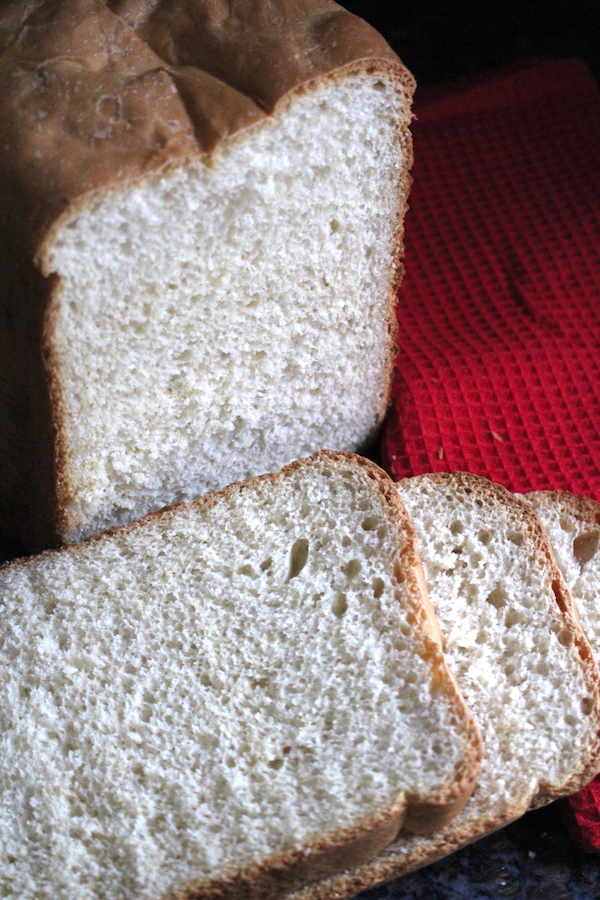
Quick Look at the Recipe
- Makes: 1 loaf, about 10 slices
- Active prep: 5 minutes
- Total time: about 3 hours (basic white cycle)
- Loaf size: 2 lb (1 1/2 lb amounts in recipe notes)
- Machine setting: Basic White cycle, medium crust
- Flour: 3 3/4 cups all-purpose or bread flour
- Yeast: 2 tsp SAF instant yeast (also sold as bread machine yeast), added to the dry ingredients
Ingredients for Bread Machine White Bread
Standard pantry ingredients across the board. The combination of milk and butter (rather than just water) is what makes this loaf soft and tender rather than crusty like a French bread. The small amount of sugar feeds the yeast and helps the crust brown.
The recipe is written for a 2-pound loaf, the default on most modern bread machines, with 1 1/2-pound amounts in the recipe notes. To make a 1-pound loaf on a small machine, cut the 2-pound amounts in half. Add the ingredients in two batches: liquid first into the bottom of the pan, then dry on top.
- Water: Lukewarm, warm to the touch but not hot (over 110°F kills yeast). Cold tap water also works because the bread machine warms the ingredients during the preheat phase.
- Milk: Lukewarm. Whole, 2%, or skim all work. The milk is what gives this loaf its softer, more tender crumb compared to a plain water-based bread. Non-dairy milk (oat, almond, soy) substitutes 1:1, with oat milk being the most neutral. If you don’t have any milk on hand, replace with the same amount of water and the loaf will still be good (just slightly less rich).
- Butter: Cut into small pieces. Cold or room temperature both work; the bread machine handles either. Melting the butter first is also fine. If using salted butter, reduce the salt by 1/4 teaspoon. Olive oil or any neutral oil (canola, grape seed, avocado oil, etc.) substitutes 1:1.
- Flour: All-purpose or bread flour both work. King Arthur All-Purpose is what I use most often because it’s what I keep in bulk. Bread flour gives a slightly taller, chewier loaf because of the higher protein content. UK readers using strong white bread flour get excellent results too.
- Sugar: Feeds the yeast and helps the crust brown. The 3 tablespoons gives a very mildly sweet sandwich bread. UK readers may prefer to reduce to 2 tablespoons; American sandwich bread tends to be slightly sweeter than the UK style.
- Salt: Essential for flavor and yeast regulation. Don’t skip or reduce significantly.
- SAF instant yeast: SAF instant yeast is what I use. Bread machine yeast is the same product (different marketing name). For active dry yeast, use 2 1/2 tsp instead of 2 tsp and dissolve in the water for 10 minutes before starting.
Flour notes: All-purpose flour produces the softest, most tender crumb (best for kids’ sandwiches). Bread flour gives a slightly chewier, taller, more sandwich-deli-style loaf. Either works in this recipe. If you weigh your flour, use 470 grams for the 2-pound loaf (1 cup all-purpose = 125 g); measuring by cup is fine but slightly less consistent. If your dough looks dry during the first minutes of kneading, drizzle in 1 tablespoon of water at a time. If too wet, add 1 tablespoon of flour.
For yeast, SAF instant yeast and bread machine yeast are the same type of yeast in two different packages, used in the same amount, and placed in a well on top of the flour with the dry ingredients (they do not need to be dissolved). If you only have active dry yeast, use 2 1/2 tsp instead of 2 tsp and dissolve it in the water first; wait 10 minutes until foamy, then proceed. Don’t use the delay timer with active dry yeast (it will die sitting in water). For more rise issues, see the Bread Machine Troubleshooting Guide.
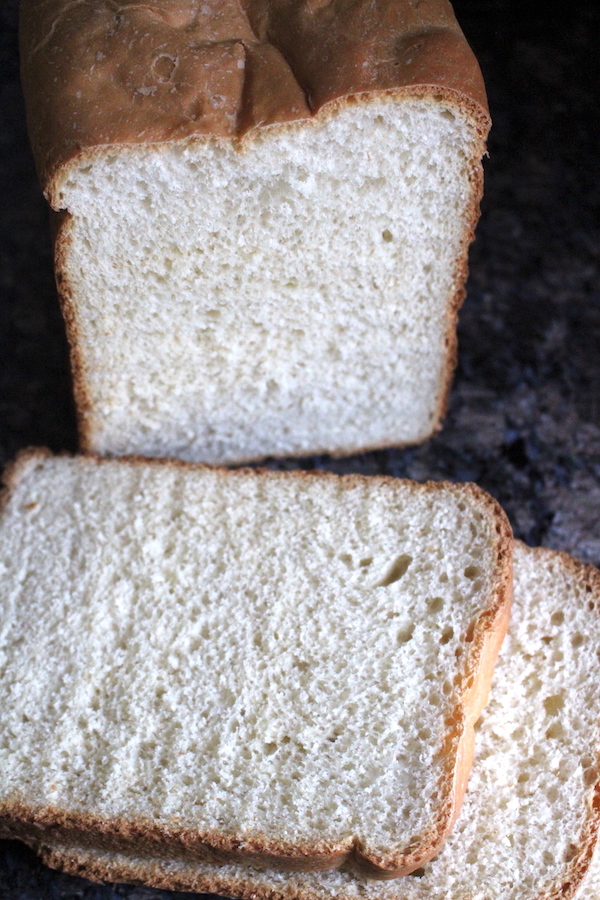
How to Make Bread Machine White Bread
This is a true “set it and walk away” recipe. Five minutes of work, then the machine handles everything.
Step 1. Add the liquid ingredients to the bread pan first. Water, then milk, then the butter cut into small pieces.
Step 2. Add the flour on top of the liquid, covering it completely. Think of the flour as an island floating on top of the water and milk. The yeast needs to stay dry until the machine starts kneading.
Step 3. Make a small well in the flour. Add the sugar and salt around the edges, and the yeast in the center. Keep the salt and yeast from touching directly; salt slows yeast activity.
Step 4. Select the Basic White cycle and medium crust. Press start. On most machines the full cycle runs about 3 hours.
Step 5. Watch the first 2 to 3 minutes of kneading. The dough should form a smooth ball that pulls cleanly away from the sides of the pan. If it looks too dry, drizzle in 1 tablespoon of water at a time. If too wet (sticking to the sides), add 1 tablespoon of flour.
Step 6. Let the machine complete the cycle. Don’t open the lid during the rises or the bake; opening releases heat and humidity and can cause the loaf to collapse.
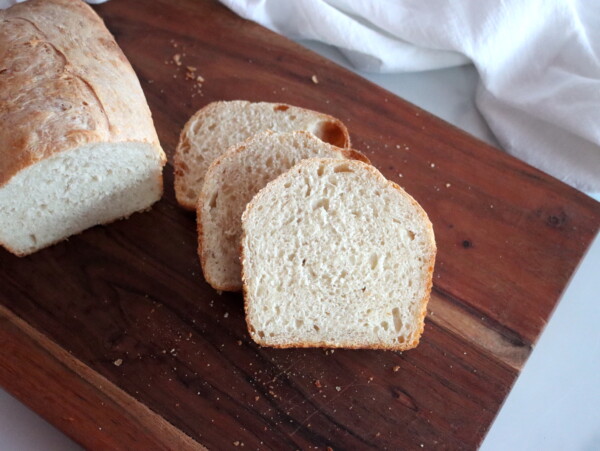
Step 7. Remove the loaf when the bake cycle finishes. Turn it out onto a wire rack and let it cool completely before slicing, ideally at least 1 hour. Slicing warm bread tears the crumb and gives gummy slices.
Recipe Tips
Watch the dough during the first 2 to 3 minutes of kneading. It’s a good habit with any bread machine loaf. The dough should form a smooth ball that pulls away from the sides of the pan. If it looks too dry, add water 1 tablespoon at a time; if too wet, add flour the same way. Humidity, flour brand, and even the time of year affect water absorption.
If your loaf rises too high or touches the lid, reduce the yeast by 1/4 teaspoon. A handful of readers have reported the dough rising right to the top of the machine in older or particularly warm machines. Try 1 3/4 tsp SAF (or 2 1/4 tsp active dry yeast) on the next batch. Old yeast can also produce inconsistent rises; replace yeast more than 4 months past its package date.
For an even softer, more pillowy loaf, swap some of the water for milk. A reader recently shared this hack: replace the water entirely with 1 cup milk plus 1/3 cup additional milk (so 1 1/3 cups milk total in place of the water and milk in the recipe). The result is a softer, more enriched loaf that her kids actually eat the crust of.
Cool completely before slicing. The crumb sets as it cools. Give it a full hour on a wire rack. If your machine bakes the loaf and shifts to the “keep warm” cycle, remove it from the pan as soon as the bake finishes; leaving it in the pan on warm makes the bottom crust soggy.
For oven baking instead of machine baking, use the dough cycle. When it finishes, turn the dough into a greased 9×5 loaf pan, rise covered for 60 to 90 minutes until 1 inch above the rim, and bake at 350°F for 30 to 35 minutes until the internal temperature reaches 190°F. Several readers prefer this method for a more traditional sandwich-loaf shape and a smoother top crust.
Variations
This recipe is the baseline for several easy variations. Each is a simple tweak from the base recipe:
- Sweet white bread: For a sweeter, more dessert-friendly loaf (excellent for French toast or breakfast toast with jam), increase the sugar to 1/4 cup and decrease the yeast by 1/2 tsp so it doesn’t over rise. The crust will brown faster, so use the light crust setting.
- Extra-soft milk bread: Replace all of the water with milk (so 1 1/3 cups milk total, no water). The result is a noticeably softer, more pillowy loaf. Best for kids’ sandwiches; not compatible with the delay timer because of the dairy.
- Dairy-free white bread: Use oat milk, almond milk, or soy milk in place of the regular milk (1:1), and substitute the butter with olive oil or any neutral oil. The loaf rises and bakes the same way.
- Whole wheat or honey wheat: For a heartier sandwich loaf, see my Bread Machine Whole Wheat Bread (100% whole wheat) or my Bread Machine Honey Wheat Oat Bread (50/50 wheat-white blend with honey and oats).
- Mix-ins (cheese, herbs, dried fruit): For cheese bread, garlic bread, herb bread, or fruit-and-nut variations, add 1/2 to 1 cup of mix-ins (shredded cheese, dried fruit, chopped nuts, herbs) at the mix-in beep about 20 to 30 minutes into the cycle. Don’t add mix-ins at the start; the kneading paddle will pulverize them.
- More bread machine recipes to try: If you love this one, see my Bread Machine Honey White Bread for a lightly sweet variant, my Bread Machine Cinnamon Raisin Bread for a sweet breakfast loaf, or my Bread Machine French Bread for a crusty European-style loaf.
I just made your bread using this recipe in the UK. I made it using strong plain bread flour in my machine and it is THE BEST loaf I’ve made so far. So light and fluffy with the perfect crust. So happy I found your recipe.
FAQs
Both work. All-purpose gives a softer, more tender crumb (best for kids’ sandwiches). Bread flour gives a slightly chewier, taller loaf because of the higher protein content. UK readers using strong white bread flour get excellent results too. The amount is the same regardless.
No. The butter can go in cold (cut into small pieces) or melted; the bread machine handles either. Cutting cold butter into small pieces helps it incorporate faster, but melting works fine if you’d rather. Don’t use butter that’s still hot, since it can warm the dough and affect the rise. If you only have salted butter, use it and reduce the salt by 1/4 teaspoon.
Almost always a yeast or temperature issue. Try reducing the yeast by 1/4 teaspoon on the next batch (so 1 3/4 tsp SAF or 2 1/4 tsp active dry yeast for the 2-pound loaf). A warm kitchen, very fresh yeast, or an older machine that runs slightly hot can all push the rise too high. The dough also rises a little higher in older Sunbeam, Breadman, or Oster machines than in newer Zojirushi models, so the yeast adjustment is more often needed in older machines.
Yes, and many readers prefer it this way. Use the Dough cycle. When it finishes, turn the dough into a greased 9×5 loaf pan, rise covered for 60 to 90 minutes until 1 inch above the pan rim, and bake at 350°F for 30 to 35 minutes until the internal temperature reaches 190°F. Cool completely on a wire rack before slicing. The result is a more traditional sandwich-loaf shape with a smoother top crust.
Yes. Any non-dairy milk works in equal amounts: oat, almond, soy, or coconut. Oat milk is the most neutral substitute. If you’re going fully dairy-free, swap the butter for olive oil or any neutral oil. The loaf will rise and bake the same way; the flavor will be very slightly less rich.
4 to 5 days at room temperature in a bread bag or wrapped in a clean dish towel. Do not refrigerate; refrigeration speeds up staling. For longer storage, slice the cooled loaf and freeze in a zip-top bag with the air pressed out. Frozen slices toast straight from the freezer and stay good for 2 to 3 months. The whole unsliced loaf also freezes well wrapped tightly in plastic wrap and a freezer bag.
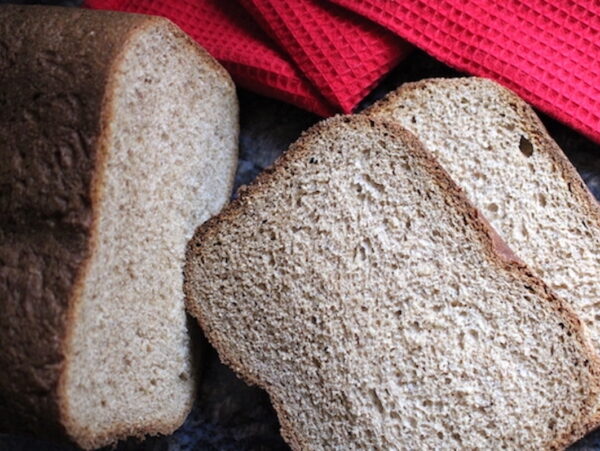
Bread Machine Recipes
If you tried this Bread Machine White Bread recipe, or any other recipe on Adamant Kitchen, leave a ⭐ star rating and let me know what you think in the 📝 comments below!
And make sure you stay in touch with me by following on social media!
Bread Machine White Bread
Equipment
Ingredients
Liquid Ingredients (add first)
- 1 cup Water, lukewarm
- 1/3 cup Milk
- 3 Tbsp. Butter
Dry Ingredients (on top of wet)
- 3 3/4 cup White Flour, All Purpose or Bread
- 3 Tbsp. Sugar
- 1 tsp. Salt
- 2 tsp. SAF Instant Yeast, or 2 1/2 tsp active dry yeast
Instructions
- Add the liquid ingredients to the bread pan first: water, milk, butter.
- Add the flour on top, covering the liquid completely.
- Make a small well in the flour. Place the sugar and salt around the edges and the yeast in the center; keep salt and yeast from touching directly.
- Select the Basic White cycle and medium crust setting. Press start.
- Watch the first 2 to 3 minutes of kneading. The dough should form a smooth ball that pulls away from the sides. Add 1 tablespoon of water if dry, or 1 tablespoon of flour if wet.
- Let the machine complete the cycle without opening the lid.
- Remove the loaf onto a wire rack as soon as the bake finishes; don’t leave it on the keep-warm cycle.
- Cool completely (at least 1 hour) before slicing.
Notes
- 3/4 cups (180 ml) lukewarm water
- 1/4 cup (60 ml) milk
- 2 Tbsp. (28 g) butter
- 2 3/4 cup (330 g) White Flour (All Purpose or Bread)
- 2 1/4 Tbsp. (28 g) Sugar
- 3/4 tsp. (5 g) salt
- 1 1/2 tsp. (5 g) SAF Instant Yeast (or 2 tsp bread machine yeast)
- SAF instant yeast or bread machine yeast: 2 tsp (interchangeable 1:1, same product).
- Active dry yeast: 2 1/2 tsp, dissolved in the water for 10 minutes before starting. Not compatible with the delay timer.
Nutrition
Nutrition information is automatically calculated, so should only be used as an approximation.
50+ Bread Machine Recipes
Bread machine recipes can be hard to find, as bread makers were most popular before the internet became a thing. …
Find the perfect recipe
Searching for something else? Enter keywords to find the perfect recipe!
This is the best white bread I’ve made yet. It is simple and the ingredients are well proportioned. Texture is consistent and it sliced perfectly. Thank you for sharing this recipe.
So glad you enjoyed it!
Makes delicious soft white bread
So glad you liked it!
It was a great meal for a cold day off volunteering at a neighbor’s place. Honey will work as a sugar-free (or reduced sugar) alternative (it activates the yeast like sugar does, use up to one teaspoon and a half, or more if you want it a honey-flavored loaf!) Went perfect with orange marmalade!
Lovely!
Turned out amazing! First time not using a bread mix in my bread machine!
Great! I’m so glad you tried it!
Does this recipe work well with milk alternatives like oat milk? Any other modifications I should make if using milk alternatives?
This works just fine with milk alternatives. Go ahead and use oat milk, almond milk, etc. They’re all wonderful. Enjoy!
This is definitely my go-to recipe for white bread. My family eats it up so quickly.
Wonderful!
This recipe was so easy to make as a first time bread maker. It so tastes SO good!
So glad to hear it!
Excellent.I did exactly using the exact measurements by using a scale. Bread turned out perfectly. Nice and soft with a fantastic texture. Thank you very much for posting your recipe. I am probably going to be making this a couple of times a week and forgo the store bought bread.
I’m so glad you like it!
Do you leave the bread and the bread pan to cook or do you take it out of the pan immediately
I generally leave it to cool slightly, for 5 to 10 minutes, and then I take it out of the pan.
This was a great recipe to follow and I’m super happy with how it turned out!
We’re in the UK so this bread was slightly sweeter than we’d normally have.
Can the sugar quantity be lowered without impacting the rise/texture please??
Yes, you can actually eliminate the sugar if you like. In the US, “white bread” is often quite sweet, but the sugar isn’t required to make the loaf work.
This recipe is AWESOME!! I use the dough setting, then put the dough in a loaf pan and let it rise for 30 minutes more. Then, I bake it at 400 degrees until golden on top. My husband loves it! I can’t wait to try your other recipes! Thanks, Ashley!
So glad you enjoyed it!
This loaf is very very good. Nice texture and flavour! Highly recommend.
I made the 1.5 lb loaf in my bread machine under the “dough” setting. After a one hour rise, I punched it down, shaped it (removed my bread maker paddle), lightly oiled the shaped dough and placed it back into the machine to let it rise for another 30 minutes. Once it was ready, I set the bread machine to bake. *I remove the paddle before baking so I don’t get a giant hole in my loaf.