This post may contain affiliate links. Please see our disclosure policy.
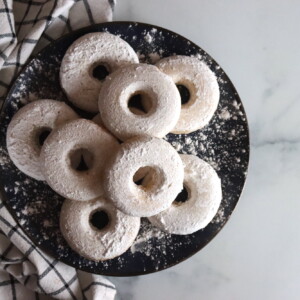
Baked sourdough donuts are soft, tender cake donuts made with sourdough discard, and they go from mixing bowl to cooling rack in about 30 minutes.
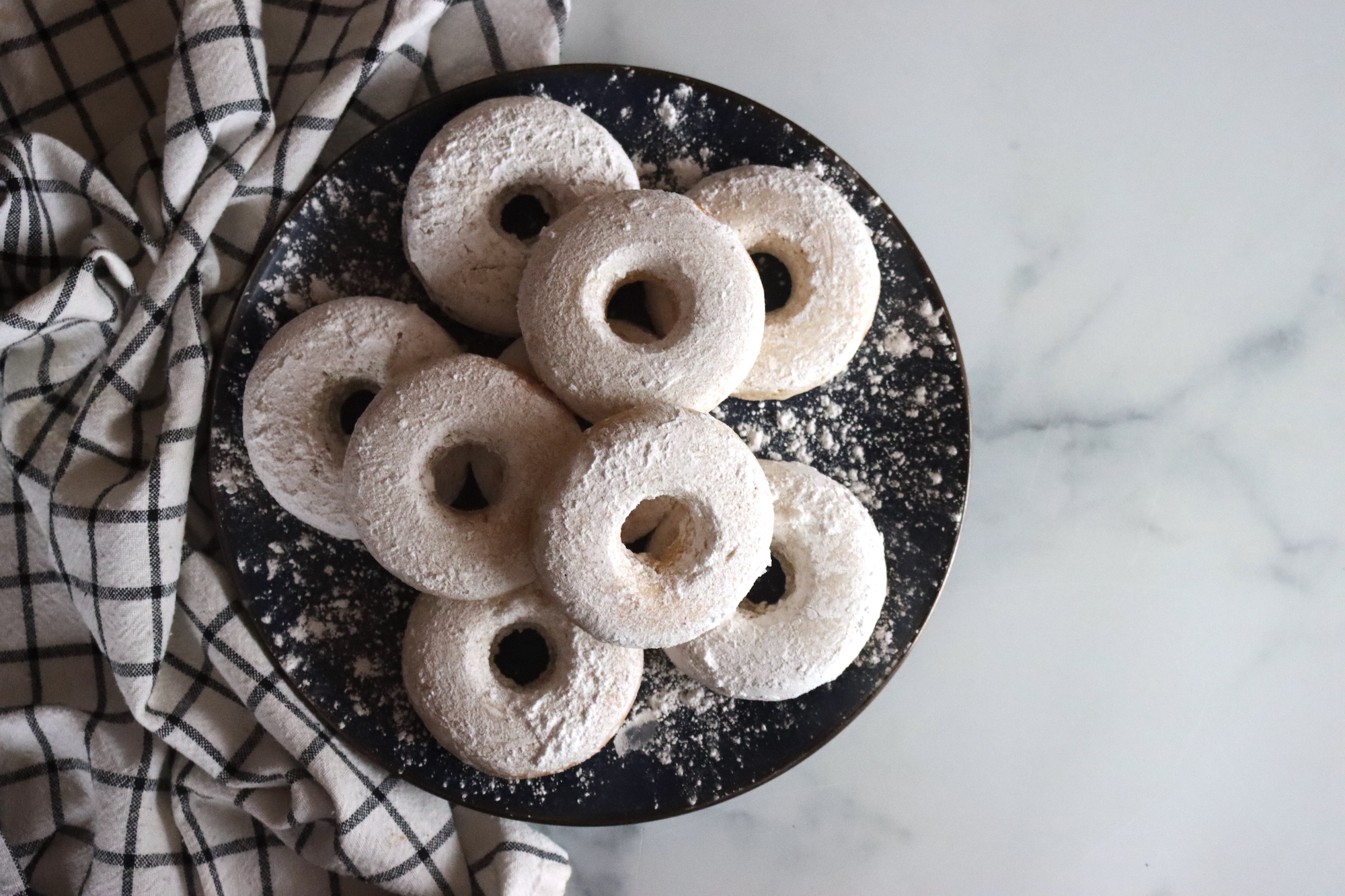
Table of Contents
These are cake donuts, not yeast donuts, which means the batter is stirred rather than kneaded and piped rather than rolled and cut. They bake in a donut pan instead of a pot of hot oil, so there is no frying, no thermometer, and no pan of used oil to deal with afterward.
I have been baking my way through my discard jar for years now, and this is the recipe my kids ask for by name. The sourdough does real work here: it adds a faint tang that keeps a sweet donut from tasting flat, and it gives the crumb a softness that a plain cake donut does not have. If you would rather use the discard for something savory, my sourdough discard crackers are the other recipe in constant rotation here.
You can mix and bake these in one sitting, or refrigerate the batter overnight for a genuinely long fermented donut. Both methods are written out below, and the full amounts are in the recipe card. For everything else the discard jar can do, see my collection of 100+ sourdough recipes.
Notes from My Kitchen

My first batch came out of the oven looking like six small bundt cakes. I had filled the wells right to the rim, the batter rose over the center posts, and the holes closed up completely. They tasted fine and nobody complained, but they were not donuts. Three quarters full is the number, and a piping bag makes hitting it easy in a way that a spoon never will.
The other thing I learned the hard way is that the tops stay pale. Baked donuts brown on the bottom, where the batter sits against the hot pan, and they simply do not develop much color on the exposed side. I overbaked two batches waiting for a golden top before I understood that. Now I flip one out at 15 minutes and check the underside, and that is the whole test.
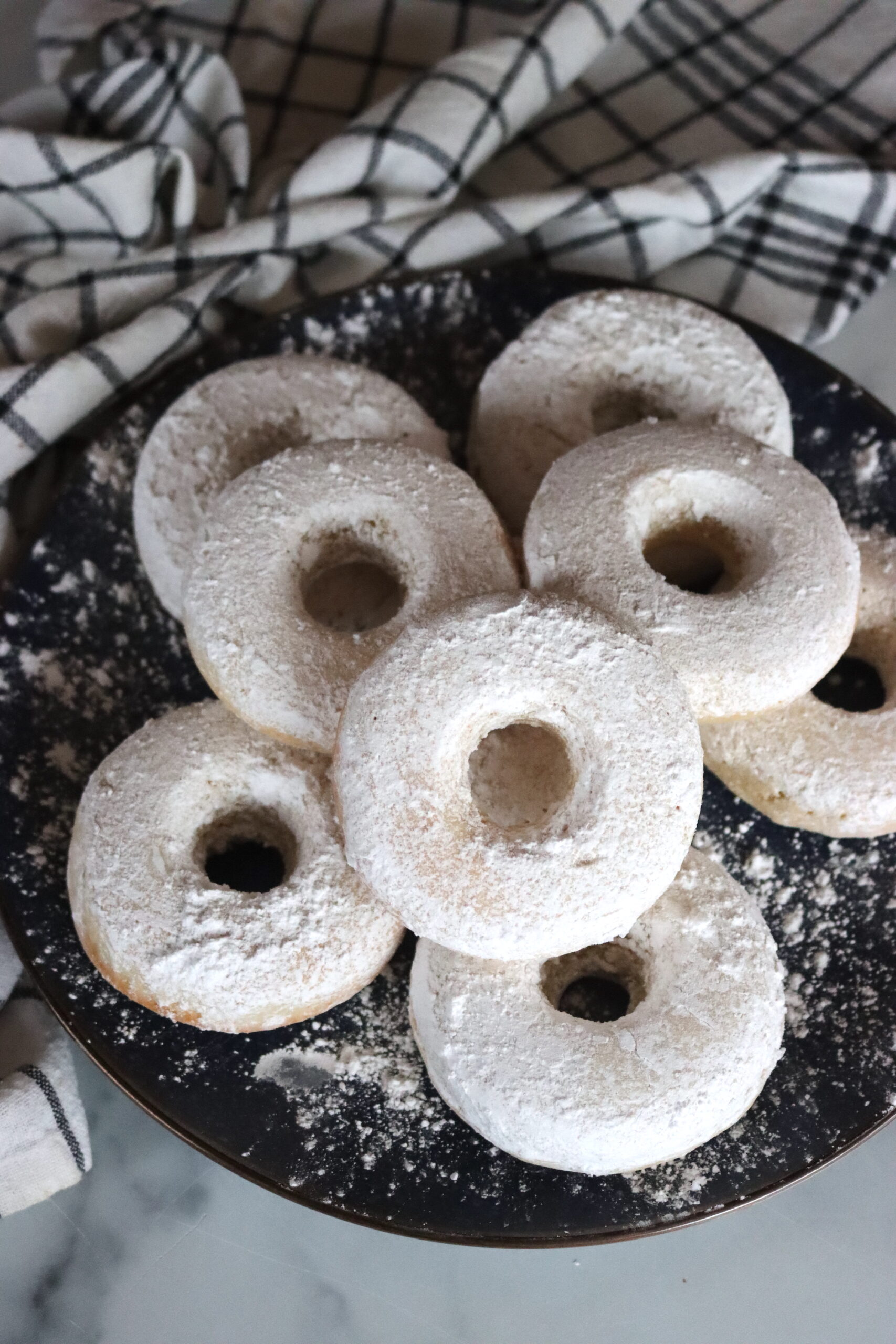
Ingredients for baked sourdough donuts
Nine ingredients, all of them pantry staples if you already keep a starter. The one piece of equipment you cannot work around easily is a donut pan, since this batter is far too loose to roll or cut. A standard pan holds six, so plan on two pans or two rounds in the oven. Exact amounts are in the recipe card at the bottom of the post.
- All-purpose flour: Gives the donuts their structure and keeps the crumb tender rather than chewy. Measure by spooning flour into the cup and leveling it off with a knife, because scooping straight from the bag packs in an extra ounce or two and turns soft donuts dense. I use King Arthur unbleached all-purpose flour.
- Sugar: Plain granulated sugar sweetens the batter and helps the bottoms take on color, which is where all the browning happens in a baked donut.
- Baking powder: This is the primary leavening. The discard contributes flavor and a little lift, but the baking powder is what actually raises these donuts, so check that yours is fresh.
- Salt: Sharpens the sweetness and keeps the sourdough tang reading as complexity rather than sourness. If you only have salted butter, leave the added salt out entirely.
- Unsalted butter: Melted and stirred into the wet ingredients for richness and a soft crumb. Let it cool for a minute before it meets the egg so it does not scramble anything.
- Sourdough discard: The whole point. It brings a mild tang, extra moisture, and a softer texture than a plain cake donut. Discard straight from the fridge works, and so does a freshly fed active starter.
- Milk: Thins the batter to piping consistency and keeps the crumb moist. Whole milk gives the richest result, but any dairy or plant milk works.
- Egg: Binds the batter and gives the donuts enough structure to hold their shape when you turn them out of the pan. Room temperature blends in more evenly.
- Vanilla extract: Rounds out the sweetness and plays against the tang. Do not skip it; in a donut this simple the vanilla is a headline flavor, not a background note.
A note on the discard: Discard is simply starter you would otherwise throw away at feeding time, and it can be days or even a couple of weeks old as long as it smells sour and yeasty rather than sharply acetone or moldy. A hundred percent hydration starter, meaning equal weights of flour and water, is what this recipe is written around. A stiffer starter will thicken the batter noticeably, so add an extra splash of milk if yours is thick enough to hold a shape. If you are starting from scratch or want a whole grain version, my whole wheat sourdough starter guide walks through it.
Discard versus active starter: Either works, and the difference is smaller than you would think. Discard is more acidic, so it gives a touch more tang. A freshly fed active starter is milder and adds a bit more rise. Because the baking powder is doing the heavy lifting either way, you will not notice a texture difference. Use whichever one is in your fridge.
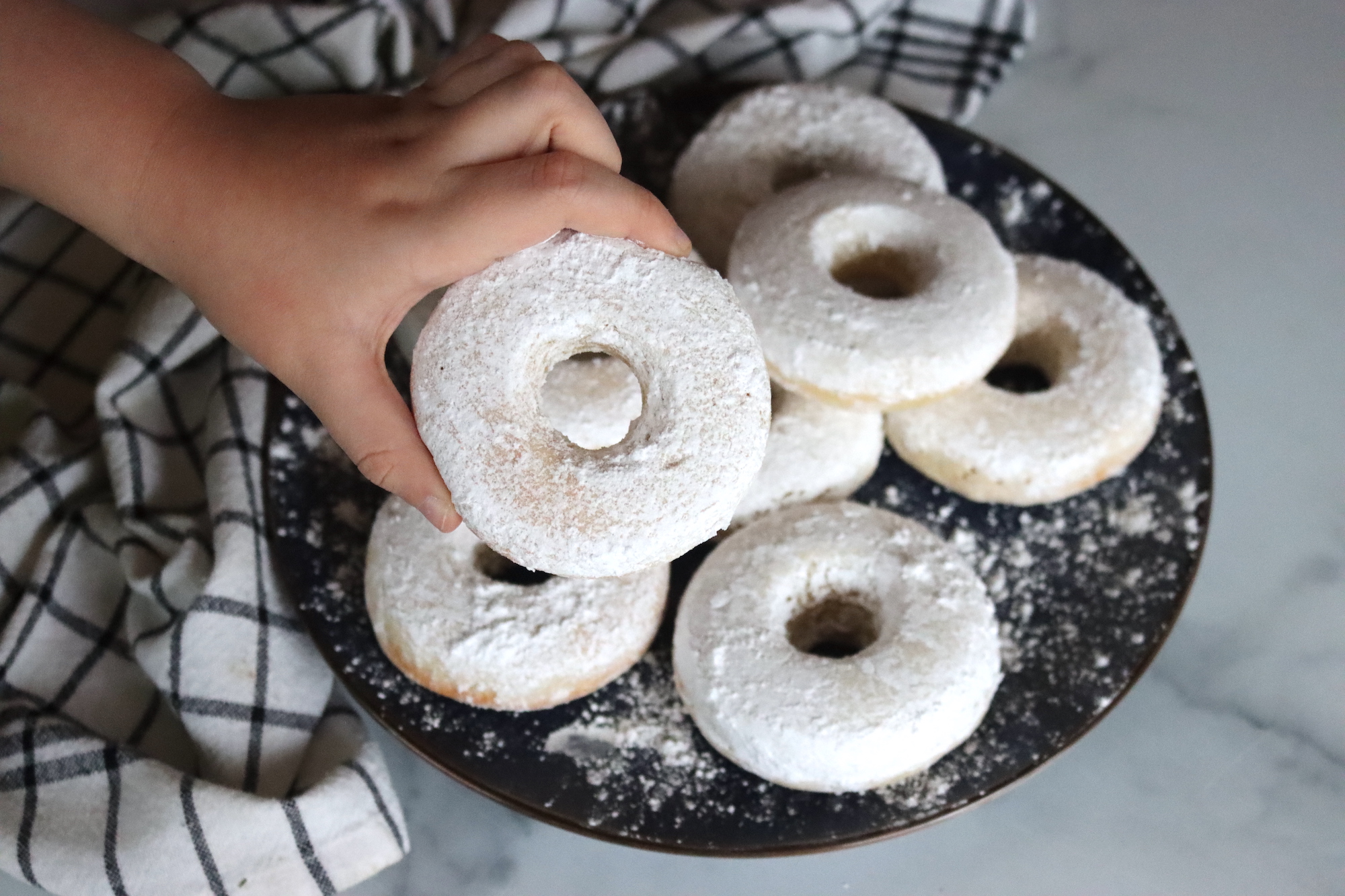
How to make baked sourdough donuts
This is a stir-together batter, closer to muffins than to bread. There is no kneading, no rising, and no resting unless you choose the overnight method further down. From the moment you start measuring to the moment the first pan comes out of the oven is about half an hour.
Step 1. Preheat and grease the pan. Heat the oven to 350°F (175°C) and grease your donut pan thoroughly with butter or nonstick spray, getting into the crease around the center post. Baked donuts stick there more than anywhere else, even in a nonstick pan.
Step 2. Whisk the dry ingredients. In a large bowl, whisk together the flour, sugar, salt, and baking powder until evenly combined. Whisking now means you will not have to overmix later to distribute the leavening.
Step 3. Combine the wet ingredients. In a separate medium bowl, stir together the melted butter, egg, vanilla, sourdough discard, and milk until smooth. Let the melted butter cool for a minute first so it blends in rather than seizing against the cold milk.
Step 4. Mix gently, and stop early. Pour the wet mixture into the dry and fold with a silicone spatula just until no dry flour remains. A few lumps are exactly right. Overmixing develops gluten and gives you tough, dense donuts instead of tender ones.
Step 5. Pipe the batter into the pan. Transfer the batter to a piping bag, or a zip-top bag with one corner snipped off, and pipe it into the wells until each is about three quarters full. Spooning works but it is messy and it is much harder to judge the fill level, which is the one thing that matters here.
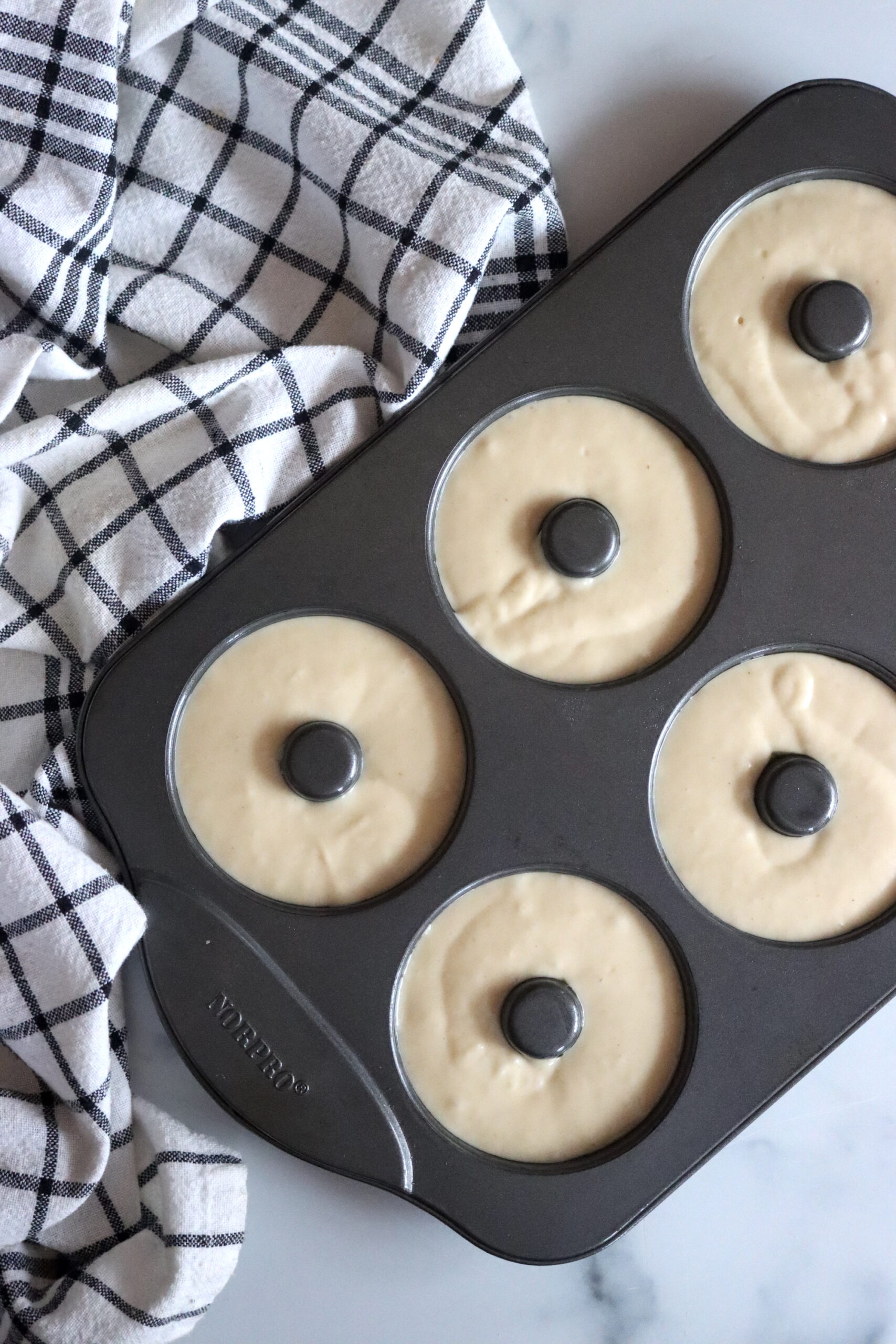
Step 6. Bake for 15 to 17 minutes. The donuts are done when the bottoms are golden and the tops spring back under a light press. Do not wait for the tops to brown, because they will not. If you are unsure, lift one out with a fork and look at the underside.
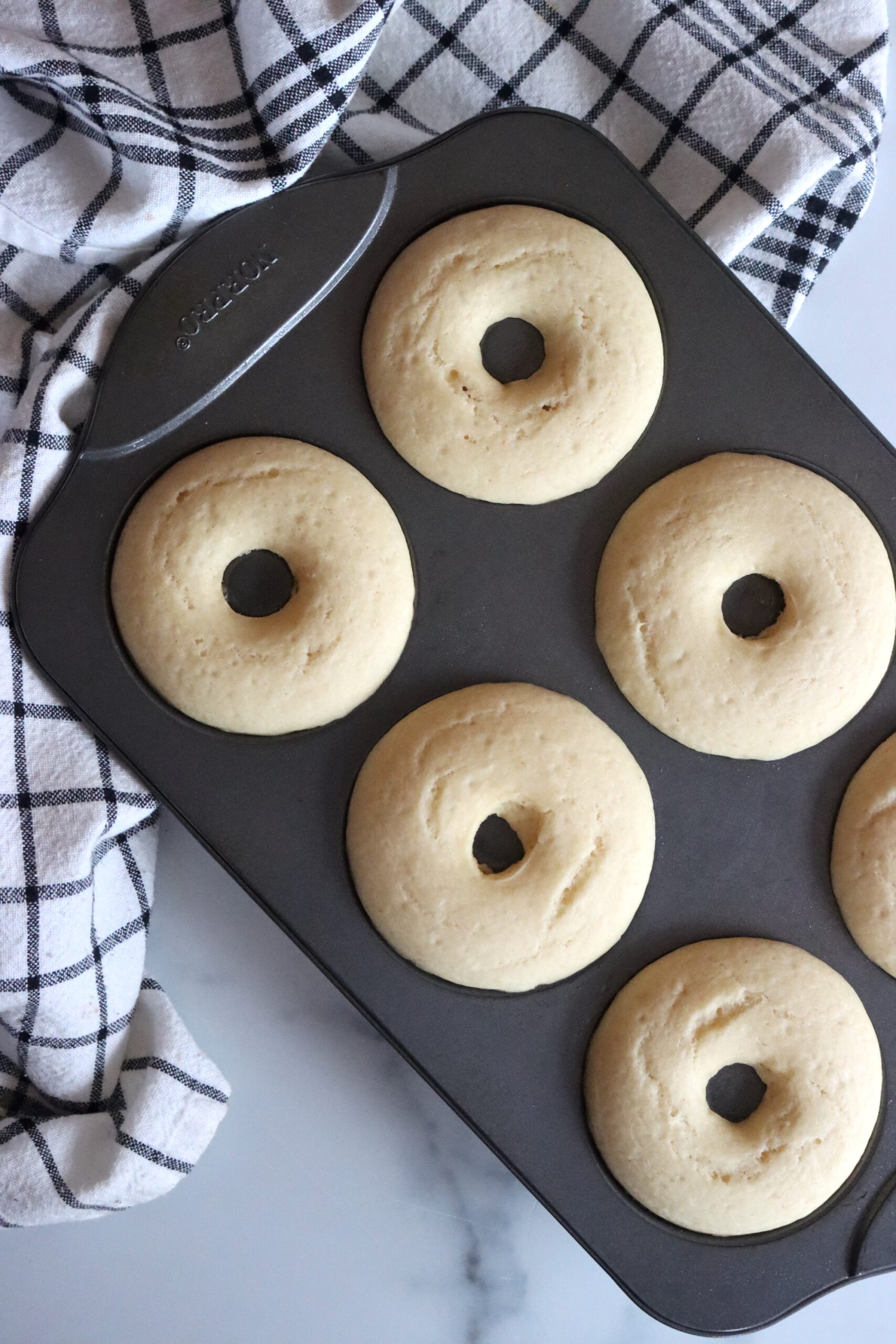
Step 7. Cool them out of the pan. Let the donuts sit in the pan for about 5 minutes, then turn them out onto a wire rack to finish cooling. Leaving them in the pan traps steam against the bottoms and turns a crisp edge soft and damp.
Step 8. Coat or glaze. Toss the cooled donuts in powdered sugar, roll them in cinnamon sugar, or dip the tops in a simple vanilla glaze. Full topping instructions are in the serving section below.
Long fermented sourdough donuts
As written, this is a sourdough discard recipe. The discard is there for flavor, moisture, and texture, and the baking powder does the leavening. That is what makes it a 30 minute recipe.
If you want the digestibility and deeper flavor of a genuine long ferment, you can hold the batter overnight with one small change to the order of operations. Mix everything except the baking powder, cover the bowl, and refrigerate it for 8 to 12 hours. In the morning, sprinkle the baking powder evenly over the surface and fold it in gently, then pipe and bake as usual.
Holding the baking powder back matters. Baking powder is double acting, which means it releases part of its gas the moment it hits liquid. Mix it in the night before and most of that first release is gone by morning, which is why an overnight batter made the ordinary way bakes up shorter and denser. Adding it at the end gives you a full rise on top of a full ferment.
Let the piped pan sit at room temperature for 20 to 30 minutes before it goes into the oven so the cold batter is not fighting the heat. Expect a slightly tangier donut and a slightly darker crumb. If you like this method, it is the same principle behind my beginner sourdough loaf bread, where the long fermentation is doing all the work.
Tips for the best baked sourdough donuts
Fill the wells three quarters full, not to the rim. This is the single fix for the most common problem with baked donuts. Overfilled batter rises over the center post, seals the hole shut, and gives you a small ring-shaped cake. Underfilled batter gives you a thin, dry donut. Three quarters is the number.
Grease the center post, even in a nonstick pan. The crease where the post meets the base is where baked donuts tear. Butter on a fingertip, worked around each post, takes fifteen seconds and saves the batch.
Judge doneness by the bottom. Baked donuts brown where they touch the pan and stay pale on top. If you wait for a golden top you will overbake them into something dry. Fifteen minutes, then check the underside of one.
Stop mixing while it still looks slightly lumpy. Cake donut batter is a muffin batter, and it follows muffin rules. The moment it looks perfectly smooth you have gone too far, and the donuts will bake up tough and tight instead of tender. This is the same rule that governs my sourdough banana bread.
Coat them warm, glaze them cool. Powdered sugar and cinnamon sugar cling best while the donuts are still slightly warm and a little tacky. A glaze needs a fully cooled donut, otherwise it thins out and runs straight off onto the rack.
Serving baked sourdough donuts
Plain, these are barely sweet and honestly excellent alongside a cup of coffee, more like a breakfast cake than a bakery donut. Most of the time I dress them up at least a little, and here are the three finishes I actually use.
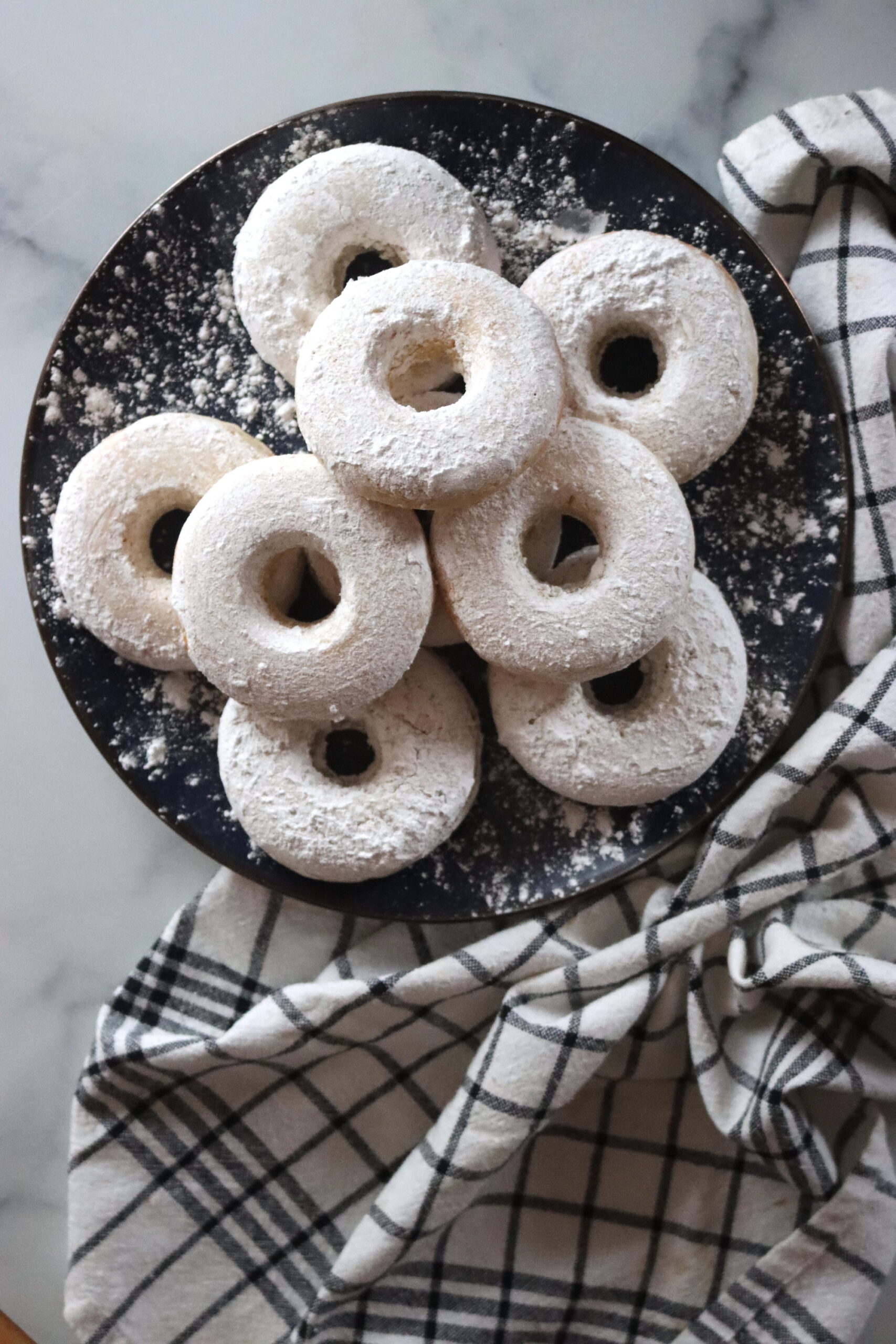
- Powdered sugar: Put about 1/2 cup of powdered sugar in a shallow bowl and turn each slightly warm donut in it until evenly coated. Simplest option, and the one my kids vote for.
- Cinnamon sugar: Whisk 1/2 cup granulated sugar with 1 tablespoon of cinnamon. Brush the warm donuts lightly with melted butter first so the coating sticks, then roll them in the mixture.
- Vanilla glaze: Whisk 1 cup powdered sugar with 1 teaspoon vanilla extract and 2 to 3 tablespoons of milk or cream until it ribbons off the whisk. Dip the top of each cooled donut, let the excess drip off, and set them glaze side up on a rack. Add sprinkles right away, while the glaze is still wet.
They are at their best within a few hours of baking, which is true of every cake donut. Store leftovers in an airtight container at room temperature for up to 2 days; the powdered sugar coating will dissolve into the surface overnight, so re-toss them before serving if you care how they look. Refrigeration dries them out and is not worth it.
To freeze, cool the donuts completely, leave them uncoated, and freeze them in a single layer before transferring to a bag. They keep for 3 months. Thaw at room temperature, warm them for a few minutes in a 300°F oven, and coat or glaze after they come out. For a make-ahead breakfast on the same principle, sourdough apple fritter bread and sourdough cinnamon raisin bundt cake both hold much better than donuts do.
If you are working through a donut phase, my lilac donuts use the same donut pan with foraged flowers, Icelandic kleina are the twisted fried version, and Danish klejner are their close cousin.
I made these today and they were a hit! I prepped the batter last night and fermented it in the fridge overnight. My kids and husband really liked them.
Baked sourdough donut FAQs
Not really, since this batter is far too loose to roll or cut. The closest workaround is a muffin tin, which gives you sourdough donut muffins rather than donuts. Fill each cup about half full and start checking at 15 minutes, since muffin wells are deeper and bake a little longer.
Yes, and no adjustment is needed. Discard is a little more acidic and gives slightly more tang, while a freshly fed starter is milder and adds a bit more lift. Since the baking powder does the actual leavening, the finished donuts are nearly identical either way.
The wells were overfilled. Batter piped past about three quarters of the way up rises over the center post as it bakes and seals the hole shut. Pipe rather than spoon the batter, and stop at three quarters full even though it looks like too little.
That is normal and not a sign of underbaking. Baked donuts brown only where the batter meets the hot pan, so the bottoms turn golden while the exposed tops stay light. Check the underside of one donut at 15 minutes rather than waiting for the tops to color, which only leads to dry donuts.
They are best the day they are baked and hold at room temperature in an airtight container for up to 2 days. Skip the refrigerator, which dries them out quickly. For longer storage, freeze them uncoated for up to 3 months, then thaw, warm briefly in a 300°F oven, and coat or glaze afterward.
More sourdough recipes
If you tried these Baked Sourdough Donuts, or any other recipe on Adamant Kitchen, leave a ⭐ star rating and let me know what you think in the 📝 comments below!
And make sure you stay in touch with me by following on social media!
Baked Sourdough Donuts
Equipment
Ingredients
Donuts
- 2 cups all-purpose flour, spooned and leveled, about 250 g
- 3/4 cup sugar
- 1 Tbsp baking powder
- 1/4 tsp salt, omit if using salted butter
- 1/4 cup unsalted butter, melted and slightly cooled
- 1 egg, room temperature
- 2 tsp vanilla extract
- 1 cup sourdough starter or discard, 100% hydration
- 1 cup milk, whole milk preferred
Powdered sugar coating (optional)
- 1/2 cup powdered sugar
Cinnamon sugar coating (optional)
- 1/2 cup granulated sugar
- 1 Tbsp ground cinnamon
- 2 Tbsp butter, melted, for brushing
Vanilla glaze (optional)
- 1 cup powdered sugar
- 1 tsp vanilla extract
- 2 to 3 Tbsp milk or cream, adjust for consistency
Instructions
- Preheat the oven to 350F (175C). Grease a donut pan thoroughly with butter or nonstick spray, working it into the crease around each center post.
- In a large bowl, whisk together the flour, sugar, baking powder, and salt until evenly combined.
- In a separate medium bowl, stir together the melted butter, egg, vanilla, sourdough discard, and milk until smooth.
- Pour the wet mixture into the dry ingredients and fold just until no dry flour remains. A few lumps are fine. Do not overmix.
- Transfer the batter to a piping bag, or a zip-top bag with one corner snipped off. Pipe into the donut wells until each is about three quarters full.
- Bake for 15 to 17 minutes, until the bottoms are golden and the tops spring back when lightly pressed. The tops will stay pale; check the underside of one donut rather than waiting for color on top.
- Cool in the pan for 5 minutes, then turn the donuts out onto a wire rack to cool completely.
- For a powdered sugar coating, turn the slightly warm donuts in powdered sugar until evenly coated. For cinnamon sugar, brush the warm donuts with melted butter, then roll in the cinnamon sugar mixture. For a glaze, whisk the powdered sugar, vanilla, and milk until smooth, dip the tops of the fully cooled donuts, and set them glaze side up on the rack to set.
Notes
Nutrition
Nutrition information is automatically calculated, so should only be used as an approximation.
More dessert recipes
Find the perfect recipe
Searching for something else? Enter keywords to find the perfect recipe!
Hello,
Can I skip the egg and add sour cream/ flax egg or something as a substitute?
Thank you!
Yes, this will work with an egg substitute in place of the egg. Enjoy!
I made these today and they were a hit!! I prepped the batter last night and fermented in the fridge overnight. The tanginess from the discard is amazing! I made a batch with melted chocolate and sprinkles on top and another with powder sugar. My kids and husband really liked them. This recipe is definitely going to be a staple in my kitchen. Thank you for posting! (:
I’m so glad you like it!
These are delicious! My grand kids love them. I have a question, do you know what I can do to keep my glazed donuts from becoming “sticky” the next morning? I put them in a sealed container but they are still wet looking come morning. Still delicious
I don’t have a good answer to that. Sometimes it’s a humidity issue, and if your house is humid or very warm, it can be tricky to keep them from getting sticky. I don’t glaze mine usually, I toss them in powdered sugar, so I don’t have a lot of experience with glazes.
Loved these!
So glad you enjoyed them!