This post may contain affiliate links. Please see our disclosure policy.
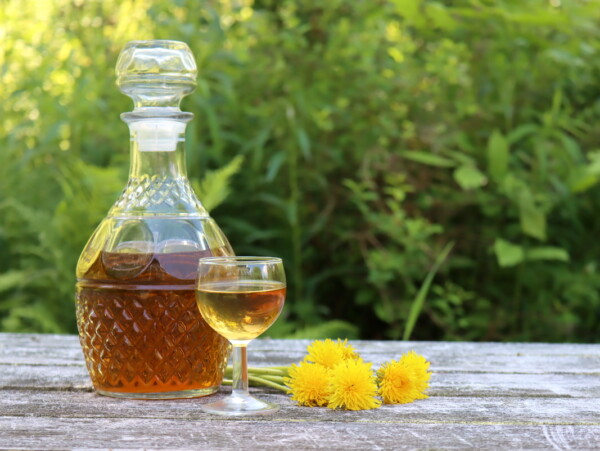
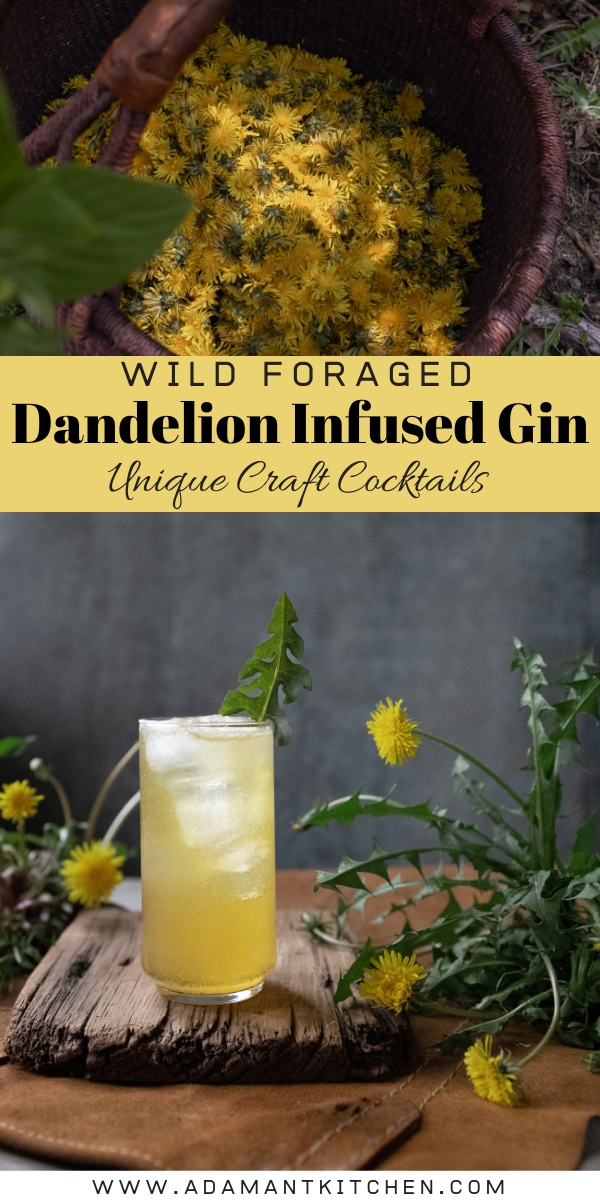
Dandelion gin is a quick herbal infusion that turns a bottle of London Dry into a bright, honey-floral spring spirit in as little as 2 hours. A handful of fresh dandelion blossoms, an optional pinch of roasted dandelion root for tannic depth, and you have a foraged twist on gin and tonic that tastes like the first warm afternoon of spring.
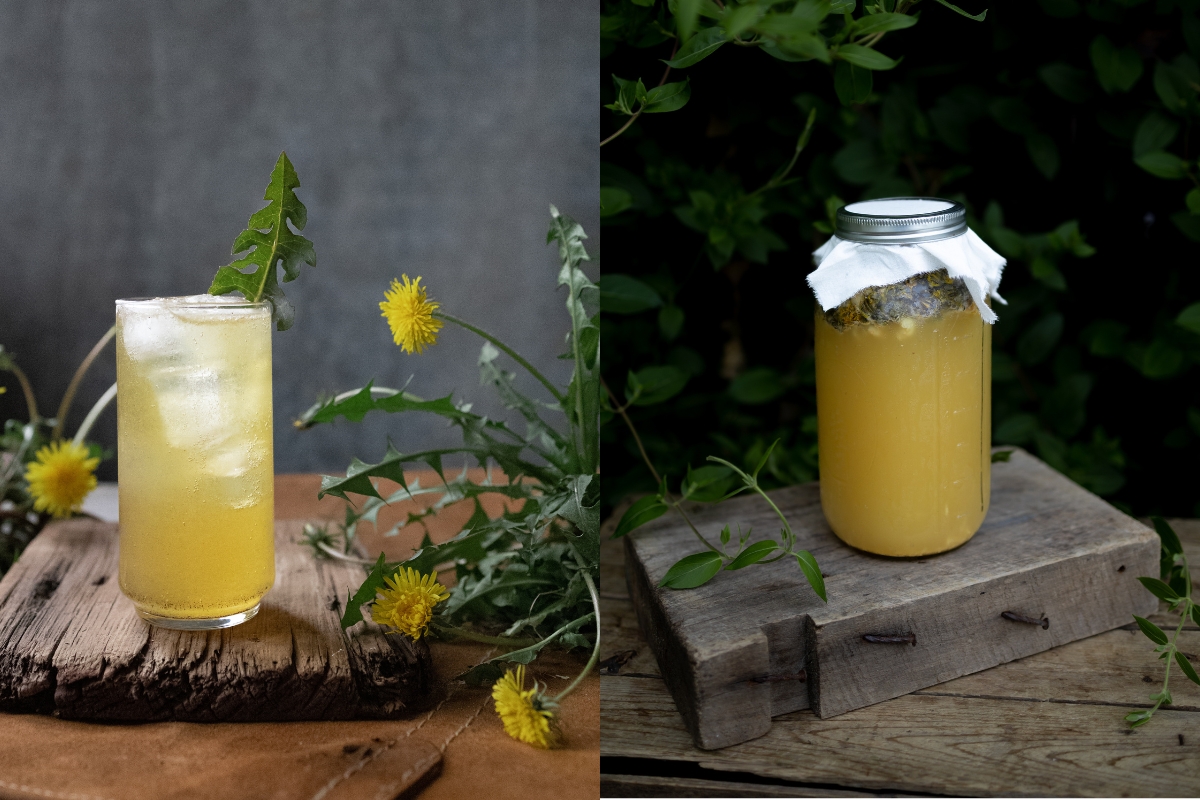
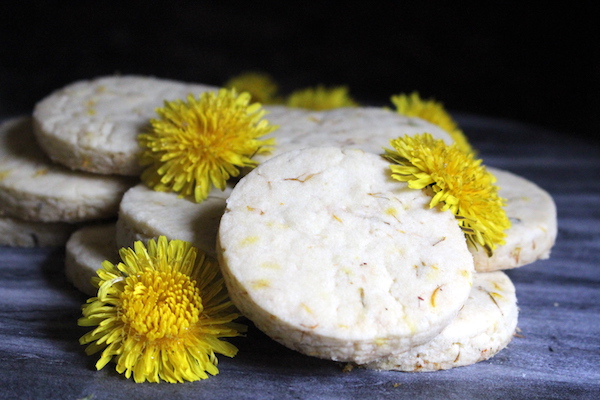
Dandelions pop up in our pasture just as the temperatures finally warm enough to drink something cold on the porch, which makes them feel custom-built for spring cocktails. The kids and I race the bees for the first wave of blossoms every year. Most of what they pick goes into dandelion cookies and dandelion marshmallows, but the rest of what comes home goes into either dandelion liqueur (a 3-week vodka infusion with sweetener) or this gin (which is ready to pour over tonic the same afternoon).
This recipe is adapted from Slow Drinks by Danny Childs, an excellent book on wild foraged drinks and cocktails that I’d recommend to anyone interested in this kind of thing. The technique is straightforward: cover dandelion blossoms with London Dry gin, add a small amount of roasted dandelion root if you have it, and infuse for as little as 2 hours or as long as 2 weeks. The shorter infusion gives a delicate floral character; the longer infusion is deeper and more honey-forward.
This recipe makes a pint of finished gin (about 16 servings of 1 oz each), which is enough for a string of gin and tonics, a few cocktails, or a small gift bottle. Scale it up if you want; the technique works just as well with a full liter of gin and proportionally more flowers.
Notes from my kitchen

What I love about this recipe (besides the obvious, which is that you can drink it the same day you pick the flowers) is how unfussy it is compared to the other dandelion projects we run every spring. Dandelion wine takes months and a small army of clean carboys; my recipe for Dandelion liqueur takes 3 weeks of waiting; this is afternoon to evening if you want it to be.
I make a small batch every May with the blossoms my kids over-pick, set the jar on the back of the counter while we have lunch, and pour the first gin and tonic by the time the sun starts to go down. It’s the spring equivalent of a hot toddy in November: a way to mark the season with something you made yourself from things growing right outside.
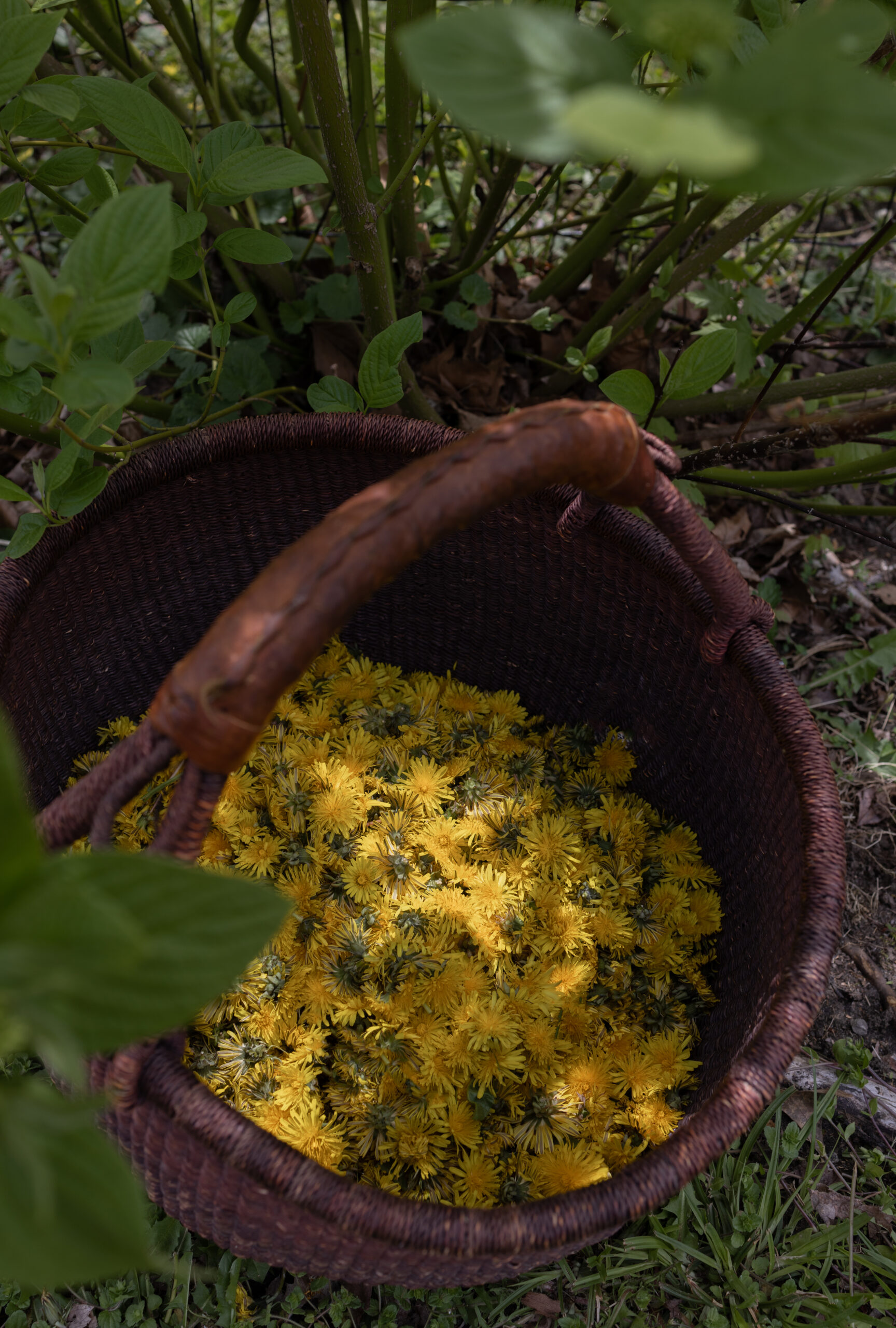
Quick Look at the Recipe
- Makes: About 1 pint of finished gin (16 servings, 1 oz each)
- Active prep: 5 minutes
- Infusion time: 2 hours minimum, up to 2 weeks for a stronger flavor
- Dandelion blossoms: Fresh, fully open, foraged from an unsprayed area
- Alcohol base: London Dry gin (mid-grade, neutral-leaning)
- Optional aromatic: Roasted ground dandelion root for tannic depth
- Storage: Shelf stable at room temperature; best flavor within 1 year
Ingredients for Dandelion Gin
Three ingredients (one of them optional), all going into a single jar. The recipe scales linearly if you want a larger batch.
- Dandelion blossoms (fresh, fully open): Pick on a sunny morning when the flowers are fully open and visibly dusted with pollen. For a quick infusion (2 to 24 hours) the whole blossoms work well; the green sepals contribute a touch of pleasant bitterness in a short window. For longer infusions (a few days to 2 weeks), pull just the yellow petals and discard the green parts, otherwise the bitterness builds and overwhelms the floral notes. Pick from a yard, pasture, or field that hasn’t been sprayed; if you’d never let your dog drink from a puddle there, don’t make gin with the dandelions.
- London Dry gin (mid-grade): A clean, juniper-forward London Dry is the right base here. The juniper plays beautifully with the honey notes in dandelion. Avoid heavily flavored craft gins (lavender, rose, citrus-forward) since they’ll fight the dandelion rather than complement it. A mid-shelf bottle is plenty; top-shelf is wasted on an infusion.
- Roasted dandelion root, ground (optional): A small amount of roasted ground dandelion root adds tannin and depth and gives the finished gin a slightly amber tint. It’s the same root preparation you’d use for dandelion coffee. If digging and roasting your own roots feels like a lot of work, roasted dandelion root is widely available, or a single bag of dandelion root tea opened up and used loose works just as well. Skip it entirely for a lighter, more floral gin.
A note on the petals vs. whole flowers: The choice depends entirely on the infusion time. Under 24 hours, whole flowers work fine and save you the petal-stripping work that the dandelion liqueur recipe requires. Over a few days, switch to petals only; the green sepals will turn the infusion bitter and medicinal if left in too long. There’s no in-between rule that’s worth memorizing; just decide whether you’re doing a same-day batch or a long one and act accordingly.
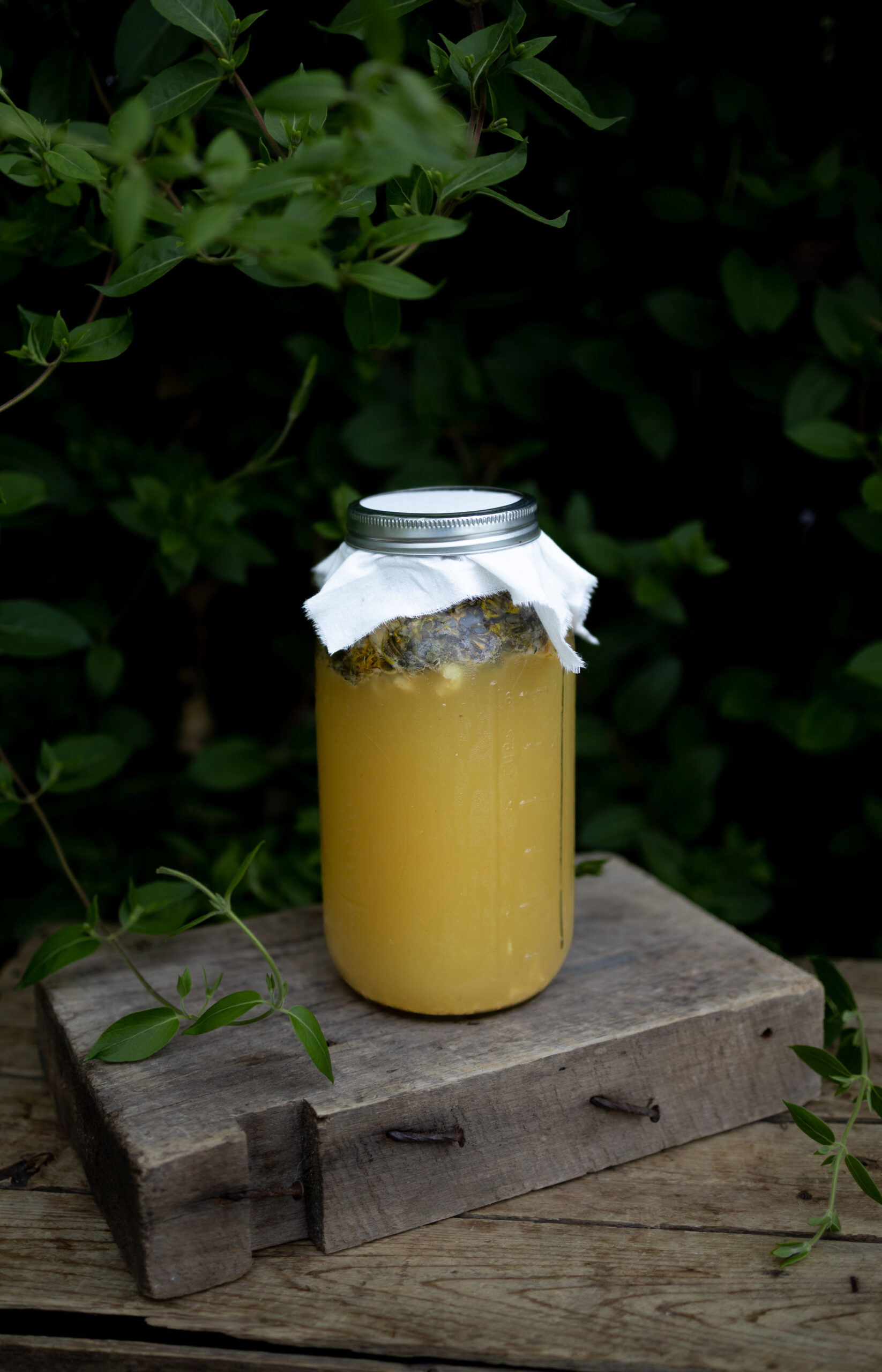
How to Make Dandelion Gin
Five minutes of work, then a wait that’s as short as you want it to be. The shortest viable infusion is about 2 hours; the longest you should plan on is 2 weeks (and only if you’re using petals rather than whole flowers).
Step 1. Pick the dandelions. Forage 1/2 cup of fully open dandelion blossoms from an unsprayed area. Pick on a sunny morning when the flowers are at their peak. Process within an hour or two of picking; dandelion flowers close up quickly once cut and they don’t reopen.
Step 2. Decide on whole flowers or petals. For a quick same-day infusion (2 to 24 hours), use the whole flower heads, sepals and all. For anything longer, pinch off the green sepals and use only the yellow petals to avoid bitterness building over time.
Step 3. Combine in a jar. Add the dandelion blossoms (or petals), 2 cups of gin, and 1/2 teaspoon of roasted ground dandelion root if using to a clean quart jar. Cap tightly and shake gently to mix.
Step 4. Infuse. Set the jar somewhere out of direct sunlight (kitchen counter is fine for a short infusion; a cabinet for a longer one). The gin will start to turn pale gold within an hour and continue to deepen in color over the infusion. Taste at 2 hours, then again every few hours if you want a quick infusion, or shake gently every few days if you’re going longer.
Step 5. Strain. Pour the infused gin through a fine mesh strainer into a clean bowl or directly back into the original gin bottle. The dandelion root powder, if you used it, can leave fine sediment; for a perfectly clear gin, run a second pass through cheesecloth or a coffee filter.
Step 6. Bottle and store. Pour into a clean glass bottle (the original gin bottle works perfectly). The gin keeps shelf stable at room temperature for at least a year; the floral notes will start to fade slowly after that, but it won’t spoil. Use a brewing funnel if bottling into something narrow-necked.
Recipe Tips
Pick on a sunny morning, after the dew has dried. Dandelion blossoms are at their fullest and most fragrant in mid-morning sun. Wait until the dew has burned off but before midday heat starts to wilt the flowers. Avoid picking on overcast days when the blossoms tend to stay half-closed.
Process within an hour of picking. Dandelion flowers close up quickly once cut and don’t reopen. If you can’t get to them right away, freeze the cleaned blossoms (or petals) in a zip-top bag; they can go straight into the gin from frozen with no loss of flavor.
Don’t overdo the infusion time with whole flowers. The green sepals on whole dandelion flowers contribute pleasant bitterness in a short infusion but turn medicinal and grassy if left for days. For anything past 24 hours, take the time to pinch off the petals and discard the green parts. It’s the same prep step the dandelion liqueur recipe calls for, and it pays off in the finished flavor.
The dandelion root makes a real difference. The 1/2 teaspoon of roasted ground dandelion root is technically optional, but it’s what gives the finished gin its characteristic depth and slight tannic finish. Without it the gin reads as floral and a little thin; with it, it has the structure to hold up in cocktails. If you don’t have ground root, opening up a bag of dandelion root tea works just as well.
Plant identification matters. Common dandelion (Taraxacum officinale) is what you want. Look-alikes including coltsfoot, hawkbit, hawksbeard, and cat’s ear all have superficially similar yellow blossoms but different leaves and stems. Real dandelions have a single hollow stem with no branches, no leaves on the stem, and a basal rosette of jagged-edged leaves. If you’re unsure, this overview of identifying dandelions covers the lookalikes in detail.
Variations
The base recipe takes well to small additions. A few that work:
- Dandelion vodka: Substitute vodka for gin to make a more neutral dandelion-infused vodka. The result is closer to my dandelion liqueur in character but unsweetened, and works well in martinis or anywhere you’d want pure dandelion flavor without the juniper.
- Long infusion (2 weeks): Use yellow petals only (no sepals), and let the gin infuse at room temperature for up to 2 weeks. The result is deeper, more honey-forward, and slightly sweeter on the palate than the quick version.
- Citrus-dandelion gin: Add a strip of lemon or orange peel with the blossoms in step 3. Brightens the floral notes and gives the gin a more aperitif-style finish.
- Spring herb gin: Add a few sprigs of fresh thyme or rosemary along with the dandelion blossoms. Particularly good for a savory cocktail program rather than spring spritzes.
- Other foraged flowers, same method: The 2-hour quick-infusion technique works for most fragrant edible flowers. Elderflower (May to June) and wild rose petals (June to July) both make beautiful infused gins using this same approach.
Dandelion Gin Cocktails
Dandelion gin slips into any cocktail that calls for gin and benefits from a bright, honey-floral note. A few of my favorites:
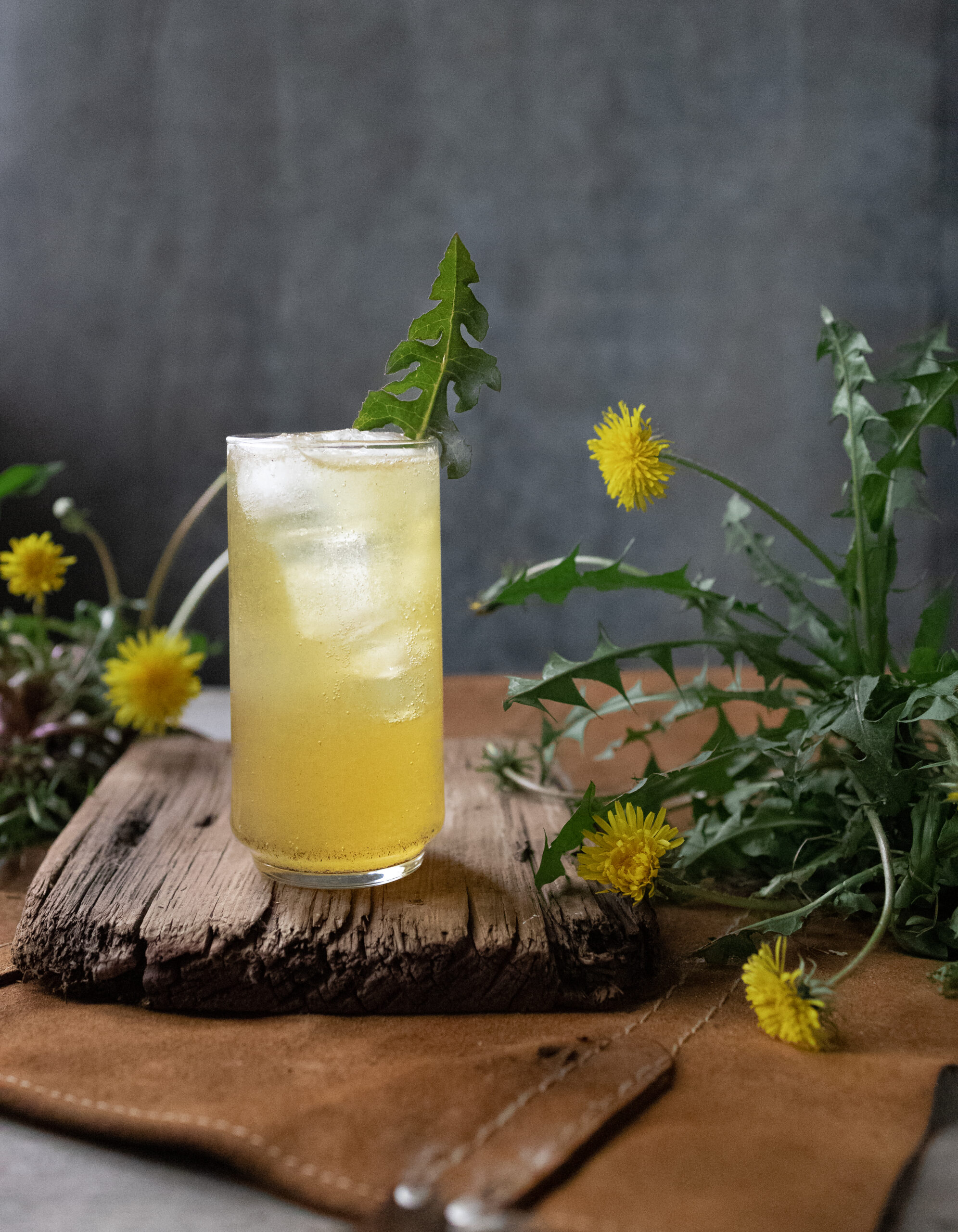
- Dandelion gin and tonic: 1 1/2 oz dandelion gin, top with tonic water and ice, garnish with a lemon slice and a fresh dandelion blossom if you have one. The simplest, prettiest spring cocktail there is.
- Dandelion bee’s knees: 2 oz dandelion gin, 3/4 oz lemon juice, 3/4 oz honey syrup, shake with ice and strain into a coupe. The honey doubles down on the natural honey notes in the dandelion.
- Dandelion martini: 2 1/2 oz dandelion gin, 1/2 oz dry vermouth, stir with ice and strain into a chilled glass. Garnish with a lemon twist; skip the olive.
- Dandelion 75: 1 oz dandelion gin, 1/2 oz lemon juice, 1/2 oz simple syrup, top with sparkling wine. The gin’s honey notes balance beautifully against the wine.
- Dandelion sour: 2 oz dandelion gin, 3/4 oz lemon juice, 3/4 oz simple syrup, optional egg white, shake with ice and strain.
- Dandelion negroni: 1 oz dandelion gin, 1 oz Campari, 1 oz sweet vermouth, stir with ice and strain over a fresh ice cube. The dandelion adds an unexpected floral lift to the classic.
For more foraged drinks, see my dandelion liqueur, rose cordial, or elderflower cordial.
Dandelion Gin FAQs
Dandelion gin tastes like a juniper-forward London Dry with bright honey and floral notes layered in. The dandelion contributes a flavor that’s somewhere between honey and chamomile, with a slight herbal bitterness that complements the gin’s botanicals rather than fighting them. If you’ve had dandelion liqueur, this is the drier, gin-based cousin: the same honey-floral signature, but with juniper providing the structure instead of vodka and sugar.
It depends on the infusion time. For a quick infusion of 2 to 24 hours, whole blossoms work well; the green sepals contribute pleasant bitterness in a short window. For anything longer, pull just the yellow petals and discard the green parts, otherwise the bitterness builds over time and overwhelms the floral notes.
No. The gin keeps shelf stable at room temperature, both during the infusion and after bottling. Store out of direct sunlight to preserve the pale gold color, and plan to use it within a year for peak flavor. The floral notes will fade slowly after about a year, but the gin won’t spoil.
Strictly no, but it makes a real difference. The 1/2 teaspoon of roasted ground dandelion root contributes tannin and depth that the floral blossoms alone can’t provide; without it, the gin reads as pleasant but a little thin in cocktails. If digging and roasting your own roots feels like too much work, a single bag of dandelion root tea opened up and used loose gives the same effect.
Dandelion gin is a quick (2-hour to 2-week) infusion of dandelions in gin, with no added sugar; the result is a dry, juniper-forward spirit you’d use anywhere you’d use regular gin. Dandelion liqueur is a longer (3-week) infusion in vodka with honey or sugar added after straining; the result is sweet, lower-proof, and meant to be sipped on its own or in liqueur-based cocktails. They’re useful for completely different things.
This recipe is adapted with permission from Slow Drinks by Danny Childs, published by Hardie Grant Publishing in October 2023. Photos by Katie Childs.
Dandelion Recipes
If you tried this Dandelion Gin recipe, or any other recipe on Adamant Kitchen, leave a ⭐ star rating and let me know what you think in the 📝 comments below!
And make sure you stay in touch with me by following on social media!
Dandelion Infused Gin
Equipment
Ingredients
- 2 cups London Dry Gin
- 1/2 cup fresh dandelion blossoms, whole flowers for short infusion; petals only for infusions over 24 hours
- 1 Tbsp roasted ground dandelion root, or 1 dandelion root tea bag
Instructions
- Forage 1/2 cup of fully open dandelion blossoms from an unsprayed area on a sunny morning. Process within an hour or two of picking.
- For an infusion of 2 to 24 hours, use whole flowers (sepals and all). For longer infusions up to 2 weeks, pinch off the green sepals and use only the yellow petals to avoid bitterness building up.
- Add the dandelion blossoms (or petals), gin, and roasted ground dandelion root if using to a clean quart jar. Cap tightly and shake gently to mix.
- Infuse at room temperature, out of direct sunlight. The gin will start to turn pale gold within an hour.
- Strain through a fine mesh strainer. For a perfectly clear gin, run a second pass through cheesecloth or a coffee filter (the dandelion root can leave fine sediment).
- Bottle in a clean glass bottle. The original gin bottle works well. Store at room temperature, out of direct sunlight, for up to 1 year.
Notes
Nutrition
Nutrition information is automatically calculated, so should only be used as an approximation.
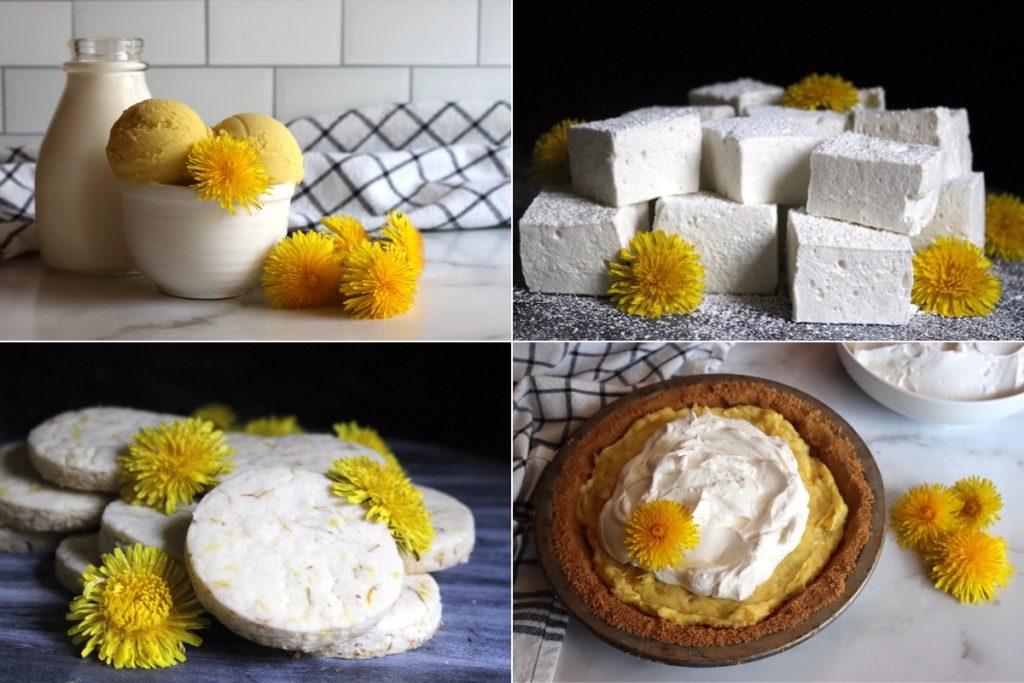
20+ Dandelion Desserts
Dandelion recipes come in all flavors, but the really magical ones are the dandelion desserts! Most of them use the…
Find the perfect recipe
Searching for something else? Enter keywords to find the perfect recipe!
1