This post may contain affiliate links. Please see our disclosure policy.
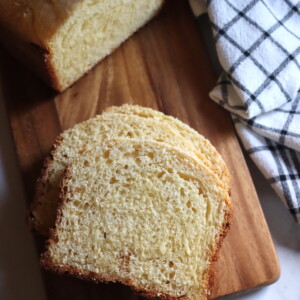
Bread machine brioche is a soft, buttery, egg-rich French loaf that used to be the province of professional bakeries, but comes together in a home bread machine with one simple trick: you add the butter partway through the knead, not at the start. The result is the tender, pull-apart crumb you expect from a proper brioche, without the hand-kneading.
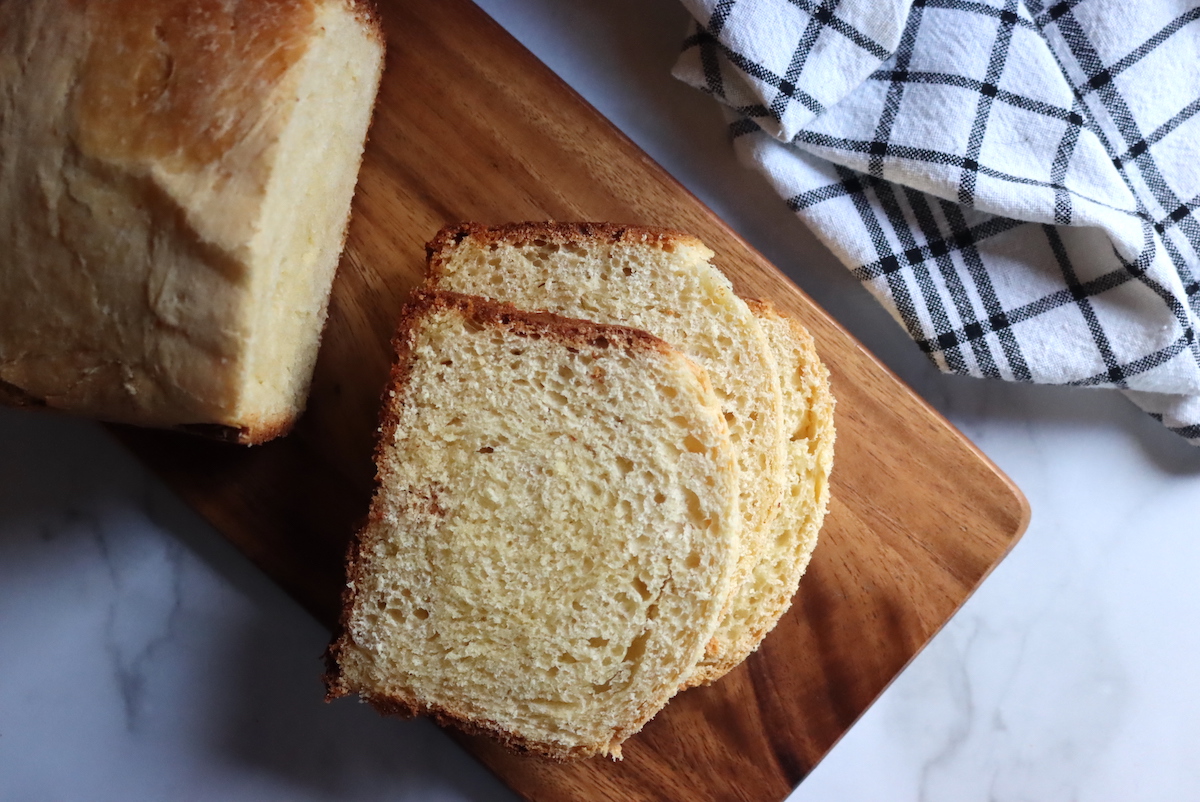
Brioche is one of those breads most home bakers leave to the bakery. It can be tricky by hand because the high butter content prevents the gluten from coming together; add the butter too early and the dough turns into a sticky, greasy mess that won’t rise properly. But the bread machine solves this beautifully!
Where a simpler loaf like my Bread Machine White Bread is a straightforward “dump it in and walk away” recipe, brioche asks for one extra hands-on step. You let the machine develop the gluten first with just the eggs, milk, and flour, and then you add the softened butter one tablespoon at a time about 10 minutes in. The dough is already structured enough to accept the butter without falling apart, and you get a soft, rich, tender crumb that rivals what you’d pay ten dollars for in a bakery.
The default loaf size for this recipe is 1 1/2 pounds (12 slices). A 2-pound size is included in the recipe notes, but most bakers find the 1 1/2-pound loaf perfectly sized for a rich, buttery bread like this; the extra butter in a 2-pound brioche can overwhelm smaller bread machines.
I’ve tested this recipe in my Zojirushi Home Bakery Supreme, and a budget Cuisinart bread machine. It works in all of them, but the butter timing is the step that needs watching on your specific machine. See the Variations section below for brioche burger buns, dinner rolls, classic brioche à tête, and a sweeter dessert-style brioche, or browse my full collection of bread machine recipes.
Why you’ll love this family favorite recipe!

Brioche was one of the first breads that made me feel like a real baker. The first time I successfully pulled a brioche out of the bread machine and watched my kids tear into it still warm, I realized the bread machine wasn’t a step down from hand-baking at all. It was just a different (and for certain recipes, better) tool. Brioche in particular is one of those recipes where the bread machine actually wins: the controlled knead and stable rise temperature give more consistent results than most home bakers can manage by hand.
We use this brioche loaf for two things, mostly: thick-sliced French toast on weekend mornings, and rich, buttery toast with jam (we go through a lot of homemade raspberry jam at this house). Occasionally I shape it into burger buns or dinner rolls instead of baking a full loaf; see the Variations below for how. This is my go-to “special occasion” bread machine recipe and the one I hand to anyone who’s nervous about trying brioche for the first time.
Quick Look at the Recipe
- Makes: 1 loaf, about 12 slices
- Active prep: 10 minutes (including butter add-in step)
- Total time: about 3 hours (basic white cycle)
- Loaf size: 1 1/2 lb default (2 lb amounts in recipe notes)
- Machine setting: Basic White cycle, light crust (the high egg and butter content browns faster than plain bread)
- Flour: 2 cups bread flour (bread flour is strongly preferred; see notes)
- Yeast: 1 1/4 tsp SAF instant yeast (also sold as bread machine yeast)
- Special step: Butter is added 10 minutes into the knead cycle, 1 tablespoon at a time
Ingredients for Bread Machine Brioche
A proper brioche needs eggs for richness and color, plenty of butter for flavor and tenderness, bread flour for structure to support all that fat, and enough sugar to feed the yeast through a slow rise. Every ingredient is standard pantry except possibly the bread flour, which you’ll want to have on hand.
The recipe is written for a 1 1/2-pound loaf, which is the right size for most bread machines when working with a rich, buttery dough. 2-pound amounts are in the recipe notes. Do not try to scale below 1 pound; the paddles don’t have enough volume to knead properly with less.
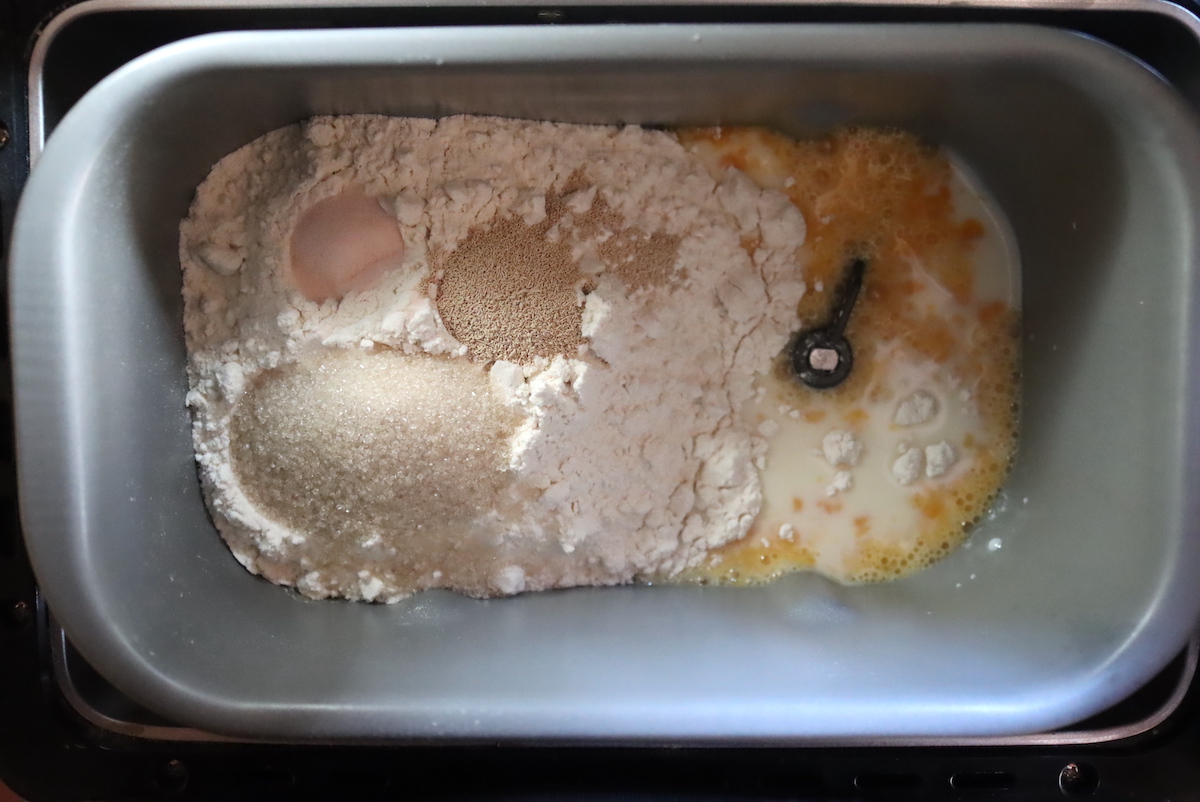
Add the ingredients in layers: liquid first into the bottom of the pan, flour on top to keep the yeast dry, then the other dry ingredients in a well. The butter is held back entirely and added during the knead cycle (see Step 4 in How to Make).
- Milk: The base liquid. Whole milk gives the richest result and the best tender crumb; 2% works. Warm the milk slightly (lukewarm, not hot) if your kitchen is cold; this helps the yeast get started. Do not substitute water for milk in brioche; you’ll lose the distinctive tender crumb.
- Eggs: Brioche is an egg-enriched dough. The eggs contribute color (that characteristic golden-yellow crumb), richness, and structure. Use room-temperature eggs for best mixing; cold eggs straight from the fridge can slightly slow the dough. For the 1 1/2-pound loaf you’ll use 2 whole eggs plus 1 extra yolk (the extra yolk gives more richness and color without adding more liquid).
- Bread flour: The key to a brioche that can handle all the butter without collapsing. I use King Arthur Bread Flour for brioche specifically; the higher protein content builds the gluten network that supports the butter. All-purpose flour works in a pinch but the loaf will be slightly less tall and slightly less chewy. See flour notes below.
- Sugar: Traditional brioche has just a little sugar (about 2 tablespoons for the 1 1/2-pound loaf). This feeds the yeast and gives a subtle sweetness that pairs with the butter. Do not use honey or maple syrup as substitutes; they add too much moisture. For a sweeter dessert-style brioche, see Variations.
- Salt: Essential for flavor and yeast regulation. Do not skip or reduce.
- SAF instant yeast: The rising agent. SAF instant yeast is what I use. Bread machine yeast is the same product as SAF instant and uses the same amount. The yeast amount in brioche is slightly lower than in plain white bread because the slow rise develops more flavor. For active dry yeast, see the notes below.
- Unsalted butter: The star ingredient. Use good-quality unsalted butter at room temperature (soft to the touch but not melty). Cut into tablespoon-sized pieces before starting so they’re ready to add one at a time. European-style butter (higher fat content) gives an even richer result but regular supermarket butter works beautifully. Do not substitute margarine, shortening, or oil; none of these give brioche’s signature tender crumb.
In terms of flour choice, bread flour is strongly preferred for this recipe. The extra protein in bread flour builds a stronger gluten network that holds up to all the butter without getting greasy or collapsing during the rise. King Arthur All-Purpose will work but the loaf will be slightly shorter and less chewy. If all you have is AP flour, add 1 tablespoon of extra flour to the recipe. A comparable enriched-dough loaf, my Bread Machine Challah, uses a similar strategy.
For yeast, SAF instant yeast and bread machine yeast are the same type of yeast, placed in a well on top of the flour with the dry ingredients (they do not need to be dissolved). If you only have active dry yeast, use an extra 1/4 teaspoon (so 1 1/2 tsp for the 1 1/2-pound loaf) and dissolve it in the milk first; wait 10 minutes until foamy, then proceed. Do not use the delay timer with any yeast for brioche; the butter mix-in step has to be done live. If the rise feels slow, check the Bread Machine Troubleshooting Guide. Brioche doughs are expected to rise more slowly than plain bread because of the high fat content.
How to Make Bread Machine Brioche
The process is almost identical to any yeast bread in the bread machine, with one extra step: the butter is added during the knead cycle, not at the start. This is the single most important thing about making brioche work in a bread machine.
Step 1. Add the liquid ingredients to the bread pan first. Milk first, then the whole eggs and the extra yolk. Whisk them very lightly with a fork if you want, but it’s not necessary; the machine will incorporate them.
Step 2. Add the flour on top of the liquid, covering it completely. The flour should form an island on top of the eggs and milk, keeping the yeast dry.
Step 3. Make a small well in the center of the flour and add the sugar, salt, and yeast. Keep the salt on one side and the yeast on the opposite side; direct contact can slow the yeast. The sugar can go with either.
Step 4. Select the Basic White cycle and press start. Do not add the butter yet. Set a timer for 10 minutes as soon as the machine starts kneading (some machines begin with a preheat cycle, so start your timer when you hear actual kneading).
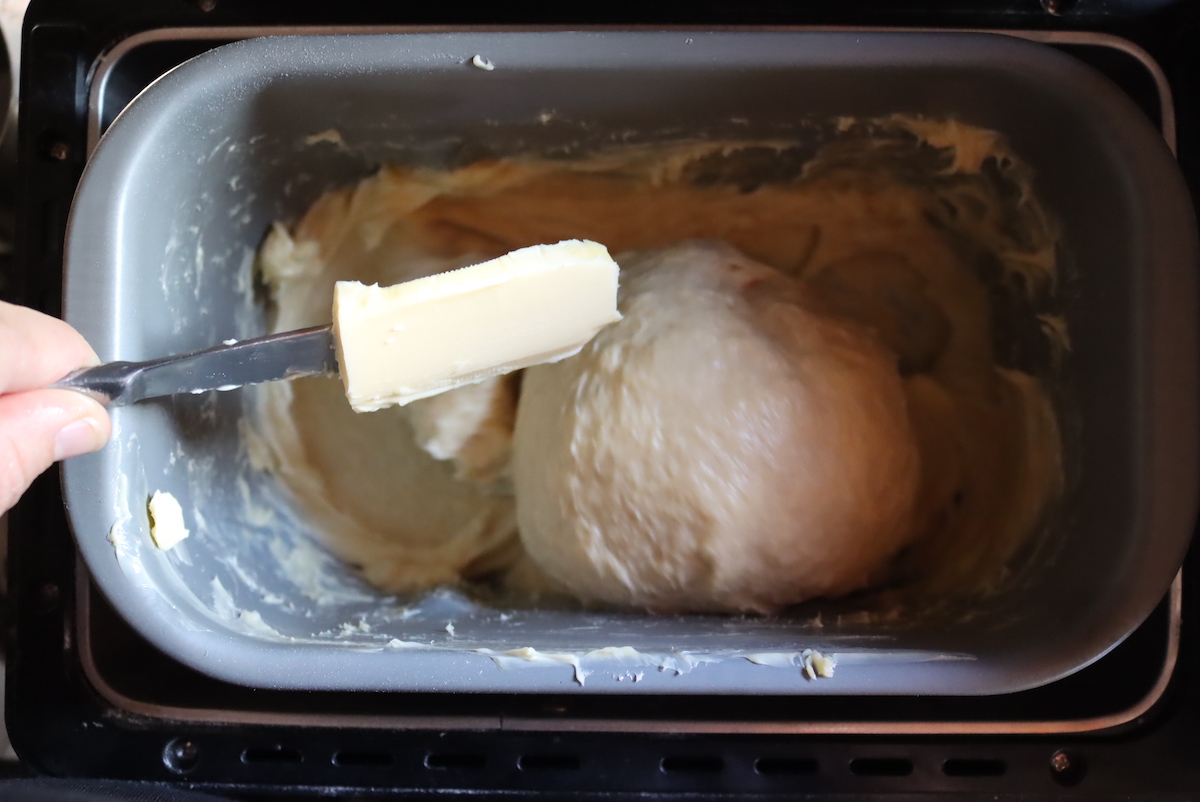
Step 5. At the 10-minute mark, add the softened butter one tablespoon at a time. Open the lid and gently drop in one tablespoon of butter. Let the machine knead it in for about 15 seconds, until it mostly disappears into the dough. Then drop in the next tablespoon. Continue until all 7 tablespoons (for the 1 1/2-pound loaf) are incorporated. The whole butter-add process takes about 1 to 2 minutes. Do not dump all the butter in at once; the dough won’t be able to absorb it.
Step 6. Close the lid and let the machine finish the cycle. The machine will finish kneading, then move to the rise cycle, then bake. The cycle takes about 3 hours total, varies by machine.
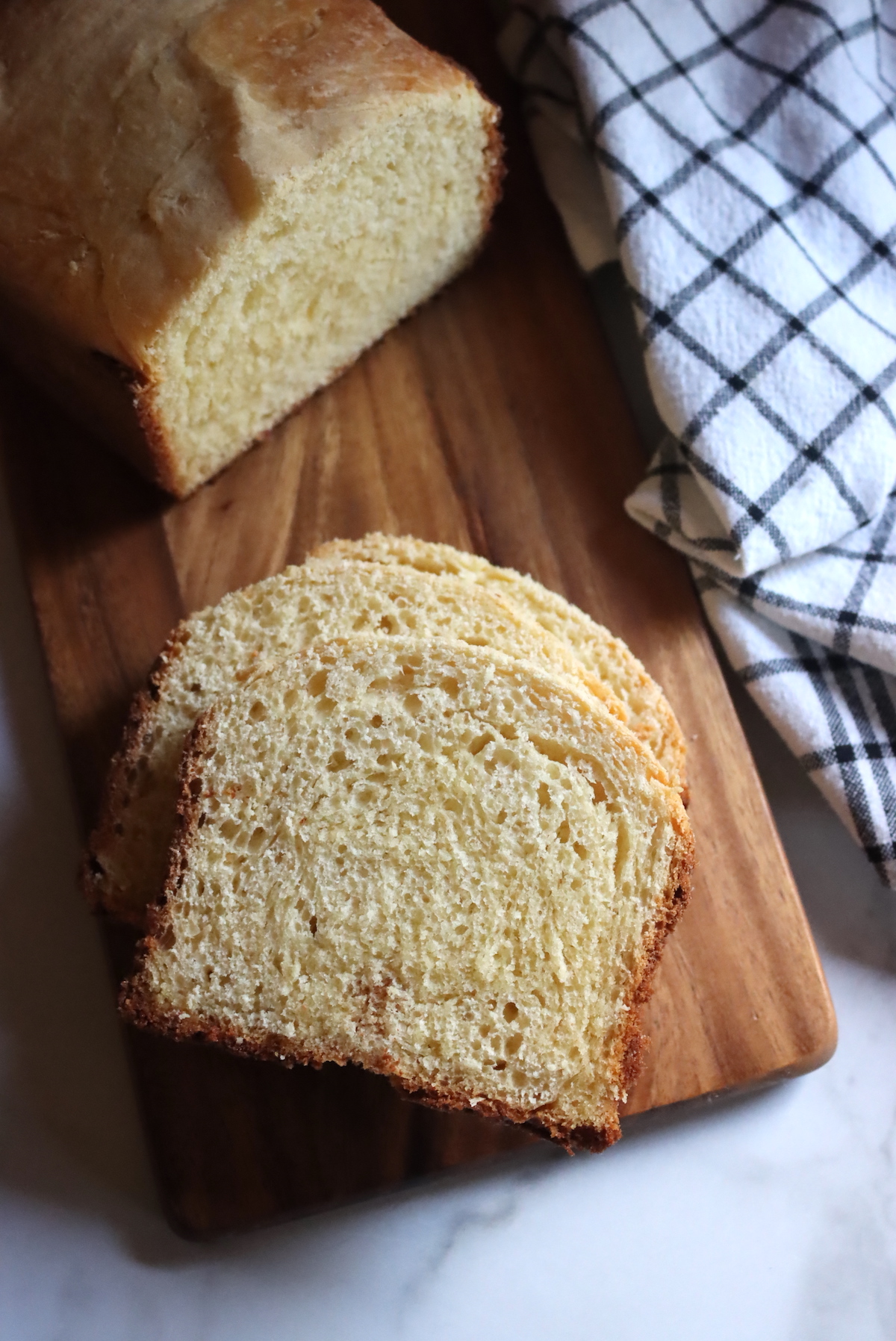
Step 7. When the bake finishes, let the loaf cool in the machine for 5 to 10 minutes. This is a rich, delicate loaf; turning it out immediately can tear the crust. After 5 to 10 minutes, turn it out onto a wire rack and let it cool completely before slicing, ideally at least 1 hour. Brioche is easier to slice cool than hot.
Recipe Tips
If your machine’s first knead cycle is shorter than 10 minutes, use the dough cycle instead. A few machines (notably some Morphy Richards and older Breadmans) run a first knead cycle of only 10 minutes or less before pausing for the rise. If you miss the butter-add window, your dough won’t develop the right texture. The workaround from reader SonomaLass: restart the cycle from scratch so you get another full knead, and add the butter during the second knead. Alternatively, use the dough cycle (which typically runs a longer continuous knead-and-rise) and then bake the shaped loaf in the oven.
Watch the dough during the first few minutes of kneading. Before the butter goes in, the dough should form a smooth ball that pulls away from the sides. If it looks sticky or soupy before butter, add 1 tablespoon of flour at a time. If it looks dry and shaggy, add 1 tablespoon of milk. Cold eggs can make the dough look slightly stickier at first; that’s normal and usually self-corrects within the first few minutes.
Use room-temperature butter, not cold. Cold butter won’t incorporate smoothly and you’ll end up with streaks of butter in the baked loaf instead of an evenly tender crumb. Take the butter out 30 to 60 minutes before you start the recipe. If you forget, cut it into small pieces and set them on a warm plate for 10 minutes; do not microwave it to soften, because melted butter incorporates differently than softened butter.
Use the light crust setting. The high egg and butter content makes brioche brown faster than plain bread. Light crust usually produces the classic deep golden brioche crust you want.
Cool completely before slicing, especially for French toast. Warm brioche tears instead of slicing cleanly. If you want it for breakfast French toast, bake the loaf the evening before and let it sit overnight loosely covered; day-old brioche actually makes better French toast because it absorbs the custard without falling apart.
Slight top-sinking is normal. Brioche is rich and delicate, and a slightly concave top after baking is common and not a sign of failure. The crumb inside will still be tender. If the top sinks dramatically, try using 1 tablespoon less milk next time, or check the Bread Machine Troubleshooting Guide.
Variations
This recipe is the baseline for a whole family of brioche-based variations. Most use the dough cycle and finish baking in the oven for the right shape:
- Brioche burger buns: Use the dough cycle instead of Basic White (add butter at 10 minutes as usual). When the dough cycle finishes, divide the dough into 8 equal pieces, shape into rounds, and place on a parchment-lined baking sheet. Rise uncovered for 30 to 45 minutes. Brush with beaten egg (for shine) and sprinkle with sesame seeds if you like. Bake at 375°F for 18 to 20 minutes until deeply golden. These are the buns that make smash burgers look professional.
- Brioche dinner rolls: Same method as burger buns but divide into 12 smaller pieces. Shape into smooth balls, arrange in a greased 9×13 pan (touching), rise 30 to 45 minutes, brush with egg wash, and bake at 375°F for 15 to 18 minutes. Classic pull-apart rolls for holiday dinners.
- Classic brioche à tête (top-knot brioche): The recognizable bakery shape with a little ball on top. Use the dough cycle. Divide the risen dough into 6 portions, pinch off about 1/6 of each portion for the “head,” place the larger piece in a greased brioche mold (or muffin tin cup), press a hole in the top, and nestle the smaller ball into the hole. Rise 30 minutes, brush with egg wash, bake at 375°F for 18 to 22 minutes.
- Chocolate chip brioche: Add 1/2 cup of chocolate chips at the mix-in beep (after the butter has fully incorporated). Makes a beautiful pull-apart breakfast bread. Several readers have made it this way and loved the result.
- Orange or vanilla brioche: Add 1 tablespoon of orange zest or 1 teaspoon of vanilla extract to the liquid ingredients. Either gives a subtle aromatic lift that pairs beautifully with the butter and eggs, without changing the texture. Orange brioche is particularly lovely served with homemade orange marmalade at breakfast.
- More enriched bread machine recipes: If you loved this one, try my Bread Machine Challah (another egg-rich loaf, famously great for French toast), my Bread Machine Zopf (the Swiss egg-and-butter braid, a close cousin of brioche), Bread Machine Honey White Bread for a simpler soft sandwich loaf, Bread Machine Focaccia for a savory Italian alternative, or Bread Machine Cinnamon Raisin Bread for a sweet breakfast loaf.
I just made this tonight and it was really tasty! I can’t believe that it turned out great. I followed your recipe to the letter. Thanks so much! I can’t wait for French toast tomorrow!
FAQs
Butter coats flour proteins and prevents them from linking up into gluten. If you add butter at the start, the dough never develops enough structure and you end up with a sticky, greasy mess that won’t rise. Adding the butter after 10 minutes of kneading lets the gluten network form first, so the dough can absorb the butter without losing structure. This is the one technique that makes brioche work in a bread machine.
Yes, but the loaf will be slightly less tall and slightly less chewy. Bread flour has more protein, which builds the gluten network that holds up to all the butter. If you substitute all-purpose, add 1 extra tablespoon of flour to the recipe to help compensate. Bread flour is strongly preferred for brioche because of the high butter content.
No. The butter mix-in step has to be done live, so the delay timer can’t be used for any part of this recipe. Brioche is one of the few bread machine recipes that requires you to be in the kitchen for at least 10 to 12 minutes at the start.
Yes, and it’s excellent for both. Use the dough cycle instead of the Basic White cycle. Add the butter at the 10-minute mark as usual. When the dough cycle finishes, divide into 8 pieces for burger buns or 12 for dinner rolls, shape, rise 30 to 45 minutes, brush with egg wash, and bake at 375°F (burger buns 18 to 20 minutes, dinner rolls 15 to 18 minutes). See the Variations section for details.
Some machines (including some older Breadman models) end their first knead cycle at or before 10 minutes, which means the butter-add window closes before the dough is ready. The workaround is to either restart the cycle from the beginning to get another full knead, or switch to the dough cycle (which runs a longer continuous knead). Then bake the shaped loaf in the oven at 375°F for 30 to 35 minutes.
Store at room temperature in a bread bag or wrapped in a clean dish towel for up to 3 days. Brioche stales faster than plain bread because of all the butter and eggs, so plan to eat or freeze within 3 days. For longer storage, slice the loaf and freeze in a zip-top bag; frozen slices thaw beautifully for French toast, or toast straight from the freezer. Do not refrigerate; cold dries brioche out quickly.
Bread Machine Recipes
If you tried this Bread Machine Brioche recipe, or any other recipe on Adamant Kitchen, leave a ⭐ star rating and let me know what you think in the 📝 comments below!
And make sure you stay in touch with me by following on social media!
Bread Machine Brioche Bread
Equipment
Ingredients
Liquid Ingredients (Add First)
- 1/2 cup milk
- 2 eggs
- 1 egg yolk
Dry Ingredients( On Top of Liquid Layer)
- 2 cups White Flour, preferably bread flour
- 2 Tbsp sugar
- 3/4 teaspoons salt
- 1 1/4 teaspoons SAF Instant Yeast, or 1 3/4 tsp active dry yeast
Mix-ins (Add after 10 minutes of kneading)
- 7 Tbsp butter, unsalted, room temperature, cut into pieces
Instructions
- Add the liquid ingredients to the bread pan first: milk, whole eggs, then the extra yolk.
- Add the flour on top of the liquid, covering it completely.
- Make a small well in the center of the flour. Add the sugar, salt, and yeast, keeping salt and yeast on opposite sides of the well.
- Set aside the butter, cut into tablespoon-sized pieces at room temperature. Do not add yet.
- Select the Basic White cycle and press start. Set a timer for 10 minutes from when kneading actually begins (not from the preheat cycle).
- At the 10-minute mark, open the lid and add the butter one tablespoon at a time. Let each piece incorporate for about 15 seconds before adding the next. The full butter-add takes 1 to 2 minutes.
- Close the lid and let the machine finish the cycle (about 3 hours total, varies by machine).
- When baking completes, let the loaf rest in the machine for 5 to 10 minutes, then turn out onto a wire rack. Cool completely (at least 1 hour) before slicing.
Notes
- 1/2 cup milk, plus 1 Tbsp.
- 2 large eggs
- 2 egg yolks
- 2 3/4 cups bread flour
- 2 1/2 Tbsp sugar
- 1 teaspoons salt
- 1 3/4 teaspoons SAF yeast (or 2 1/4 tsp bread machine yeast)
- 10 Tbsp butter, unsalted, room temperature, cut into pieces
- SAF instant yeast or bread machine yeast: 1 1/4 tsp (same product; interchangeable 1:1). Placed in the well on top of the flour.
- Active dry yeast: 1 1/2 tsp, dissolved in the milk first (wait 10 minutes until foamy, then proceed). Not compatible with the delay timer.
- Sticky, greasy dough: butter added too early, or too much butter at once. Add 1 Tbsp of flour at a time until the dough comes together.
- Sunken top: too much liquid, too much butter, or over-risen. Try 1 Tbsp less milk next time.
- Dense crumb: old yeast, cold eggs/butter, or short knead cycle ended before butter was incorporated. Use fresh yeast, bring ingredients to room temperature, and confirm the knead cycle length.
Nutrition
Nutrition information is automatically calculated, so should only be used as an approximation.
50+ Bread Machine Recipes
Bread machine recipes can be hard to find, as bread makers were most popular before the internet became a thing. …
Find the perfect recipe
Searching for something else? Enter keywords to find the perfect recipe!
I love this recipe but sometimes it comes out too wet
I have tried several bread machine brioche recipes, and this is the best one BY FAR. I made the 1.5 lb loaf and it rose to the very top of my machine. Light, fluffy, delicious.
I did have the problem that my bread machine has a 10-minute first kneading cycle. I solved that by just starting it over and adding the butter while it did the first knead again. Worked great! A slight sinking of the top, so maybe a touch more flour next time.
Thank you for this one; I will use it often.
Wonderful, so glad it worked out for you!
Looks so good want to try. Do you warm the milk a little most bread machine recipes say to warm the milk
Warming the milk slightly will speed up the rise. My bread machine has a “pre-warm” cycle that it runs as it get started, and many of the newer ones have that.
I just made this tonight and it was really tasty! I can’t believe that it turned out great. I followed your recipe to the letter. Thanks so much! I can’t wait for french toast tomorrow!!
It is the second recipe I make from you site and they were both perfect. Thanks!
So glad you enjoyed it!
How do I scale the recipe down for a 1/2-pound loaf?
To make a half pound loaf, you’d divide the 2 pound loaf quantities by 4. I think you may have trouble getting your machine to work with less than a 1 pound loaf though, it’s just not enough ingredients in the pan to get the paddles to mix.
Using the Morphy Richards fast bake, settings- set to sweet bread in the menu. select light crust and 1.5LB loaf. Timer should say 2hr 50mins. Add butter after approximately 12 minutes (when it starts to beep) this is when you can also add chocolate chips if you choose too. When there’s approx 20mins left the dough should still look very pale like dough brush with milk or egg yolk, wait 10 mins and repeat. Turn off at wall once timer ends and leave to rest for 20 mins in machine lid closed, remove from tin onto cooling rack and let rest till cool, taste absolutely delicious super airy and light not like other home made breads. Great recipe. I added a splash more milk as my dough was very dry to begin with that’s why it’s always essential to watch the dough for the first 10 minutes of kneeding.
Hi. Can I use regular flour?
Yes.