This post may contain affiliate links. Please see our disclosure policy.
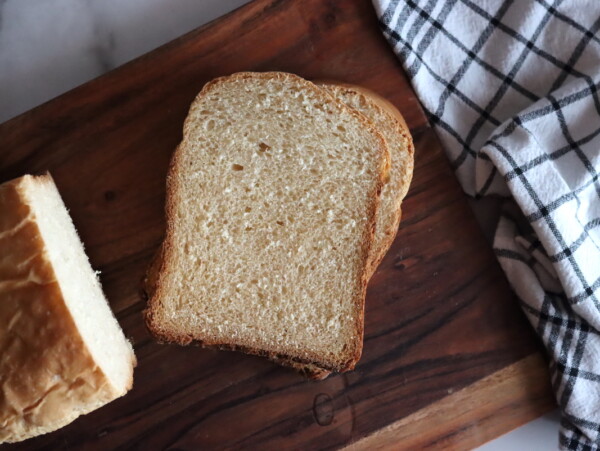
Bread machine challah is the easy way to enjoy this rich, golden, traditional egg bread without spending half a day kneading and braiding. Five minutes of prep, then about three hours hands-off while the machine does the work. The result is a soft, lightly sweet, egg-rich loaf perfect for Shabbat dinner, holiday meals, or French toast the next morning.
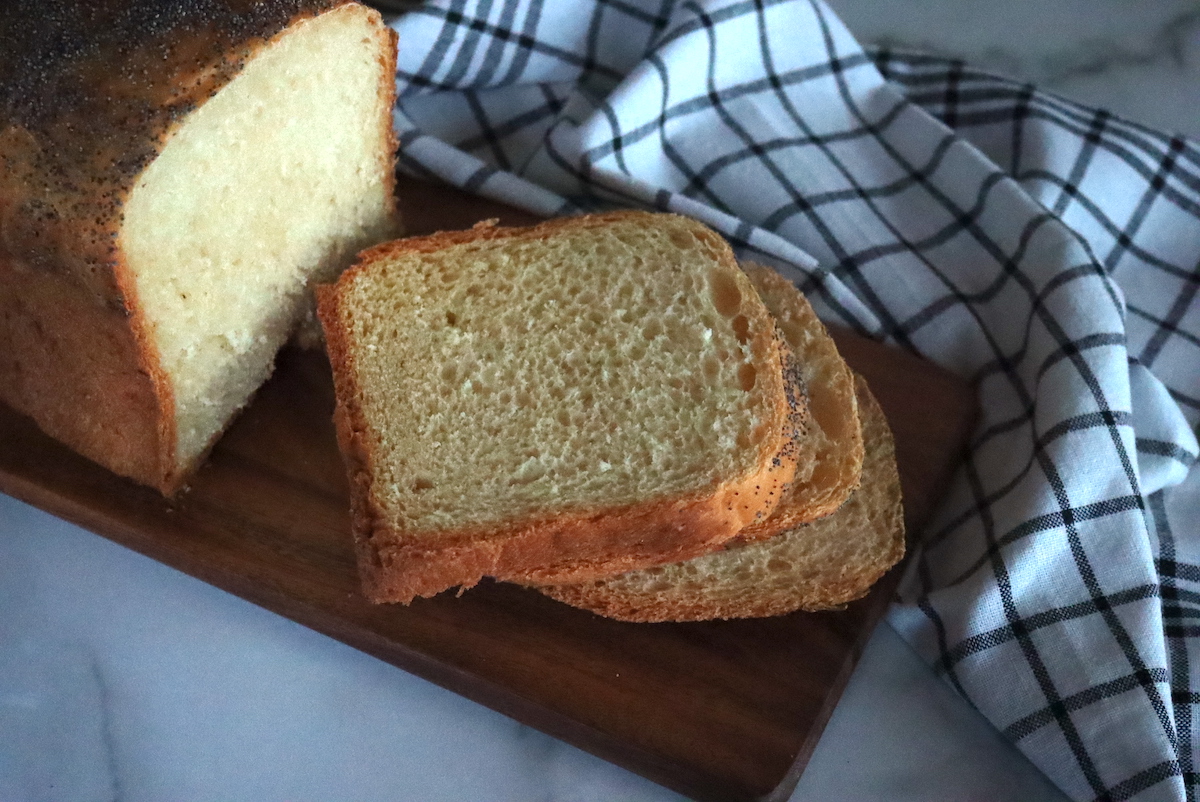
Challah is one of those breads that most home bakers leave to the bakery. Traditional challah involves multiple rises, careful handling of an enriched dough, braiding, and an oven bake. The bread machine handles all of it: mixing the eggs into the dough properly, the long bulk rise the high-fat-and-egg dough needs, the punch-down, the final rise, and the bake. What you get is the same flavor and crumb as a traditional oven challah without the labor, just baked in a rectangular loaf shape instead of a braid.
I’ve tested this recipe in my Zojirushi Home Bakery Supreme, in a Cuisinart bread machine, and in older vertical-pan machines. It works in all of them. The recipe card has both 2-pound and 1 1/2-pound amounts, and the 2-pound amount fits all the way to the top of a standard 2-pound machine, so do not scale up further. See the Variations section below for cinnamon raisin challah, whole wheat, round Rosh Hashanah, and traditional braided versions, or browse my full collection of bread machine recipes.
Notes From My Kitchen

My family loves challah, but making it from scratch is a labor of love. The kids will sometimes ask for it late in the day hoping to have a slice with dinner and the leftovers as challah French toast the next morning, which would be impossible to deliver without the bread machine.
Five minutes of measuring, three hours of hands-off bake time, and we have a fresh loaf on the counter for dinner. This recipe is adapted from The Bread Lover’s Bread Machine Cookbook, which is my favorite bread machine reference and contains five different challah variations including chocolate challah, apple challah, and pumpkin challah for Rosh Hashanah. The version below is the basic everyday loaf I bake most often.
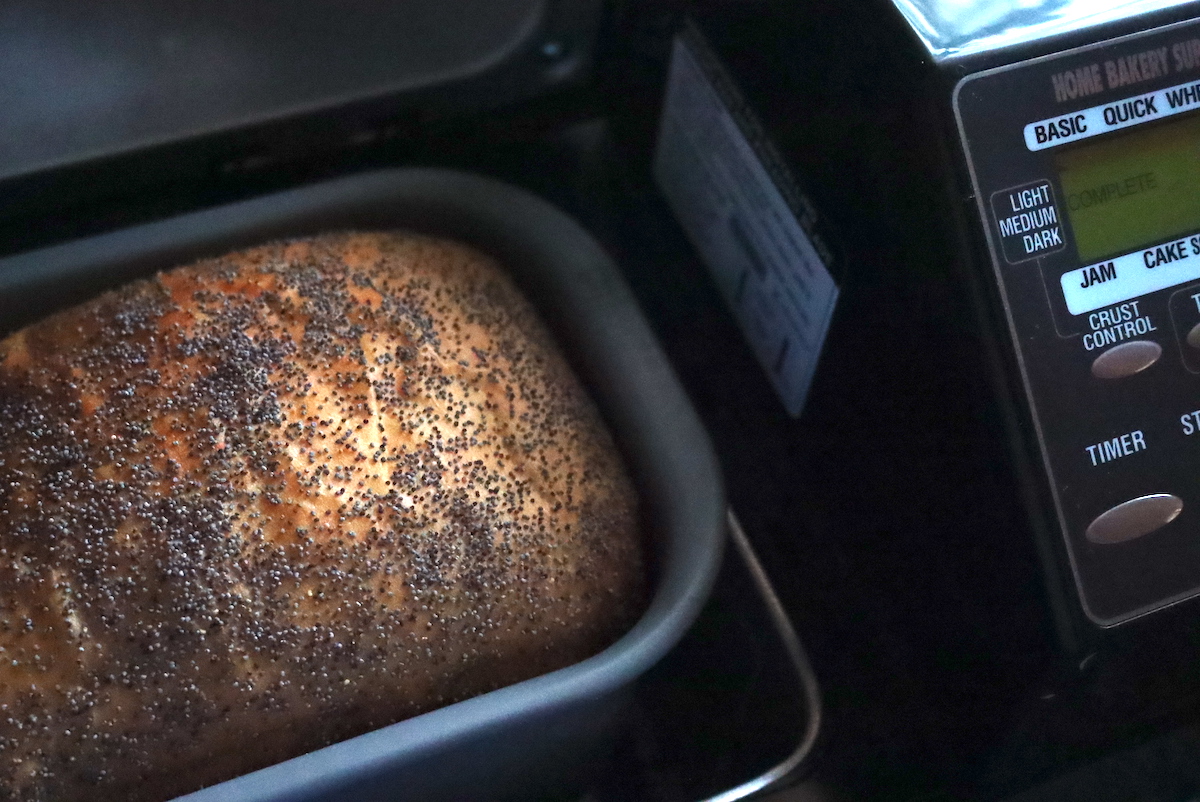
Quick Look at the Recipe
- Makes: 1 loaf, about 10 to 12 slices (2 lb loaf)
- Active prep: 5 to 10 minutes
- Total time: about 3 hours (varies by machine)
- Loaf size: 2 lb (1 1/2 lb amounts in the recipe notes). Do not scale up beyond 2 lb. The egg-rich dough rises dramatically and overflows in larger sizes.
- Machine setting: Basic White cycle, medium crust
- Flour: 3 cups bread or all-purpose flour
- Yeast: 1 1/4 tsp SAF instant yeast (also sold as bread machine yeast)
Ingredients for Bread Machine Challah
Challah is an enriched dough, meaning it contains eggs, fat, and sweetener in addition to the basic bread ingredients. These additions tenderize the crumb and make the bread richer, but they also make the dough slower to rise and more sensitive to ingredient ratios than a plain water-and-flour bread. Get the proportions right and the result is extraordinary.
The recipe is written for a 2-pound machine, the standard size on most modern bread machines, with 1 1/2-pound amounts in the recipe notes. Do not scale this recipe up beyond 2 pounds. Egg-rich doughs rise more dramatically than plain bread doughs, and a larger version overflows the pan and bakes onto the heating element. Always size down if you’re between machine sizes.
Add the ingredients in two batches: liquid ingredients first into the bottom of the pan, then dry ingredients on top. This keeps the yeast dry until the cycle starts.
- Lukewarm water: The primary liquid. Warm to the touch but not hot; anything over 110°F starts killing the yeast. The eggs and oil contribute additional moisture, so the water amount in challah is lower than in plain bread.
- Eggs: The signature challah ingredient. Eggs are what give challah its golden color, soft tender crumb, and rich flavor. Bring them to room temperature before adding (cold eggs slow the yeast). No need to beat them first; the machine handles the mixing during kneading.
- Honey: The sweetener and flavor base. Honey gives challah a subtle floral sweetness that white sugar can’t match, and its hydrophilic nature keeps the bread moist for longer. Maple syrup substitutes 1:1 (less floral, slightly more caramel). White sugar works as a last resort but produces a less complex flavor.
- Olive oil: Tenderizes the crumb and helps the bread stay soft for days. Use a light or extra virgin olive oil; the flavor is subtle in the finished loaf. Vegetable oil, canola, avocado oil, or melted butter all substitute 1:1. Traditional challah uses oil rather than butter so the bread stays parve (suitable for both meat and dairy meals under kosher dietary law).
- Bread or all-purpose flour: King Arthur Bread Flour is what I use; the higher protein content (12.7%) gives challah the structure it needs to support the egg-rich dough and produces a fluffier final loaf. King Arthur All-Purpose works fine too with a slightly softer crumb. Spoon the flour into the measuring cup and level with a knife rather than scooping (which packs the cup and gives you 15 to 20% too much flour).
- Salt: Balances the sweetness and regulates the yeast so the bread rises steadily instead of over-rising and collapsing. Place it on the opposite side of the flour well from the yeast (salt directly contacting yeast can deactivate it).
- SAF instant yeast (also sold as bread machine yeast): The rising agent. SAF Instant Yeast is what I use in everything; the 1-pound bulk pouch is much cheaper than packets and stores in the freezer for years. Bread machine yeast is the same product as SAF instant and uses the same amount. For active dry yeast, see the notes below.
For active dry yeast instead of instant: use 1/4 to 1/2 tsp more (active dry has larger granules, so less yeast per teaspoon by weight), and dissolve it in the water for 10 minutes until foamy before adding the rest of the wet ingredients. Active dry is not compatible with the delay timer because it activates immediately when wet. Bob’s Red Mill Active Dry Yeast is a reliable option if SAF instant isn’t available locally.
About the rise: challah dough rises significantly more than plain bread dough because of the eggs. This is by design (it’s what gives challah its airy crumb), but it means strict adherence to the loaf-size amounts. Trying to bake the larger version in a smaller machine, or using more yeast than the recipe calls for, will overflow the pan and bake onto the heating element. The 2-pound version below has been tested to rise to the very top of a standard 2-pound machine and no further; do not scale up.
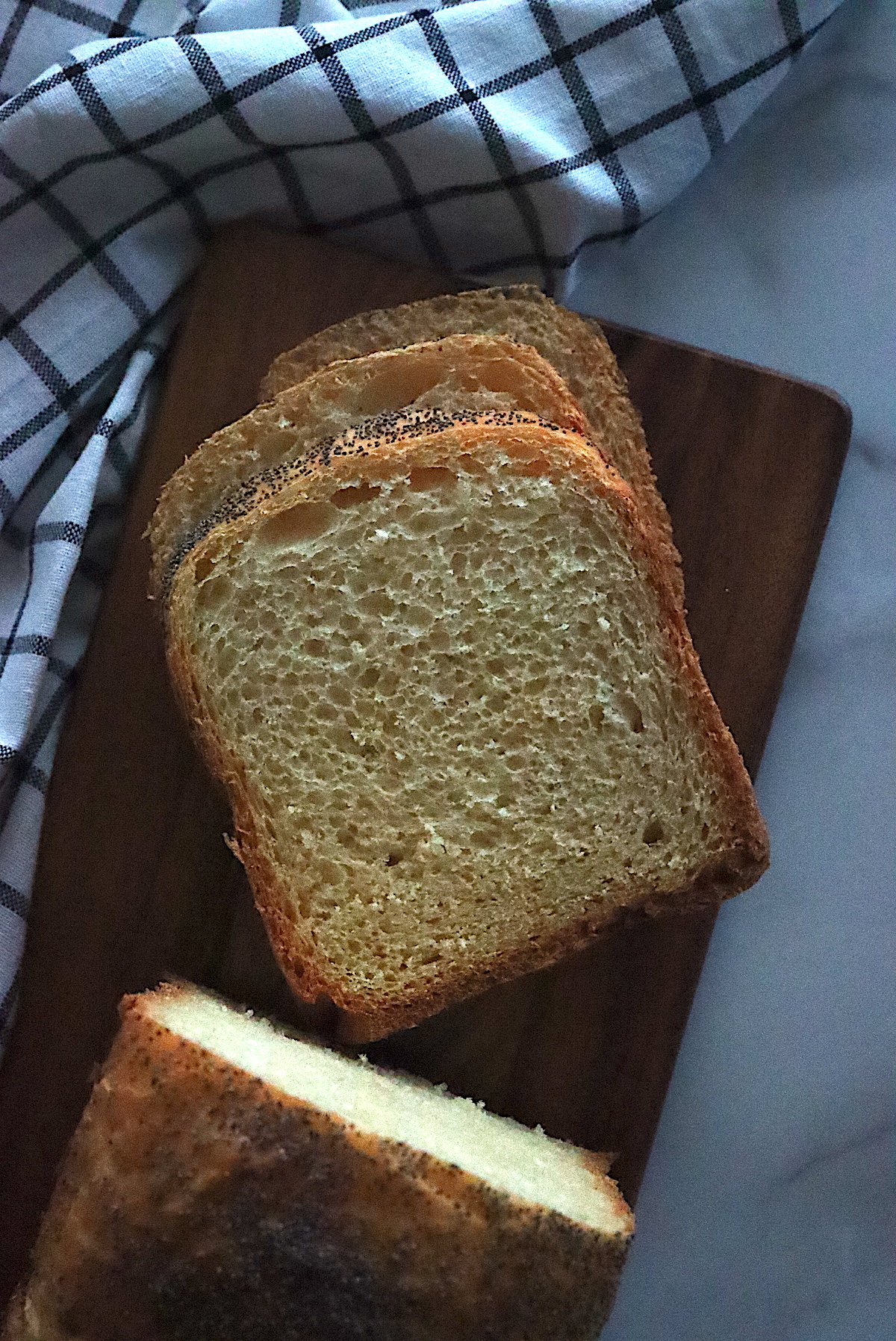
How to Make Bread Machine Challah
The process is mostly hands-off. Measure the ingredients, layer them in the pan, push start, and walk away. The only optional step is the egg-white wash and poppy seed sprinkle during the final rise, which adds a few seconds of work for a glossy, festive top.
Step 1. Add the liquid ingredients to the bread pan in this order: water first, then eggs, then honey, then olive oil. There is no need to beat the eggs ahead of time; the machine will incorporate them during kneading.
Step 2. Add the flour on top of the liquid, covering it completely. The flour acts as a barrier between the wet ingredients and the dry ingredients you’ll add next.
Step 3. Make a small well in the center of the flour. Place the salt on one side of the well and the yeast on the other side. Keeping them apart prevents the salt from deactivating the yeast before the cycle starts.
Step 4. Set the bread machine to the Basic White cycle and medium crust setting. Select the loaf-size setting that matches the recipe you measured (2 lb or 1 1/2 lb). Press start.
Step 5. Watch the first 2 to 3 minutes of kneading. The dough should form a soft ball that pulls away from the sides of the pan. It will feel slightly stickier than plain bread dough because of the eggs, which is normal. If the dough is genuinely wet (the paddle is passing through it without picking up dough), add 1 tablespoon of flour at a time. If the dough looks dry and crumbly, add 1 tablespoon of water at a time.
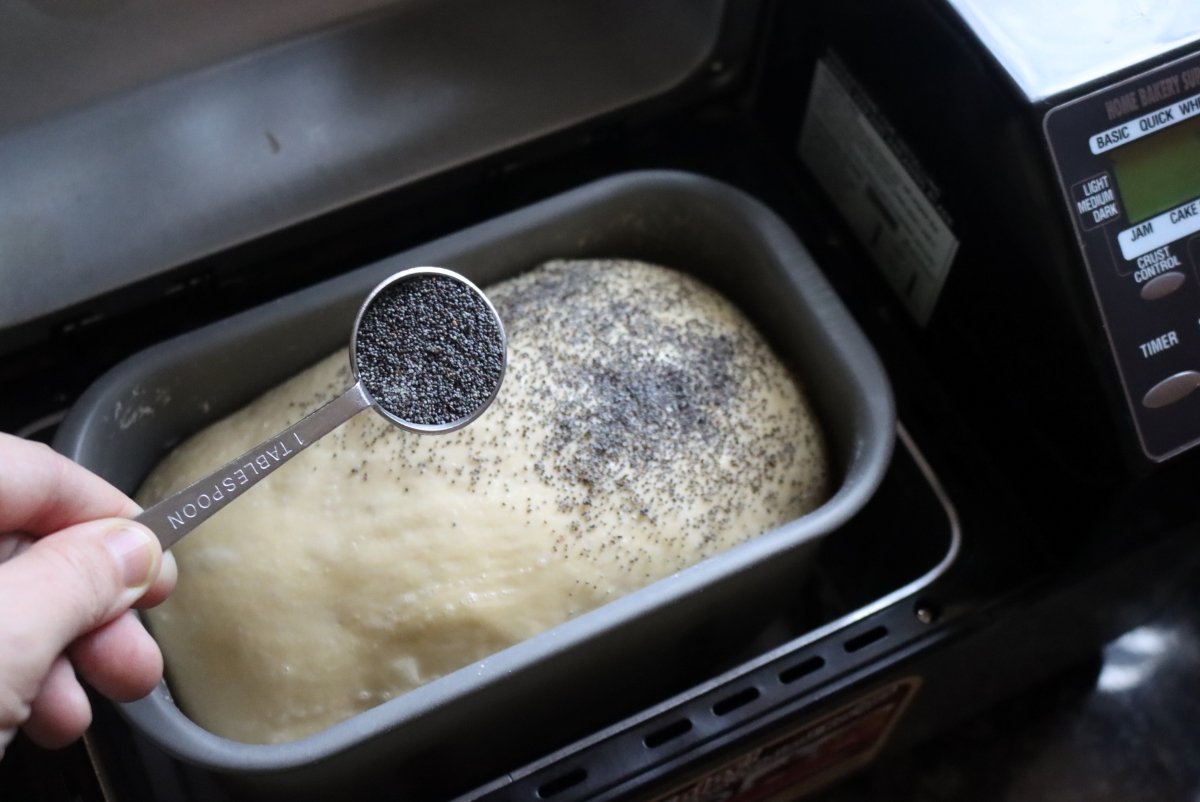
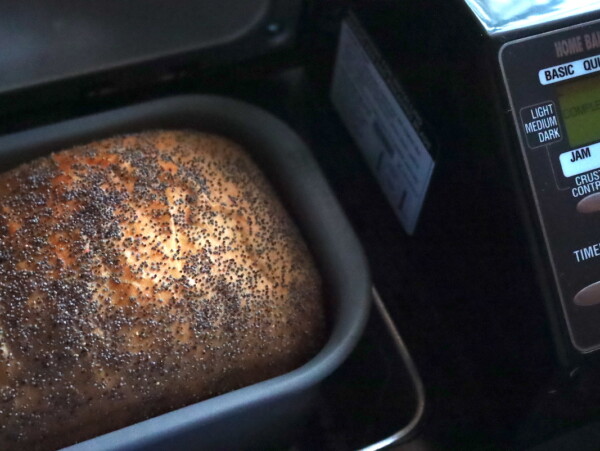
Step 6. Optional: about 1 hour before the cycle ends, brush the top with egg white and add poppy seeds. If you happen to be in the kitchen during the final rise (after the last punch-down), open the lid quickly, brush the dough with a beaten egg white, and sprinkle with 1 tsp poppy or sesame seeds. Close the lid quickly to preserve the rise.
Step 7. Let the machine complete the cycle. Total time is typically 3 hours on a basic cycle, slightly more on machines with longer rise times.
Step 8. Remove the loaf onto a wire rack to cool. Cool completely (at least 1 hour) before slicing. Challah slices cleanly only when fully cool; warm slices tear and the crumb suffers. The flavor also develops as the loaf rests.
Recipe Tips
Do not scale this recipe up beyond 2 pounds. Egg-rich challah dough rises dramatically more than plain bread dough. The 2-pound amounts below fit a standard 2-pound machine all the way to the top with no room to spare. Trying to make a larger version overflows the pan, bakes onto the heating element, and produces a hard-to-clean mess. If you have a smaller machine, use the 1 1/2-pound amounts in the recipe notes.
Spoon and level your flour. Challah is more sensitive to flour amount than plain bread because the egg-rich dough is wet to start with. Scooping flour straight from the bag packs an extra 15 to 20 percent into the cup, which produces a dense, dry loaf. Spoon the flour into the measuring cup and level with a knife, or weigh it (1 cup all-purpose = 125 g; 1 cup bread flour = 130 g).
Use bread flour if you have it. Bread flour’s higher protein content (12.7% vs all-purpose at 10 to 11%) gives challah more structure to support the egg-rich dough, resulting in a higher rise and a slightly chewier crumb. All-purpose works fine, but bread flour produces a noticeably more bakery-style loaf. If you use bread flour and the dough looks dry in the first minutes of kneading, add a tablespoon of water.
Adjust honey to taste. 1 1/2 Tbsp honey produces a lightly sweet, traditional challah. For a more savory loaf to pair with dinner, use 1 Tbsp. For a sweeter dessert-style or French toast loaf, increase to 2 Tbsp; do not exceed 2 1/2 Tbsp or the bread browns too quickly and the crust burns.
Skip the delay timer for this recipe. The eggs are perishable and shouldn’t sit in the bread machine pan at room temperature for more than an hour or two before the cycle starts. Plain bread machine recipes work fine with the delay timer; egg-rich recipes do not.
Cool completely before slicing. A full hour on a wire rack is worth the wait. The crumb sets up properly only after cooling, and the flavor develops with rest. Day-old challah is the absolute best for French toast, so it’s worth saving a few slices for the next morning.
If something goes wrong, see the troubleshooting guide. The FAQ section below covers the three most common challah issues (overflowing, sticky dough, collapse). For other bake-related problems (dense crumb, raw center, dark crust, off flavor), see my Bread Machine Troubleshooting Guide.
Variations
Challah is a versatile base for several traditional and modern variations. Each is a small tweak from the basic recipe:
- Cinnamon raisin challah: Add 1 tsp ground cinnamon with the flour. Add 1/2 cup raisins at the mix-in beep (about halfway through the initial knead). For an even sweeter loaf, increase honey to 2 Tbsp.
- Whole wheat challah: Replace 1 cup of the flour with whole wheat flour for a partial whole wheat version. Going fully whole wheat is not recommended; the loaf turns dense and the egg-rich dough doesn’t rise enough. For a traditional 100% whole wheat sandwich loaf instead, see my Bread Machine Whole Wheat Bread.
- Round challah for Rosh Hashanah: Use the dough cycle. When the dough cycle finishes, turn the dough out, roll into a long rope (about 24 inches), and coil into a tight spiral on a parchment-lined baking sheet. Rise for 30 to 45 minutes, brush with egg white, sprinkle with poppy or sesame seeds, and bake at 375°F for 25 to 30 minutes.
- Traditional braided challah: Use the dough cycle. When the dough cycle finishes, divide into 3 equal pieces, roll each into a 14-inch rope, braid, and place on a parchment-lined baking sheet. Rise for 30 to 45 minutes, brush with egg white, sprinkle with seeds, and bake at 375°F for 25 to 30 minutes.
- Pumpkin challah: A traditional Rosh Hashanah variation. Replace 1/4 cup of the water with 1/4 cup pumpkin puree, and add 1/2 tsp ground cinnamon and 1/4 tsp ground ginger with the flour. The crumb takes on a beautiful pale orange color.
- Other egg breads and bread machine recipes: Try my Bread Machine Zopf (Swiss Egg Bread) for the close-cousin Swiss version made with milk, my Bread Machine Brioche Bread for the buttery French interpretation, my Bread Machine Honey White Bread for an everyday sweet sandwich loaf, my Bread Machine Cinnamon Raisin Bread for a sweet breakfast loaf, or my Bread Machine White Bread for the basic everyday sandwich bread.
I usually use the bread machine to prepare the dough and then braid or make my challahs round for the Jewish high holy days but didn’t have time this year. I found this recipe yesterday and made this to have with dinner before Yom Kippur. Made the smaller loaf which still rose high (my bread machine is over 30 years old). Texture and taste were both great.
Challah FAQs
You probably scaled the recipe up beyond 2 pounds, or used the 2-pound amounts in a 1 1/2-pound machine. Egg-rich challah dough rises dramatically more than plain bread dough; this recipe has been tested to fill a standard 2-pound machine all the way to the top, and a larger version overflows onto the heating element. Always size down if you’re between machine sizes. The 1 1/2-pound amounts in the recipe notes are the right choice for any machine smaller than 2 pounds, including most older machines and budget models. If your loaf is overflowing despite using the correct size amounts, reduce the yeast by 1/4 tsp on the next bake.
Yes, challah dough is meant to be slightly stickier than plain bread dough because of the eggs. During the first 2 to 3 minutes of kneading, the dough should form a soft ball that pulls away from the sides of the pan but still feels tacky to the touch. If the dough is so wet that the paddle passes through it without picking up dough, add 1 tablespoon of flour at a time until it forms a ball. If you’ve used bread flour and the dough looks dry, add 1 tablespoon of water. After the cycle finishes, the loaf may stick slightly to the pan; let it cool 5 minutes before turning it out.
Too much yeast, water that was too warm, or a kitchen that’s too warm can make the dough rise faster than the gluten structure can support. Reduce yeast by 1/4 tsp on the next bake. Second, too much liquid in the dough: if the kneading dough was wet enough that the paddle was passing through it, the dough collapses during baking. Add 1 tablespoon of flour at a time during the first minutes of kneading next time.
No. The eggs are perishable and shouldn’t sit in the bread machine pan at room temperature for more than an hour or two before the cycle starts. The delay timer works for plain water-and-flour bread but not for egg-rich enriched doughs. If you want fresh challah for a specific time, do the math backward from when you want it ready (about 3 hours for the basic cycle) and start the cycle then.
You can store it 3 to 4 days at room temperature in a bread bag or wrapped tightly in plastic wrap. Do not refrigerate; the cold dries out the crumb and the bread goes stale faster. For longer storage, slice the cooled loaf and freeze for up to 3 months; thaw individual slices at room temperature or toast directly from frozen. Day-old challah is genuinely better than fresh for making French toast; the slightly drier crumb absorbs the egg custard without falling apart.
Bread Machine Recipes
If you tried this Bread Machine Challah recipe, or any other recipe on Adamant Kitchen, leave a ⭐ star rating and let me know what you think in the 📝 comments below!
And make sure you stay in touch with me by following on social media!
Bread Machine Challah (Jewish Egg Bread)
Equipment
Ingredients
In the bottom of the pan
- 3/4 cup water
- 2 large eggs
- 1 1/2 Tbsp. honey
- 3 Tbsp. olive oil
floated on top of the liquid ingredients
- 3 cups flour, bread or all-purpose
- 1 tsp. salt
- 1 1/4 tsp. SAF Instant Yeast, or 1 1/2 tsp active dry yeast
Optional toppings
- 1 large egg white, beaten
- 1-2 tsp. poppy seeds, or sesame seeds, optional
Instructions
- Add the liquid ingredients to the bread pan first: water, eggs, honey, and olive oil. There is no need to beat the eggs ahead of time.
- Add the flour on top, covering the liquid completely.
- Make a small well in the center of the flour. Place the salt on one side and the yeast on the opposite side, so they aren’t in direct contact.
- Select the Basic White cycle and medium crust setting. Set machine to its 2-pound loaf size setting (or 1 1/2-pound if you measured the smaller amounts in the notes below).
- Press start. Watch the first 2 to 3 minutes of kneading. The dough should form a soft ball that pulls away from the sides; it will feel slightly stickier than plain bread dough because of the eggs. Add 1 tablespoon of flour at a time if the dough is too wet, or 1 tablespoon of water at a time if too dry.
- Optional: about 1 hour before the cycle ends (after the last punch-down, during the final rise), open the lid quickly, brush the dough top with the beaten egg white, and sprinkle with poppy or sesame seeds. Close the lid.
- Let the machine complete the cycle.
- Remove the loaf onto a wire rack. Cool completely (at least 1 hour) before slicing.
Notes
- 1/2 cup water, lukewarm
- 1 large egg + 1 large egg yolk
- 1 Tbsp honey
- 2 1/4 Tbsp olive oil
- 2 1/4 cups bread or all-purpose flour
- 3/4 tsp salt
- 1 tsp SAF instant yeast
- SAF instant yeast and bread machine yeast are the same product; use the amount listed.
- Active dry yeast: add 1/4 to 1/2 tsp more, dissolved in the water for 10 minutes until foamy. Not compatible with the delay timer.
- Loaf overflows the machine: you used the larger recipe in a too-small machine. Always size down. If overflowing despite using the right amounts, reduce yeast by 1/4 tsp.
- Loaf collapses in the middle: over-rise (reduce yeast 1/4 tsp), water too warm, or dough too wet (add 1 Tbsp flour during kneading).
- Dense loaf: old yeast, too much flour from compressed measuring, or salt touching yeast.
- Dry result: add 1 to 2 Tbsp extra water, or use bread flour (which holds moisture better than AP).
Nutrition
Nutrition information is automatically calculated, so should only be used as an approximation.
50+ Bread Machine Recipes
Bread machine recipes can be hard to find, as bread makers were most popular before the internet became a thing. …
Find the perfect recipe
Searching for something else? Enter keywords to find the perfect recipe!
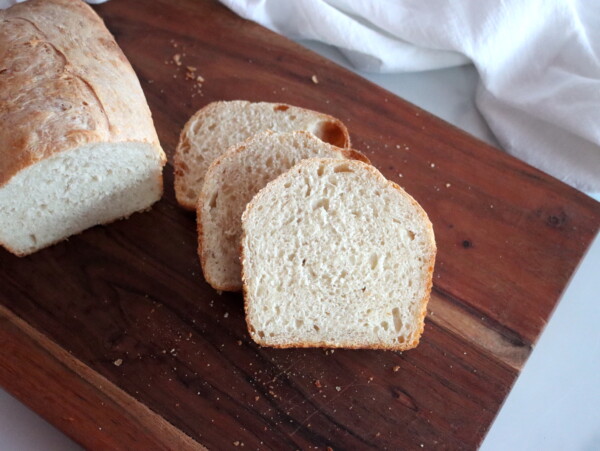
This is my favorite white bread recipe for sandwiches. We always have extra eggs to use because of our ducks and this bread comes out so airy and soft. Perfect for sandwiches in my opinion
Wonderful!
I usually use the bread machine to prepare the dough and then braid or make my challahs round for the Jewish high holy days but didn’t have time this year. I found this recipe yesterday and made this to have with dinner before Yom Kippur. Made the smaller loaf which still rose high (my bread machine is over 30 years old). Texture and taste were both great.
Made this bread, it came out fantastic. However it could be a little more sweeter. Next time I’ll add more honey. Otherwise a great recipe.
Made this today! Delish!
Glad you enjoyed it!
Can you add cinnamon and raisins to make a cinnamon raisin challah bread
Yes you can! Add the cinnamon in with the flour, and then add the raisins half way through the initial knead, when the “mix ins” buzzer goes off.
It isn’t quite sweet enough for our taste. Would and extra tbsp of honey hurt it?
You can definitely add an extra bit of honey. Enjoy!