This post may contain affiliate links. Please see our disclosure policy.
Persimmon recipes can be hard to find, but there are plenty of ways to use this versatile late-season fruit!
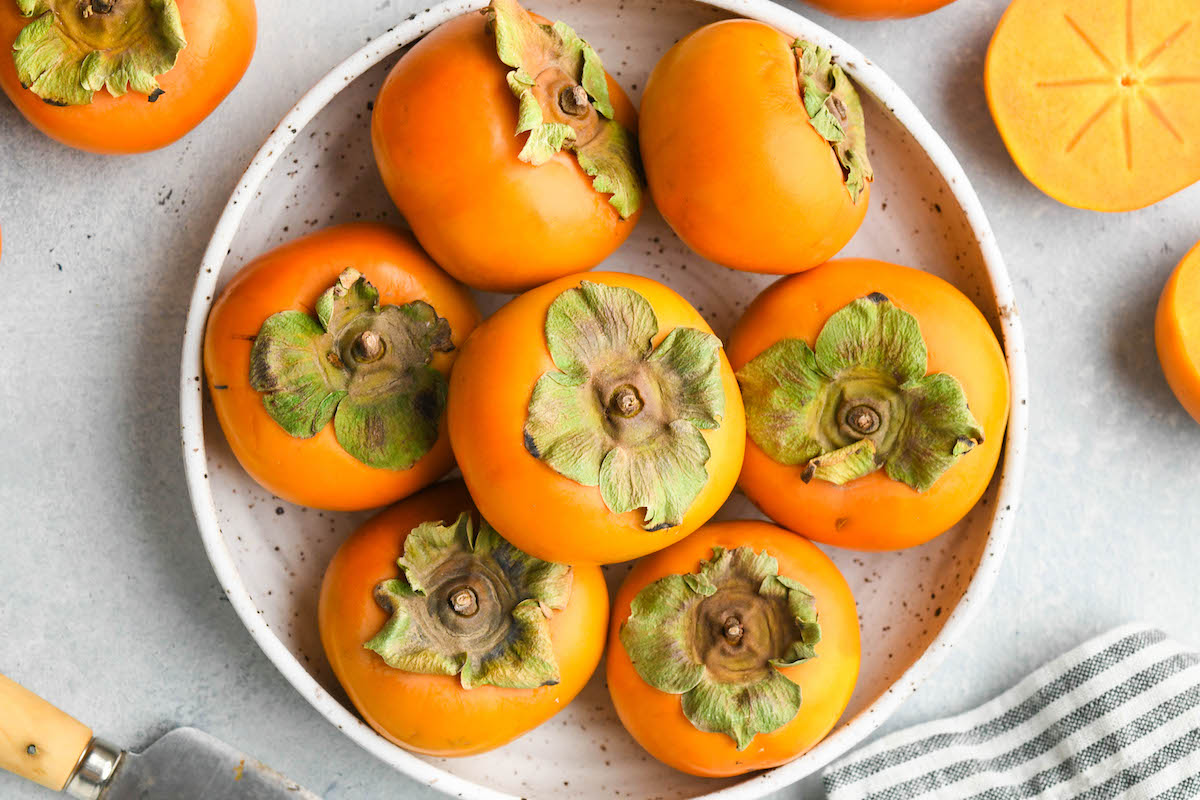
Persimmons were my grandmother’s favorite fruit, and she’d buy them by the case each autumn and early winter. She’d chop them for our Thanksgiving table, and there’d be plates of them for snacking all autumn long.
For me, it’s not autumn without persimmons, and while we do love them fresh, I also love them in all manner of persimmon recipes.
I developed a specific recipe for persimmon jam to celebrate this luscious fruit, and there are plenty of fresh and baked recipes featuring these little lovelies for you to enjoy.
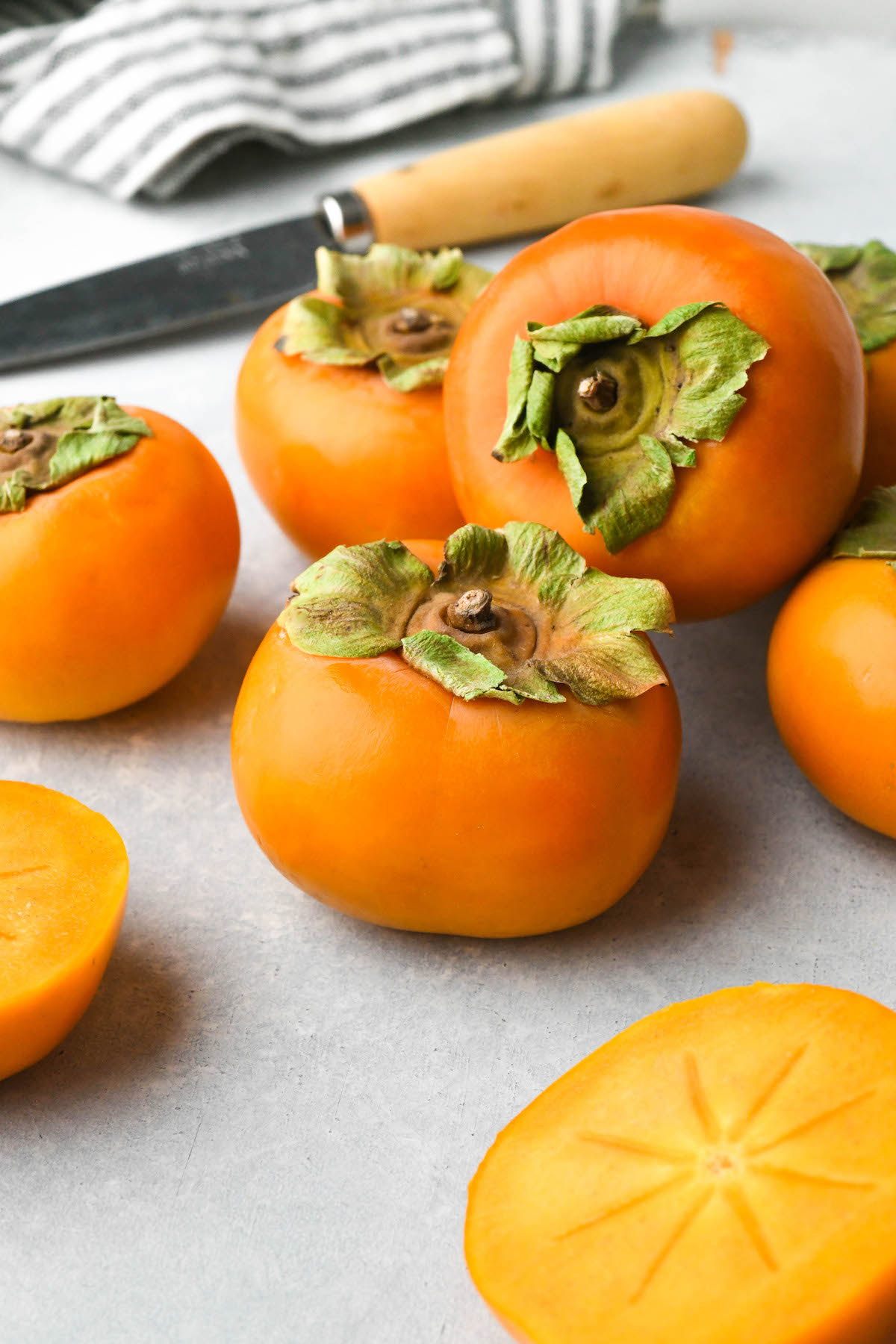
Types of Persimmons
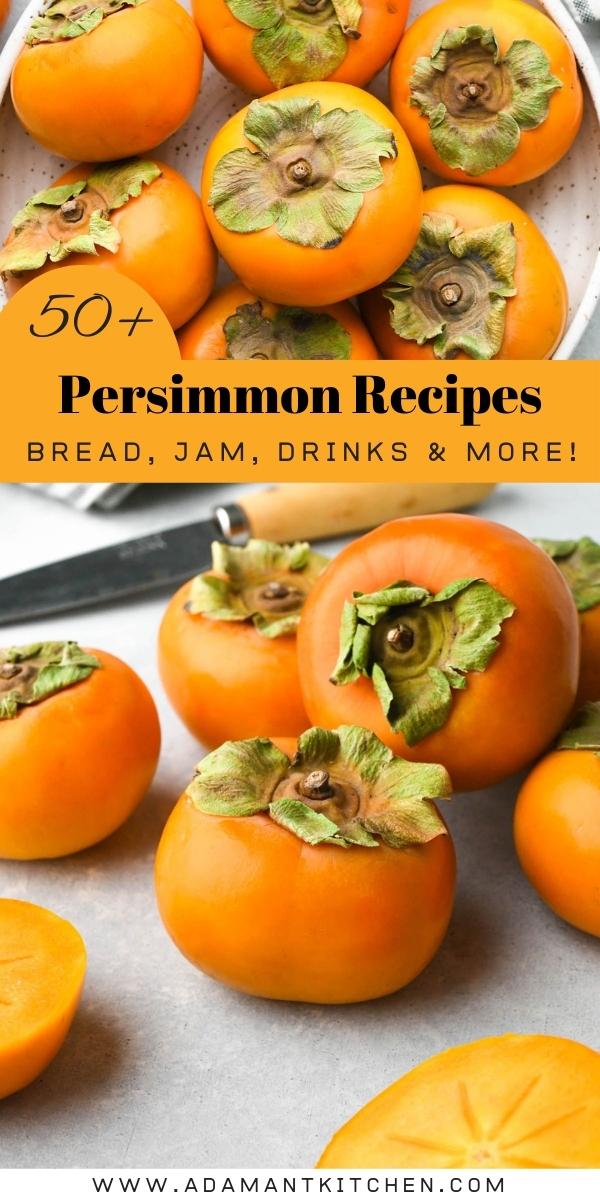
Fuyu persimmons are short and squat, resembling miniature pumpkins or orange tomatoes. You can find Fuyu persimmons in November and December, and they range in color from deep yellow to bright orange. Fuyu persimmons should be eaten when they become slightly soft to the touch. The fruit should feel firm but should also have some give when pressed with your finger. Fuyu persimmons can be eaten raw like an apple, or they can be cooked or baked in a recipe.
Hachiya persimmons are taller than Fuyu persimmons and resemble a large acorn, they also tend to be a deeper orange color than Fuyus. When Hachiya persimmons are ripe the flesh becomes custard- or jelly-like. Hachiya persimmons are incredibly astringent when underripe and should always be enjoyed when the fruit is at peak ripeness.
Wild American persimmons (also called “sugar plums”) make their first appearance in autumn and can be found growing from trees in many parts of the United States. If you’re lucky enough to find these bright plum-size fruits growing nearby, you’ll want to wait until they look almost overripe before eating them. Once they get to this stage, these orangey-pink persimmons will be exceptionally sweet and delicious. This is one type of persimmon that you won’t find at the grocery store, you’ll need to find this fruit in the wild in order to give them a try.
Persimmon Recipes
If you’re lucky enough to get your hands on a bounty of persimmons in the winter, you’re in for a treat. Persimmons have a wide variety of culinary uses and can be used in recipes for baked goods, desserts, beverages, salads, jams, chutneys, and even raw fruit desserts like puddings and dessert cups.
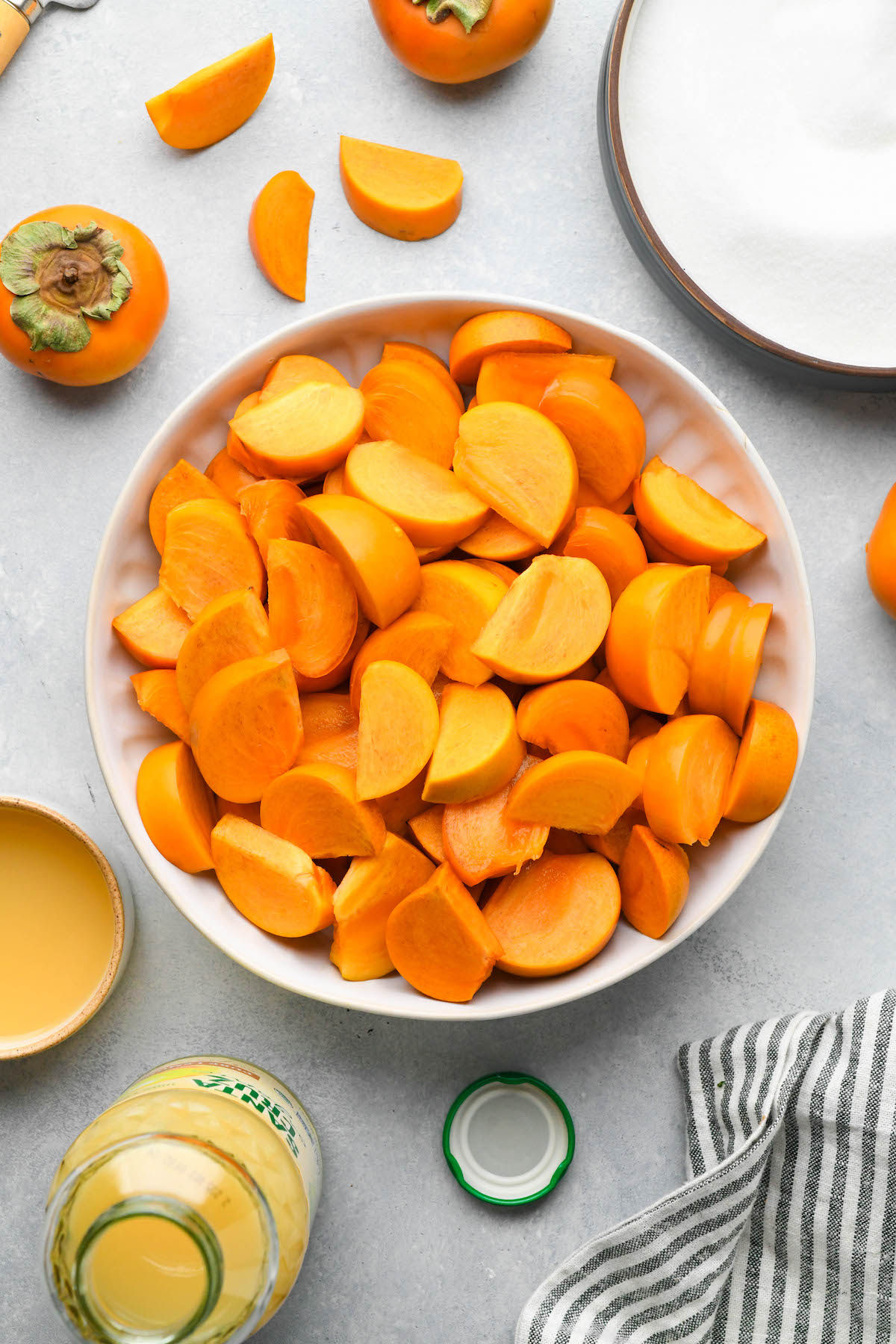
The manner in which persimmons are prepped for a recipe will depend on what you’re making. I like using a mandolin to thinly and uniformly slice slightly underripe persimmons for salads and tarts, or they can be cut into quarters or eighths like an apple or a pear for crisps, jams, and quick breads. If you have a very ripe Hachiya persimmon, the inner flesh can simply be scooped out with a spoon and eaten as-is, straight from the peel.
Persimmon Salad Recipes
When making a salad with persimmons, choose slightly underripe fruit for best flavor and texture. For inspiration, think of salads made with tart green mangos or green plums. Fuyu persimmons work best for most salad recipes and, depending on the recipe, can be cut into wedges, thinly sliced, grated, or spiralized.
Persimmons pair well with big flavors such as bitter greens, salty cheese, earthy beets, cured meat, and citrus fruit. They make a stunning addition to hearty grain salads, particularly grains that have some heft (think farro or bulgur). Finish the salad with a zippy salad dressing made with orange or lime juice, punchy herbs and spices, and plenty of fresh cracked pepper.
- Arugula Persimmon Salad
- Persimmon Salad with Pomegranate & Radicchio
- Persimmon Salad with Cranberries & Prosciutto
- Persimmon Salad with Maple Glazed Pecans
- Persimmon, Beet, & Citrus Salad
- Fuyu Persimmon Salad with Cumin-Lime Vinaigrette
- Farro Salad with Onion Confit, Persimmon, & Arugula
- Persimmon Salad with Halloumi & Apples
- Mixed Chicories with Persimmons
- Winter Tabbouleh with Persimmon & Pomegranate
Raw Persimmon Dessert Recipes
The custard-like texture of ultra-ripe persimmons, particularly Hachiya persimmons, make them the perfect choice for all kinds of raw dessert recipes. Because ripe Hachiya persimmons are so sweet and dense, there’s usually no need to add any extra sweetener.
When sliced into thin rounds, Fuyu persimmons make an elegant topping for a raw chocolate tart (or any other type of raw dessert in need of a bright splash of color). The sweet-tart taste of persimmon works especially well with fruity dark chocolate or cacao nibs.
- Raw Persimmon Pie
- Raw Persimmon Custard
- Raw Chia Persimmon Pudding
- Raw Pumpkin Spice Persimmon Pudding
- Raw 2-Ingredient Persimmon Chocolate Vegan Pudding
- Raw Persimmon & Pomegranate Dessert Cups
- Raw Persimmon Chocolate Tart
Cooked Persimmon Dessert Recipes
Persimmons are just as delicious when they’re the main star of cooked desserts. Cooked persimmons offer sweetness, a hint of warm spices, and a pleasing tartness to crisps, tarts, pies, pavlovas, and even frozen desserts such as gelato and ice cream.
Of course, nothing beats a simple recipe for baking or broiling halved persimmons. To experience this beautiful winter fruit at its best, cook persimmons until sumptuous and then top with a scoop of vanilla ice cream (or persimmon ice cream if you’re in the mood for double the persimmons!) or a dollop of mascarpone cheese that’s been doctored with vanilla sugar.
- Easy Baked Persimmons
- Persimmon Almond Rosette Tarts
- Spiced Persimmon Tart with Brandy Mascarpone
- Cardamom Spiced Persimmon Ice Cream
- Persimmon, Pear, & Brandy Pie
- Persimmon Pavlova
- Persimmon Fruit Leathers
- Autumn Mousse with Persimmons
- Persimmon Gelato
- Steamed Persimmon Pudding
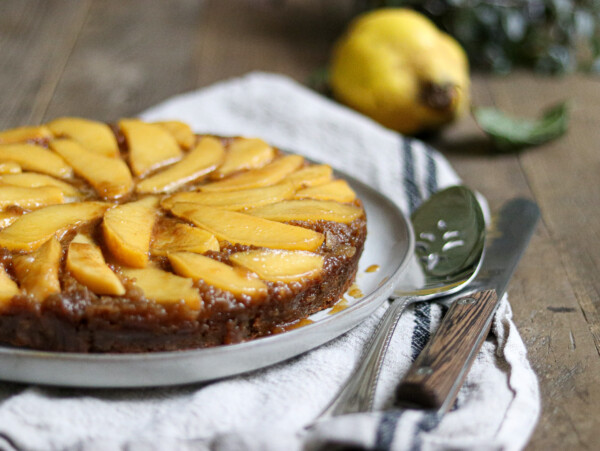
- Persimmon Upside Down Cake
- Persimmon Compote
- Broiled Persimmons with Mascarpone
Persimmon Baked Goods Recipes
When persimmons are added to baked goods they add sweetness and moisture, much like bananas or applesauce. Unless a recipe specifically calls for it, peeling persimmons isn’t necessary. In most cases, the peel will cook into a pleasantly soft texture with the rest of the fruit.
Persimmon goes well with warm spices commonly used in baking such as cinnamon, ginger, nutmeg, and cloves. Nuts, chocolate, and citrus are also welcome additions to any persimmon-based recipe for baked goods.
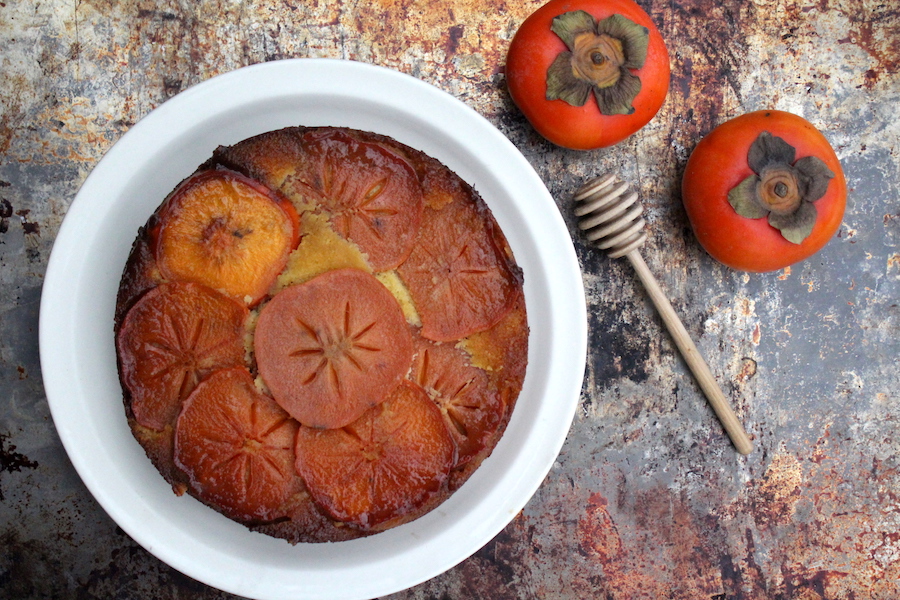
- Persimmon Upside Down Cake
- Ginger & Persimmon Scone Muffins
- Persimmon Bread
- Persimmon Pudding
- Persimmon Cookies with a Sweet Orange Glaze
- Chocolate Persimmon Muffins
- Persimmon Cookies
- Persimmon & Walnut Muffins
Persimmon Drink Recipes
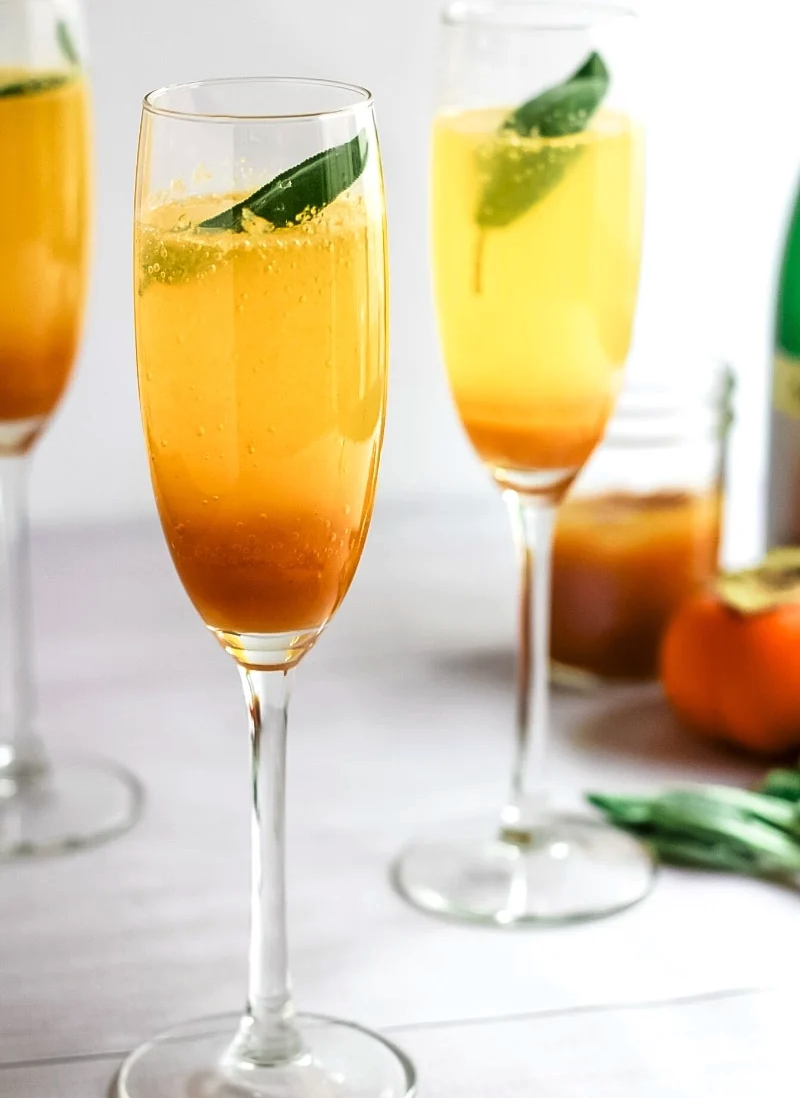
Thanks to the simultaneous tart and sweet flavors inherent in persimmons, they make an excellent candidate as an ingredient in cocktails, teas, and smoothies. If you have persimmon simple syrup on hand, you have the base for all sorts of festive libations. It pairs especially well with spirits such as bourbon or whiskey, and it’s also fantastic mixed with champagne or sparkling water if you prefer bubbles with your beverages.
I’ve also included recipes for a sour persimmon beer and a persimmon wine you can brew at home. Persimmon beer has a long history in the United States, with records showing it was being made as far back as the late 1700s. If you aren’t up to the task of making it at home, I highly suggest checking to see if your local microbrewery offers it as a seasonal selection.
- Persimmon Champagne Cocktail with Cinnamon and Sage
- Spiced Persimmon Turmeric Tea
- Persimmon Beer
- Persimmon Wine
- Persimmon Orange Smoothie
- Spiced Persimmon, Almond Milk, & Date Smoothie
- Persimmon Collins Cocktail
- Persimmon Aperol Spritz
- Spiced Persimmon Bourbon Old Fashioned
- Persimmon Simple Syrup
- Cranberry Persimmon Sunrise Liqueur
- Persimmon Shrub
- Persimmon Soda
Persimmon Canning and Preserving Recipes
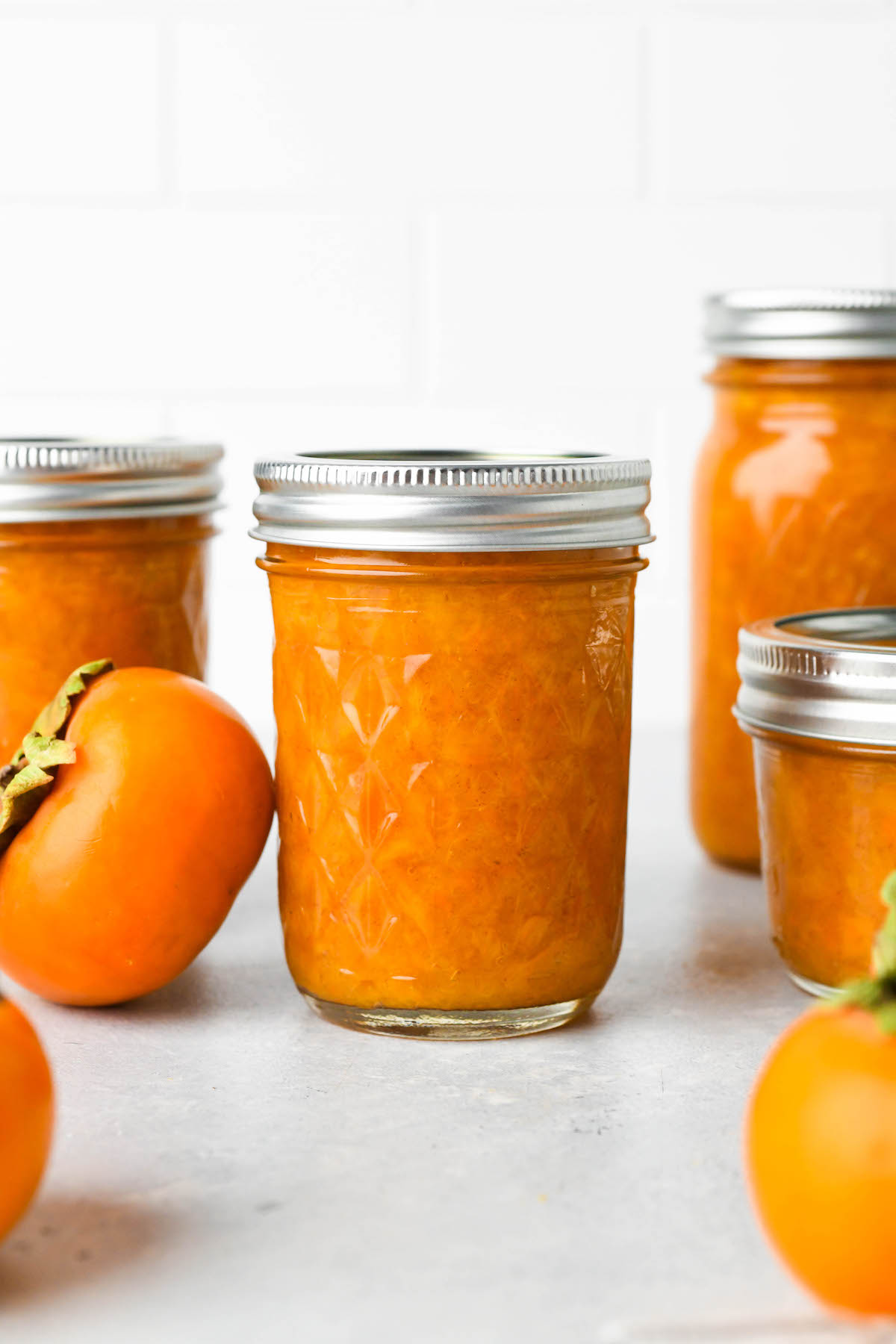
If you’ve ever made and canned your own persimmon jam you’ll know how easily persimmon preserves come together. Persimmons have plenty of naturally occurring pectin and will set up without having to add extra pectin to the mix. What they don’t have is acidity. Persimmons sit right around the pH line that separates safe water bath canning from unsafe, so every tested recipe calls for added lemon or lime juice. That citrus is there for safety, not just flavor, so never cut it back or leave it out.
In addition to jam, persimmons lend themselves well to recipes for curd, pickles, chutney, and even a persimmon marmalade. Only some of these are shelf stable, though, so I’ve noted which ones are water bath canned and which need to live in the refrigerator. If you find yourself with a surplus of persimmons, consider using one of the following recipes to make gifts for your family and friends.
- Persimmon Jam (water bath canned)
- Persimmon Yuzu Curd (refrigerator, about a week)
- Persimmon & Bergamot Fruit Curd (refrigerator, about a week)
- Spicy Mango Persimmon Chutney (refrigerator chutney)
- Italian Persimmon Marmalade (no canning schedule given, keep refrigerated)
- Persimmon Chutney (water bath canned, 15 minutes)
- Quick Pickled Persimmons (refrigerator pickles)
Savory Persimmon Main Course Recipes
From persimmon latkes to braised meats with persimmon salsa, the sky’s the limit when it comes to letting persimmons shine in savory recipes. Like apples, pears, and tropical fruit, persimmons can be served cooked or fresh alongside or as part of soup, fish, chicken, pork, cooked greens, or spicy curry dishes.
Just like salads that feature persimmons, savory recipes with strong flavors are best-suited for this versatile fruit. You’ll find Moroccan spices, citrus, fennel, and salmon heavily featured in the recipes below. If you’d like to add the taste of persimmon to several dishes, try making the zesty ginger persimmon sauce, which can be served with pork, chicken, or fish.
- Shakshuka with Persimmons
- Persimmon Sweet Potato Soup
- Persimmon Latkes
- Simple Persimmon Soup with Fennel
- Braised Pork with Persimmons
- Persimmon Goat Cheese Tartlets
- Spicy Beef & Persimmon Korma
- Roasted Sweet Potatoes with Merguez, Persimmon, & Za’atar Yogurt
- Pork with Persimmons & Mustard Greens
- Broiled Salmon with Persimmon-Lime Salsa
- Fish Baked in Paper with Persimmon Butter
- Ginger Persimmon Sauce (for Pork, Chicken, & Fish)
Persimmon FAQs
Persimmons come with more questions than most fruit, and nearly all of them come down to ripeness in one way or another. If you’ve ever bitten into one too early, you already know why.
Here are the questions I get asked most often about buying, ripening, storing, and preserving persimmons.
No, and this is one of the most persistent bits of folklore about the fruit. Persimmons lose their astringency as they ripen on their own schedule, and frost has nothing to do with it. The confusion comes from timing, since in much of the persimmon range the fruit happens to finish ripening right around the first frosts. A persimmon picked hard and then frozen comes out just as astringent as it went in, only softer, so freezing an unripe one is not a shortcut.
Put them in a paper bag on the counter with a ripe apple or banana and fold the top over. The ethylene those fruits give off speeds things along considerably, often turning a two week wait into three or four days. Check them daily and go by feel rather than color, because a Hachiya can look completely orange while still being firm and unpleasant inside. It is ready when it feels like a water balloon.
That is astringency, and it comes from soluble tannins rather than from acidity. The tannins bind to proteins in your saliva, which is what creates that drying, chalky, furry feeling on your teeth and tongue. Because it is not a sourness, adding sugar will not mask it and cooking will not remove it. The tannins only become insoluble as the fruit fully ripens, which is why a properly ripe persimmon tastes sweet and a barely underripe one is inedible.
Yes, and it is the easiest way to handle a glut, since persimmons all seem to come ripe in the same week. Scoop the pulp out of fully ripe fruit, stir in a little lemon juice to keep the color bright, and freeze it in one cup portions laid flat. It keeps for about a year and thawed pulp goes straight into any baked recipe with no adjustment. Whole Fuyu persimmons can also be frozen, though they turn soft on thawing and are best used for baking rather than slicing.
Only in a tested recipe that adds lemon or lime juice. Persimmons are unusual in being high in pectin but low in acid, sitting right around the pH 4.6 line that separates water bath canning from pressure canning, so the added citrus is there for safety and not just for flavor. Never reduce or leave it out, and never water bath can plain persimmon pulp, persimmon puree, or persimmon butter, none of which are acidic enough to be safe. Freezing and drying are both excellent alternatives with none of these constraints.
Seasonal Fruit Guides
Find the perfect recipe
Searching for something else? Enter keywords to find the perfect recipe!
2 Comments