This post may contain affiliate links. Please see our disclosure policy.
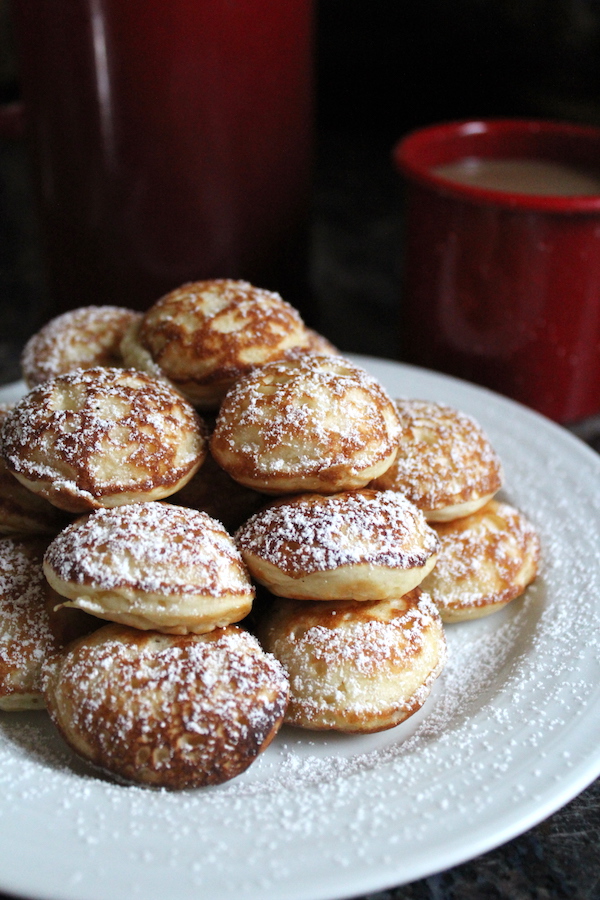
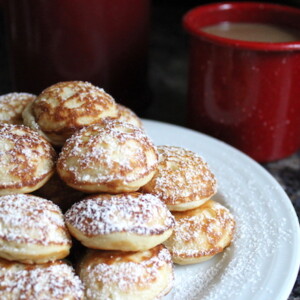
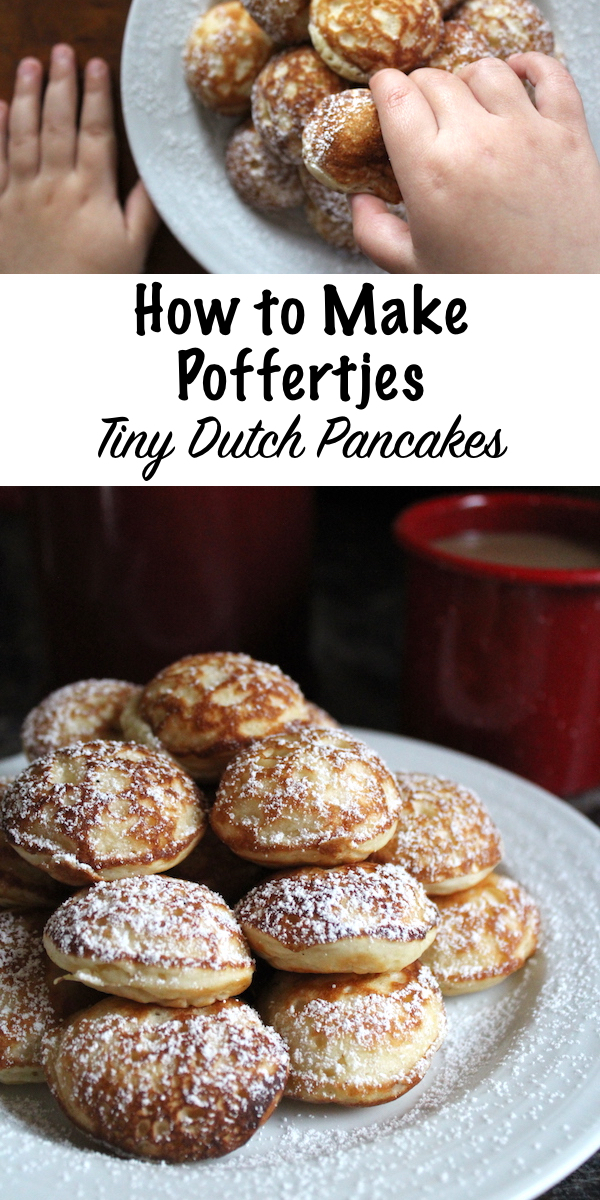
Poffertjes are tiny Dutch yeasted pancakes with a soft, doughy interior and a delicately browned exterior, served warm with a dusting of powdered sugar and a pat of butter melting on top.
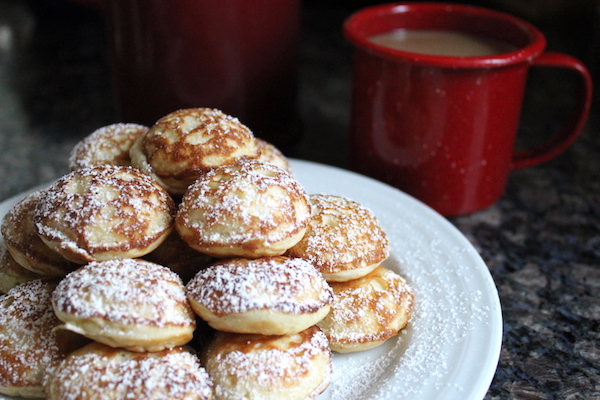
This poffertjes recipe takes 5 minutes of mixing, an hour of rising while you drink your coffee, and about 20 minutes of cooking to turn out 30 to 40 little puffed pancakes. They taste closer to a yeasted donut than to an American breakfast pancake, with the kind of depth that only yeast leavening can deliver.
In the Netherlands, poffertjes are sold from dedicated street carts and served as an afternoon snack or dessert rather than breakfast. The classic topping is the simplest one: a heavy dusting of powdered sugar and a small pat of butter melting into the warm pancakes. They are also wonderful with maple syrup, fruit jam, or fresh berries and whipped cream.
If you have made Danish aebleskiver, Norwegian pannekaker, or a Dutch baby pancake, you already know that European pancakes are a different category from American ones. Poffertjes are part of that same family: small, eggy, lightly sweet, and meant to be eaten by the dozen.
Why you’ll love this family favorite recipe!
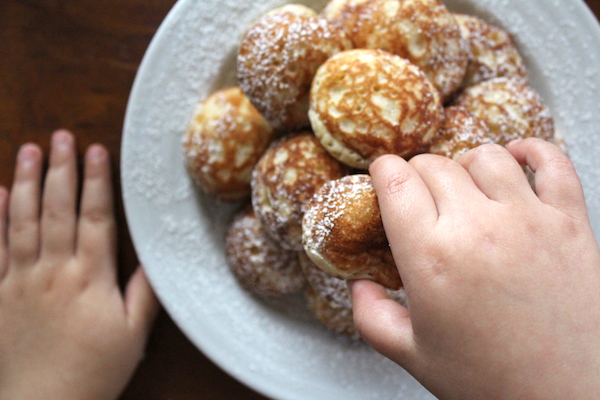
Poffertjes have been the most-requested weekend breakfast in our house ever since the kids were toddlers. They never could get the word right, so they just call them “baby pancakes” or “ball pancakes.”
The batter takes about as long as pouring a cup of coffee, and the hour-long rise lines up perfectly with everyone getting dressed and the pan heating up. Once it is going, I can plate a fresh round every two minutes. It is the rare Saturday breakfast that feels both special and easy, and the few that survive past breakfast turn into the best afternoon snack.
Quick Look at the Recipe
- Makes: About 30 to 40 poffertjes (4 servings)
- Active prep: 5 minutes
- Rise time: 1 hour at room temperature (30 minutes minimum)
- Cook time: About 20 minutes, in batches
- Pan: Poffertjes pan or aebleskiver pan with 1 1/2 to 2 inch divots
- Flour: 1 3/4 cups all-purpose flour (or a buckwheat blend for the traditional Dutch version, see Variations)
- Yeast: 1 tablespoon SAF instant yeast, also sold as bread machine yeast
Ingredients for Poffertjes Recipe
Six ingredients you almost certainly already have. The full amounts are below, with substitutions in the notes.
- All-purpose flour: Standard white all-purpose flour gives the soft, slightly chewy interior that makes poffertjes feel like little yeasted donuts. For the most traditional Dutch flavor, replace half the flour with buckwheat flour (see Variations); for a gluten-free version, see Variations as well.
- Warm milk (at 90 to 100 F): The milk should feel barely warm to the touch, like a comfortable bath. Hotter than 110 F can damage the yeast; colder than 80 F slows the rise. Whole milk gives the richest flavor; 2% works fine.
- SAF instant yeast: SAF instant yeast and bread machine yeast are the same product sold under different names. If you only have active dry yeast, use 1 tablespoon plus 1/2 teaspoon and dissolve it fully in the warm milk before adding to the flour.
- Granulated sugar: Just enough to feed the yeast and lightly sweeten the dough. The pancakes are not very sweet on their own, which is exactly the point: the sweetness comes from the powdered sugar topping.
- Salt: Essential for flavor, and it regulates the yeast so the dough rises steadily.
- Egg: Adds richness and gives poffertjes their characteristic eggy texture. Room temperature egg incorporates better; if yours is fridge-cold, set it in a bowl of warm water for 5 minutes while the milk warms.
- Butter (for the pan): You’ll use butter to grease the divots before each round of pancakes. Real butter, not a substitute, since the browned milk solids add a lot of the finished flavor.
A note on the flour: The recipe is written for ordinary all-purpose flour, which is what most American cooks have on hand. In the Netherlands, traditional poffertjes use a 50/50 blend of buckwheat and all-purpose flour, which gives them a slightly nuttier, earthier flavor and a more pronounced rustic color. If you want the most authentic version, see the Variations section below.
A note on the yeast: The recipe was written with SAF instant yeast in mind, which is also marketed as “bread machine yeast” or “rapid rise yeast.” All three names refer to the same product, and any of them works. Active dry yeast also works with two adjustments: bump the amount by 1/2 teaspoon and dissolve it in the warm milk for 5 minutes before mixing with the dry ingredients.
How to Make Poffertjes
Two short active steps with an hour of hands-off rise in between. Once the pan is hot, the cooking moves quickly: about a minute per side per batch, with a fresh round of pancakes coming off the pan every two minutes.
Step 1. Warm the milk and dissolve the yeast. Heat the milk to lukewarm, about 90 to 100 F (it should feel comfortable to the touch, not hot). Stir in the SAF instant yeast and let it sit for a few minutes while you measure the rest of the ingredients.
Step 2. Combine the dry ingredients. In a large mixing bowl, whisk together the all-purpose flour, sugar, and salt until evenly mixed.
Step 3. Mix the batter. Pour the warm milk and yeast into the flour mixture, then crack in the egg. Stir with a wooden spoon or whisk just until the batter comes together. A few small lumps are fine; do not overmix.
Step 4. Let the batter rise for 1 hour at room temperature. Cover the bowl with a clean kitchen towel and let it sit somewhere warm and draft-free. The batter will roughly double, become bubbly on top, and develop a yeasty aroma. A 30 minute rise will work in a pinch but the flavor and texture are noticeably better at the full hour.
Step 5. Heat the pan and butter the divots. Set a poffertjes pan over medium to medium-high heat. The pan should be quite hot but not smoking. Use a small piece of butter to generously grease each divot. The butter should sizzle on contact.
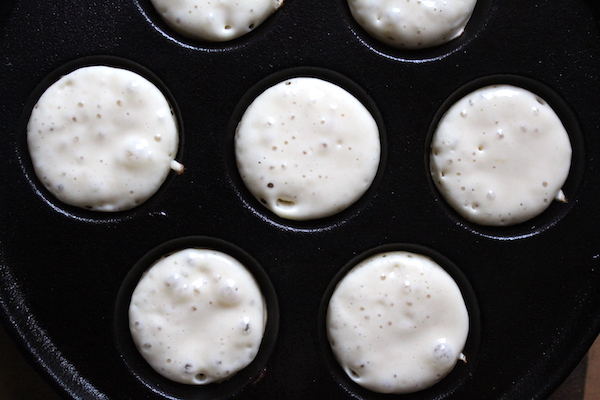
Step 6. Fill each divot about halfway with batter. The batter is thicker than ordinary pancake batter after the rise, so a small cookie scoop, a squeeze bottle, or a measuring cup with a pour spout all work better than ladling. Fill each divot only about halfway; the batter will puff to fill the divot as it cooks.
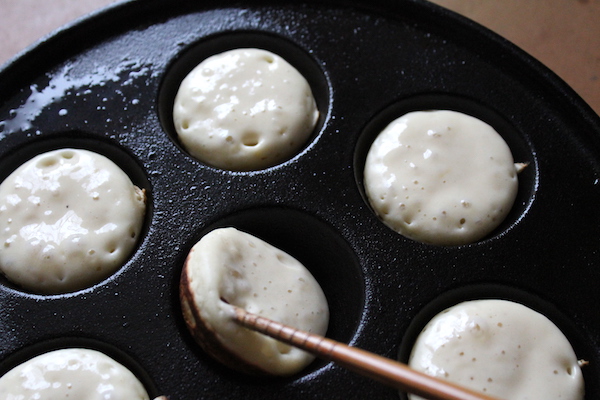
Step 7. Cook for 1 to 2 minutes, then flip with a skewer. When the tops look bubbly and the bottoms are just turning golden brown, it is time to flip. Stab a wooden skewer, chopstick, or knitting needle into the edge of a poffertje and slide it gently up the side of the divot, lifting the pancake free.
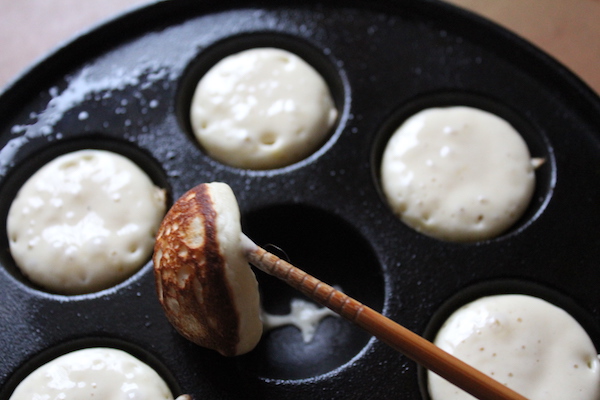
Step 8. Set the pancake back down upside down in the divot. In one motion, drop the pancake back into the divot with the cooked side facing up. If you miss slightly, use a fork to nudge it back into place.
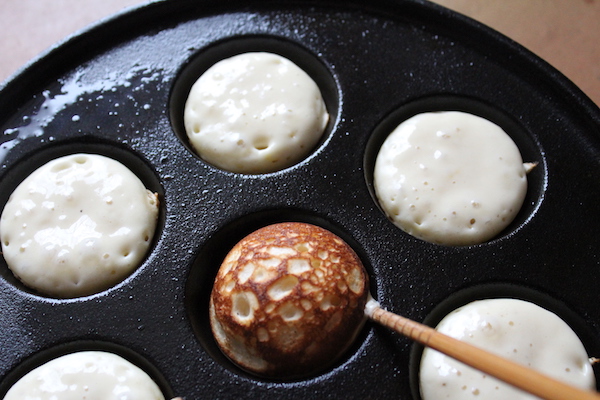
Step 9. Cook for another 1 to 2 minutes on the second side. The poffertjes are done when both sides are golden brown and the centers feel springy when gently pressed. Lift them out of the pan with the skewer or a small fork.
Step 10. Re-butter the divots and repeat. Add a small piece of butter to each divot before the next round, and continue until the batter is gone. Plan on about 3 to 4 batches depending on your pan size. Keep finished pancakes warm in a 200 F oven on a baking sheet while you cook the rest.
Recipe Tips
Use a squeeze bottle or cookie scoop for the batter. After the rise, the batter is too thick to pour from a measuring cup easily. A small cookie scoop (the kind with the lever release) drops the perfect amount into each divot in seconds, and a clean squeeze bottle (like a salad dressing bottle) makes refilling the divots between batches even faster. This single tip is the difference between a relaxing breakfast and a frantic one.
Get the pan hot before the first batch. A truly hot pan is the secret to puffy poffertjes with a thin browned crust. If the pan is only warm, the batter will spread and flatten before it can rise. Heat the pan over medium-high for at least 3 minutes before buttering, and adjust down to medium once you find the rhythm.
Re-butter every batch. Each round of pancakes absorbs the butter from the divots, so do not skip the regreasing step between batches. The butter is what gives poffertjes their crisp, golden bottoms and a hint of nutty flavor. Skipping it produces pale pancakes that stick to the pan.
The flipping technique takes one pan to learn. Your first batch may not be photogenic, and that is normal. By the second pan you will have the wrist motion down. The trick is to commit to the motion in one quick movement, rather than trying to be careful, since hesitation is what causes pancakes to fall sideways. A wooden skewer, a chopstick, or a knitting needle all work; metal skewers can be tricky because the batter slides off them.
Save leftover poffertjes for snacks. Cooled poffertjes keep for 2 days in an airtight container at room temperature, or up to 2 months in the freezer. Reheat straight from the freezer in a 350 F oven for 5 minutes, or in a toaster for the smallest sizes. They make excellent after-school snacks dusted fresh with powdered sugar.
Variations
Once you have made a basic batch, the recipe takes well to changes. A few that work:
- Traditional Dutch buckwheat poffertjes: Replace half the flour for the most authentic Dutch flavor. The buckwheat adds a nutty, slightly earthy note and gives the pancakes a darker, more rustic color. This is the version most readers from the Netherlands grew up eating.
- Poffertjes without a special pan: If you do not have a poffertjes or aebleskiver pan, a mini muffin pan in a 350 F oven gets you about 80% of the way there. Butter each cup, fill halfway with batter, and bake for 12 to 15 minutes until puffed and golden. The texture is more cakey than a true skillet poffertje, but the flavor is right and you do not need any special equipment. (If you do invest in an aebleskiver pan, see dozens of ways to use an aebleskiver pan beyond pancakes.)
- Filled poffertjes: Drop a small dab of jam, Nutella, or fruit preserves into each divot after pouring the batter. The filling sinks into the center of the pancake as it cooks. Strawberry jam, apricot jam, and dulce de leche are all excellent.
- Raisin poffertjes: Plump 1/3 cup raisins in warm water for 10 minutes, drain, and stir into the batter after the rise. A traditional Dutch grandmother addition that tastes like a tiny rum raisin pastry without the rum.
- Sourdough poffertjes: Replace the yeast and milk with 1 cup active sourdough starter plus 1/2 cup warm milk, and let the batter rise for 2 hours instead of 1. The flavor is more complex and slightly tangy.
- Other yeasted European pancakes to try: Once you have the technique, try Danish aebleskiver (made in the same pan with deeper divots), Icelandic pönnukökur, Finnish ålandspannkaka, Icelandic lummur (oatmeal pancakes), or Icelandic kleina donuts.
How to Serve Poffertjes
The classic serving in the Netherlands is the simplest one, but poffertjes take well to many toppings. A few that work especially well:
- Powdered sugar and butter (the classic): A heavy dusting of powdered sugar and a small pat of butter melting over the warm pancakes. This is how Dutch street vendors serve them, and it is hard to beat.
- Maple syrup: The American breakfast favorite. Real maple syrup beats the imitation by a wide margin here, since the small surface area of poffertjes means every bite gets a strong syrup flavor.
- Fruit jam or preserves: Strawberry, raspberry, apricot, or any thick fruit jam. Particularly good with the buckwheat version.
- Whipped cream and fresh berries: Dessert-style poffertjes for a special occasion. Try with sliced strawberries, blueberries, or sweetened mixed berries.
- Chocolate hazelnut spread: Popular with kids in the Netherlands. A small dollop on each pancake disappears quickly.
- Honey and lemon: A drizzle of honey with a tiny squeeze of lemon zest brightens the rich, doughy pancakes beautifully.
While visiting the Dutch community of Pella, Iowa, and having these in a restaurant, I had to buy a poffertjes pan. I found your recipe and it worked great! They are a bit fiddly, but so worth it. They were easy to turn and I’ll be making them often. Thank you.
This recipe makes 30 to 40 poffertjes, depending on the size of your pan’s divots. That’s about 4 servings of 8 to 10 pancakes each, served as a main breakfast. As a dessert or snack with smaller portions, the same batch easily serves 6 to 8 people.
Poffertjes are flat, UFO-shaped Dutch yeasted pancakes about 1 1/2 inches across with a soft, doughy interior. Aebleskiver are Danish, larger and rounder (closer to a small ball), and leavened with whipped egg whites and baking soda rather than yeast. Both are made in pans with hemispherical divots, but aebleskiver pans have deeper wells to accommodate the spherical shape.
A poffertjes pan or aebleskiver pan gives you the most authentic shape and texture. Without one, a mini muffin pan in a 350 F oven gets you about 80% of the way there: butter the cups, fill halfway with batter, and bake for 12 to 15 minutes. The texture is more cakey than skillet-cooked poffertjes, but the flavor is right.
You can make a similar mini pancake without yeast, but it will not technically be a poffertje. Authentic poffertjes are defined by their yeast leavening, which gives them their distinctive doughy interior and complex flavor. Baking-powder versions exist online and taste like ordinary mini pancakes; if you want true poffertjes flavor, the yeast and 1-hour rise are essential.
Yeasted batter is best used the day it is mixed. If you must hold it overnight, refrigerate immediately after the 1-hour rise; the cold slows fermentation but does not stop it entirely. Bring the batter back to room temperature for 30 minutes before cooking the next day. Already-cooked poffertjes hold much better than raw batter: cool them, refrigerate or freeze, and reheat in a 350 F oven for 5 minutes.
More Pancakes and Breakfast Recipes
If you tried this Poffertjes Recipe, or any other recipe on Adamant Kitchen, leave a ⭐ star rating and let me know what you think in the 📝 comments below!
And make sure you stay in touch with me by following on social media!
Poffertjes (Dutch Pancakes)
Equipment
Ingredients
- 1 tbsp SAF Instant Yeast
- 1 1/2 cup warm milk, 90 to 100 degrees F
- 1 3/4 cup white flour, All Purpose Flour
- 1 tbsp sugar
- 1/2 tsp salt
- 1 large egg
- 4 tbsp Butter, for generously greasing the pan
Instructions
- Heat the milk to lukewarm (90 to 100 F). Stir in the yeast and let it sit for 5 minutes while you measure the dry ingredients.
- In a large mixing bowl, whisk together the flour, sugar, and salt.
- Pour the warm milk and yeast into the flour mixture, then crack in the egg. Stir just until the batter comes together; a few lumps are fine.
- Cover the bowl with a clean kitchen towel and let the batter rise at room temperature for 1 hour, until doubled and bubbly. (30 minutes will work in a pinch but 1 hour gives better flavor.)
- Heat a poffertjes pan or aebleskiver pan over medium to medium-high heat for 3 minutes. Generously butter each divot.
- Fill each divot about halfway with batter using a small cookie scoop or squeeze bottle.
- Cook for 1 to 2 minutes, until the tops look bubbly and the bottoms are golden brown. Stab a wooden skewer into the edge of each pancake and flip it back into the divot upside down.
- Cook for another 1 to 2 minutes on the second side, until both sides are golden brown.
- Lift the poffertjes out of the pan with the skewer or a small fork. Re-butter the divots before each new round of batter.
- Serve warm with powdered sugar and a small pat of butter, or with maple syrup, jam, or fresh berries.
Notes
Nutrition
Nutrition information is automatically calculated, so should only be used as an approximation.
Find the perfect recipe
Searching for something else? Enter keywords to find the perfect recipe!
Hi, there! Grandma and Grandpa were from Denmark and we always make aebleskiver at Christmas. Our family recipe is yeast-risen, though I have found so many that use baking soda. Wonder how similar our recipe is to yours? Ours puff up and are fully round. We fill with apple slivers tossed in cinnamon & sugar or stewed prunes. We’ll have to make two batches and have a side-by-side taste off! Thanks so much for the recipe! Sue
In the Netherlands poffertjes are always made with at least some buckwheat flour, essential for an authentic taste. Same as the original crêpes in France! & great using sourdough starter.