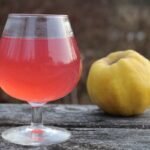
Quince Liqueur
Quince liqueur steeps grated raw quince, sugar, and rose petals in vodka for 2 to 3 months, with no cooking. It comes out pale pink and floral, for sipping, gifting, and fall cocktails.
Servings: 24 servings, makes about 3 cups
Equipment
- Food Processor optional, with a grating attachment
- Cheesecloth optional
Ingredients
- 2 large ripe quince skin on, see notes
- 1/2 to 1 cup granulated sugar start with less; you can add more after straining
- 1/4 to 1/2 cup fresh unsprayed rose petals or dried, see notes
- 1 whole cinnamon stick optional
- 750 ml vodka or other neutral spirit, 80 proof or higher
Instructions
- Wash the quince and wipe off the soft fuzz on the outside with a dry cloth. Don't peel; the skin contributes color and flavor.
- Cut around the apple-like core of each quince and discard. Grate the remaining flesh and skin on the large holes of a box grater or in a food processor with the grating attachment. Work quickly; the flesh browns within minutes.
- Pack the grated quince into a clean half-gallon jar. Add the sugar, rose petals, and cinnamon stick, if using.
- Pour the vodka over the top, cap the jar, and shake gently to mix. The fruit will float at first.
- Store at room temperature, out of direct sunlight, for 2 to 3 months. Shake gently every few days for the first couple of weeks, then leave undisturbed.
- Strain through a fine mesh strainer, pressing gently on the solids to extract every drop of liqueur. For a clearer finish, run a second pass through cheesecloth or a coffee filter.
- Taste, and add more sugar if you'd like a sweeter finish (it dissolves easily into the room-temperature liqueur with a few minutes of stirring).
- Bottle in clean glass bottles. Store at room temperature, out of direct sunlight, and use within 1 year.
Notes
Yield: Two large quinces give about 2 to 3 cups of grated fruit. With the sugar and a 750 ml bottle of vodka, it all fits in a half-gallon jar, and the batch makes about 3 cups of liqueur after straining. A quart jar is too small.
Peeling: Don't peel the quince. Rub off the soft fuzz and grate it skin and all. The skin holds a lot of the color and flavor, and grating breaks it down so you won't notice it.
Sugar: 1/2 cup (100 g) makes a drier liqueur that's good with ginger beer, and 1 cup (200 g) makes a sweeter one. Taste after straining and stir in more if you like.
Rose petals: Use unsprayed petals. In place of fresh, use 2 tablespoons of dried edible rose petals. Pink or red petals give the most color.
Raw quince only: Don't cook the quince. Cooking pulls pectin out of the fruit, and pectin turns cloudy and clumps up in alcohol.
Other spirits: Brandy or gin can replace the vodka in the same amount. Brandy makes a darker, richer liqueur, and gin goes well with tonic.
Leftover fruit: The strained quince is still sweet and fragrant. Use it in cakes, cookies, or ganache, or freeze it until you're ready to bake.
Storage: The liqueur is shelf stable at room temperature and doesn't need the fridge. Keep it out of direct sunlight so the color doesn't fade, and use it within a year, before the floral notes fade. A jar left longer than 3 months before straining won't spoil, so taste it and strain it when you like it.
Nutrition
Serving: 1fl oz | Calories: 89kcal | Carbohydrates: 4g | Protein: 0.002g | Fat: 0.01g | Sodium: 0.4mg | Potassium: 1mg | Fiber: 0.02g | Sugar: 4g | Vitamin A: 0.1IU | Vitamin C: 0.002mg | Calcium: 0.5mg | Iron: 0.01mg