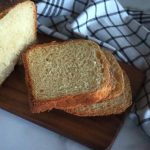
Bread Machine Challah (Jewish Egg Bread)
Soft, golden, egg-rich challah in the bread machine. An easy way to enjoy this traditional Jewish bread for Shabbat dinner, holiday meals, or French toast. Includes amounts for 2-pound and 1 1/2-pound machines.
Servings: 10 slices (2 lb loaf)
Equipment
Ingredients
In the bottom of the pan
- 3/4 cup water
- 2 large eggs
- 1 1/2 Tbsp. honey
- 3 Tbsp. olive oil
floated on top of the liquid ingredients
- 3 cups flour bread or all-purpose
- 1 tsp. salt
- 1 1/4 tsp. SAF Instant Yeast or 1 1/2 tsp active dry yeast
Optional toppings
- 1 large egg white beaten
- 1-2 tsp. poppy seeds or sesame seeds, optional
Instructions
- Add the liquid ingredients to the bread pan first: water, eggs, honey, and olive oil. There is no need to beat the eggs ahead of time.
- Add the flour on top, covering the liquid completely.
- Make a small well in the center of the flour. Place the salt on one side and the yeast on the opposite side, so they aren't in direct contact.
- Select the Basic White cycle and medium crust setting. Set machine to its 2-pound loaf size setting (or 1 1/2-pound if you measured the smaller amounts in the notes below).
- Press start. Watch the first 2 to 3 minutes of kneading. The dough should form a soft ball that pulls away from the sides; it will feel slightly stickier than plain bread dough because of the eggs. Add 1 tablespoon of flour at a time if the dough is too wet, or 1 tablespoon of water at a time if too dry.
- Optional: about 1 hour before the cycle ends (after the last punch-down, during the final rise), open the lid quickly, brush the dough top with the beaten egg white, and sprinkle with poppy or sesame seeds. Close the lid.
- Let the machine complete the cycle.
- Remove the loaf onto a wire rack. Cool completely (at least 1 hour) before slicing.
Notes
For a 1 1/2-pound bread machine, use these smaller amounts:
- 1/2 cup water, lukewarm
- 1 large egg + 1 large egg yolk
- 1 Tbsp honey
- 2 1/4 Tbsp olive oil
- 2 1/4 cups bread or all-purpose flour
- 3/4 tsp salt
- 1 tsp SAF instant yeast
- SAF instant yeast and bread machine yeast are the same product; use the amount listed.
- Active dry yeast: add 1/4 to 1/2 tsp more, dissolved in the water for 10 minutes until foamy. Not compatible with the delay timer.
- Loaf overflows the machine: you used the larger recipe in a too-small machine. Always size down. If overflowing despite using the right amounts, reduce yeast by 1/4 tsp.
- Loaf collapses in the middle: over-rise (reduce yeast 1/4 tsp), water too warm, or dough too wet (add 1 Tbsp flour during kneading).
- Dense loaf: old yeast, too much flour from compressed measuring, or salt touching yeast.
- Dry result: add 1 to 2 Tbsp extra water, or use bread flour (which holds moisture better than AP).
Nutrition
Serving: 1slice | Calories: 203kcal | Carbohydrates: 31g | Protein: 6g | Fat: 6g | Saturated Fat: 1g | Polyunsaturated Fat: 1g | Monounsaturated Fat: 4g | Trans Fat: 0.004g | Cholesterol: 37mg | Sodium: 213mg | Potassium: 77mg | Fiber: 1g | Sugar: 2g | Vitamin A: 54IU | Vitamin C: 0.02mg | Calcium: 19mg | Iron: 2mg